Estonian Minister of Public Administration discussed local government reforms in Kyiv
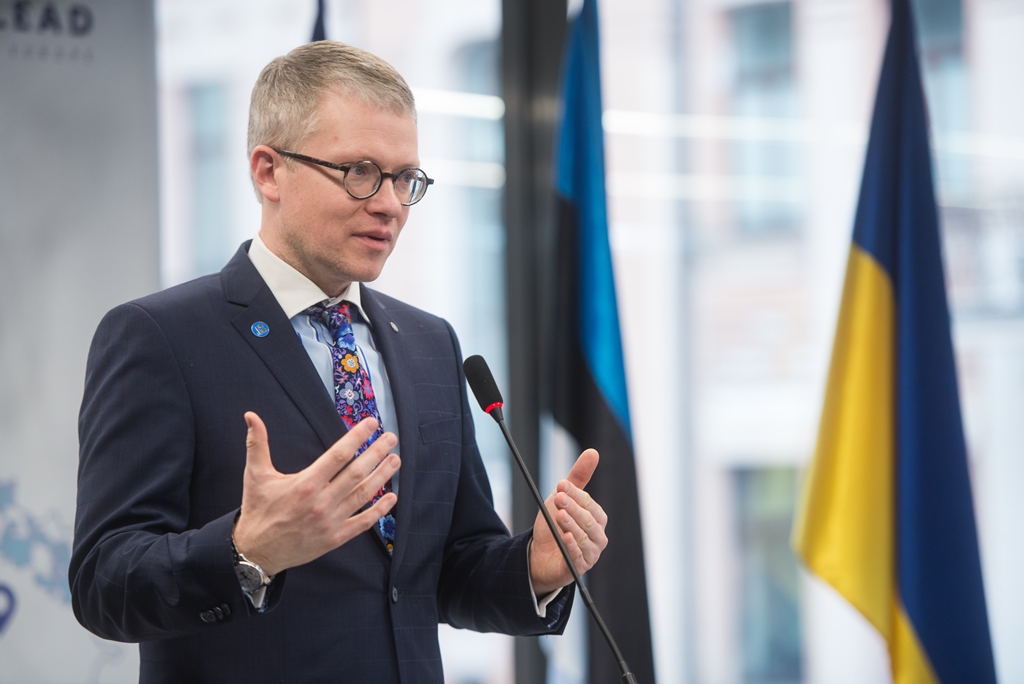
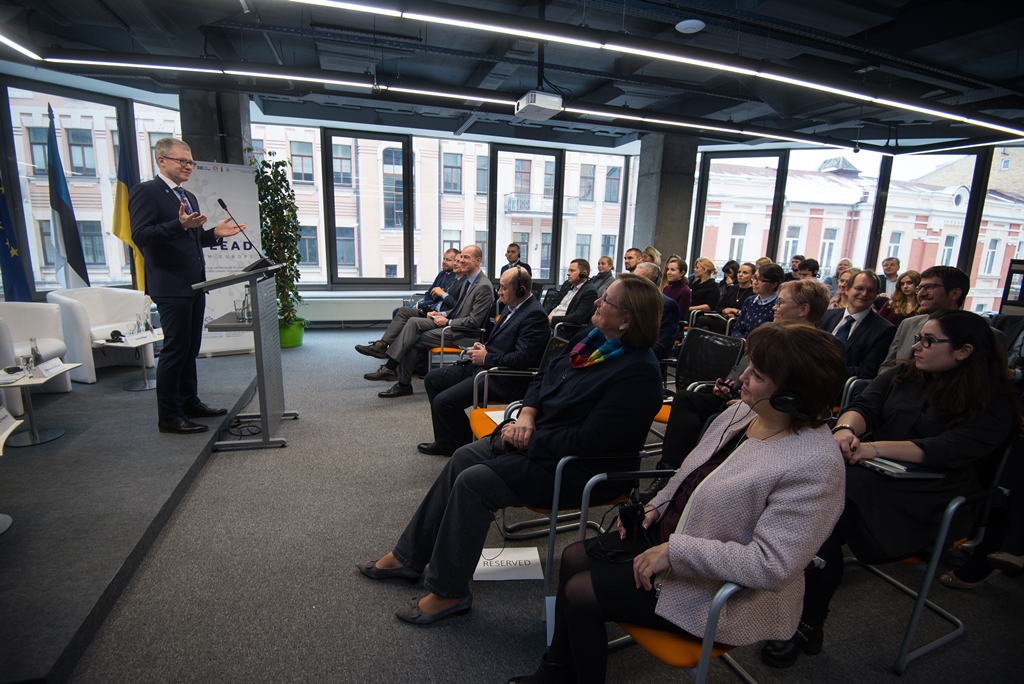
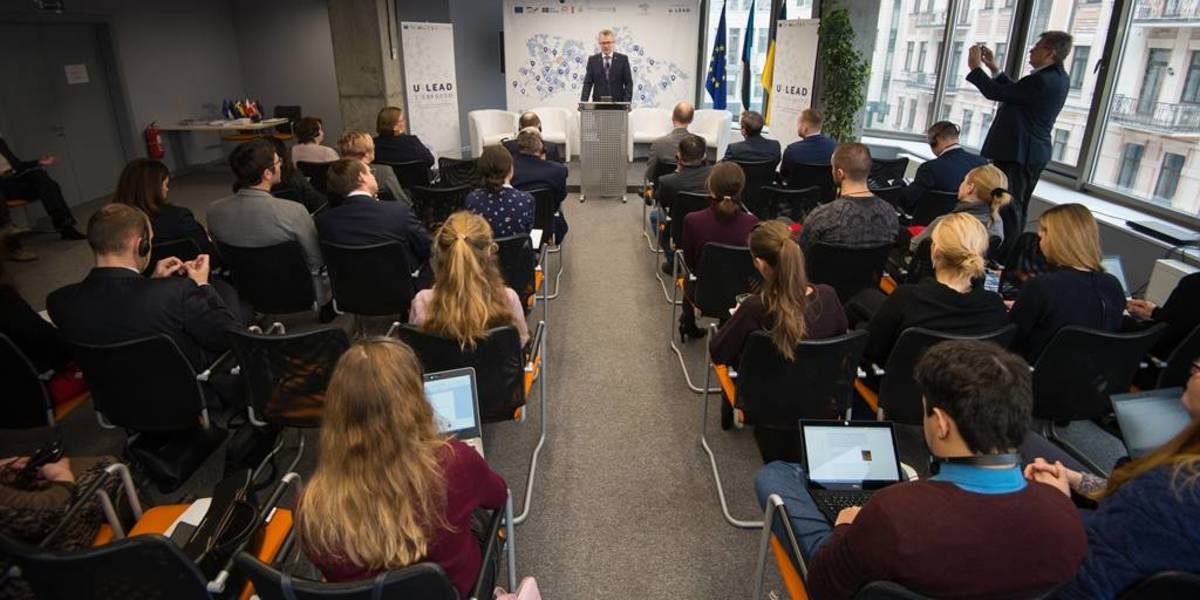
On 22 November 2018, Janek Mäggi, Estonia's Minister of Public Administration, paid a visit to the U-LEAD with Europe Programme office at the House of Decentralisation. During his visit, he presented insights in the local government reform in Estonia and local government functions. As the minister described, “In Estonia, reform was highly needed. It took 25 years to agree the principles, but implementation itself was quick. We now share a vision we did not have for 25 years.” The result: “In 1991, after independence, Estonia was a country with more than 200 local government units. Now we have just 79.”
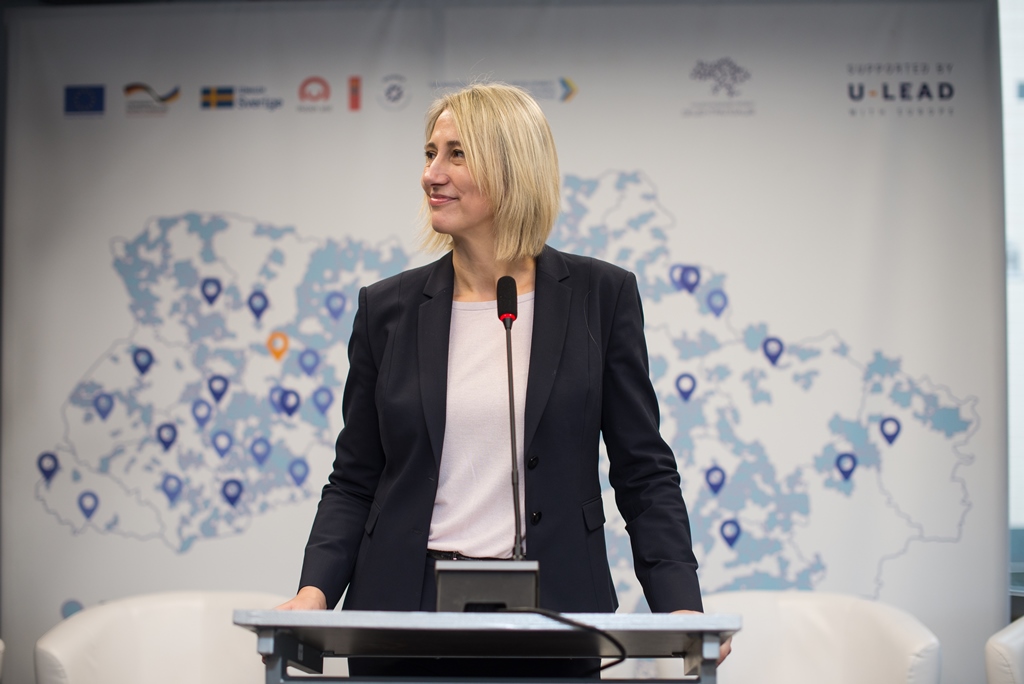
In the following panel talk moderated by Alexandra Fehlinger, Deputy GIZ Programme Director of U-LEAD with Europe, Minister Mäggi had the chance to discuss administrative supervision of local authorities based on the European experience and Ukrainian perspectives with Valentyna Poltavets, Executive Director of the Association of Amalgamated Hromadas, Manuela Söller-Winkler, former State Secretary of the Interior in Schleswig-Holstein, and Oleksandr Slobozhan, Executive Director of the Association of Ukrainian Cities.
Focusing on experiences of partnership between central and local government – specifically the issues of supervision of local authorities – Mäggi explained that central government in Estonia wanted to give more independence for smaller communities to make decisions. He added, “We saw so many people leaving the country and knew we had to make life in small towns more attractive again In a country with a population of 1.3 million, 100,000 live in Finland alone and we need to offer better living conditions back home.”
Executive director Slobozhan explained that with the Ukrainian decentralisation reform, “A new relationship has formed between the national and local level. The more partnership develops, the more transparency helps prevent mistakes.” Speaking from the Estonian perspective, Mäggi commented on the progress of decentralisation and its supervision, saying that in Estonia, “Society itself is the best overseer of reform, as people have realised how they can benefit. As a small country, maintaining a partnership at eye level between state and municipalities is easy.” In Ukraine, Poltavets added, “People are very active in the rural communities. Control and oversight are most effective in small, tight-knit communities, similar to Estonia.”
Adding the German context to the panel, Söller-Winkler argued that, “A partnership at eye level and supervision between central and local administration is no contradiction in terms. Trust, supportive advice and respect for the sphere of the municipalities ensure the best results for citizens.”
Concluding the talk, Fehlinger stated, “In this type of partnership between state and municipal bodies, administrative supervision should never be seen as patronising, but should always be supporting and empowering local self-governance.”

01 August 2026
З прийняттям постанови Кабінету Міністрів України від 8 липня 2026 р. № 883 «Деякі питання державного фонду...
31 July 2026
BIM має стати єдиною системою управління інформацією про об'єкти будівництва
BIM має стати єдиною системою управління...
Заступниця міністра з відновлення, інфраструктури та транспорту України Наталія Козловська взяла участь в...
31 July 2026
Громади Європи: рішення місяця
Громади Європи: рішення місяця
липень 2026 Українські громади дедалі глибше входять у європейський політичний, правовий та професійний...
31 July 2026
Government allocates funding for 130 future academic lyceums to create modern educational spaces
Government allocates funding for 130 future...
Almost UAH 700 million will be allocated to 130 future academic lyceums in 22 regions of Ukraine – the Government has...