Head of Government supports increase of educational components in hromada development budgets
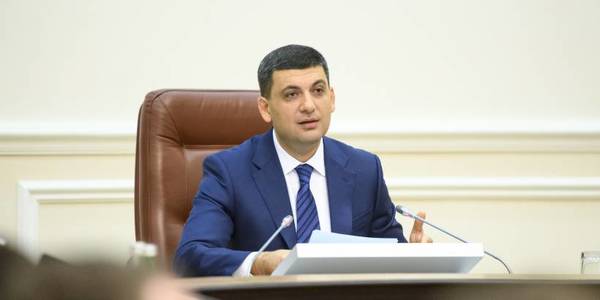
Prime Minister of Ukraine Volodymyr Groysman supports the revision of hromada development budgets, aimed at the development of educational institutions and salaries of educators, in the direction of their increase. The Head of Government said this at a meeting of the Cabinet of Ministers.
“I'm talking about planning! And salaries here are the number one priority,” noted Volodymyr Groysman.
He recalled that yesterday, 9 July, during the meeting of the Coordination Council on education, the issue of the lack of funds provided by the local authorities arose. As it turned out, the general local development budgets have billions of hryvnias, while budgets for educational needs amount to millions of hryvnias. As it turned out, this is insufficient not only for the material equipment of educational institutions, but even for decent salaries of educators. This, as the Head of Government stressed, is unacceptable, and it forces to strengthen state control over the use of funds transferred to the ground. According to Volodymyr Groysman, building fountains and planting trees, as some executives do today, is necessary. But it is also necessary to take care of global things, among which education is one of priorities, ensures the Prime Minister.
Tags:
budget Volodymyr Groysman education management
Source:
Урядовий портал
07 October 2026
21 Regional Development Agencies to master KROKUS: UCORD strengthens the regions’ project capacity
21 Regional Development Agencies to master...
In Lviv, representatives of 21 regional development agencies started a two-day training course on developing project...
07 October 2026
Проєкт Держбюджету-2027: громади обговорили ресурс для послуг, освіти та підтримки дітей
Проєкт Держбюджету-2027: громади обговорили...
Фінансова спроможність громад у 2027 році, міжбюджетні відносини, доступність послуг для дітей і сімей стали темою...
07 October 2026
Молодь Хмельниччини та Івано-Франківщини...
Платформа соціальних змін відкрила набір на акселератор Skills Future For Youth для молоді віком 15–29...
07 October 2026
Short-term (by 2027) and mid-term (by 2030)...
This article of the U-LEAD series consolidates the main short-term (by 2027) and mid-term (by 2030) recommendations...