U-LEAD Dialogue: Post-war reconstruction of municipalities should facilitate the return of residents
The process of post-war reconstruction of Ukrainian municipalities should primarily focus on creating conditions for the return of local residents forced to leave due to hostilities.
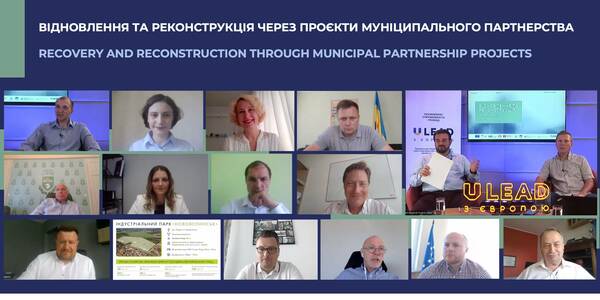
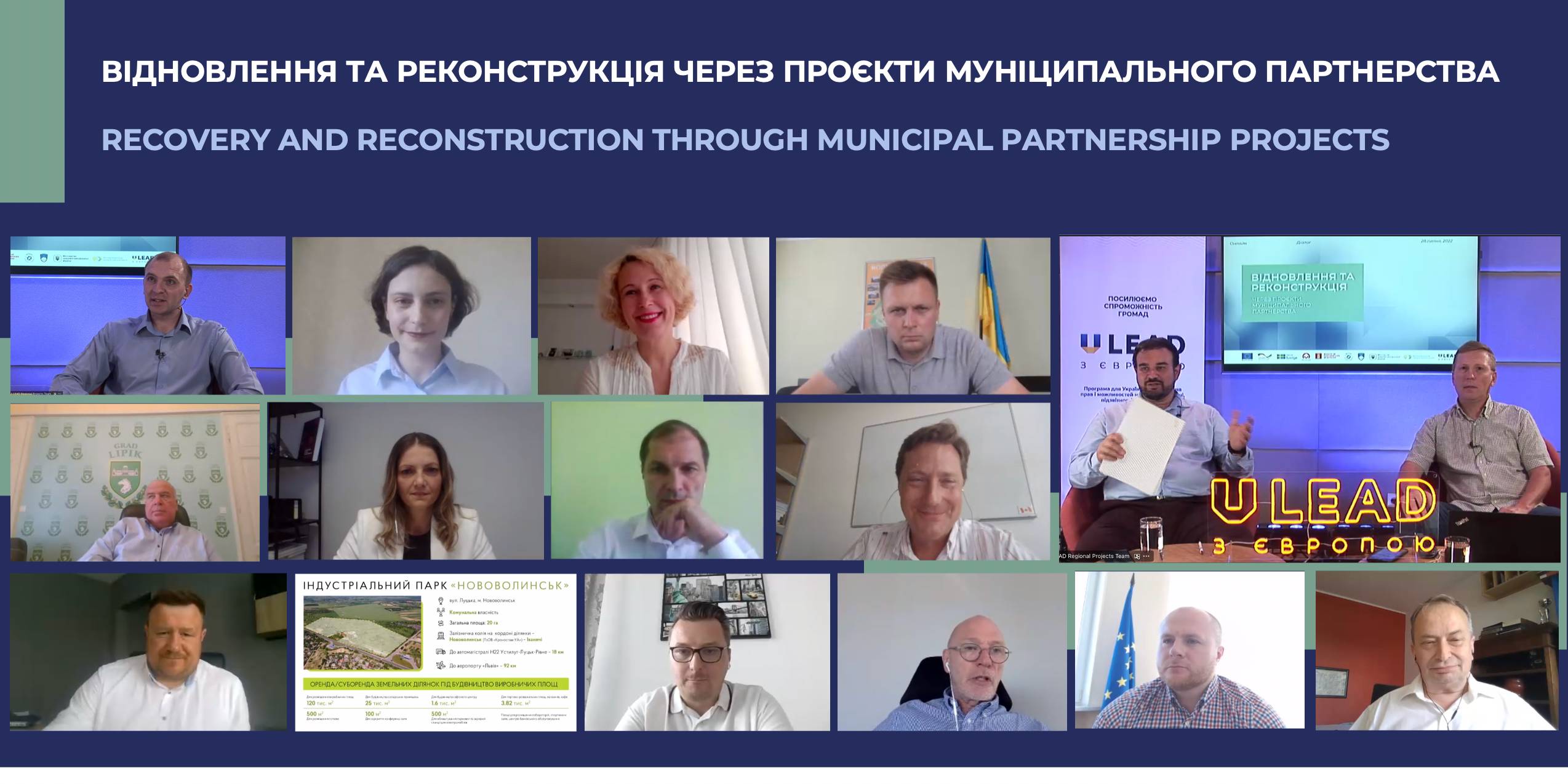
This was discussed during an online dialogue organised by the U-LEAD with Europe Programme regarding the post-war reconstruction of Ukrainian municipalities, Ukrinform reports.
For instance, Vinko Kasana, a mayor of the Croatian municipality of Lipik, noted that the war in Croatia (1991-1995) damaged the country, took about 15,000 lives, and up to 300,000 citizens became internally displaced, and about 180,000 infrastructure facilities were damaged. However, Croatia managed to overcome the effects of the war and is now a member of the EU.
“In the process of post-war reconstruction, we concentrated on the restoration of schools, roads, health care facilities and public infrastructure in order to provide citizens with a quality life,” said Vinko Kasana.
The mayor added that post-war reconstruction is a complex process that should be focused on citizens, as it is necessary to facilitate their return home and provide them with jobs.
“The town of Lipik, our development agency and other Croatian cities and towns are willing to join various projects [in Ukrainian municipalities] and provide assistance. I believe in the successful recovery in Ukraine and the success of joint projects,” said Vinko Kasana.
According to Senka Horvat, Director of the Požeško-Slavno Regional Development Agency (Croatia), the town of Lipik was completely destroyed as a result of the war but was able to recover and is now a recreational town thanks to its natural sources of mineral water from the time of the Roman Empire. Lipik bottles mineral water and develops its businesses, such as spa centres and implements new intelligence projects. There is also a horse racing venue in the town.
“It is important to start reconstruction as early as possible, while people still want to return. The rules and motivations for reconstruction should be clearly defined. As for motivations, in the case of Croatia, it was about the return of people, so it was necessary to restore housing and infrastructure,” said Senka Horvat.
She also pointed out that in the process of recovery, municipalities should cooperate with the central government and foreign partners.
The mayor of the Slovenian municipality of Kočevje (Slovenia) Vladimir Prebilić noted that the recovery process should also attract international investments, including in order to provide jobs. He also emphasised the need to support local businesses and start-ups, including providing entrepreneurs with the necessary information and promoting available opportunities for business development in the municipality. In addition, free entrepreneurship courses for local residents can be held.
17 June 2026
Кадрові наслідки змін у мережі закладів освіти та управління кадровими переміщеннями
Кадрові наслідки змін у мережі закладів освіти...
кадрові ризики при реорганізації та зміні типу закладу освіти; переведення, вивільнення та працевлаштування...
17 June 2026
Практичні рішення для розвитку мережі...
Практичні рішення для формування мережі академічних ліцеїв та впровадження реформи старшої профільної школи...
17 June 2026
У центрі відновлення мають бути люди – їхня...
15 червня 2026 року у Києві відбувся форум «Діалог з питань врядування щодо інклюзивного відновлення та розвитку», що...
17 June 2026
Президент України заснував почесну відзнаку «Громада-рятівник»
Президент України заснував почесну відзнаку...
Президент України Володимир Зеленський підписав Указ №491/2026, яким засновано почесну відзнаку «Громада-рятівник»...