‘Grants are not manna from heaven’: how the border Korop community transformed an old school bomb shelter into a modern hub
Korop community in Chernihiv region is situated in a high-risk area due to its proximity to the russian border. The people here understand that ensuring the safety of children is the number one priority.
The story of the renovation of the bomb shelter at Atiushivka school demonstrates how community perseverance, cooperation with international partners and student activism can transform a gloomy bomb shelter into a modern educational space in a village.
‘The school, which was built in 1986, had never been renovated. The walls were made of bare concrete blocks and were damp and dark. Such was the state of the building for years. Before the full-scale invasion, the premises served as a warehouse for discarded school furniture: desks and chairs that were too good to throw away,’ says Mykola Sverdlov, the school’s principal.
When the full-scale war broke out, the staff tried to tidy up the bomb shelter themselves: they cleared away rubbish, filled the windows with sand, and installed electric lighting. However, conditions remained difficult: there was no floor, the toilets were out of order, and the doors were falling apart. It was impossible to stay there for long due to the cold and damp.
The situation changed radically when the community became a partner in DECIDE: VIDBUDOVA initiative. Read on to find out how and why this happened.
The philosophy of community success
Korop community is distinguished by its proactive approach to attracting extra-budgetary funds. During the full-scale war, they managed to attract UAH 186 million in grant funds, obtain more than 80 generators, repair four bomb shelters in schools, and obtain equipment for public utility companies.
However, the community leader emphasises that these figures were achieved through tremendous effort.
‘People view financial assistance and participation in projects as if they were manna from heaven. In reality, it is not. It involves fierce competition, sleepless nights, and hard work. We could have been excluded from this project if we had not tracked such opportunities and if we had not proven that we have excellent educators, that our community really needs bomb shelters and that we are ready and willing to learn, help out, get involved, meet deadlines, and report back. It is frightening to imagine how much we would have lost if they had not believed in us,’ says Volodymyr Kunitsyn, Mayor of Korop.
The community leader compares the role of local self-government to that of managing a football club: the community must elect the most capable leaders to achieve positive outcomes.
‘We are not a wealthy community, but we have extensive infrastructure that we cannot improve on our own. There are nine schools, 13 starosta districts, an excellent hospital, a hotel, a territorial centre, two elderly care homes, a youth sports school, an art school and a children’s creativity centre. All of these require significant funds, which we do not have,’ says the community leader.
Meanwhile, Volodymyr Kunitsyn emphasises that participation in grant programmes is not only about money, but also about learning and changing mindsets, and the local government team adheres to this principle.
‘For example, DECIDE Project is our long-term partner. We monitor their security and educational projects and consult with experts on the legislative framework. We know who to turn to, who will guide us, help us, and advise us, so we feel much more confident,’ says Yevhen Kyslyi, Chief Specialist of the Education Department of the Korop Settlement Council.
Volodymyr Kunitsyn says that visits by experts and participation in international projects help to overcome an inferiority complex and broaden people’s horizons:
‘Knowledge often provides significantly greater opportunities than simply being given a million hryvnias. We understand that we are not the centre of the universe; Korop is a peripheral town. However, when people come to you, bringing knowledge, understanding of the situation, and a different perspective, it is a great honour. It allows you to get rid of “peripheral thinking”, when people only think about getting something today, without a strategy for the future. When you study, learn to do something new, you make progress, and the people around you make progress too.’
Why this school was chosen and how water almost stopped the renovation
The choice of an educational institution for the renovation of the bomb shelter was not accidental. The community is investing in the future. Atiusha is a remote village, but it has potential for development.
‘I am confident that this village will be successful in the future because a large livestock farm is about to be built, which will create around 400 jobs. Where people work, there will be children, and a school will be needed,’ explains Volodymyr Kunitsyn.
The school also receives children from other localities. In total, more than 100 schoolchildren study here. Therefore, investing in the safety of this particular institution is an investment in the future.
However, renovating the space in Atiusha was not easy. For the first time in 18 years, the groundwater rose in the basement. This occurred during the active construction phase, forcing the builders to halt work for almost four months.
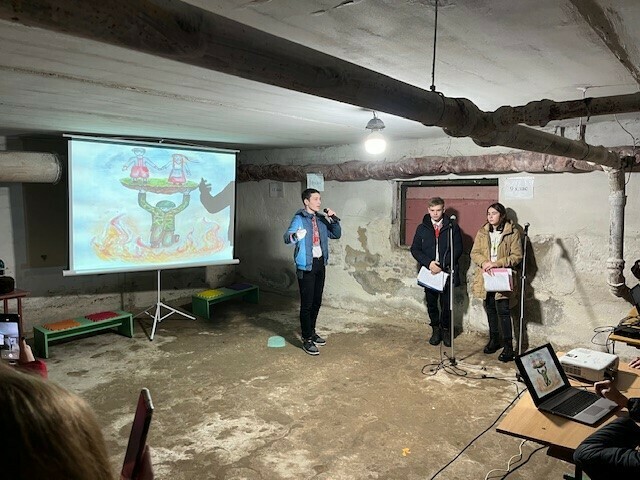
Bomb shelter before renovation
‘The water level rose by 15–20 centimetres. This significantly complicated the work and increased the cost of the project. In total, the repairs were carried out between February 2023 and September 2025,’ recalls Mykola Sverdlov, the school’s principal.
The total cost of the project was almost UAH 4.8 million. A significant condition was co-financing: the community allocated UAH 500,000. When additional expenses arose due to the water, partners from DECIDE quickly helped to resolve the issue.
From a warehouse of furniture to a digital hub: what has changed
Today, the 226-square-metre bomb shelter has been transformed into a fully-fledged educational space divided into different zones. The school’s principal, Mykola Sverdlov, gives a virtual tour of the renovated space:
- Digital hub: the space is equipped with a projector, computers, and 15 tablets for lessons.
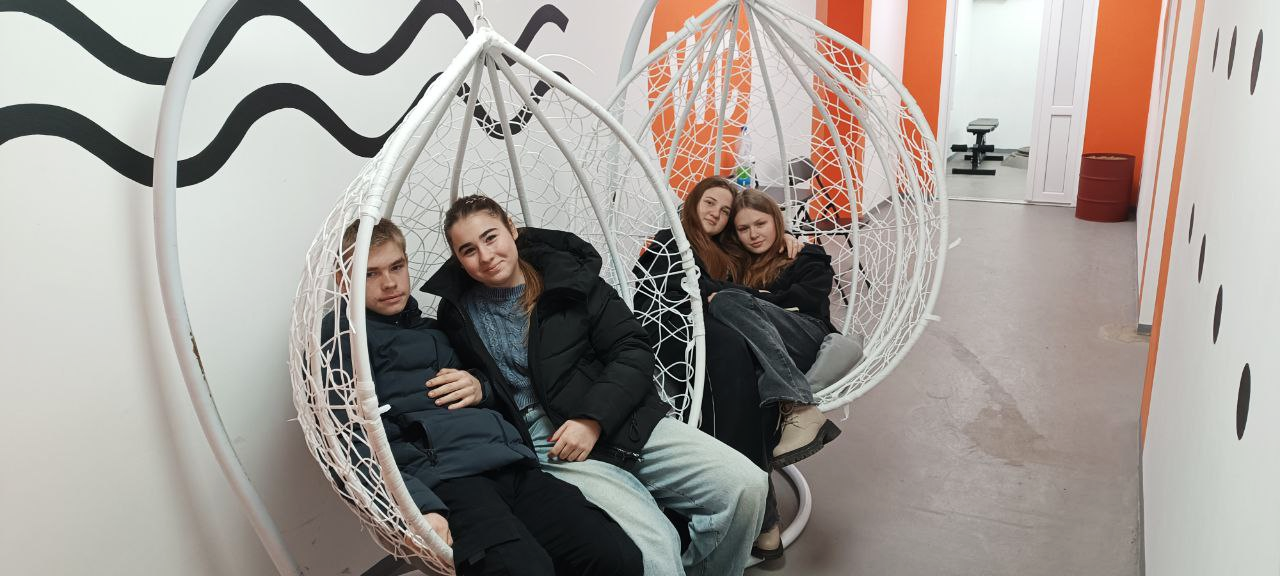
- Library and lounge area: in the corridors there are shelves with books that students can take home, rocking chairs, table football and soft sofas to relax on.
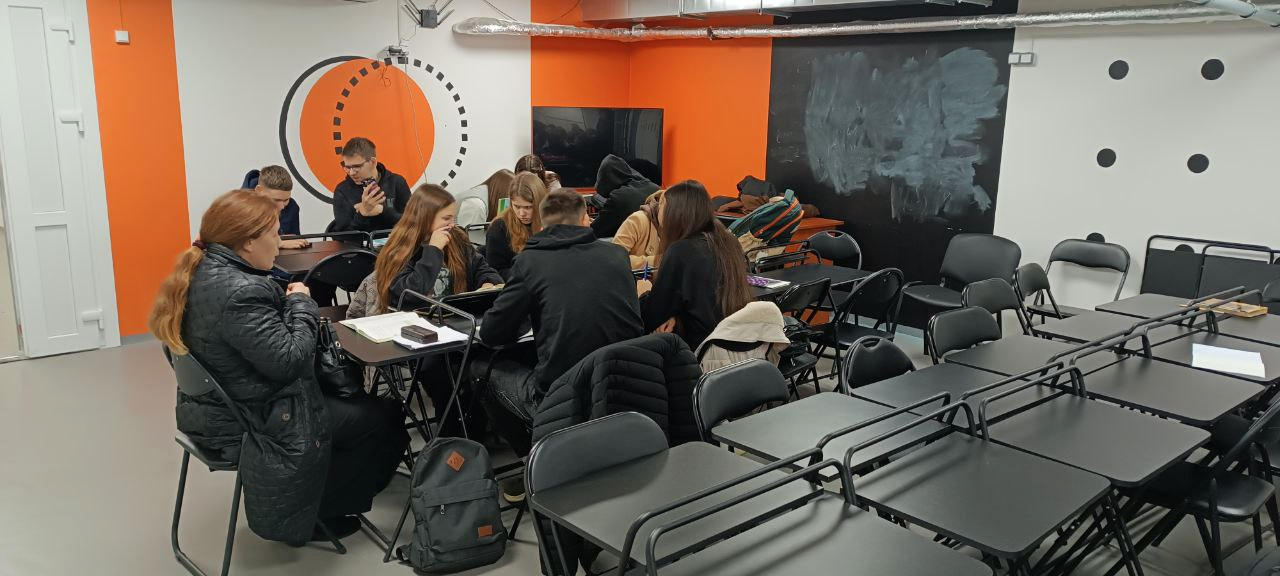
- Space for learning: a large hall has been divided into zones for all classes (from 1 to 11). A mobile curtain has been installed for first-graders to separate them from older students – the plan is to divide all classes in this way where possible. Two televisions have also been installed.
- Three modern toilets have been installed, including an inclusive toilet, and a lift for people with reduced mobility has been installed at the entrance.
- There is a separate room for kindergarten children with beds and games.
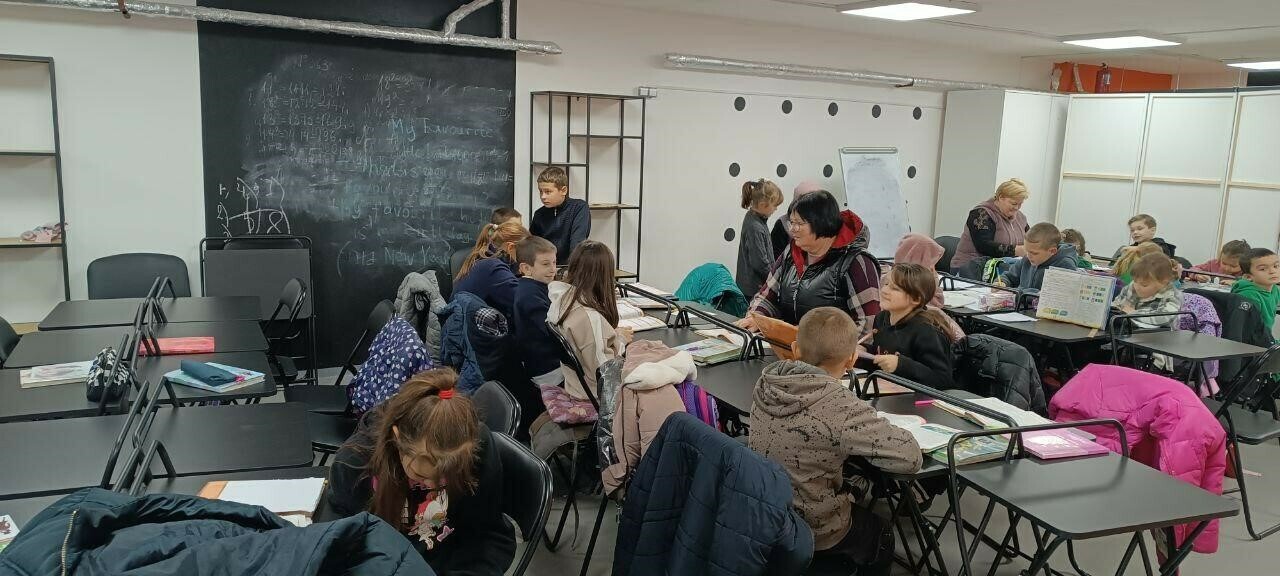
All shelter zones are equipped with desks and chairs and high-speed Wi-Fi
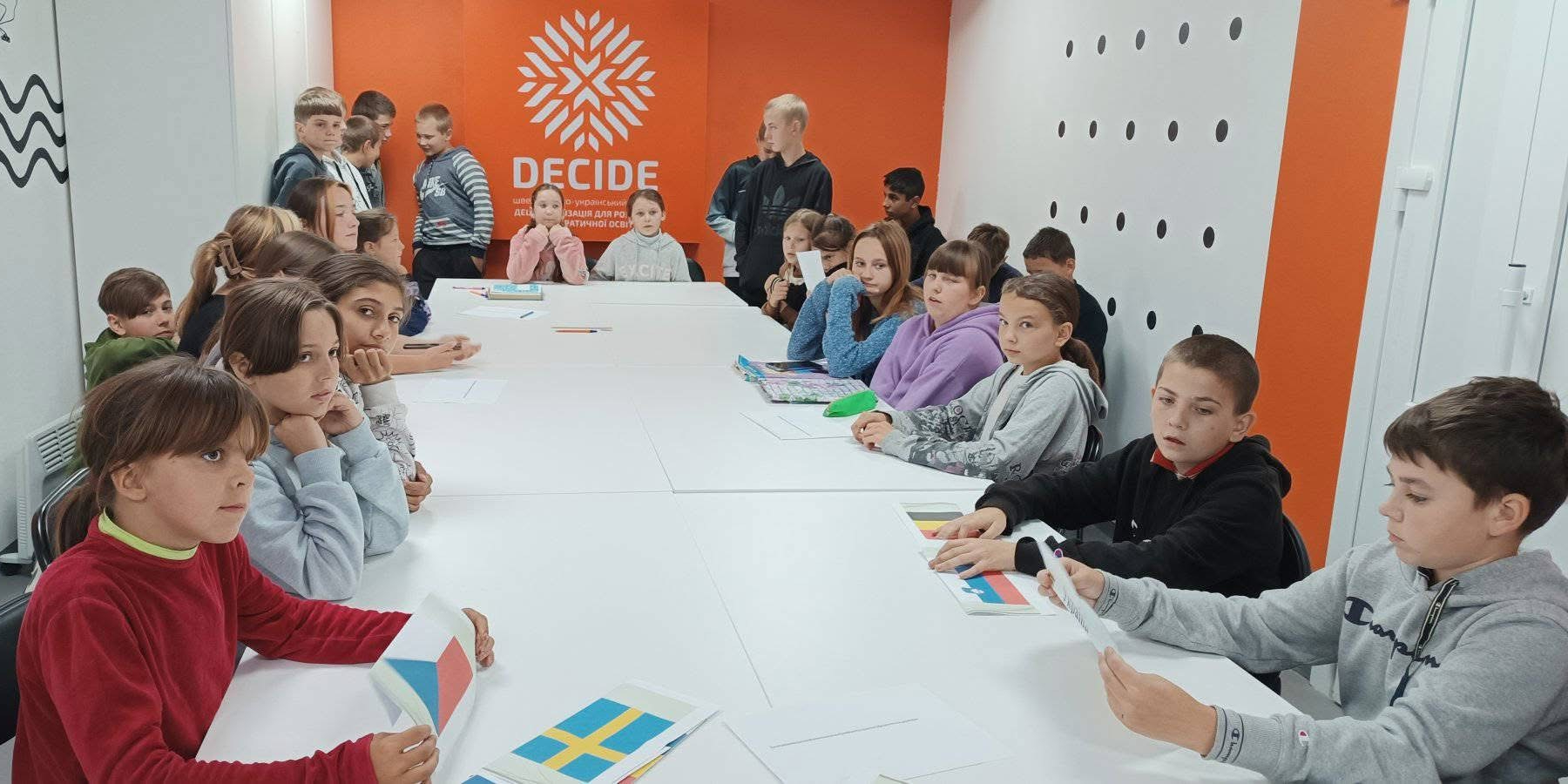
A special feature of the project in Korop community was that children had the opportunity to add something of their own to the bomb shelter – DECIDE allocated a mini-grant of UAH 50,000 for this purpose. A real student vote was held – students chose between a relaxation area, a sports ground and a project focused on psychology.
The senior students’ project ‘Relaxation Zone’ won. Maryna Vasilieva, the teacher and organiser responsible for supervising the team of students who had already graduated from school, says:
‘The students really enjoyed it! Trainers came and taught us how to develop projects. The children enjoyed learning and discovering new things, as well as applying their newfound knowledge immediately. When we won, they were delighted because they got everything they wanted: pouffes, cocoon chairs, headphones and floor puzzles.’
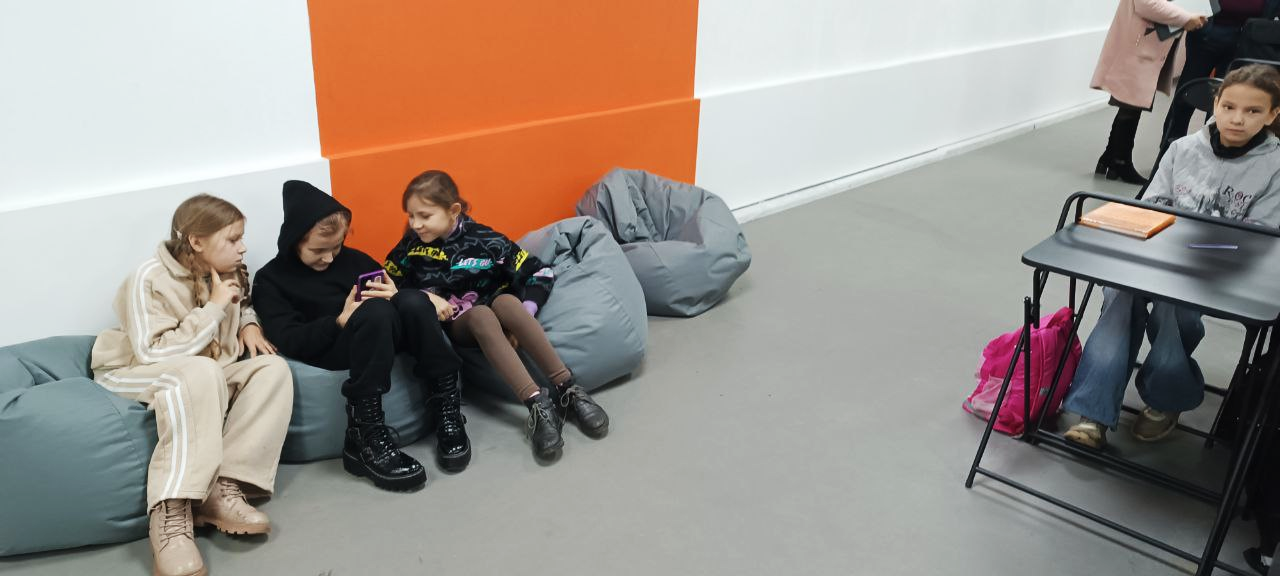
The school principal continues:
‘And since we saved money, we were also able to implement the idea of a sports area with exercise equipment and dumbbells, which was suggested by another team, as well as stock the library in the bomb shelter. This is the gift our graduates left us. Everyone is happy.’
The best indicator of success is the emotions of the schoolchildren themselves. Tenth-graders Bohdana Haiova and Karolina Vysotska recall their first impressions of the renovated bomb shelter:
‘While the renovation was ongoing, we followed the principal around, constantly asking, “When can we see it?” When we first entered the bomb shelter, we were amazed. Everything was so bright, beautiful and colourful. We feel safe and comfortable inside it. Now, we enjoy sitting on pouffes and listening to music in the relaxation zone the most. Our friends from other schools ask us about it and are happy for us.’
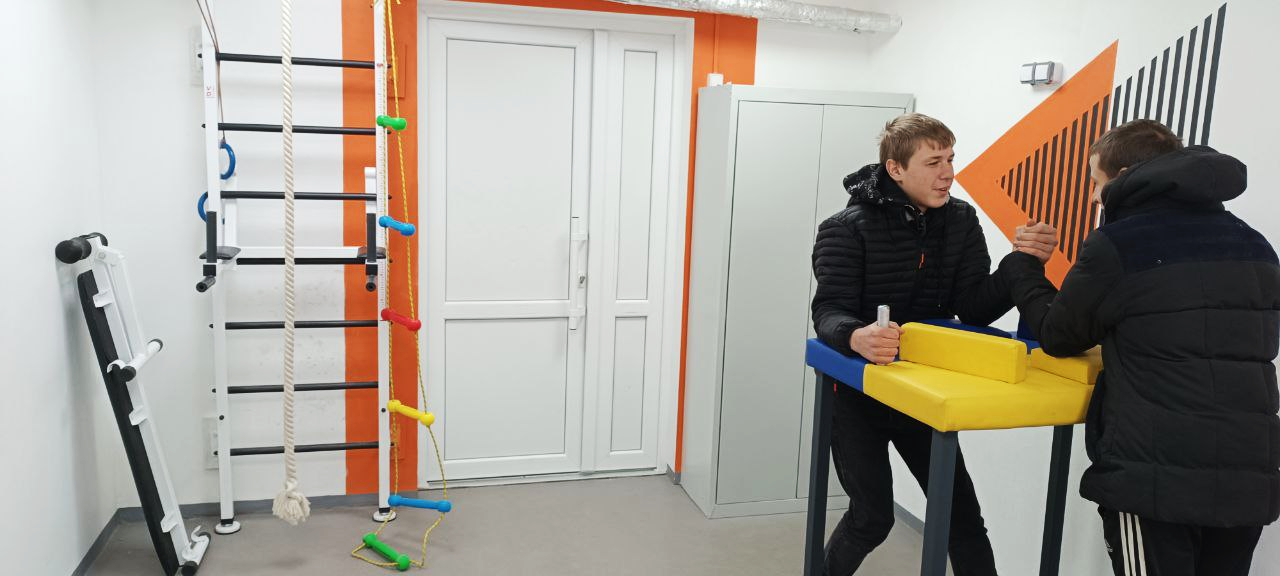
Security at the border: more than just walls
For Chernihiv region, having reliable and comfortable bomb shelter is a matter of survival and psychological health.
‘Unfortunately, it is very important to have modern bomb shelters in Ukraine today, especially since we live quite close to the border with russia, and the more comfortable, accessible and positive these bomb shelters are, the better it is for the safety and emotional state of the people who are forced to stay in them,’ says Yevhen Kyslyi.
The danger is felt here every day. In these circumstances, a bright, modern space plays an important therapeutic function.
‘In the current situation, we sometimes spend more time in the bomb shelter than in the school up above. And if we sit in a dark, gloomy basement all day long, our mood will reflect that. But in a bright, cheerful room, the stress of air raid alarms is relieved. Now, when we are in the bomb shelter, we can study during alarms in good conditions, better than in school,’ concludes Mykola Sverdlov, the school’s principal.
The students agree with the principal:
‘It’s much calmer here. We’re distracted from the anxiety altogether.’
The community believes that once the war is over, the bomb shelter will simply be a space where children can come whenever they want to play, read books, or listen to music.
Mariia Buleiko (Markovska)
20 February 2026
Місцева статистика: Як перетворити розрізнені...
У Києві відбулася стратегічна зустріч "Статистика громад", організована Державною службою статистики України за...
20 February 2026
I_CAN launched a nationwide rollout of its Public Investment Management Training Programme for local governments and...
20 February 2026
Language of Development Part 2: Funds and Instruments of EU Cohesion Policy
Language of Development Part 2: Funds and...
With the “language of development”, we describe not only the goals and principles of EU regional policy, but also...
19 February 2026
Анонс: вебінар «Обговорення змін до Порядку...
Які практичні кроки мають здійснити керівники та педагоги, щоб ефективно впровадити ключові зміни до Порядку...