Communities as drivers of sustainability: NISS experts and international partners discuss new European territorial policies
At the European Congress of Local Governments in Mikołajki, participants explored how to release the potential of communities in the face of global challenges – from security threats to the demographic crisis.
How can we ensure that communities are not merely administered, but become full-fledged actors in addressing global challenges? Is Europe ready to move from linear administration to multi-level adaptive governance, where local self-government plays a key role? These questions were central to a panel discussion organised by the National Institute for Strategic Studies (NISS) at the 11th European Congress of Local Governments, which brought together over 3,000 participants from 33 countries in Mikołajki, Poland, last week.
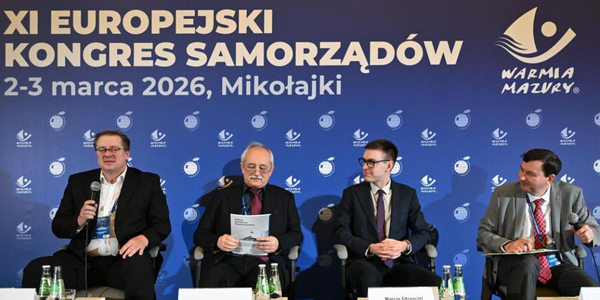
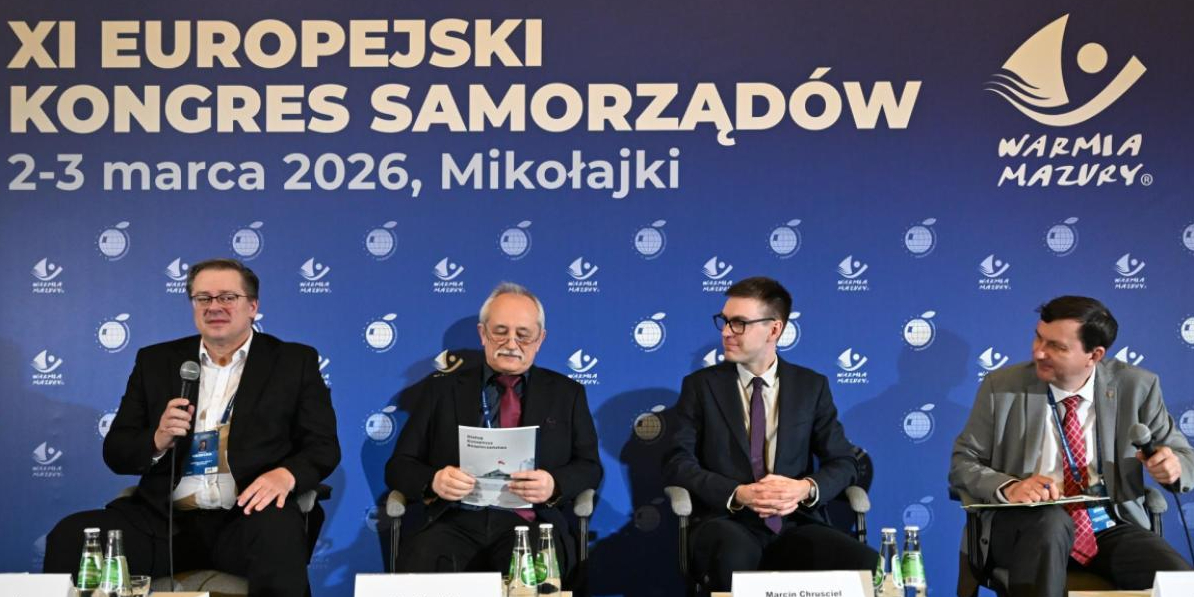
The discussion entitled ‘Placed-based Policies: How to Unlock Local Potential in the Face of Modern Challenges?’ brought together leading experts from Ukraine, Poland, and Slovakia. The discussion was moderated by Yaroslav Zhalilo, Deputy Director of the NISS and Doctor of Economics.
Times of uncertainty: Why old solutions are no longer sufficient
The motto of this year’s Congress is ‘Local Government in Times of Uncertainty – Local Responses to Global Challenges’. Never before has this been more relevant to Ukraine, which has been facing full-scale aggression for many years running.
Opening the discussion, Yaroslav Zhalilo emphasised that today's challenges – security, climate, energy, digitalisation and migration – are global in nature. However, their complexity requires the mobilisation of all resources, even at the level of individual communities.
‘Communities should be resilient, adaptable and capable of transformation. National policies should be geared as much as possible towards strengthening this capacity. That is precisely why we need special place-based policies that will allow us to utilise the unique local context to respond to major challenges,’ he noted, adding that this approach should form the basis of future European cohesion policy.
Trust, turbulence, and social capital: The triangle of resilience
Experts agreed that a strong community is based not only on financial resources, but also on the resources of human relationships.
Vasyl Kuibida, PhD in Public Administration (Koretskyi Institute of State and Law of the National Academy of Sciences of Ukraine), described the current situation as ‘multidimensional turbulence’ that is eroding traditional mechanisms of stability. Today’s risks are a symbiosis of security, socio-demographic and infrastructure issues.
‘We have to move from linear administration to multi-level adaptive governance. The main task of local authorities today is to build trust and foster partnerships. And the state, for its part, must recognise communities not merely as implementers, but as equal partners in the implementation of national policies,’ he emphasised.
This idea was developed by Michal Vašečka, Programme Director at the Bratislava Policy Institute (Slovak Republic). In his view, social capital plays a leading role in the transformation of communities, yet it is currently under threat due to the erosion of trust. He outlined several systemic shifts putting pressure on local self-government:
- Demographic changes that are undermining the existing tax base;
- Economic polarisation within communities;
- Digital divides caused by unequal access to technology;
- Climate change;
- Increasing fiscal constraints.
‘The key task today is to rebuild trust. Without it, neither social cohesion nor effective governance can be achieved,’ concluded the Slovak expert.
The experience of Poland and Ukrainian resilience: Mutual benefit
The Polish perspective on the issue was presented by Marcin Chruściel, Director of the Government Plenipotentiary Office for Polish-Ukrainian Development Cooperation (Ministry of Development Funds and Regional Policy of Poland). He reminded the audience that local self-government is the ‘DNA of democracy’, and that today it is under threat due to security risks, depopulation and unpredictability.
‘Communities must remain united in the face of hybrid attacks. We must learn to use the available resources as effectively as possible,’ noted Mr Chruściel.
He outlined Poland’s specific policies for its eastern regions and emphasised Warsaw’s commitment to strengthening Ukrainian communities in order to foster closer cooperation. Notably, Poland is willing to share its experience of utilising European funds, while Ukraine’s experience of resilience in the face of direct military and hybrid threats is becoming a unique case study for Europe as a whole.
Subjectivity of communities as a guarantee of security
Summing up, Yaroslav Zhalilo highlighted the multifaceted nature of the challenges arising during the formulation of territory-oriented policies.
‘The success of these policies directly depends on maximising the autonomy of communities within the system of public administration. And the foundation of this autonomy is strong social capital and cohesion. It is these that allow a community to remain resilient where traditional mechanisms fail,’ he concluded.
The discussion once again confirmed that, in an era of global turbulence, strong, united and empowered local self-government becomes the pillar supporting the framework of democracy and security. Ukraine, despite the war, is one of the main sources of this invaluable experience today.
The 11th European Congress of Local Governments took place in Mikołajki, Poland, on 2–3 March 2026. The panel was organised by the National Institute for Strategic Studies, an institutional partner of the Polish Institute of Eastern Studies.
Source:
Портал "Децентралізація"
23 March 2026
Опитування для роботодавців: Партнерство бізнесу і закладів профосвіти
Опитування для роботодавців: Партнерство...
ГО EasyBusiness запрошує представників бізнесу пройти коротке опитування про партнерство бізнесу і закладів...
23 March 2026
Голос прифронтових громад – на національному рівні
Голос прифронтових громад – на національному рівні
Презентовано методичні рекомендації щодо підвищення стійкості прифронтових та прикордонних громад до надзвичайних...
20 March 2026
Всеукраїнська асоціація громад закликає...
Всеукраїнська асоціація громад виступає за виділення додаткових коштів із Державного бюджету для оплати праці...
20 March 2026
Call for applications for European Week of Regions and Cities 2026 to open soon
Call for applications for European Week of...
The call for applications to European Week of Regions and Cities (EURegionsWeek) 2026, one of the largest events in...