‘Academic’ lyceums as an opportunity for young people: Why senior school reform is an opportunity for communities
The reform of specialised senior secondary schools, which has been transforming Ukrainian education for eight years now, gives every child the opportunity to choose their own educational path: fewer irrelevant subjects, and greater focus on the subjects the student has chosen themselves. This is also a real chance for technical and vocational professions to finally overcome stereotypes and gain prestige. Skilled welders, plumbers, machine operators, and builders are just as much needed by the country today as lawyers or economists.
Therefore, despite all the challenges, further transformation of education must not be halted. Today, the task for communities is to work in synergy with the state and international partners to create a network of lyceums that will serve as not merely a place of learning for young people, but a real trampoline for building a future in Ukraine.
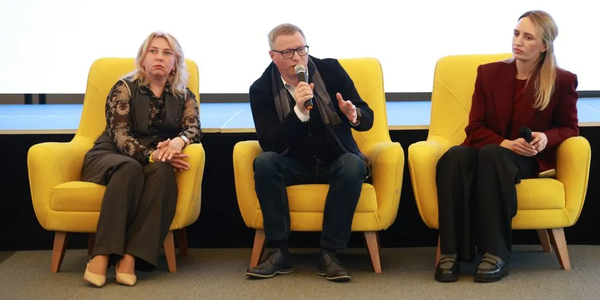
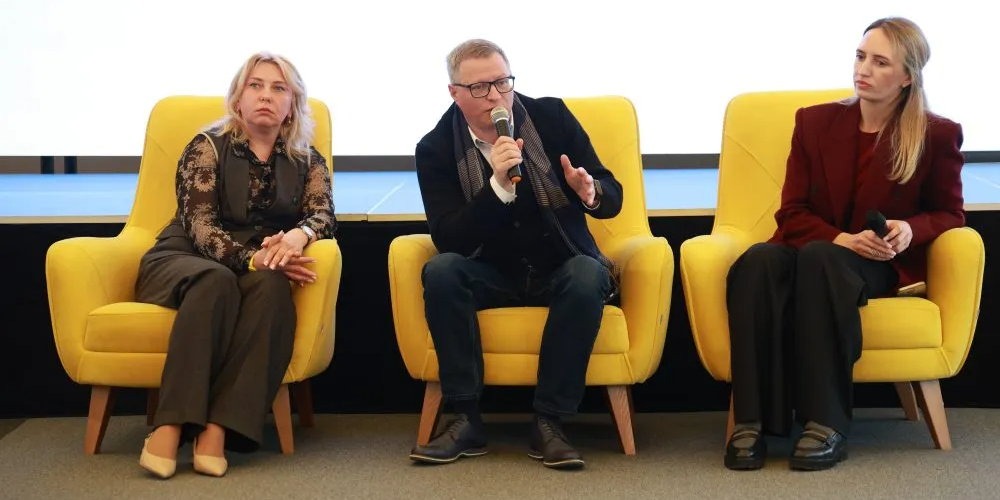
Valentyna Poltorak, DECIDE Project Manager and Deputy Director of the NGO DOCCU, highlighted this during the panel discussion ‘The Swiss-Ukrainian DECIDE Project – “Decentralisation for Improved Democratic Education”: Implementation of Phase 2’ at the All-Ukrainian Association of Communities (VAG) Summit in Khmelnytskyi region.
‘The main idea behind the reform of specialised senior secondary education is to give children the right to choose. We need to shift away from a model where a senior secondary student is forced to study 15 subjects at once, often getting bored in lessons that have no relevance to their future,’ says Valentyna Poltorak. In her words, the new system is about the individual student’s educational path: in Grade 10, students still study a broad core curriculum (70% compulsory subjects), but begin to explore their choices through 30% of optional courses. In Grade 12, the situation changes radically: students devote 70% of their time to subjects they have chosen themselves, with only 30% remaining as a core curriculum. Instead of scattering their attention across a dozen or so subjects, senior students will focus on 8–9 subjects, but study them deeper and more thoroughly.
The Swiss-Ukrainian DECIDE Project has been a reliable partner to communities in this process since 2020. The first phase has achieved impressive results:
- Partnership: covered 1,411 communities;
- Assistance: nearly 14,000 officials have undergone training;
- Impact: over a million children have benefited from the implemented educational initiatives.
The second phase of the Project (2025–2030) focuses on providing comprehensive support to 40 selected partner communities in eight regions of Ukraine. The Project offers support in a wide range of areas: from strategic planning and the digitalisation of education management to school nutrition reform and the development of inter-municipal cooperation. Expert consultative support groups for local governments have proved to be an effective tool, with their specialists having already visited around 600 communities nationwide.
A significant area of focus is the development of a career guidance system, in which direct partnerships with the business sector play a key role. Businesses, rather than teachers, will show children the real world of work through a network of hubs and career counsellors, which will be operational in 3,000 schools from 1 September. The experience of Brovary community, where the number of teenagers involved has risen from 50 to 5,000 in a year, demonstrates the effectiveness of this approach. When children see modern agricultural enterprises or manufacturing facilities, their horizons broaden, and in-demand technical specialisms become a priority in their choice of future career. A network of career guidance hubs has been established all over Ukraine at vocational education institutions: in Chernihiv, Lviv, Ivano-Frankivsk, Kremenchuk, Reshetylivka, and Savran. The hubs’ partners are major businesses: mining and processing plants, Ukrzaliznytsia, agricultural holdings, and light industry companies. Businesses, rather than teachers, are the ones showing children the real world of professions.
An interesting example: at the start of the pilot, most teenagers in one rural community dreamed of becoming prosecutors. After visits to local agricultural enterprises – businesses located literally across the road from the school and which the children had never visited before – the list of desired specialisations grew to 30, mainly agricultural and technical.
The national pilot scheme now covers 400 communities in 24 regions, and from 1 September, career counsellors will start working in 3,000 schools.
Serhii Yatskovskyi, DECIDE National Expert and Coordinator of Advisory Support to Local Governments in Implementing the Reform of Specialised Secondary Education, also noted during the Summit that the NUS reform should come as no surprise – it was launched back in 2017–2018 with the adoption of the Law “On Education” and took its final shape after 2020 following the adoption of the Law of Ukraine “On Complete General Secondary Education”, a significant portion of whose provisions will come into force on 1 September 2027. However, in order to prepare for this implementation, the Ministry of Education and Science has initiated a pilot for the implementation of the state standard for “specialised secondary education”.
From 1 September 2026, 150 communities will enter a three-year pilot. The full-scale launch for all is 1 September 2027. Ultimately, Ukraine will have around 2,000 academic lyceums and 591 vocational colleges.
Communities receive an educational subsidy from the state based on a formula that takes into account the number of students per class. According to preliminary calculations, for a lyceum to be financially viable and fully cover teachers’ salaries through state subsidies, the minimum number of Grade 10 students must range from 47 in rural communities to 78 in large cities. Parallel to this, the Ministry of Education is developing mechanisms to provide additional incentives for teachers, in particular the introduction of bonuses for teaching specifically in lyceum classes.
The implementation of the reform also requires a significant upgrade of the material and technical infrastructure. The state has already been investing systematically in this area: between 2023 and 2025, UAH 15.2 billion was allocated to the modernisation of school infrastructure – the equipping of laboratories, the procurement of modern equipment and school buses. Meanwhile, the participants in the discussion drew attention to the specific logistical needs of different regions. In particular, there is currently an urgent need for the procurement of small, manoeuvrable buses (up to 15 seats). Such vehicles are critically important for transportation of children in mountainous areas and frontline territories, where large vehicles cannot always operate effectively. The summit participants noted that the issue of school buses has not yet been resolved. The condition of the roads on which such transport will operate also causes concern.
Olha Khomenko, Deputy Head of the Nekhvoroshcha community in Poltava region, explained that the community has for several years been the de facto educational hub for four neighbouring communities in Poltava and Dnipropetrovsk regions and is preparing, under a cooperation agreement, to provide secondary education services (lyceum classes) for these four communities, including two from Dnipropetrovsk region with which they share a border. ‘Reform must not simply be adopted – it must be understood and worked on. Education is the community’s largest expenditure item and it affects every family,’ she said.
For her part, Uliana Tkachenko, Member of the Khmelnytskyi Regional Council, called for a broader view of the reform that goes beyond a purely school-based perspective, ‘We need to see the bigger picture – what jobs we can offer and the direction our country is taking.’
‘This is a unique opportunity for a new life – not to pursue a degree in Kyiv or Khmelnytskyi, but to see prospects here, in one’s own community,’ emphasised Ms Tkachenko.
In Khmelnytskyi region, the regional military administration has already approved a network of 61 potential lyceums. The councillor stressed the need for extensive awareness-raising work with parents and teachers, not only about the reform but also about the prospects Ukraine can offer young people at home.
Yana Brusentsova, DECIDE National Expert on Local Self-Government, emphasised that in those communities where the operation of a lyceum cannot be ensured, a tool provided for by legislation – cooperation between communities – can be used. Joint funding (maintenance) of such institutions by several communities is a realistic scenario. Our Project is ready to assist in organising such cooperation.
The reform of specialised education is a test of the communities’ capabilities. Local governments and the state should finally move from maintaining buildings to investing in the quality of education. The creation of high-quality academic lyceums is not merely a change of name; it is an opportunity for a child to choose their own path, to gain knowledge without private tutors, and to feel that quality education is available right here in Ukraine, rather than somewhere abroad. This process must not be halted. Only by combining the efforts of communities and the state can Ukrainian youth see their future right here.
DECIDE Project is implemented by the NGO DOCCU in partnership with Zurich University of Teacher Education – International, with the support of the Embassy of Switzerland in Ukraine
07 September 2026
Як може працювати депозитно-поворотна система: від європейського досвіду до української моделі
Як може працювати депозитно-поворотна система:...
Національний план управління відходами до 2033 року показує важливу статистику. В Україні працює близько 1500...
07 September 2026
UCORD Summer School kicks off in Uzhhorod: Why...
When air raid sirens sound daily in the region, a strategy easily seems like a luxury. First things first: restore...
04 September 2026
Training local specialists to avoid the need...
Hleiuvatska community in Dnipropetrovsk region is situated just 15 minutes from the city of Kryvyi Rih. For many,...
04 September 2026
“Educational Polissia 2026/27: We teach. We...
On 20 August, Zhytomyr hosted the August Forum “Educational Polissia 2026/27: We Teach. We Inspire. We Succeed”,...