City in ruins, community still standing: How Kupiansk fights for its future
Vitalii Saiapin, Chief of Affairs of the Executive Committee of the Kupiansk City Council, on how his community assembles drones, finds utility vehicles, and plans its own future
By Dmytro Syniak
After capturing the ruins of Avdiivka in February 2024, the russians failed to occupy any large localities. Therefore, the russian command turned its attention to Kupiansk, which seemed to be a relatively easy target, as it was situated just 40 km from the border. Besides, the occupation administration of Kharkiv region had been based there until September 2022, and the Mayor of Kupiansk, Hennadii Matsehora, had joined the occupying forces.
In September 2025, after a large-scale offensive, the russian General Staff once again reported the capture of “the second-largest city in Kharkiv region”. However, like most military operations carried out purely for propaganda purposes, the September offensive on Kupiansk turned into a spectacular failure: more than 200 invaders ended up surrounded in the city centre and in the devastated Yuvileinyi district. Having issued the order typical for the russian army to “hold until the last soldier”, the command basically left its soldiers to the mercy of their fate, only occasionally supplying them with food and water via drones. Ultimately, the Ukrainian Armed Forces, along with hunger, thirst and disease, finally defeated the uninvited russian soldiers.
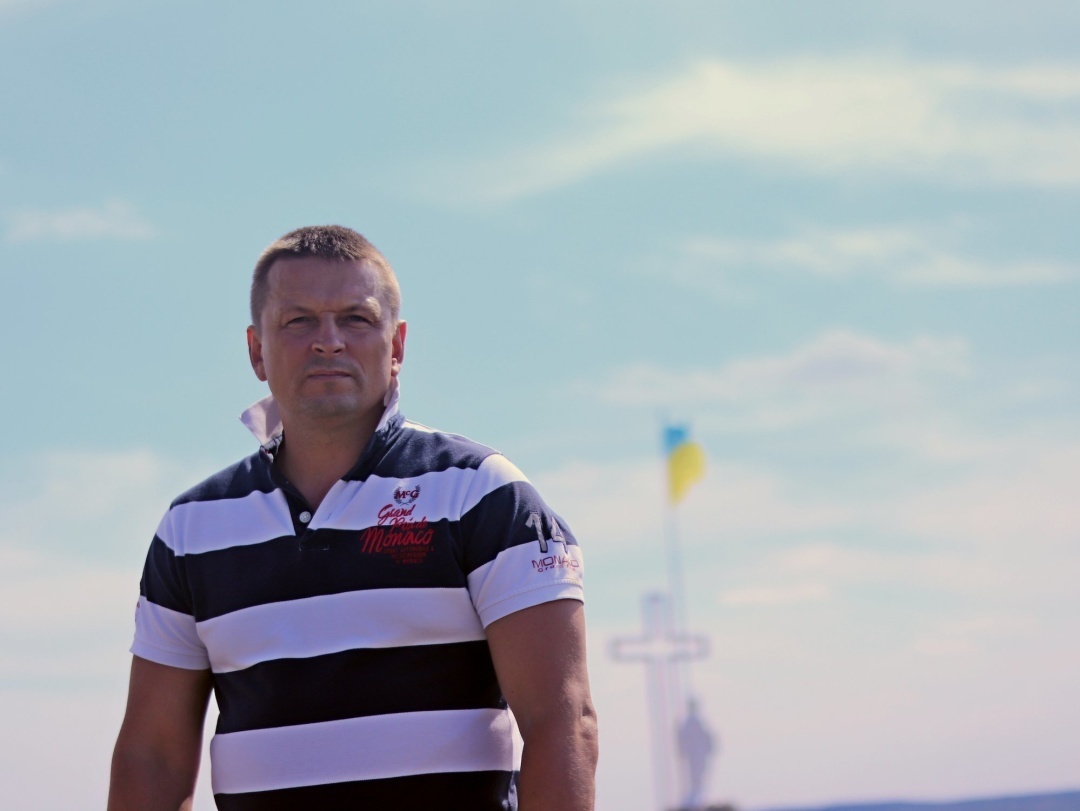
Such is the life and daily fight of Kupiansk community amidst constant hostilities. Despite this, it continues to create new and innovative approaches, supports its own residents, and successfully secures international aid. Vitalii Saiapin, Chief of Affairs of the Executive Committee of the Kupiansk City Council, describes the community’s life on the front line. In 2022, he spent four months in a russian prison and was miraculously released.
Фото 1. Vitalii Saiapin, Chief of Affairs of the Executive Comm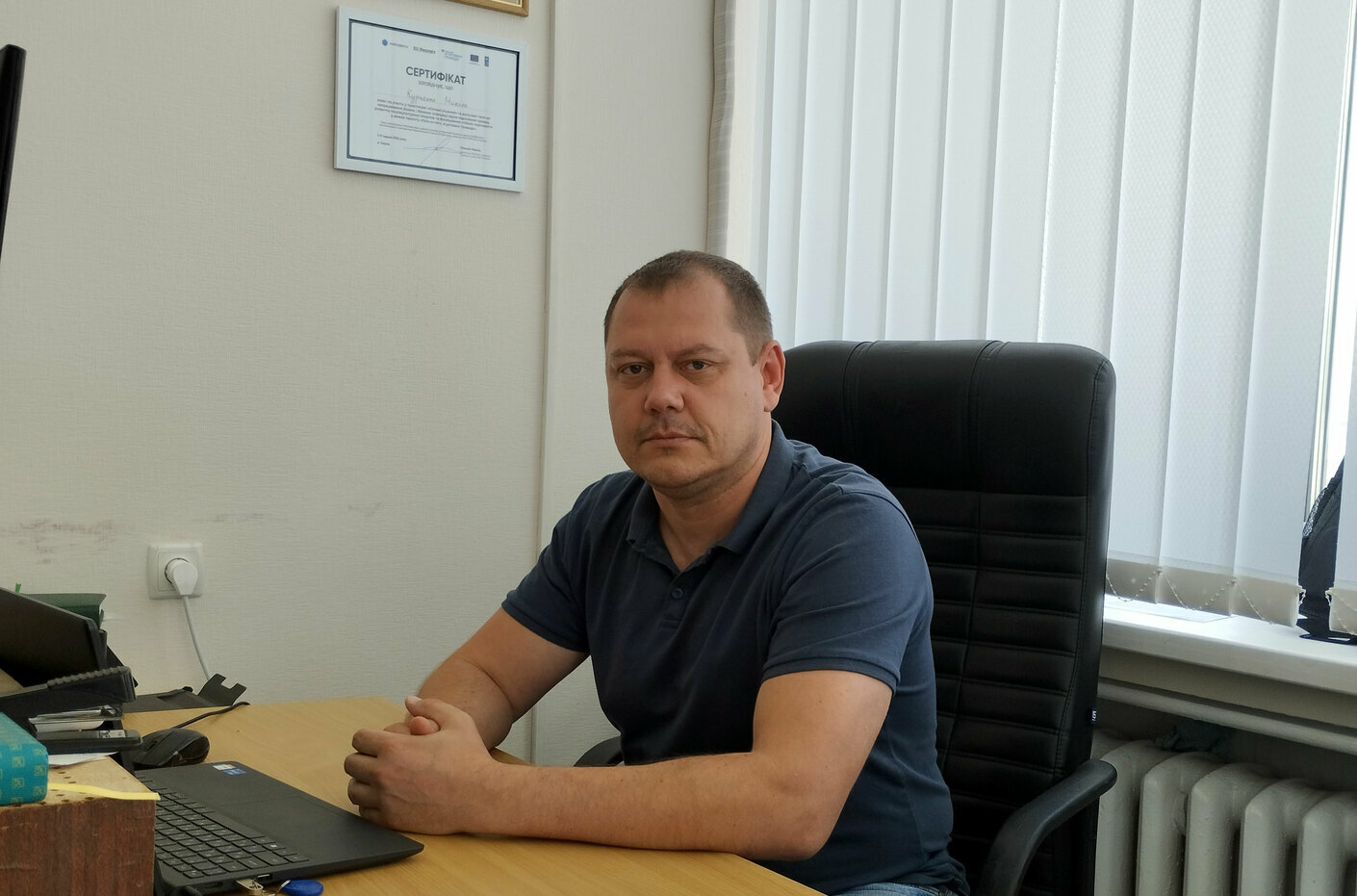 ittee of the Kupiansk City Council
Kupiansk has been destroyed, but not occupied
In one of his interviews, Andrii Besedin, Head of the Military Administration, claimed that Kupiansk had been completely destroyed. What does that literally mean? What does the city look like now?
What can I say? The city lies in ruins. All infrastructure has been destroyed. Utility services have not been provided in the city's left-bank districts since October 2024, and in the right-bank districts since June 2025. There are no intact buildings; some high-rise apartment blocks have been reduced to their foundations. The whole area is mined, russian drones are everywhere, and russian sabotage groups occasionally enter the city. Living there is impossible. On the other hand, most of the buildings have not been destroyed but burnt down. Some of them may still be restored in the future. But those where the fire has caused the collapse of stairwells and floor slabs will have to be demolished.
What part of the community is occupied? The DeepState map paints a rather bleak picture.
None at all. Our community is in a zone of active hostilities, where some parts may constantly shift from one side to the other. Well, DeepState is not an official map from the General Staff. It is the result of a community initiative, which does not always reflect the reality. Well, I can tell you officially: there are no russian troops on the territory of Kupiansk community (Not counting saboteurs). Yes, the russians are putting pressure on Kivsharivka and Kupiansk-Vuzlovyi, as well as on the left-bank part of the city, where there are the ruins of the sugar factory. However, this is not an occupation.
At the end of April, Andrii Besedin said in an interview with Suspilne that there are still around four hundred people living in Kupiansk. What can you say about their current situation? Are there still people on the left bank of the Oskol, which is the most troubled part of the city?
Indeed, there are still residents in the city, and representatives of the Defence Forces are helping them to leave – where possible. Almost every day, someone leaves or is evacuated, taking advantage of the designated hours of ceasefire. For example, 17 people were evacuated all at once not long ago. No one can say for certain exactly how many are left. The fact is that, on the front line – however strange it may sound – a certain kind of migration is taking place. What do I mean by that? Well, in a particular village, the russians burnt down an aged woman’s house using artillery. She survived in her cellar, but when her food ran out, she headed for the big city in the hope of finding food there or a way to safety. So there are people constantly coming into and leaving the city. In fact, we have no idea who these people are until they are evacuated from the city.
How many enemy attacks were there in Kupiansk, for example, in May 2026?
This is impossible to estimate, as there is constant shelling that never stops, not even for an hour. We are under fire day and night. Our community comprises 12 localities: besides Kupiansk, there are two other urban-type settlements and nine villages. As far as I know, despite this relentless shelling, there are still about 100 people left in the villages. Of course, this refers to the villages closer to the territory controlled by the Ukrainian army. But even volunteers no longer go there. Who is left there? Either elderly people, or those hoping for the russian army to return, or those trying to avoid conscription. To be honest, we ourselves do not really understand what keeps people there. Because practically all the buildings have been destroyed, there is no food, and it is extremely dangerous everywhere. It is impossible not only to provide medical services there, for example – it is impossible even to deliver water there.
The whole of Ukraine followed with great interest the news about the russians being surrounded in Kupiansk and the effective return of control over the city in December 2025. What is the current situation with the russians who are surrounded in the Yuvileinyi neighbourhood and near the hospital?
The remaining russian troops in Kupiansk have long been cut off from any supplies by land. If anything was delivered to them at all, it was by drones. Based on our sources, the russians have long since left Yuvileinyi. There may still be a few scattered soldiers in the city centre, so to speak. In any case, the Defence Forces are in control of the situation. There can be no question of the aggressor country exercising any control over Kupiansk.
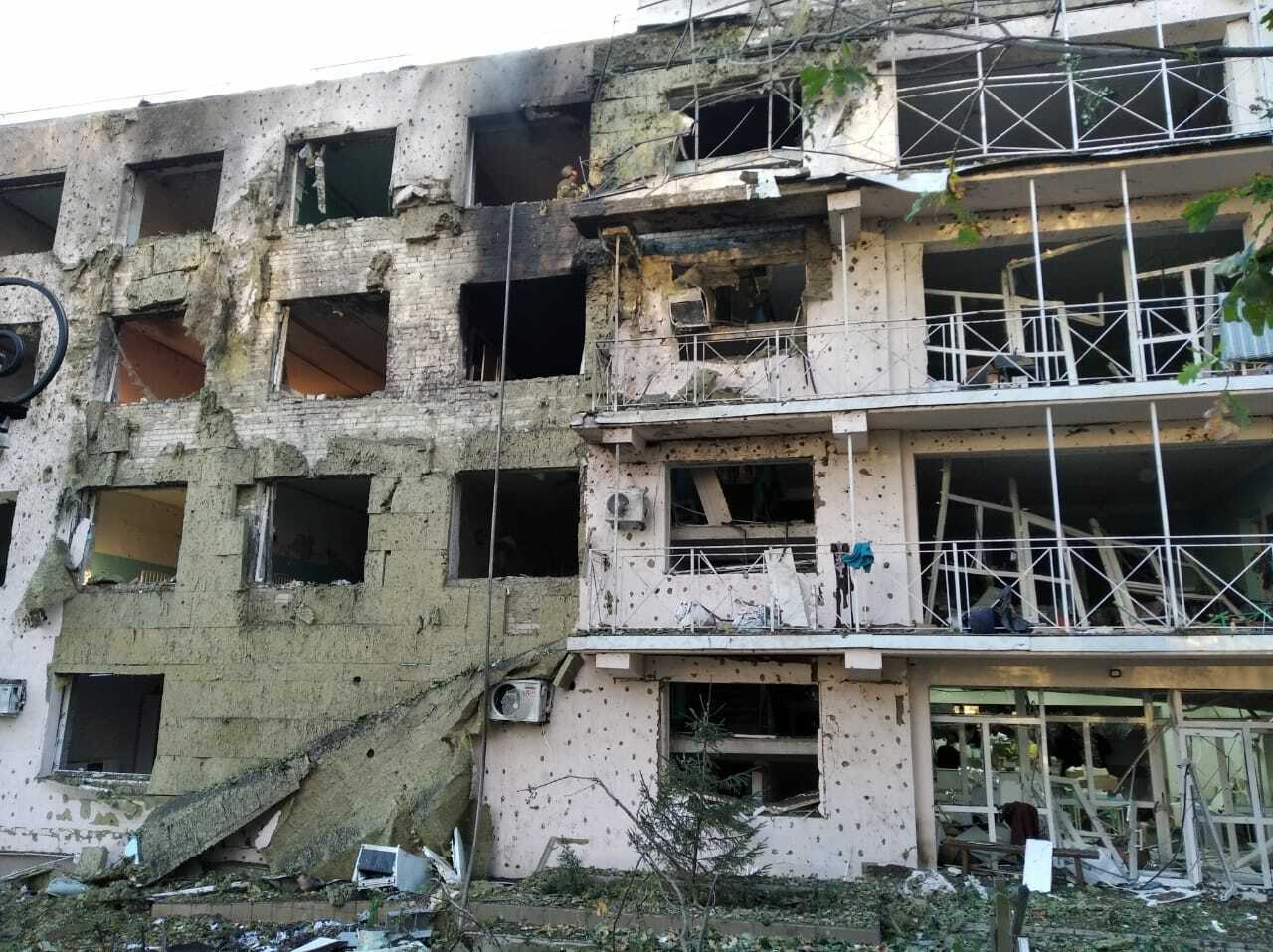
Central City Hospital after the shelling on 3 October 2022
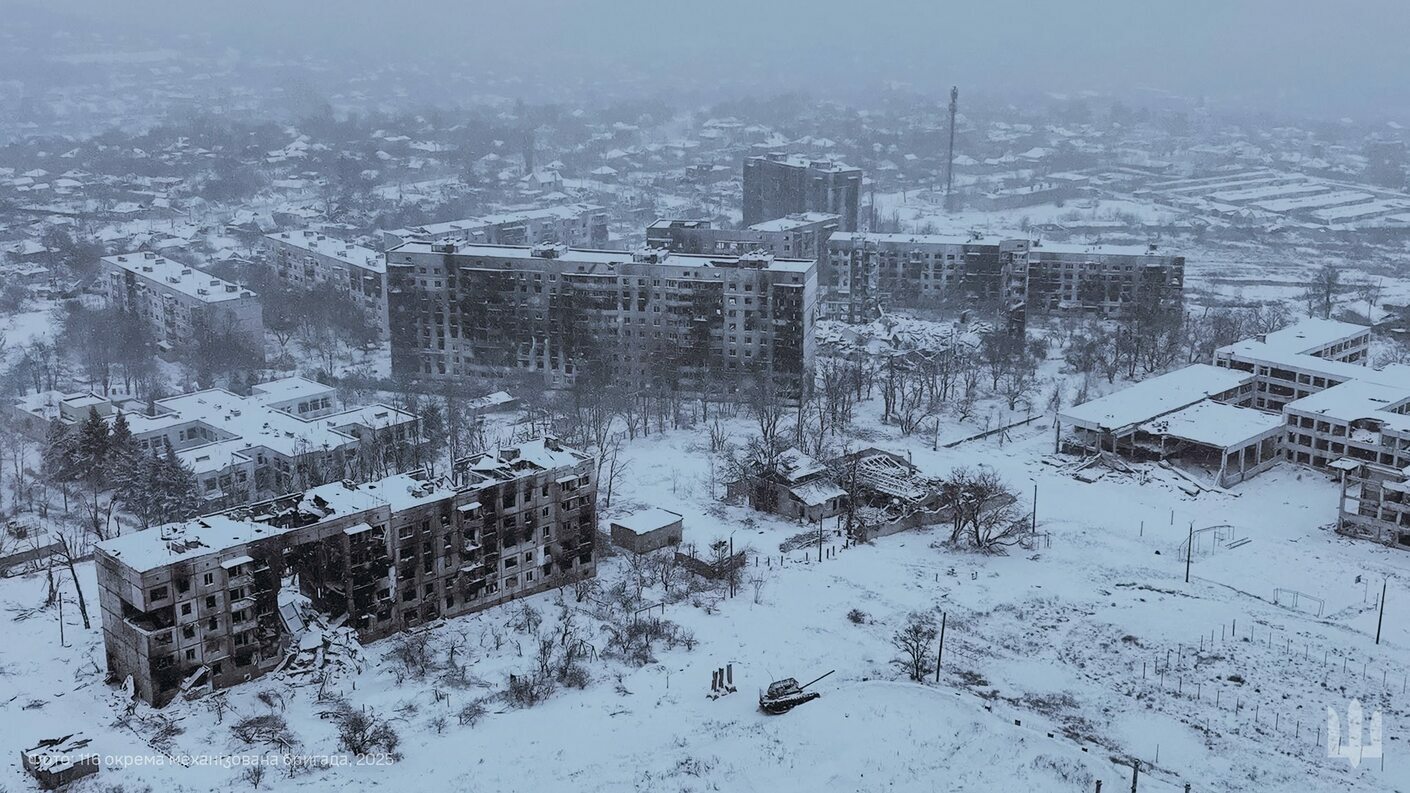
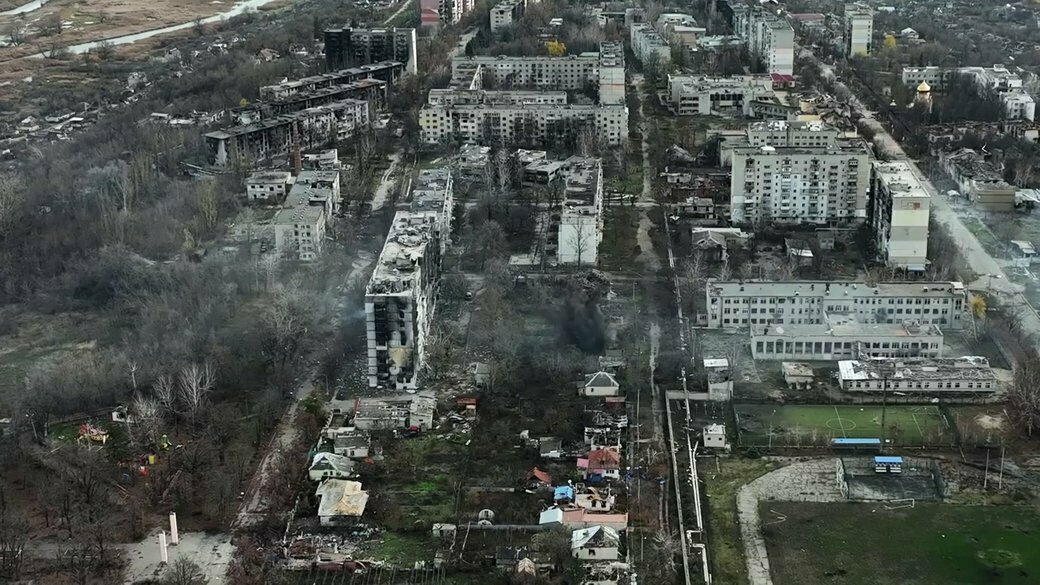
Ruins of Kupiansk
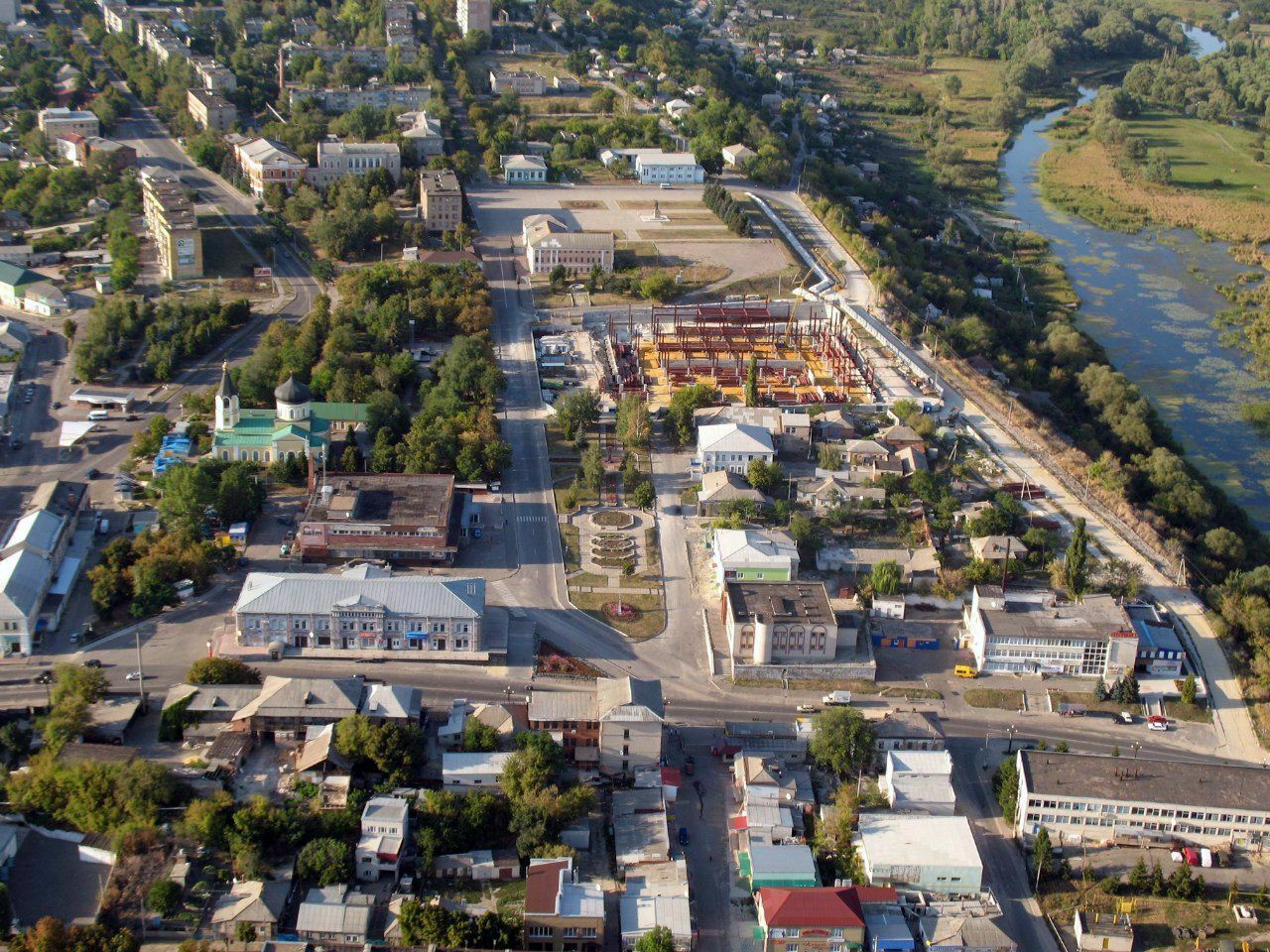
Kupiansk before 2022
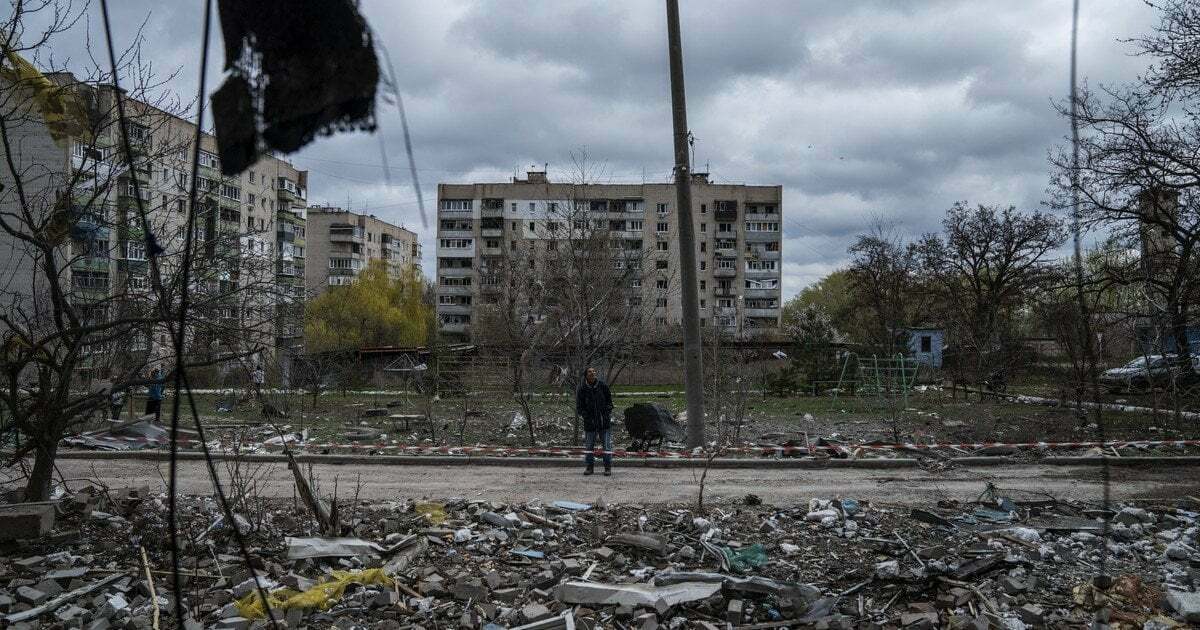
Kupiansk-2026
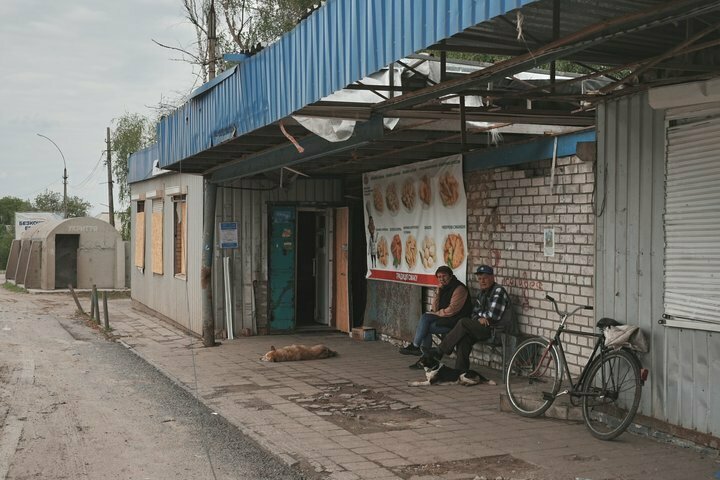
People at a bus stop in Kupiansk, 8 May 2025. Photo: Suspilne Kharkiv/Viktoriia Yakymenko
‘The enemy has gathered a large number of its units from the unmanned systems forces around Kupiansk. There is the 68th russian Division, the Sixth Army’s drone systems regiment, and other enemy units near Lyman-I. They are primarily attempting to use drones to isolate the combat zone and inflict unacceptable losses on us, in close coordination with intensive artillery fire. Their aim is to breach our front line and recapture Kupiansk, as happened in 2022.
The enemy is fighting to establish a stronghold on the right bank of the Oskol. They are trying to hold it, increase their forces there, and are attempting to bring reinforcements to Kupiansk at every opportunity, as soon as the weather permits and limits drone activity.
The fighting in this sector is therefore extremely fierce. The terrain here provides excellent cover for the enemy’s infantry, and the enemy has deployed significant forces to combat and counter our drones. However, we are managing to repel the enemy quite effectively and hold our battle formations.’
Yurii Butusov, Commander of the UAV Platoon, 13th Khartiia Operational Brigade of the National Guard of Ukraine
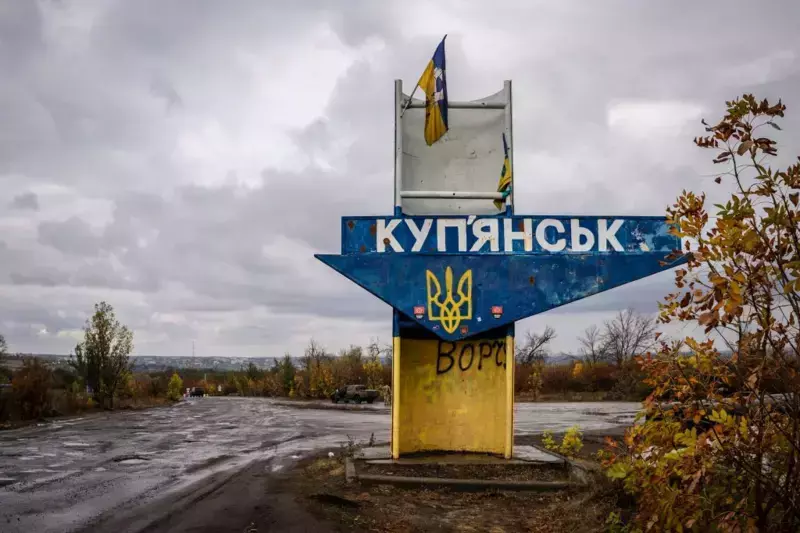
Фото 24. Road to Kupiansk. Fall 2025
7 months of occupation
Kupiansk community lived under occupation from 24 February to 17 September 2022. What is known about the crimes of the occupiers during this period?
We have a lot of information about this: about abductions, abuse, and torture… There was looting, theft, and robbery… Law enforcement agencies document all these crimes almost every day, and there is no end in sight. New victims keep coming, and new incidents continue to emerge. I myself, actually, spent four months in the occupiers’ prison. When the Armed Forces of Ukraine liberated Kupiansk, the russians fled so quickly that they simply abandoned the prisoners to their fate and ran away. After a day without food or water, our people managed to use a bench to break through the double bars on the window of one of the cells and get out. However, they did not flee after that; instead, risking their lives, they went to look for the keys to the other cells. When they found them, they set all the prisoners free.
Please describe your communication with the occupying forces during your detention. Did they use physical force against you? What could they want from the chief of affairs of the city council?
The russians suspected everyone of collaborating with the Ukrainian Armed Forces and the Security Service of Ukraine. They kept pushing and asking: ‘Who are your supervisors?’, ‘Who did you pass information to?’ But what information could I possibly have passed on? I had no military intelligence whatsoever about russian troops. There were also some russians who accused me of dealing in drugs or weapons. It seemed that as soon as they saw me, they would level whatever accusation first came to mind. And they would beat a confession out of me – they would even burn it out of me. In fact, I ended up behind bars because I refused to cooperate with the occupying administration.
What helped you survive in captivity and cope with everything?
I had no choice. What else could I do but stand strong? Although this may sound a bit strange, one source of great inspiration was the propaganda newspapers they handed out to us, such as “Komsomolskaya Pravda”, “Izvestia”, “Kharkiv Z” and others. We quickly learnt to read between the lines. For example, from a news report about the “almost complete capture of Kharkiv”, we realised that the russians had not even reached the city yet. If they had actually invaded it, there would have been some news about meetings of the new administration and so on. To be honest, it was quite funny reading all those propaganda lies. But the feeling that its authors had something to hide gave us hope. And the fact that we were not mistaken in our assumptions was confirmed by new prisoners arriving “from the outside”. However, enough about prison life. Even now, it is hard for me to look back on it.
In March 2022, the occupying forces abducted Mykola Maslii, the organiser of a pro-Ukrainian rally, a city councillor and a veteran of the war in Donbas. Where is he now? Is there any news of him?
No, unfortunately, there is no news. When a rally in support of Ukraine was held in Kupiansk on 1 March 2022, Mykola Maslii was one of the participants. The rally was suppressed by units of the russian armed forces, who used tear gas and smoke grenades to disperse the crowd. Activists were later arrested. That was when Mykola Maslii went missing. There are all sorts of rumours going round, but I prefer not to spread them.
Mykola Maslii, the organiser of a pro-Ukrainian rally in 2022, a member of the Kupiansk City Council and a veteran of the war in Donbas
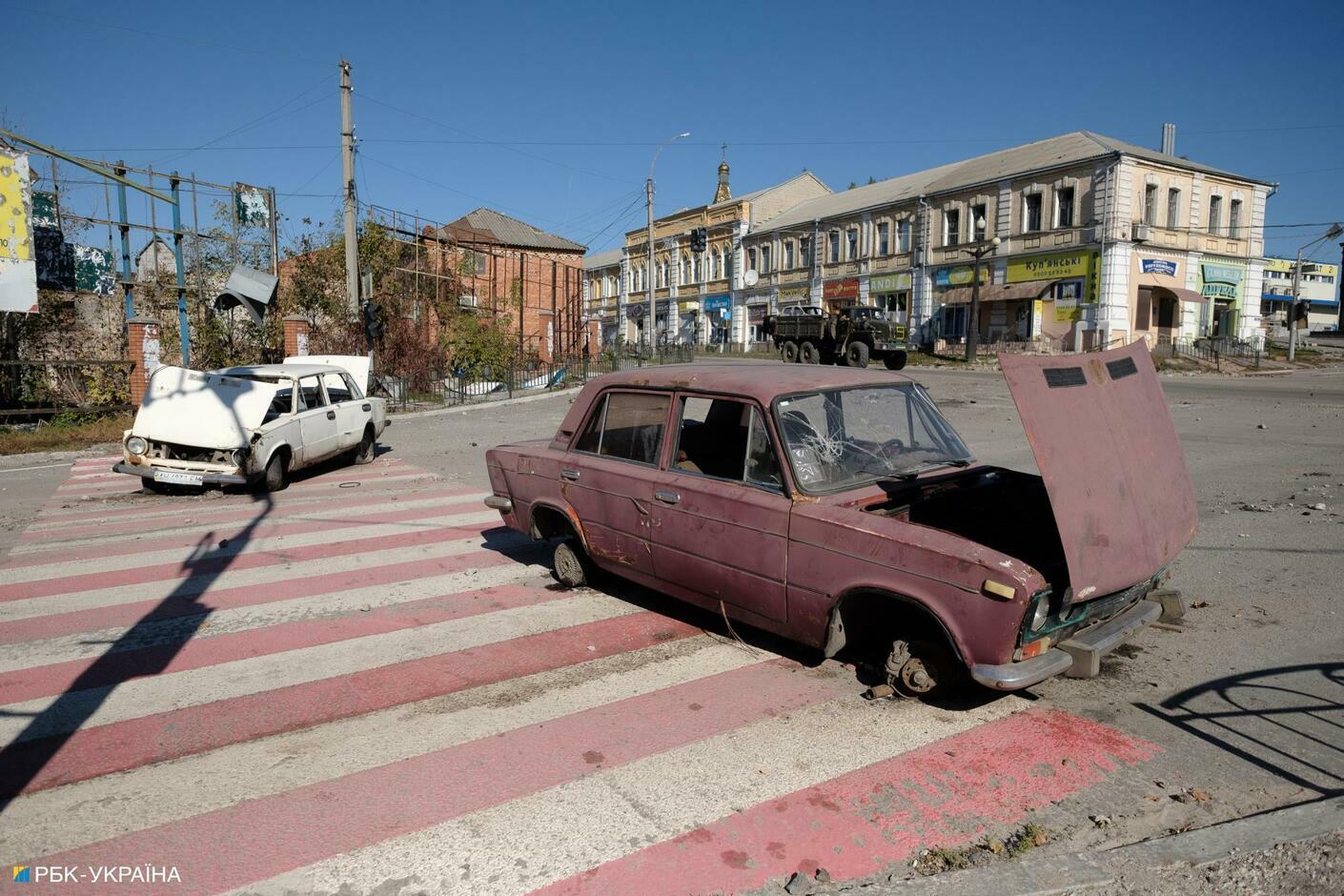
Kupiansk after the russian occupation in the fall of 2022
Lessons learned from the burnt-out State Technical Registration Office
What lessons from Kupiansk, relating to the hostilities and the occupation, could other communities learn from?
For example, the fact that every community should have emergency response plans. Before the full-scale invasion, we had never taken this seriously, and that was a major mistake on our part. Another lesson: absolutely all documents must be digitised, starting with the archives. It is also necessary to move physical collections to a relatively safe location and relocate the relevant staff there. Sadly, we failed to do this in time, and one day, as a result of a russian mine strike, our State Technical Registration Office was completely burnt down along with all the documents. Although this happened long before the military administration was established, it is now forced to deal with thousands of desperate requests from people trying to prove ownership of their property. This means the community’s entire archive of documents should be digitised as quickly as possible, and people should be given guidance on registering their property. A lot of this work is now done through “Diya”.
A year ago, the Kupiansk Military Administration reported that the residents of the community had been paid over UAH 350 million in compensation for the loss of their homes. How much has this figure risen now? How easy or difficult is it to receive these payments, given the destruction of the State Technical Registration Office?
There are two types of payments: for damaged homes and for destroyed homes. At present, the programme for payments for damaged homes is not in place, as this is a requirement of the Cabinet of Ministers: nothing is to be rebuilt in the active combat zone. We are therefore focusing on providing compensation for destroyed homes. There are some nuances and certain difficulties, but we are managing.
What exactly are these difficulties?
Inspections should precede the payment of compensation. In other words, the commission has to visit the site and verify that the specific property has been destroyed and cannot be restored. However, the community is located in an area of active hostilities, so it is impossible to access many places. Last July, the Government adopted Resolution No. 815, which authorised remote inspections of properties – using satellite imagery or video footage from drones. For private houses, this usually works well, as it is generally immediately apparent whether a house can be restored or not. But what about burnt-out multi-storey buildings? Can they be restored or not, if the structural frames are still standing? The Government has not developed clear criteria for determining whether such housing can be considered destroyed, and as a result we receive many complaints. Formally, it appears that people still have a home. We are in constant contact with the Ministry for Development of Communities and Territories of Ukraine on all these issues.
How many certificates have been issued under the “eVidnovlennya” programme?
Roughly 340. Of course, not a lot, but little by little the numbers are increasing. Just yesterday, the commission held a meeting and recognised a further four blocks of flats as having been destroyed. Their former residents will now be able to receive certificates. In total, there are 55,000 residents and 17,000 addresses. So far, 4,500 applications have been submitted, which is a quarter of the total. This is usually because people are having problems registering their property rights, as well as due to the destruction of documents held by the State Technical Registration Office. However, we are trying to resolve all these issues, so I think reaching 13,000 submitted applications is entirely realistic.
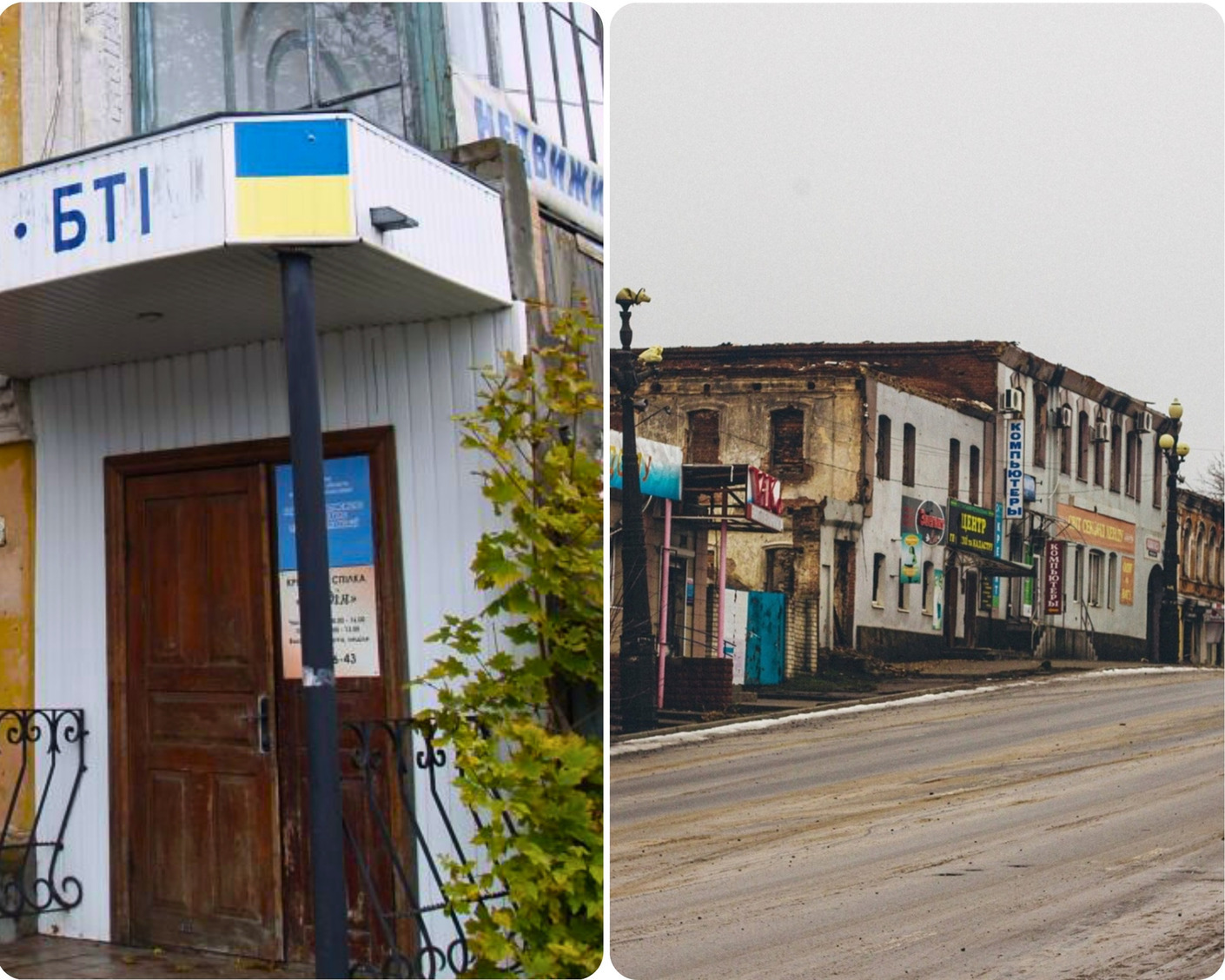
Kupiansk State Technical Registration Office before the full-scale invasion …
. … and the remains of it after the shelling in 2022
Military administration and elements of democracy
This year marks four years since the Kupiansk Military Administration was set up. You are one of the leaders of the city council. What is your view on the loss of the real power by the city council? Is this a positive or negative?
The military administration, despite all the circumstances, is a temporary body set up in communities where city councils, mayors, or executive committees cannot perform the functions entrusted to them. In other words, it is not a universal solution. If a city council operates smoothly and efficiently, it is possible to manage without a military administration, and there are such cases. However, as the mayor and some councillors in Kupiansk joined the enemy during the occupation, the setting up of a military administration was inevitable. Indeed, Andrii Besedin, Head of the Military Administration, currently combines the powers of the city council, the mayor, and the executive committee. But there is one important detail: the staff of the military administration consists of only a few people. Therefore, the main workload falls on the executive committee, where I have been working since 2020, as well as on the different departments of the city council, which, of course, are now subordinate to the administration.
To what extent, given the absolute authority of the head of the military administration, is the community involved in making decisions?
Here, I should point out that we do not currently have a community in the usual sense of the word. Active hostilities are ongoing in our area, and a mandatory evacuation was declared back in 2023. As a result, our entire administrative team is now based in Kharkiv. Under these circumstances, all communication with residents takes place online or at our hub. However, we still apply, so to speak, democratic elements of governance wherever we can. Just recently, we held public consultations on the decolonisation of place names – via our website and social media. Over the years of the great war, we have also developed effective systems for online voting, petitions, citizens’ appeals and so on. Besides, we are always open to any comments and suggestions at our humanitarian hub. We opened it in Kharkiv after discovering (through the distribution of humanitarian aid) that more than 11 out of 53,000 of our residents currently live in this city or nearby.
Please share with us some details about a very interesting initiative by the Kupiansk Military Administration – the “Kupiansk Drone” programme. How did this idea come about, and what are the results of the programme?
It was first created to support the troops fighting on our front, the Kupiansk sector. The programme’s second aim is to provide our people with work. The third is to remind them that they are Ukrainians and have a duty to contribute to the defence of the state. The fourth aim is to provide people with specialist military knowledge, which, given our circumstances, is by no means superfluous. So, what is the “Kupiansk Drone” programme? People register on a dedicated website and, if they pass all the checks, receive the parts needed to assemble drones. Anyone can do this wherever they like: in a garage, in a hallway, in a shed... Naturally, people are not given any ammunition; this is fitted to the drones later by the military. When we receive the assembled drones, our specialist tests them and, if everything is in order, the assembler receives payment for their work. This money comes mainly from sponsors, who can donate via the same website where the assemblers register. Since the launch of the platform, over 200 people have assembled 2,349 drones. Here is another interesting figure that speaks volumes about our patriotism: over the four years of the war, staff at the Kupiansk City Military Administration, the Executive Bodies of the Council and municipal utility companies have donated UAH 14.1 million to support the Ukrainian Defence Forces. By agreement, we all donate one day’s wages to the military every month. It may not seem like much, but look at the figure we have reached over four years.
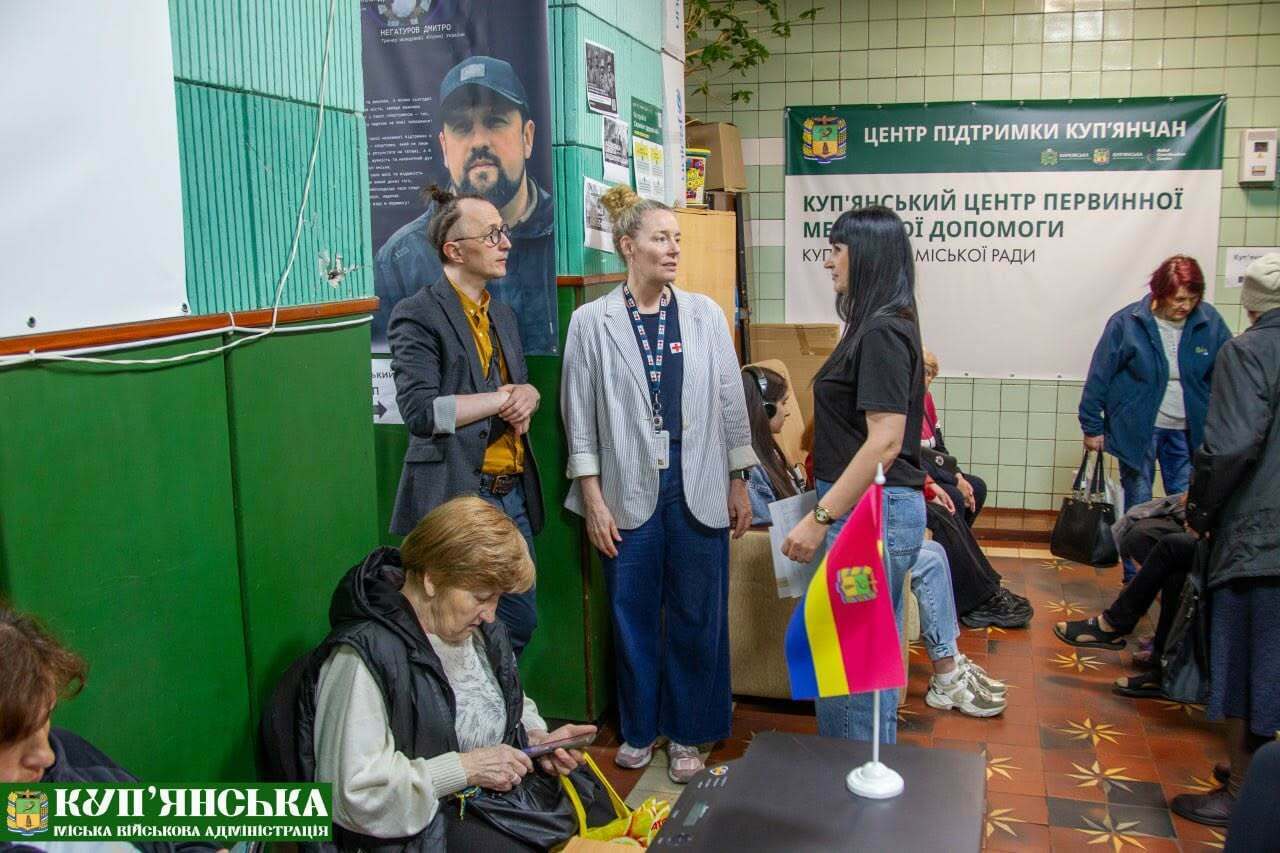
At the Kupiansk hub
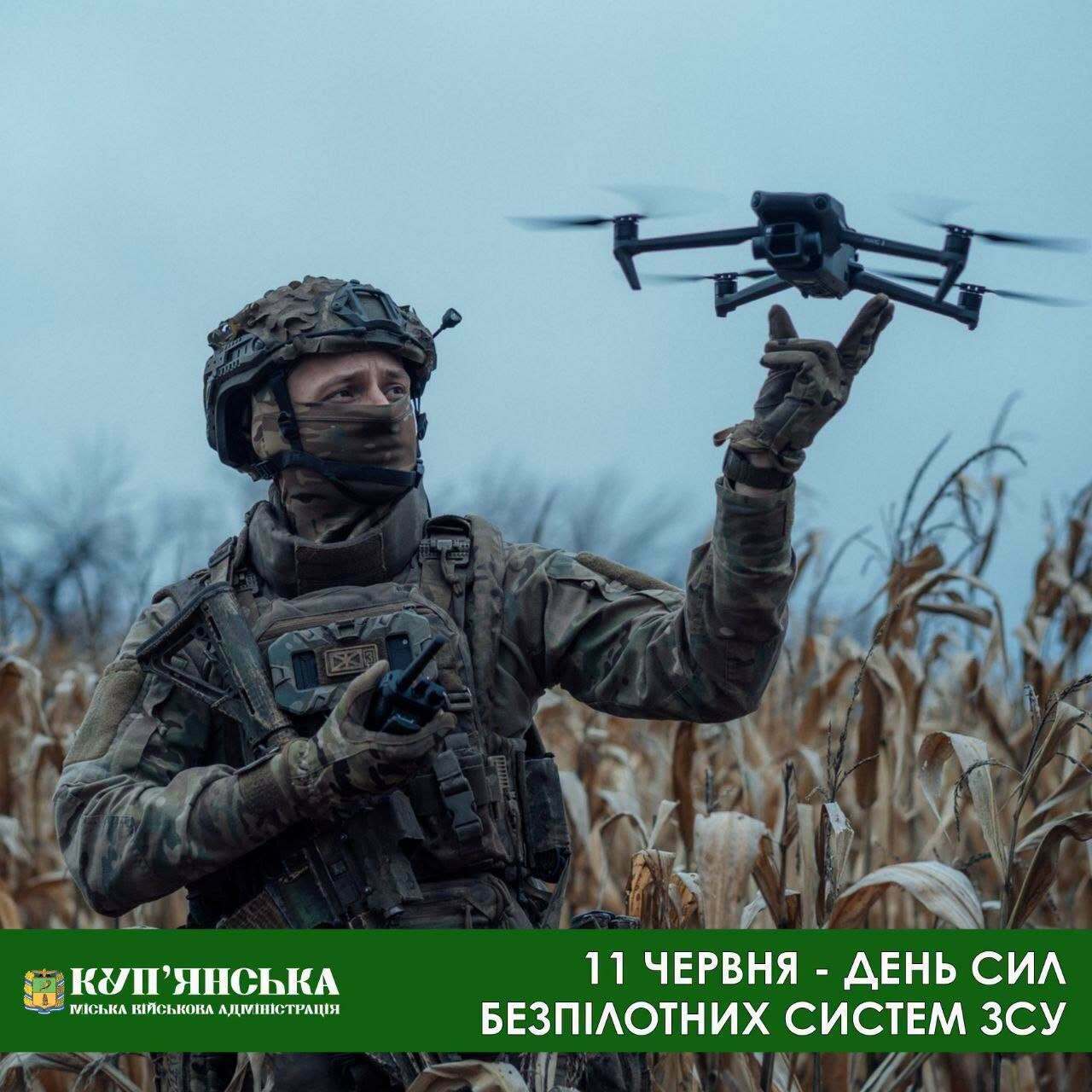
Since the launch of the “Kupiansk Drone” platform, more than 200 people have assembled 2,349 drones – funded by the military administration and sponsors
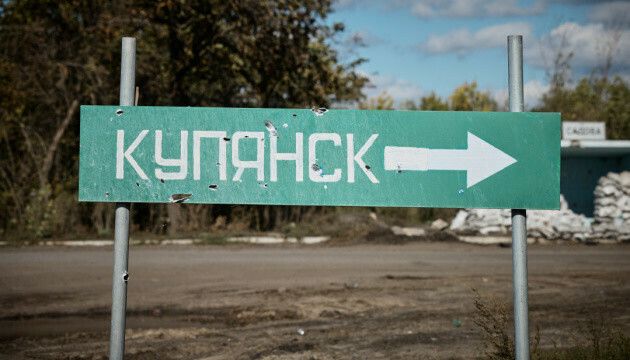
The “Kupiansk” sign, shot through with bullets and shrapnel. Life in the city is now impossible
On the Coalition to Support Kupiansk
Some time ago, Head of the Kupiansk City Military Administration initiated another interesting project – the creation of the so-called Coalition to Support Kupiansk. Andrii Besedin recently wrote on his Facebook page that the Canadian city of Windsor had joined this coalition. Could you tell us more about this coalition and how you managed to get the Canadians interested?
Basically, the Coalition is a network of twin cities that support us. Under the “Shoulder-to-Shoulder: Cohesive Communities” national project alone, we have 12 such cities. And then there are cities in Poland, Canada, the US… When you have not just friends all over the world, but a whole network of partners, you need to coordinate their efforts. Thanks to the Coalition, we can come together and decide who can help with what, and who can tackle which problem. We primarily direct the efforts of our partners towards helping the soldiers fighting on our front line. Thanks to the Coalition, they have already received a considerable number of drones, generators, batteries, office equipment, building materials and so on. Another area of cooperation is helping our residents: humanitarian aid, household cleaning products, children’s healthcare, transport… After the de-occupation in the fall of 2022, we had no municipal vehicles whatsoever – not a single one! The russians stole everything, dismantled it, and destroyed it all. All that was left were shovels and a broom. And now we even have buses and a garbage truck, which are currently in use in the neighbouring communities.
What communities are your partners in the “Shoulder to Shoulder: Cohesive Communities” project? Are you satisfied with the cooperation?
We are very satisfied. Our partners are large cities such as Poltava, Lviv, Rivne, Chernivtsi, and Ivano-Frankivsk. In fact, we are currently taking children to Ivano-Frankivsk for a health retreat and to take part in sports competitions. Those communities that are unable to provide us with any substantial material support, for example, help to raise the professional qualifications of our teachers. That is important too. So, “Shoulder-to-Shoulder” does work.
Tell us about the Support Centre for Residents of Kupiansk in Kharkiv. How does it help people?
It is literally a space that brings together the provision of humanitarian, social, legal assistance, and administrative services. For example, our residents have access to a laundress and a hairdresser there, who do not charge them a penny. Children can also gather there for celebrations, and veterans – or indeed anyone – can come to discuss any issues they may have.
What are the main expenditure lines for the community at present, and how is its budget funded?
The main expenditure line is support for the Armed Forces of Ukraine. This year alone, we have transferred UAH 82 million to different military units. In other words, we have allocated as much as 44% of our budget to the Armed Forces of Ukraine, which is the highest percentage in the whole of Ukraine. The second-largest expenditure is the implementation of local programmes, amongst which programmes providing assistance to military personnel – veterans, the wounded, those who have returned from captivity, and so on – are the most important. The three relocated utility companies currently in operation also require funding. The budget is funded by taxes paid by the relocated utility companies and by state subsidies.
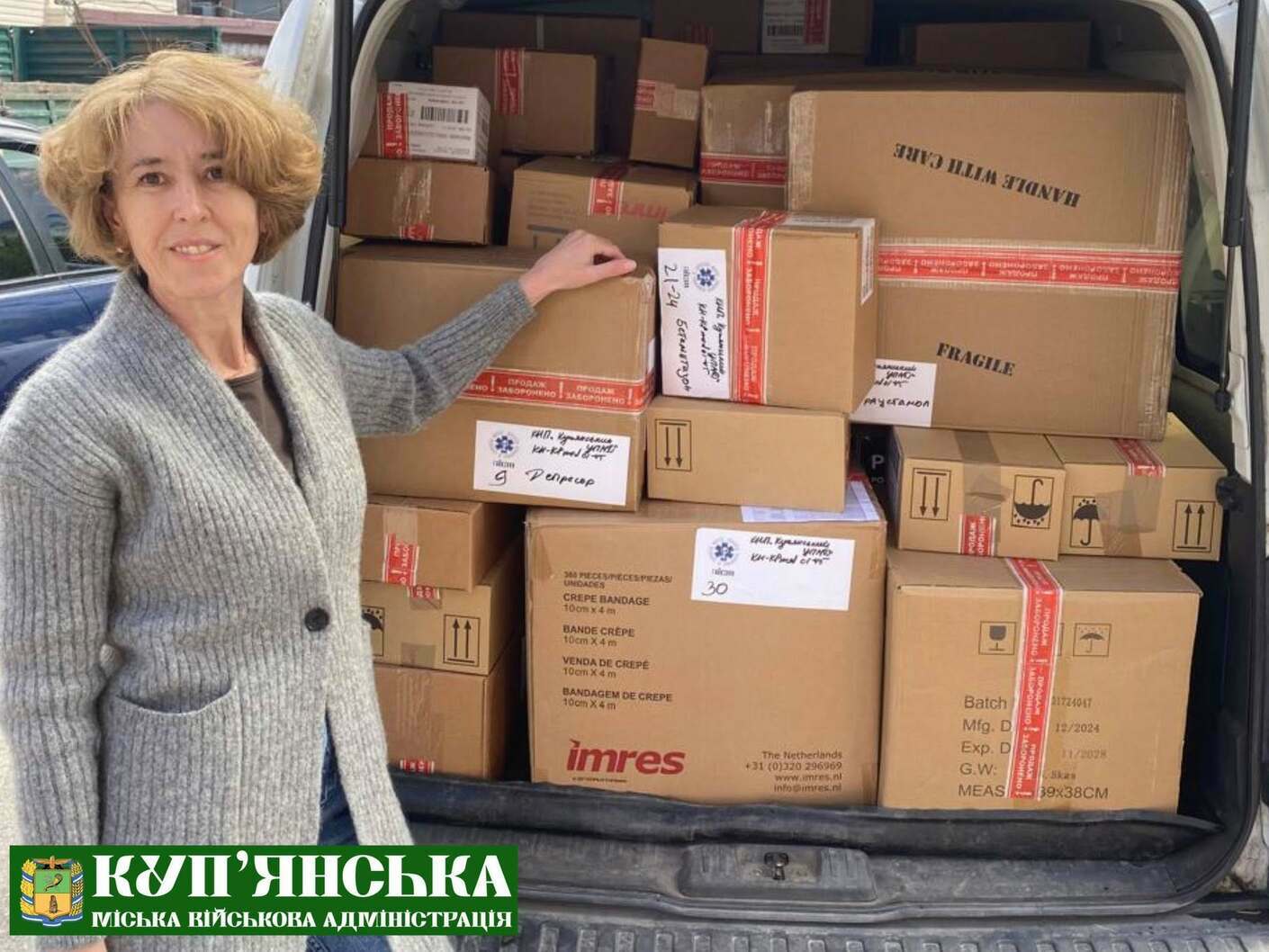
A humanitarian shipment from “AISM Ukraine” recently arrived at the Kupiansk Medical Centre: antipyretics, painkillers, antibiotics, metabolic drugs, medical supplies, personal hygiene products, and portable power stations and heaters
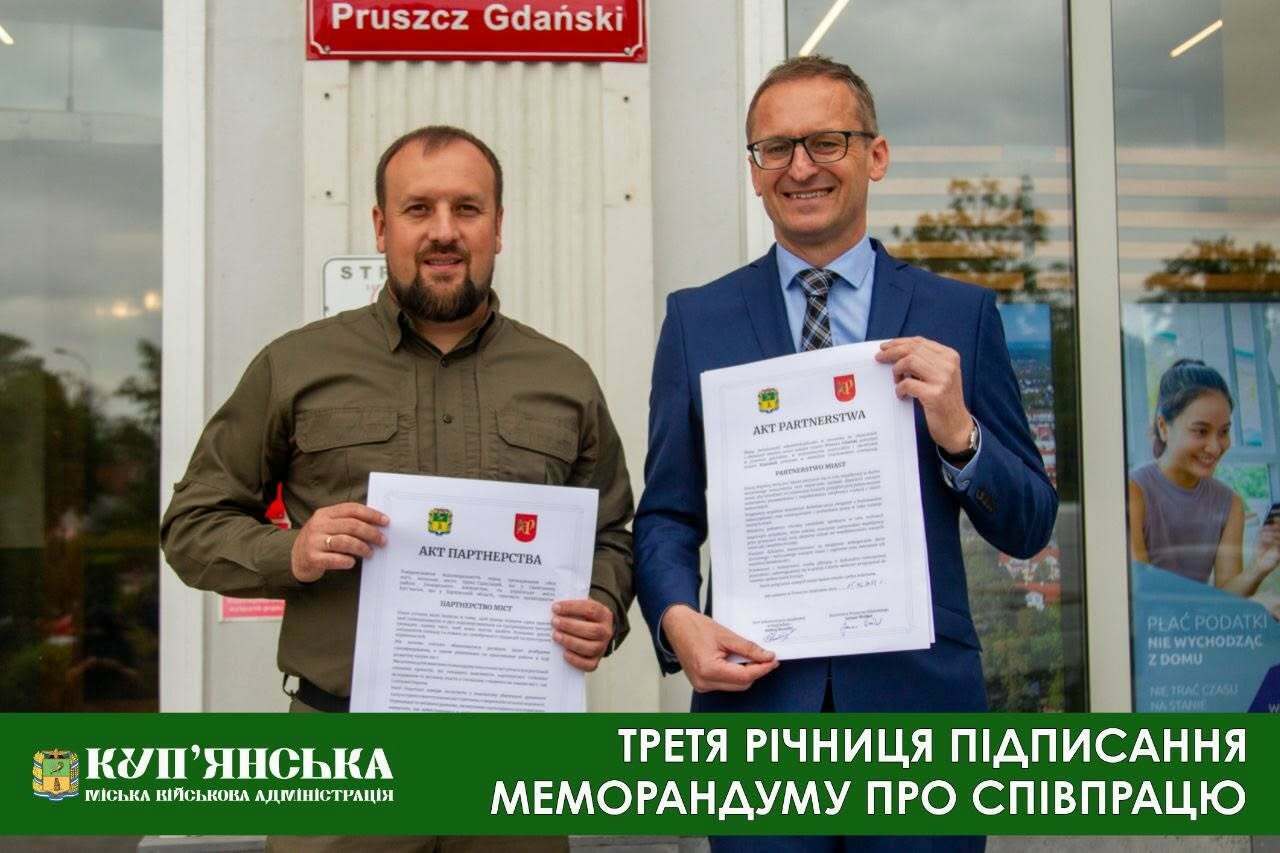
The third anniversary of the signing of the Memorandum of Cooperation with Pruszcz Gdański. On the right – Mayor Janusz Wróbel; on the left – Andrii Besedin, Head of the Kupiansk Military Administration
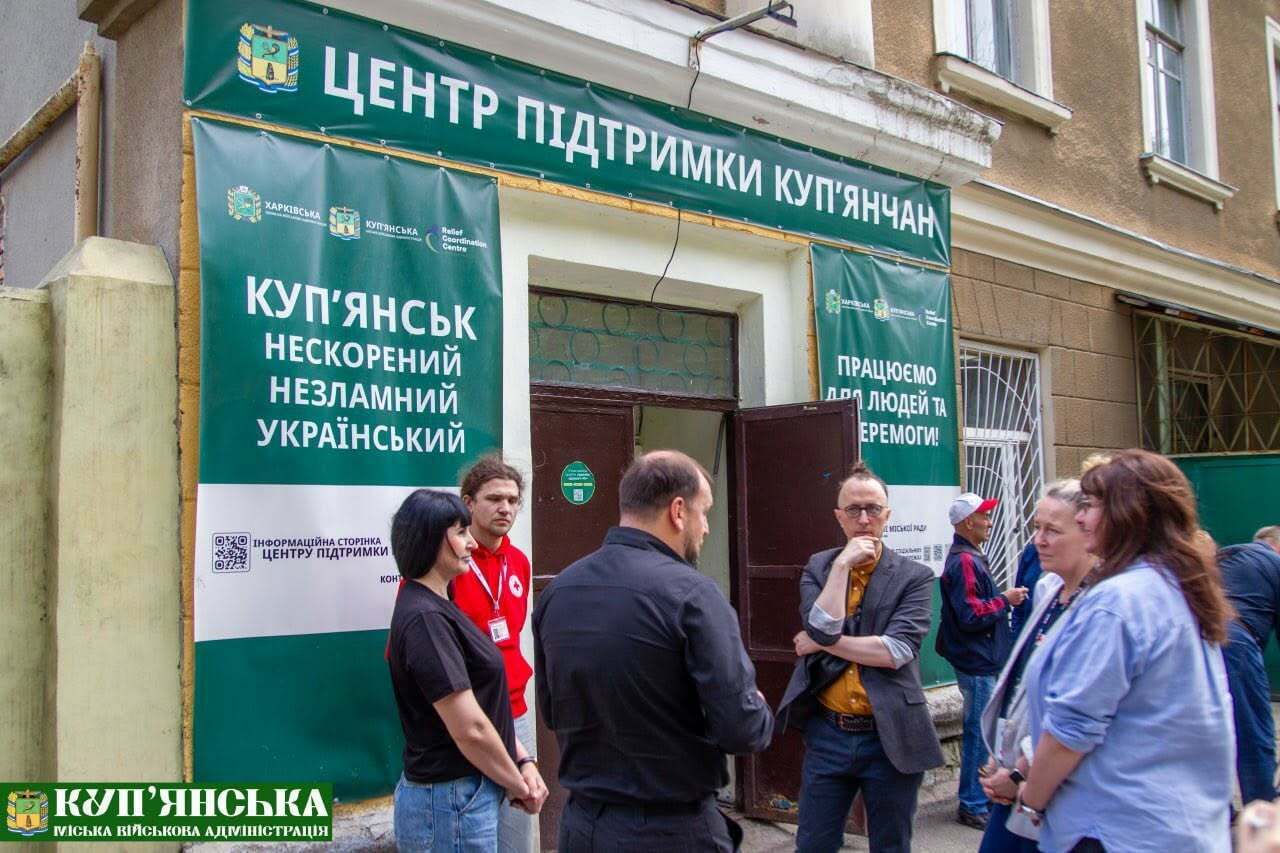
Meeting in Kharkiv between representatives of the Kupiansk Military Administration and the Danish Red Cross mission team in Ukraine
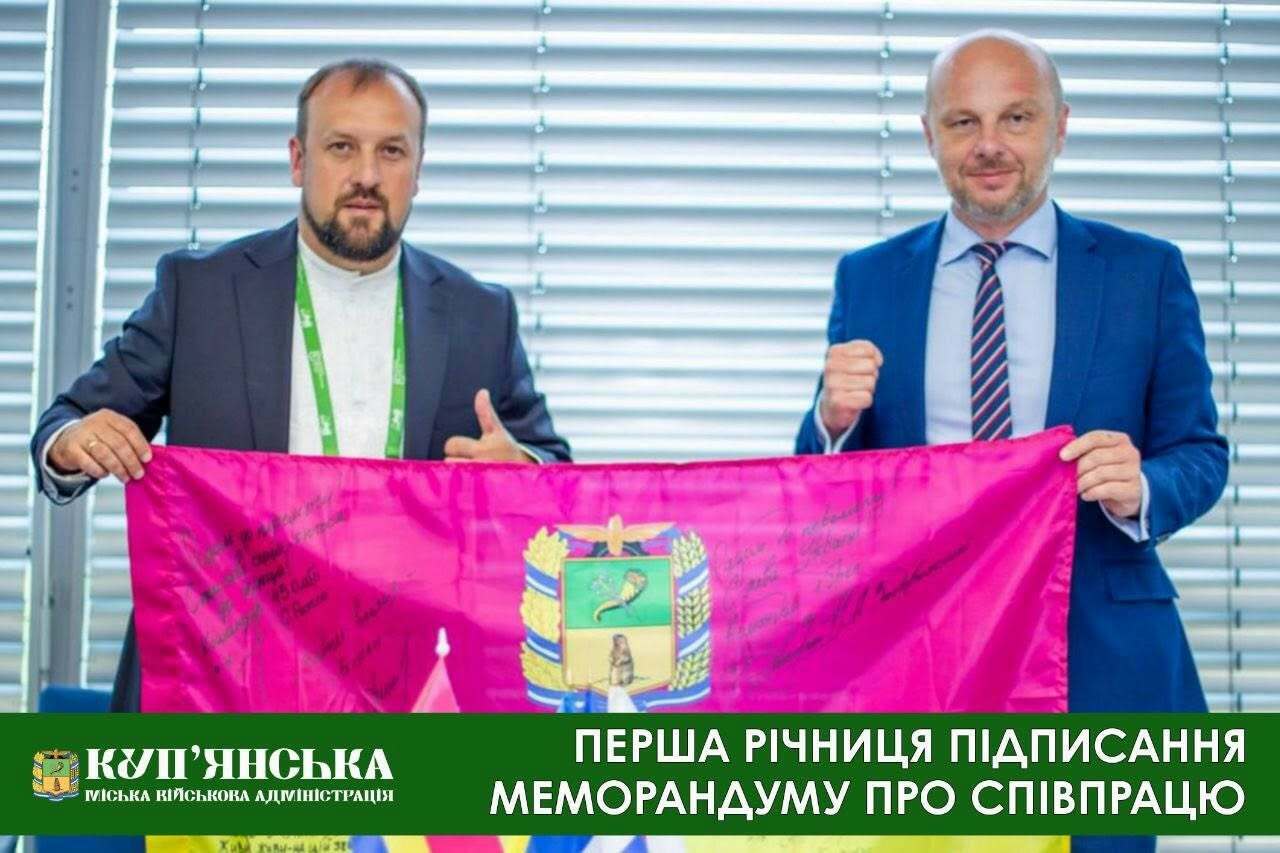
Фото 64. ‘12 June marked one year since the signing of the Memorandum of Cooperation between the Hero City of Ukraine, Kupiansk, and the City of Rescue, Rzeszów,’ wrote Andrii Besedin (on the left in the photo) on his Facebook page. On the right is Konrad Fijołek, Mayor of Rzeszów
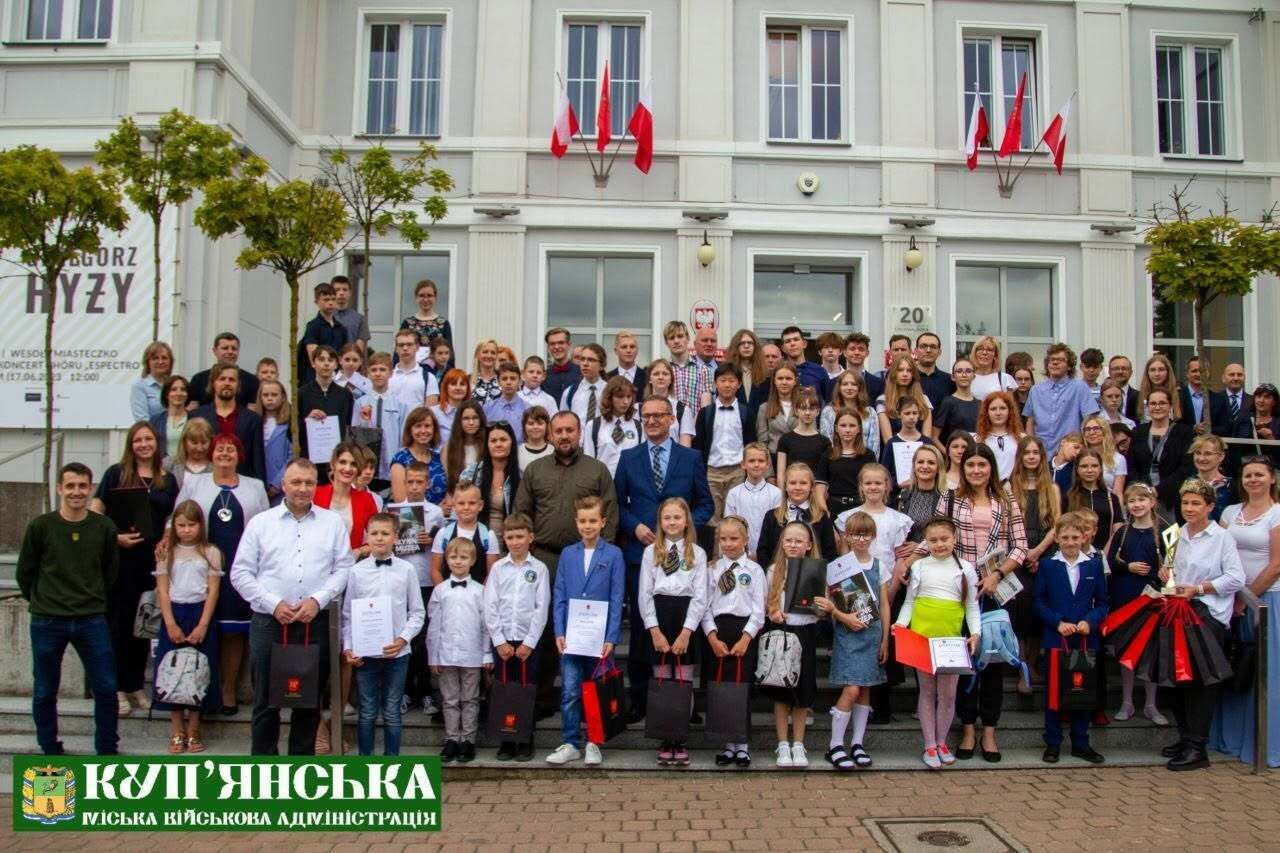
Children from Kupiansk on holiday in Poland
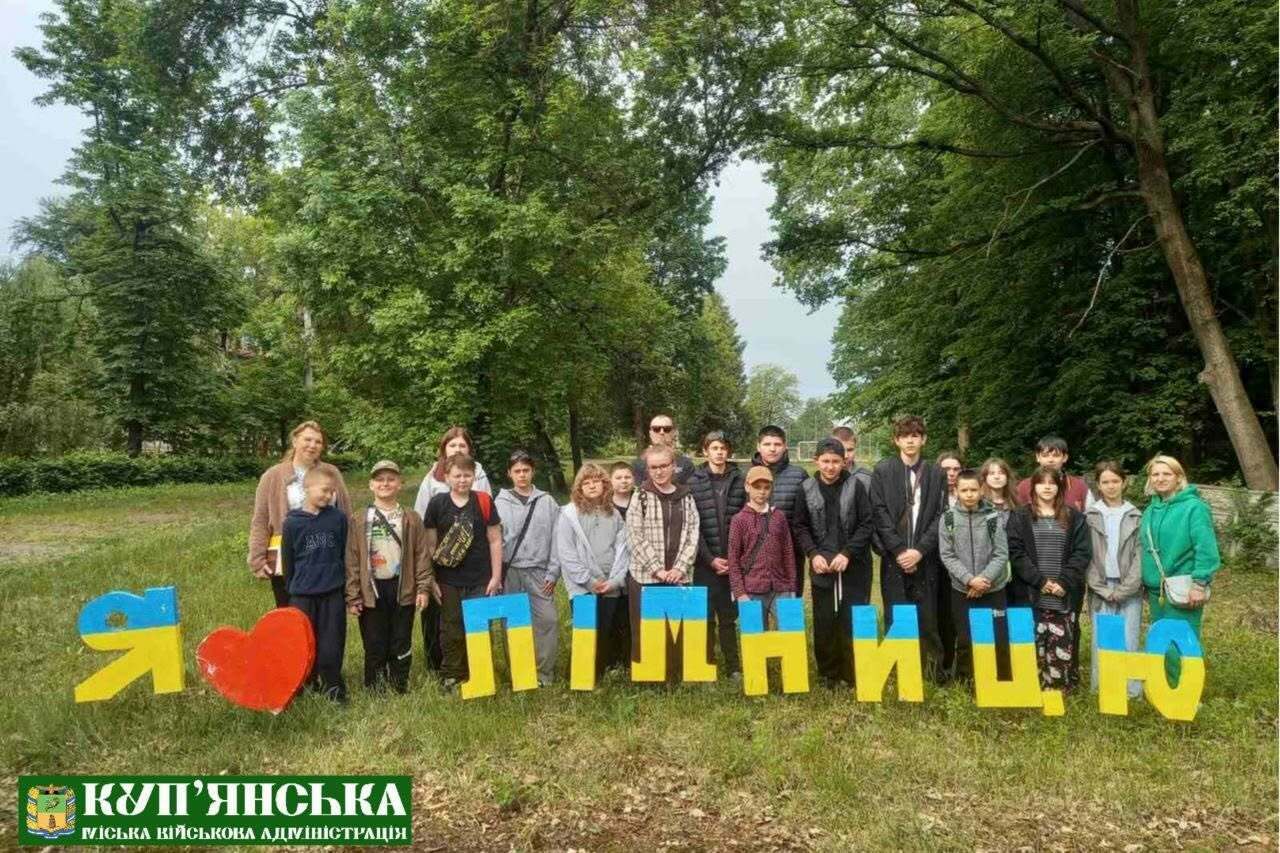
A holiday in Ivano-Frankivsk region
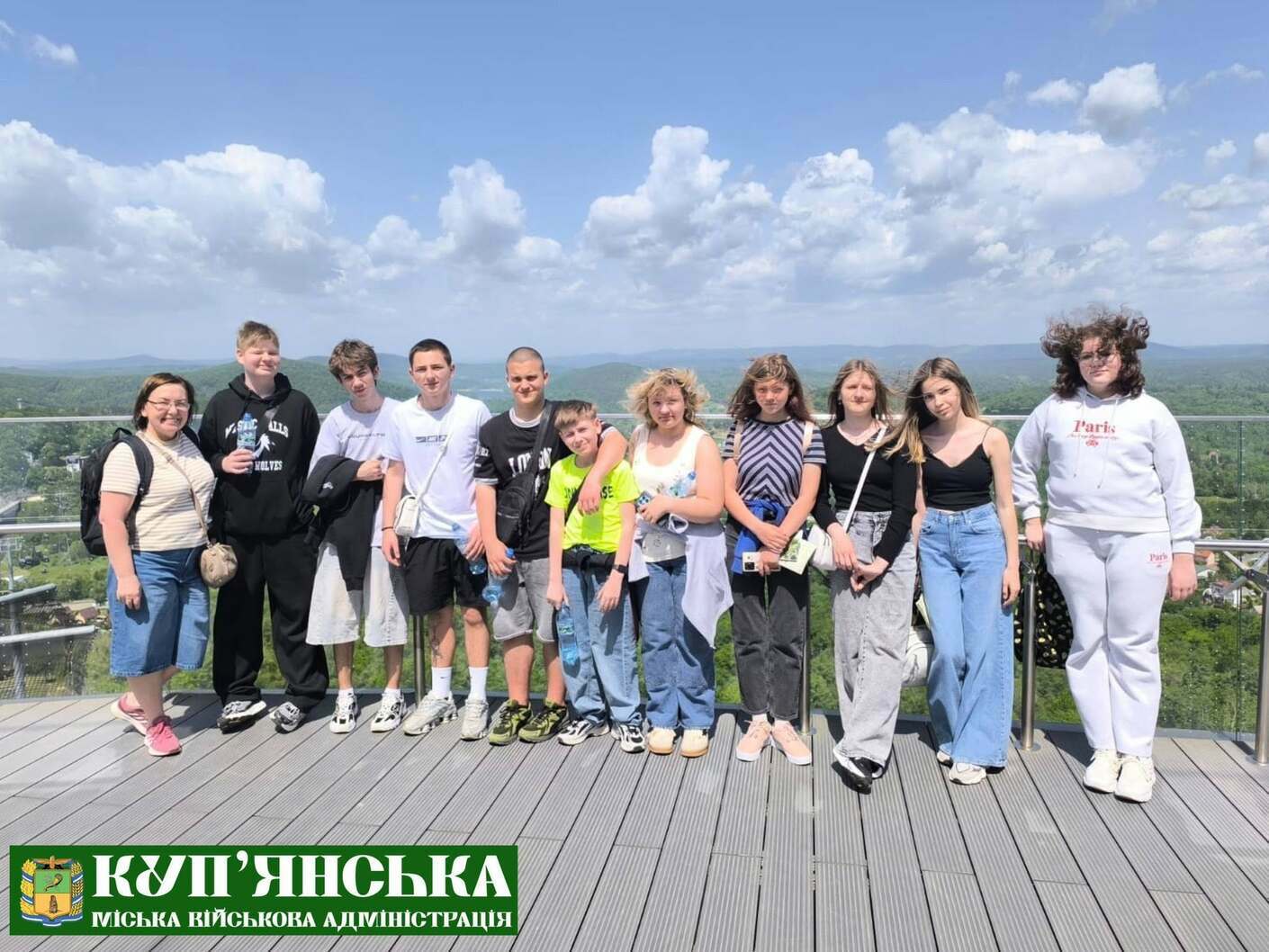
Schoolchildren from Kupiansk in Poland
On the future of the community and the strength to fight
Is there already a strategy of post-war reconstruction for Kupiansk? How do you see your community 5–10 years after the war ends?
Yes, we do have a strategy; we are currently finalising this document. But I prefer not to discuss it in detail just yet, as the situation on the battlefield is changing so rapidly. For this reason, for example, two years ago we had one vision for development, whereas now it is slightly different. This is linked to both the destruction and the possibilities for reconstruction, and so on. We used to have a very powerful transport hub, but it was oriented towards the aggressor country and Luhansk region. We now realise that there is a 99.9% probability that these routes will not be needed in the future. We also had a very strong industrial sector, but in order to assess the prospects for its recovery, we need to gain access to the territory of the community. We also need to identify our local business owners and ascertain their plans, which, naturally, change over time. We also require funding to support these business owners and a preferential tax regime at the national level. Farmers are a separate matter, but in order to speak with them, all the land first needs to be cleared of mines.
In your opinion, what should be changed in the Ukrainian system of wartime governance, taking into account the experience of communities near the front line?
As practice has shown, martial law does not exempt anyone from responsibility for making decisions. On the one hand, this is right; on the other hand, there are certain procedures that slow down or even prevent problems from being resolved. Because by the time the procedure is completed, the decisions have become irrelevant. Therefore, for communities such as ours, the entire spectrum of legislation across all areas needs to be analysed. For example, we receive many complaints from business owners who are being charged land and property taxes by the state tax authorities, even though their businesses have not existed for four years. This causes outrage amongst people. But on the other hand, there are provisions in the Tax Code, and there is no avoiding them. This needs to be resolved as soon as possible. A separate topic is ensuring payment for energy resources used by military units when they are stationed, for example, in the private sector or in community buildings. There is no legal mechanism for such payments. This also needs to be sorted out.
What gives you the strength for your daily struggle?
Understanding why it is necessary. We are striving to develop our community, come what may. Our educational programme continues, as do our sports and health activities; we organise events for children and adults – mainly in Kharkiv. From the start of the new academic year, we plan to open a new educational facility. We have two relocated healthcare centres operating successfully, offering both primary and secondary care, which are already competing with local hospitals. After all, thanks to the decentralisation reform, funding follows the patient. Life goes on; life triumphs over death. And although we do not know when our victory will come or what form it will take, we have no doubt that it will come. This is what gives us strength and fills us with inspiration.
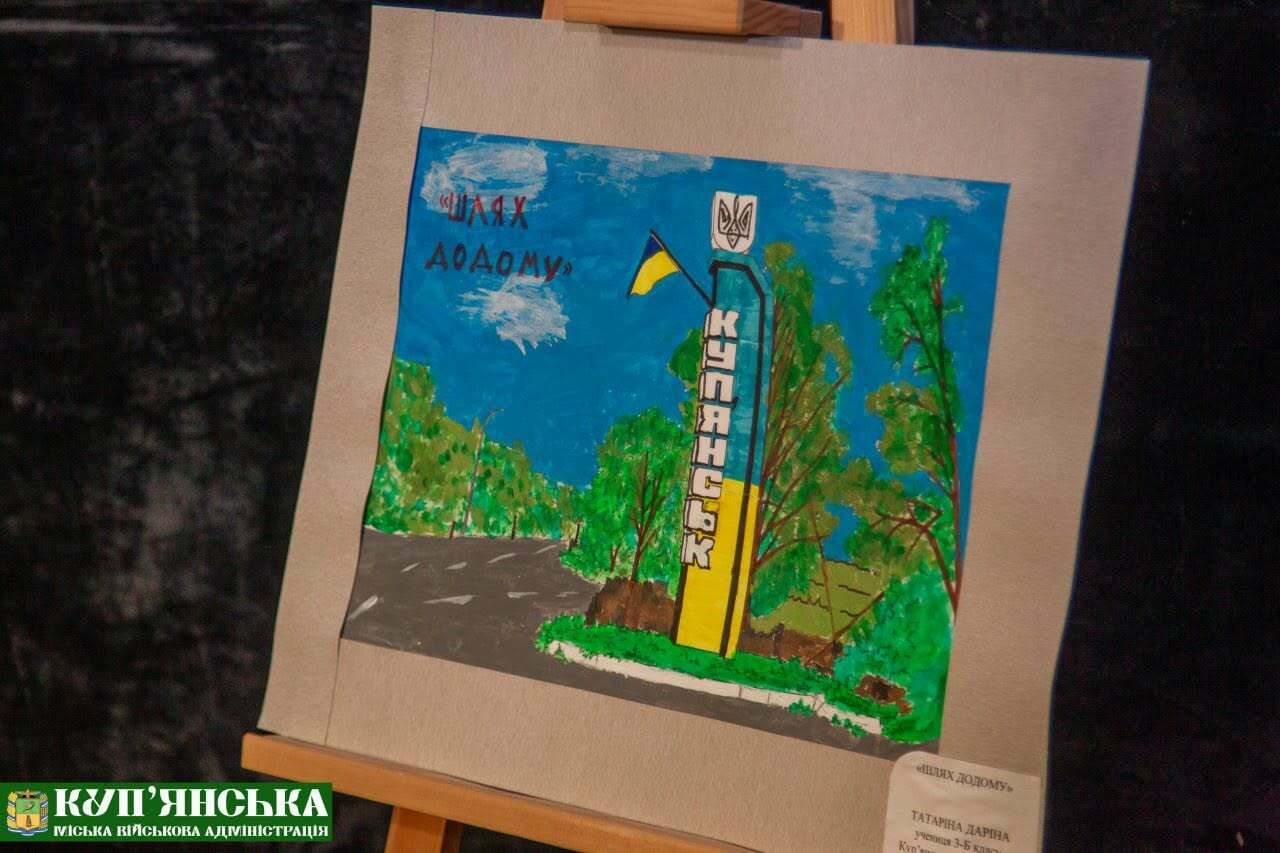
“The Way Home”, a picture by Daryna Tatarina, a third-year pupil at Kupiansk School
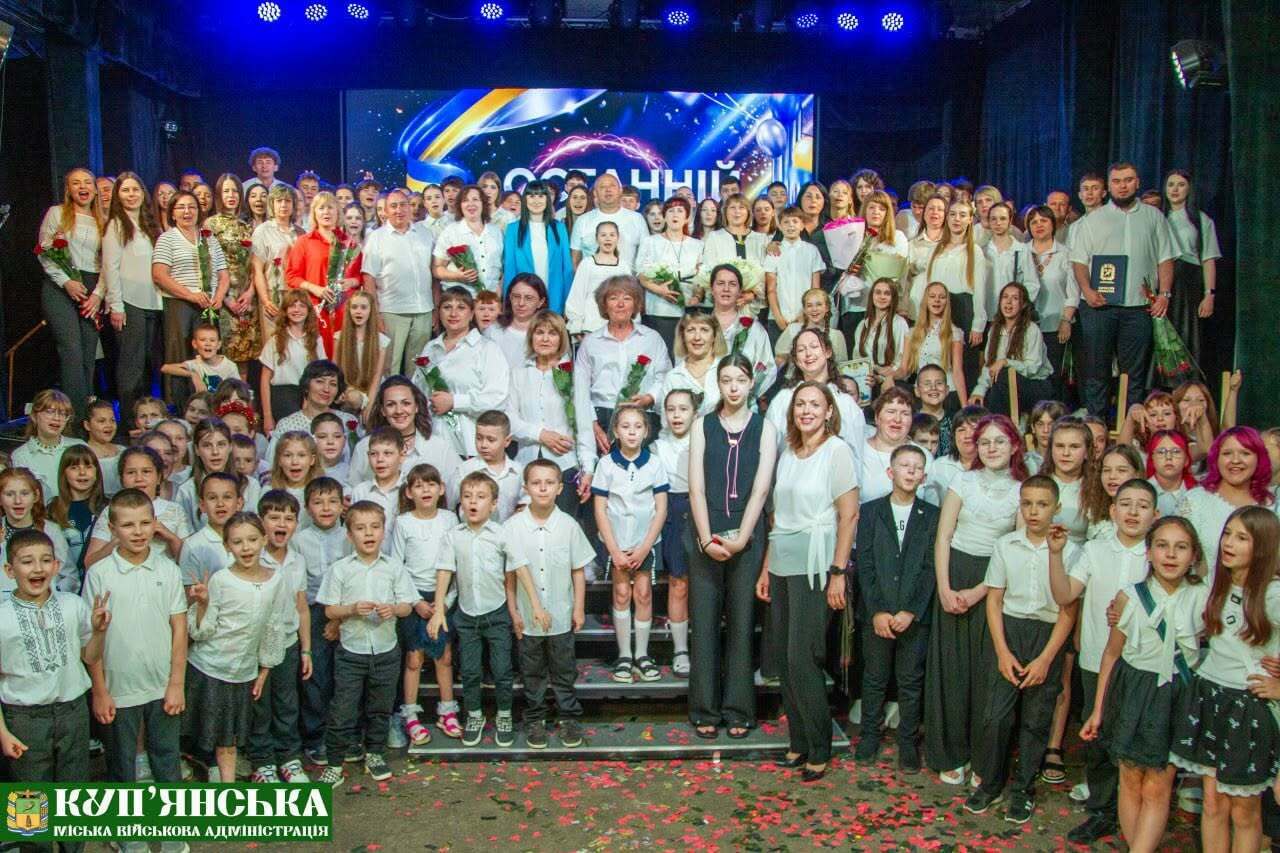
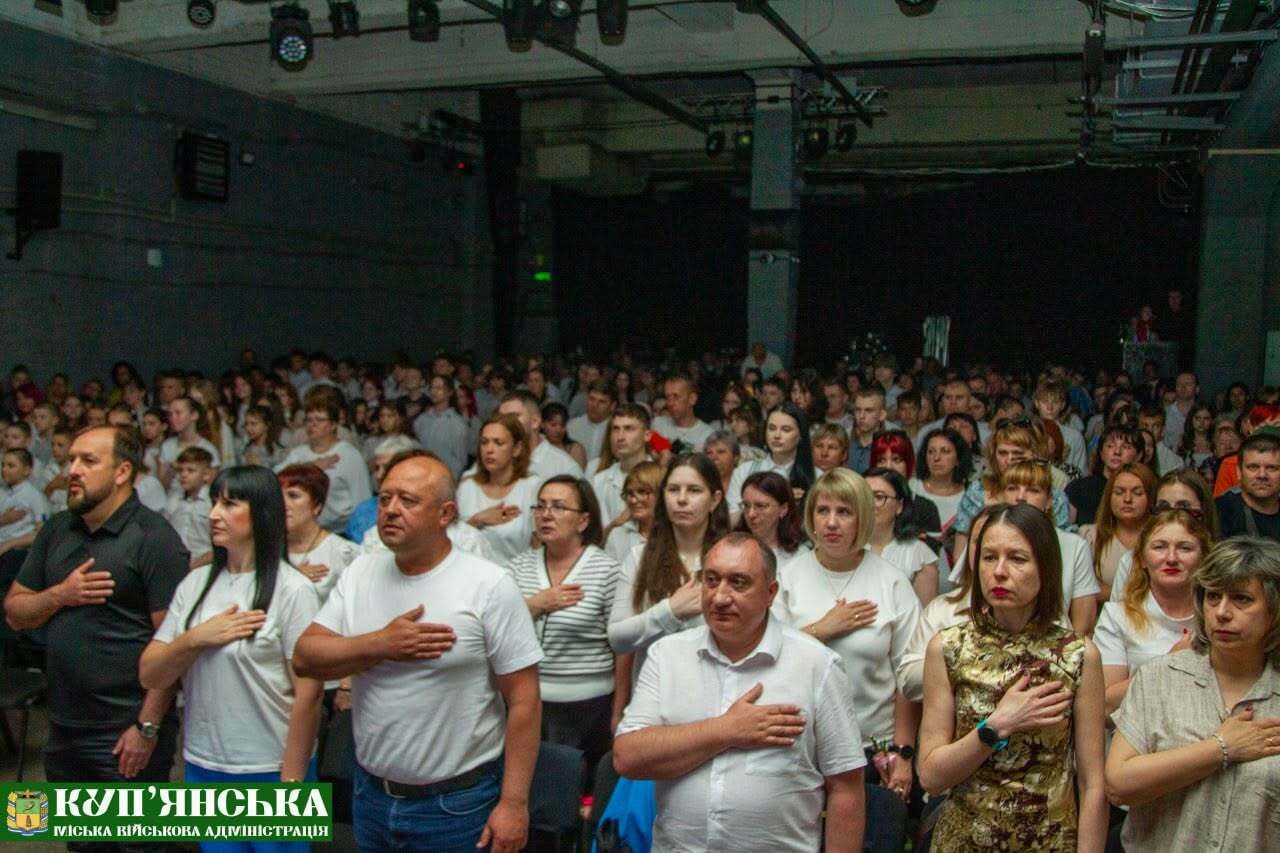
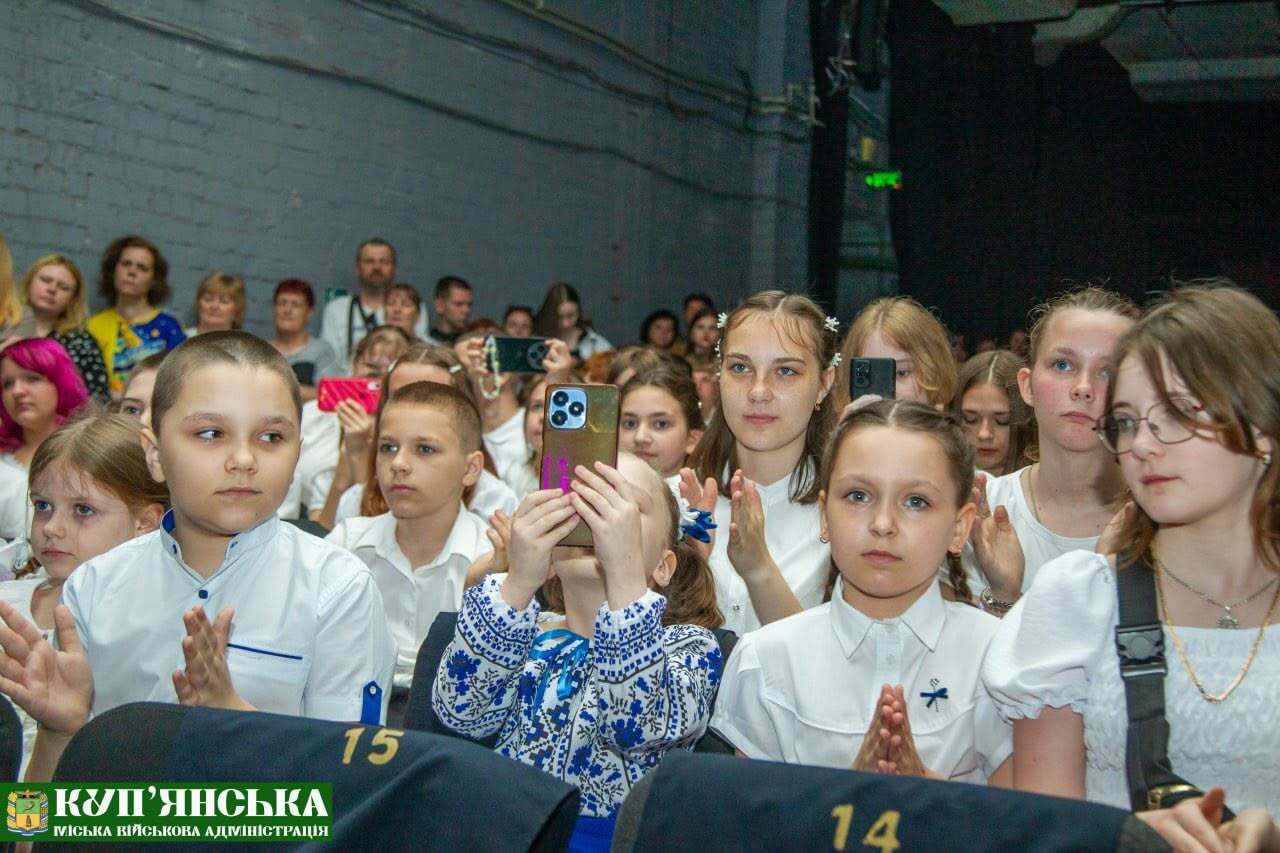

This year’s “last bell” ceremony in Kupiansk community, which was held in Kharkiv
Photos from open sources are used in this article
26 October 2026
«Свобода бути там, де хочеш»: як соціальне таксі допомагає Людмилі та Олегу пересуватися Дніпром
«Свобода бути там, де хочеш»: як соціальне...
Портал «Децентралізація» продовжує серію матеріалів про рішення громад, які роблять публічні послуги та простори...
26 October 2026
«Держава поруч. Старости»: на початку грудня стартує національна ініціатива
«Держава поруч. Старости»: на початку грудня...
На початку грудня стартує національна ініціатива «Держава поруч. Старости». Вона має наблизити важливі послуги до...
26 October 2026
Як релокована лікарня стала частиною життя громади: досвід Мирнограда й Оринина
Як релокована лікарня стала частиною життя...
Майже два роки тому Мирноградську лікарню з Донецької області евакуювали до села Оринин на Хмельниччині. Медики...
26 October 2026
Мобільність без кордонів: як громадам з’єднати транспорт, дані й фінансування
Мобільність без кордонів: як громадам з’єднати...
Мобільність не закінчується на межі громади, але транспортні системи часто залишаються розділеними між містами,...