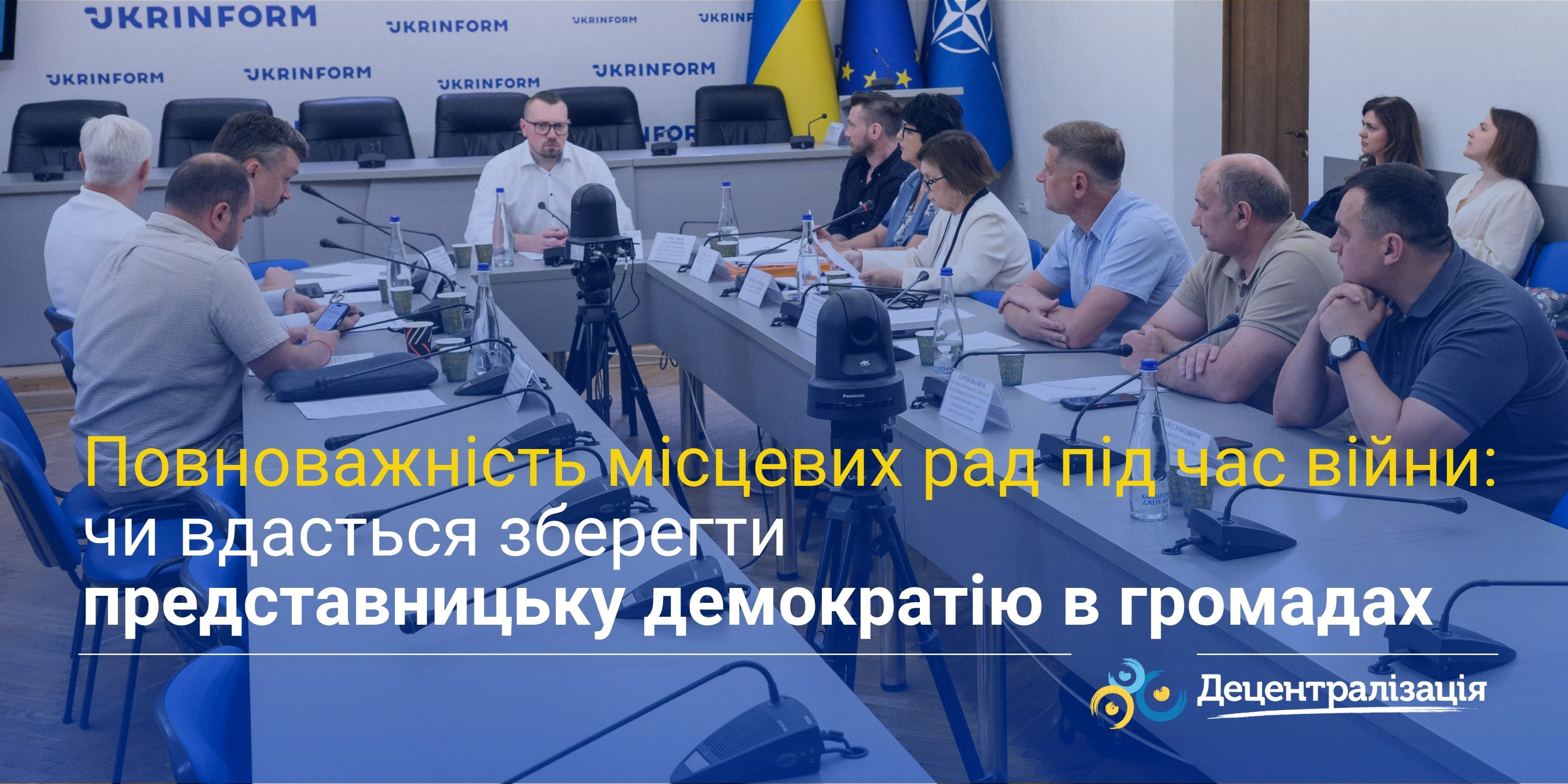
The Capacity of Local Councils During Wartime: Can Representative Democracy Be Preserved in Local Communities?
The full-scale war has presented local government with a challenge that current legislation did not foresee. In many communities, the total number of councillors is gradually dwindling due to the early termination of their powers, while holding new or by-elections during martial law is impossible. As a result, certain local councils are facing the risk of losing their quorum, and consequently, the ability to pass decisions essential for their communities.
This is precisely why Draft Bill No. 14405, "On Ensuring the Quorum of Local Councils Under Martial Law", has been registered in the Verkhovna Rada, aiming to provide a mechanism to maintain the operational capacity of local government.
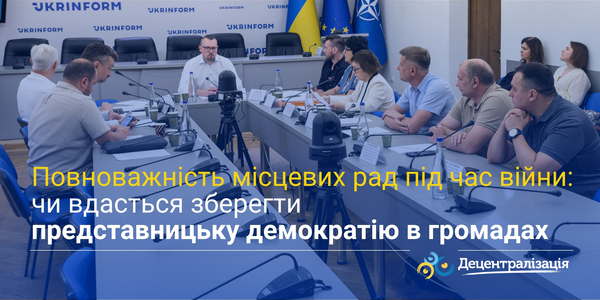
This legislative initiative, along with the findings of a large-scale study on the functioning of local councils and the positions of state authorities, experts, and local government bodies, were discussed during the round table "The Quorum of Local Councils Under Martial Law".
The event was organized by the NGOs "Laboratory for Legislative Initiatives" and "DESPRO", with the participation of the Verkhovna Rada Committee on State Power, Local Self-Government, Regional Development, and Urban Planning. It was supported by the EGAP Programme, implemented by the Eastern Europe Foundation and funded by Switzerland, as part of the grant project "E-Consultation Platform for Ensuring Continuous and Effective Dialogue between Local Self-Government, the Verkhovna Rada of Ukraine, and Central Government Authorities".
A Problem That Has Ceased to Be Isolated
Opening the discussion, the event's moderator, Nadiya Petrunyak, emphasized that this is not a theoretical problem, but an issue that is already impacting the ability of local authorities to exercise their powers.
In the 2020 local elections, over 43,000 local council councillors were elected, forming the backbone of grassroots representative democracy. However, the full-scale war has significantly altered the landscape: councillors are resigning their seats for various reasons or being mobilised into the Armed Forces of Ukraine. Consequently, an increasing number of councils face the threat of losing their quorum.
Communities where the 2020 elections were held under a first-past-the-post (majority) system remain the most vulnerable. If a councillor steps down, replacing them is virtually impossible, and the reduction in the number of councillors leads to the council losing its quorum.
Draft Bill No. 14405 was prepared specifically to address this issue, proposing a change in the approach to determining a quorum for local councils under martial law.
Vitaliy Bezgin: "This is not about politics; it's about preserving the local government system"
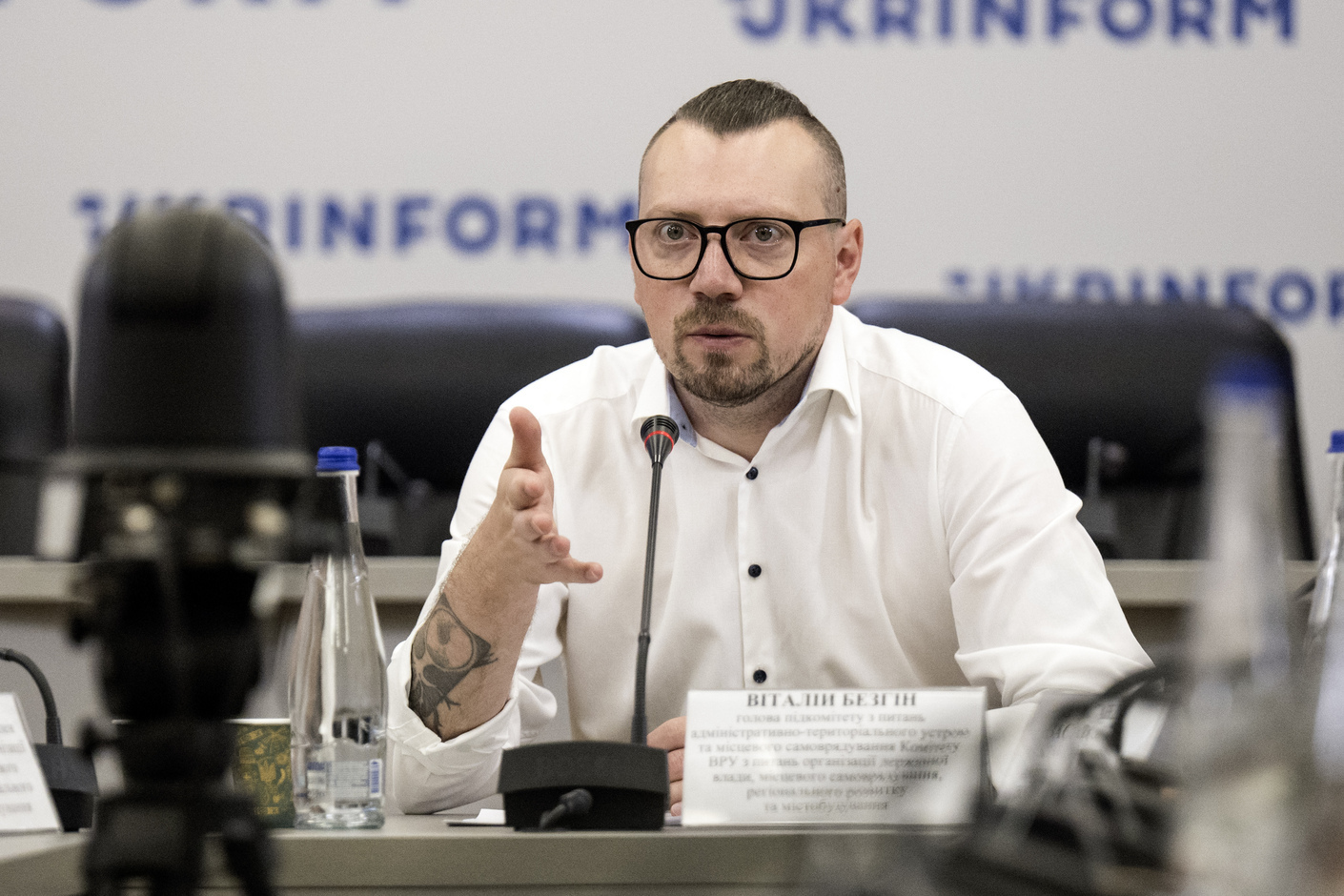
The Chairman of the Subcommittee on Administrative-Territorial Structure and Local Self-Government of the Verkhovna Rada Committee, Vitaliy Bezgin, who is a co-author of the draft bill, stressed that the document was a response to real appeals from communities.
"It is beneficial for us and for parliament that we are discussing this just ahead of the plenary week. Local government is demonstrating extraordinary resilience and capacity, but at the same time, it faces new challenges every day. One of the most acute is the gradual decline in the number of local council councillors. This is particularly true for small territorial communities."
According to the MP, Draft Bill No. 14405 is not a political initiative, but is instead designed to ensure the continuity of local government operations.
"We would like to use the results of this study to advocate for the bill in parliament. Frankly speaking, we currently lack the votes, but we will work to ensure this problem is resolved. If local councils lose their quorum en masse, the state will have to resort to establishing a large number of military administrations. This in itself is detrimental both to the public administration system and to democratic processes."
He emphasized that the issue has long ceased to be unique to small communities.
"We used to speak mainly about communities with fewer than 10,000 voters, but the study shows that the problem now spans all levels of local government. It affects both district and regional councils. This means decisions must be made right now."
Vitaliy Bezgin drew particular attention to a provision in the draft bill concerning mobilised councillors.
"One of the provisions stipulates that a local councillor cannot be stripped of their mandate simply because they have been mobilised into the Armed Forces of Ukraine and cannot physically participate in council sessions. This is a matter of fairness and respect for the people defending the state today."
In the MP's view, the presented research makes it possible to shift the discussion from assumptions to facts.
"Now we can move away from generalities and rely on concrete figures. We can see why councillors are stepping down, what the primary reasons are, and how widespread this problem has already become. This is precisely what should help parliament make statesmanlike decisions."
Oksana Garnets: Over 65% of community representatives support changing the approach to determining a quorum
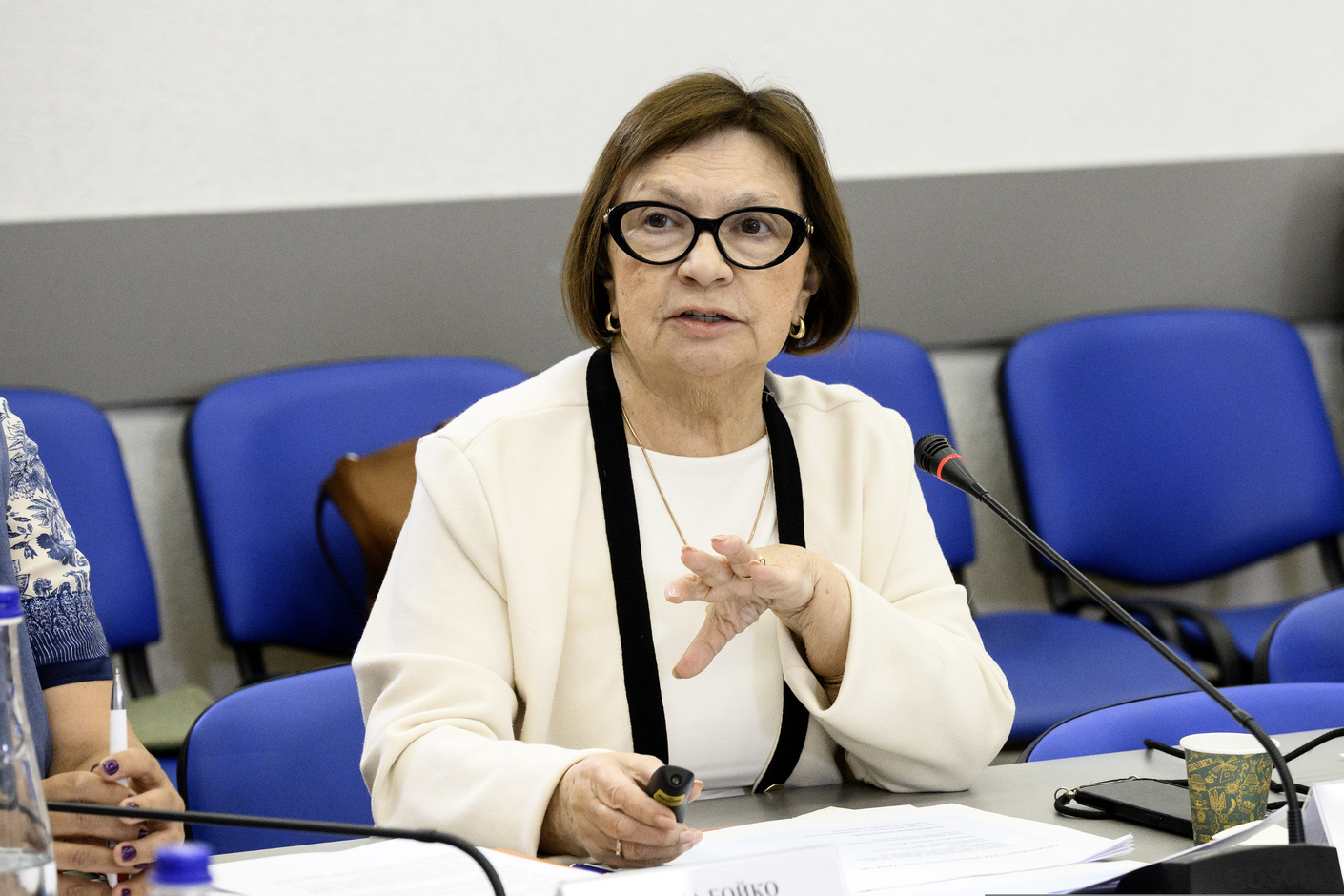
The President of the NGO "DESPRO", Oksana Garnets, presented the results of consultations with local self-government bodies conducted on the LEMS platform (Local Electronic Consultation Platform), established with the support of the EGAP Programme as a permanent tool for interaction between the Verkhovna Rada and communities. Today, 1,451 local government representatives are registered on the platform, participating in consultations on a "one community, one vote" basis.
As Oksana Garnets noted, the purpose of the current consultation was to find out how local government bodies themselves assess the legislative proposals aimed at securing the quorum of local councils during martial law.
According to her, 299 respondents took part in the consultation, predominantly representing the primary level of local government. Nearly 59% of the participants were village, settlement, and city mayors; another 18.1% were heads of municipal military administrations; and 8.4% were council secretaries. Chairmen of district and regional councils, their deputies, and acting community heads also took part.
Every Third Community Already Facing Quorum Issues
One of the first questions in the consultation was how acute the problem of securing a quorum for plenary sessions has become since the start of the full-scale invasion.
According to the survey results:
- 14% of respondents stated they frequently face quorum issues;
- 21.4% noted that such a problem arises from time to time;
- More than half do not currently feel it acutely.
Thus, nearly one in three communities participating in the consultation is already experiencing difficulties in maintaining a functional council quorum.
Almost Half of Communities Have Lost Over a Tenth of Their Councillors
The responses regarding the early termination of councillors' powers were equally telling.
According to the consultation data:
- 13.7% of respondents reported that their councils had not lost a single councillor;
- 15.1% noted that up to 5% of councillors had terminated their powers early;
- 14.7% reported a loss of 5% to 10%;
- 24.7% reported a loss of 10% to 20%;
- Another 24.7% reported losing between 20% and 50% of their total councillors;
- 4.3% of councils have already lost more than half of their councillors.
Summarizing these results, Oksana Garnets noted:
"We are seeing a significant reduction in the number of councillors across many local councils. In the absence of an opportunity to hold elections and fill vacant seats, this directly increases the risk of councils losing their legal capacity."
Based on the aggregated results of the consultation, 18.2% of local council councillors representing the surveyed communities have had their powers terminated early since the 2020 local elections. This is why, she stressed, the issue of ensuring a quorum for local councils requires legislative regulation today.
Most Communities Support Legislative Changes
A key question in the consultation was the assessment of the core idea of Draft Bill No. 14405—to determine a quorum based on the actual number of councillors whose powers have not been terminated, rather than the total statutory composition of the council.
The results were quite convincing:
- 65.2% of respondents supported this proposal;
- 19.1% found it difficult to say;
- Only 14% were opposed.
Support for other provisions of the draft bill was similarly high. For instance, 57% of consultation participants backed the proposal to prohibit the recall of a local council councillor during their mobilisation into the Armed Forces of Ukraine. A vast majority also voted in favour of allowing councillors' reporting procedures to be adapted to the security conditions of martial law.
Oleksandr Zaslavskyy: "For the first time, we have a comprehensive picture of what is happening to local councils during the war"
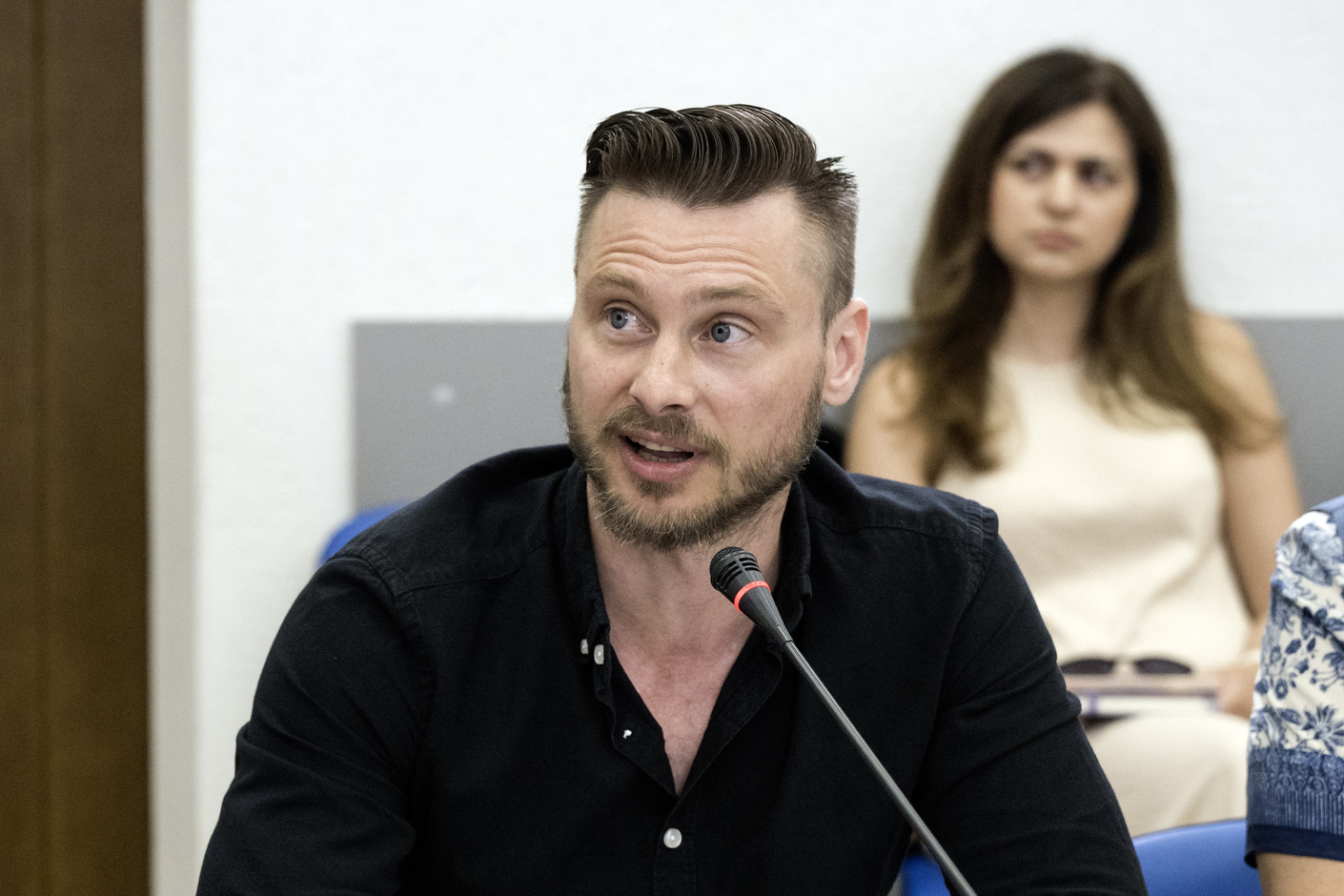
While the consultation with local government bodies showed how communities themselves view the problem, the study prepared by the NGO "Laboratory for Legislative Initiatives" made it possible to assess its scale using official data.
The findings of the study were presented by Oleksandr Zaslavskyy, Deputy Executive Director for Analytical Work at the NGO "Laboratory for Legislative Initiatives".
Analysts reviewed the operational status as of 1 February 2026 of:
- 24 regional councils;
- 119 district councils;
- 1,449 village, settlement, and city councils, as well as the activities of the respective community heads.
The scope of analysis included:
- The statutory composition of councils;
- The number of vacant seats;
- Early termination of councillors' powers;
- Attendance at plenary sessions;
- The presence of military administrations;
- Ensuring the quorum and legal capacity of local councils.
Over Two Hundred Local Councils Are No Longer Holding Plenary Sessions
The first conclusion of the study concerns the actual functioning of councils. As Oleksandr Zaslavskyy reported, there are local councils today that have effectively ceased operations.
"We identified a number of councils that are non-functional. At the regional level, the Donetsk and Luhansk regional councils were not elected at all in 2020. Furthermore, the Zaporizhzhia Regional Council did not hold a single plenary session in 2025."
The situation is even more complex at the district and primary levels.
According to the study:
- 21 district councils (17.6%) did not hold a single plenary session in 2025;
- 211 village, settlement, and city councils (14.6%) also failed to convene for plenary sessions.
This primarily concerns communities located in temporarily occupied territories or near the front lines. However, the study also revealed isolated cases in relatively safe areas.
"Special attention should be paid to the fact that the Khmelnytskyi District Council in the Khmelnytskyi Oblast did not hold a single plenary session in 2025, despite having a legally valid composition."
Councillors Resigning En Masse
One of the most alarming findings of the study was the trend towards the early termination of councillors' powers.
According to data from the "Laboratory for Legislative Initiatives":
- 15.1% of regional council councillors have terminated their powers early;
- 26.7% of district council councillors;
- 15.3% of village, settlement, and city council councillors. The vast majority of these cases occurred after the start of the full-scale invasion.
As Oleksandr Zaslavskyy noted, the most common ground was a councillor's personal resignation letter.
"In regional councils, nearly 68% of councillors terminated their powers of their own accord; in district councils, over 83%; and at the primary level, over 70%."
The expert pointed out that various life circumstances lie behind these dry figures.
"We can assume this is linked to several factors. Firstly, migration—both internal and outside the country. Secondly, restrictions on crossing the state border imposed on local council councillors. And, of course, we cannot rule out a drop in motivation and a reluctance among some councillors to perform their duties under the extreme conditions of war."
At the same time, he highlighted another pattern.
"While the main problem is characteristic of occupied territories and communities near the front lines, it is concerning that we see quite high rates of early termination of powers in relatively safe regions as well—such as Vinnytsia, Zakarpattia, Ternopil, and Chernivtsi oblasts."
Nearly Four Thousand Council Seats Are Already Vacant
The situation regarding the replacement of councillors is equally telling.
As of 1 February 2026, the following seats remained vacant:
- 104 seats in regional councils;
- 476 seats in district councils;
- 3,407 seats in village, settlement, and city councils.
The situation is particularly problematic in councils elected under the proportional system, according to Oleksandr Zaslavskyy.
"In such councils, vacant seats should be filled by the next candidates on the electoral lists. However, this often does not happen. We cannot say conclusively why, but it could be linked both to the operation of territorial election commissions and to the fact that certain political parties are effectively inactive today."
More Councils Approaching the Loss of Quorum
A separate section of the study focused directly on the quorum issue.
As Oleksandr Zaslavskyy reported, currently:
- 2.5% of district councils lack a legally valid composition;
- 5.5% of village, settlement, and city councils have also lost their quorum;
- An additional 2% of district and 3% of local councils are in a risk zone, where the departure of just one or two councillors could completely paralyze their work.
He also drew attention to another issue—the lack of systematic state monitoring regarding the quorum status of local councils.
Consequently, among the study's recommendations, he highlighted the need to:
- Regulate the issue legislatively by adopting Draft Bill No. 14405;
- Introduce permanent monitoring of local councils' status by the Ministry for Communities and Territories Development;
- Update information regarding the early termination of councillors' powers by the Central Election Commission.
Vitaliy Bezgin: "If nothing changes, there will be even more such councils by the end of the year"
Following the presentation of the study's findings, Vitaliy Bezgin emphasized that the figures confirmed the urgency of Draft Bill No. 14405. In his conviction, the problem has long crossed the boundaries of individual communities and requires an immediate legislative solution.
"When we see that 5.5% of village, settlement, and city councils have already lost their quorum, this is undoubtedly a problem. Looking at the current dynamics, we can predict that by the end of the year, about eight percent of such councils will be affected. This means the demand from local government exists, and it is entirely justified."
According to the MP, the issue has effectively been agreed upon by all participants in the process.
"I believe that representatives of local government associations, the Ministry for Communities and Territories Development, and the Central Election Commission will be united in their assessment of this problem. The matter now rests entirely with the Verkhovna Rada."
Vitaliy Bezgin expressed hope that parliament would be able to begin consideration of the bill in the near future. He stressed that this legislative initiative carries no political bias.
"My main message to representatives of all parliamentary factions and groups: this is not about politics. Community heads represent various political forces, but right now that is not the point at all. It is about preserving the system of local government. An alternative exists, but I don't think anyone will like it, especially if we are talking about communities in right-bank Ukraine."
Dmytro Mykysha: "I see no reason why this draft bill cannot be supported"
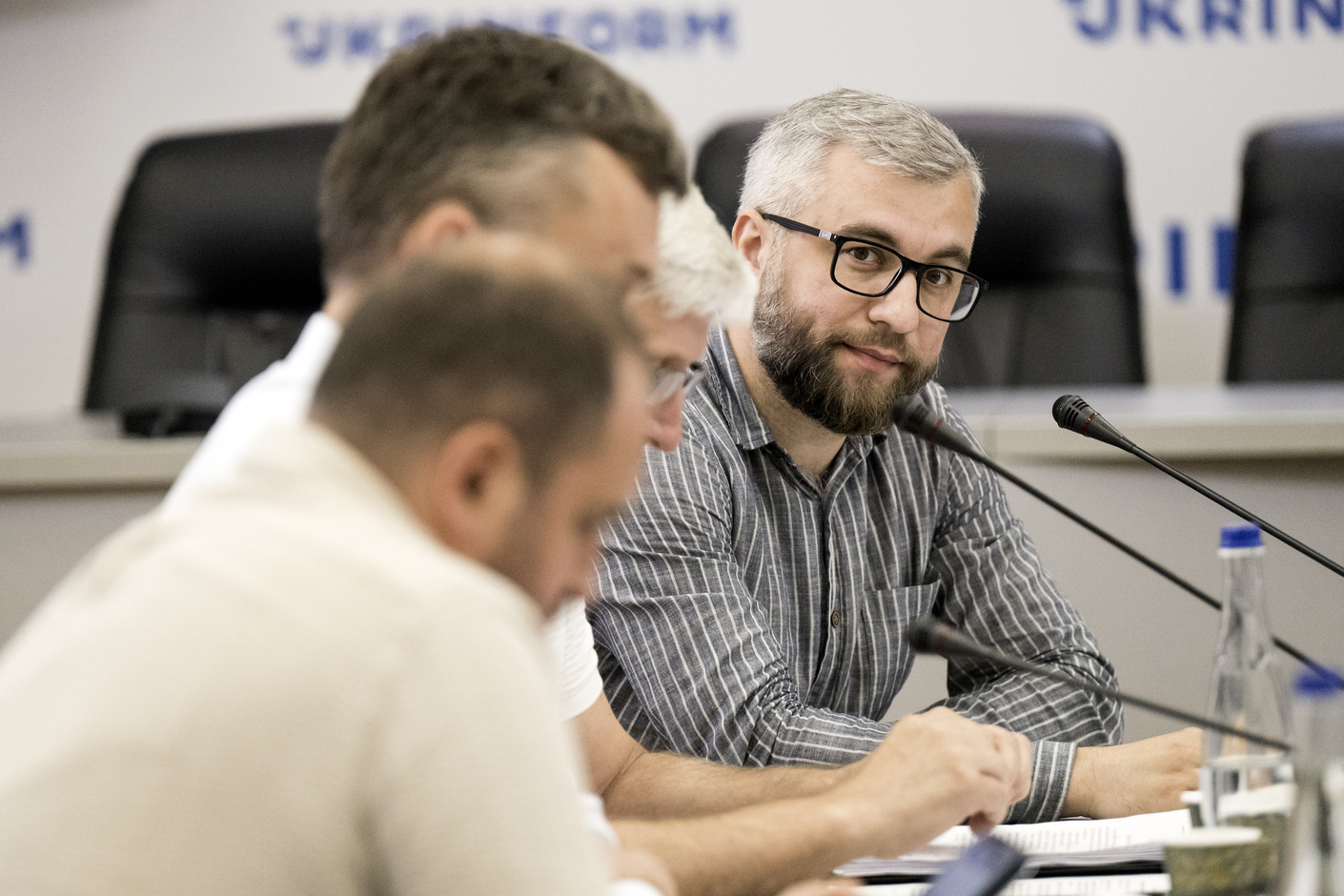
Dmytro Mykysha, a member of the Verkhovna Rada Committee on State Power, Local Self-Government, Regional Development, and Urban Planning, also spoke in support of the bill. He admitted that the consultation results regarding the level of support for the legislative changes were unexpected.
"To be honest, I was surprised by the survey results. If over 60 percent support the bill, the question arises: what are those who don't support it proposing? To leave everything as it is and wait until councils lose the ability to work?"
According to the MP, the text of the bill contains no controversial provisions.
"It is strange to me that some colleagues in parliament still have doubts about supporting this bill. If you read it carefully, there is nothing in it that could cause political concerns. It is an entirely technical document that allows local government bodies to function under war conditions."
"We cannot allow communities to lose the ability to work simply due to a shortage of councillors"
Dmytro Mykysha also drew attention to another issue that arose following the creation of military administrations. According to him, different models of community governance currently coexist in Ukraine.
"There are military administrations to which the Verkhovna Rada has already transferred all the powers of local government bodies. There are others where a hybrid system has emerged, where the council formally still exists, but its influence is minimal. Against this backdrop, leaving communities without the ability to work simply because they lack a few councillors for a quorum is strange, to say the least."
The MP expressed hope that the Verkhovna Rada would at least initiate the passage of the bill in the near future.
"I highly hope that during this plenary week, we will manage to at least table the bill for a vote and begin its consideration. The problem exists right now, and there is no longer any reason to delay its resolution."
Legislative Restrictions Became One of the Reasons for Stepping Down
Dmytro Mykysha paid special attention to the reasons why local council councillors are terminating their powers early. In his view, the statistics do not fully reflect the actual motives behind these decisions.
"During the presentation, it was mentioned that legislative and bureaucratic restrictions, particularly regarding the ability of local councillors to cross the state border, were among the reasons. I am convinced that the real impact of this factor is even greater than what we see in the respondents' answers."
At the same time, he emphasized that the problem is not limited to the issue of travelling abroad.
"It concerns the status of a local council councillor as a whole. In recent years, a number of additional restrictions have been imposed on them. For many, this was the final straw that led people to decide to step down."
Dmytro Mykysha stressed that passing Draft Bill No. 14405 is necessary primarily to preserve the operational capacity of local government, rather than to resolve political issues.
"Today, we are not talking about the interests of individual councillors or even individual communities. We are talking about the ability of the entire local government system to function until the moment democratic elections can be held in Ukraine again."
Central Election Commission: The problem exists nationwide, not just in frontline areas
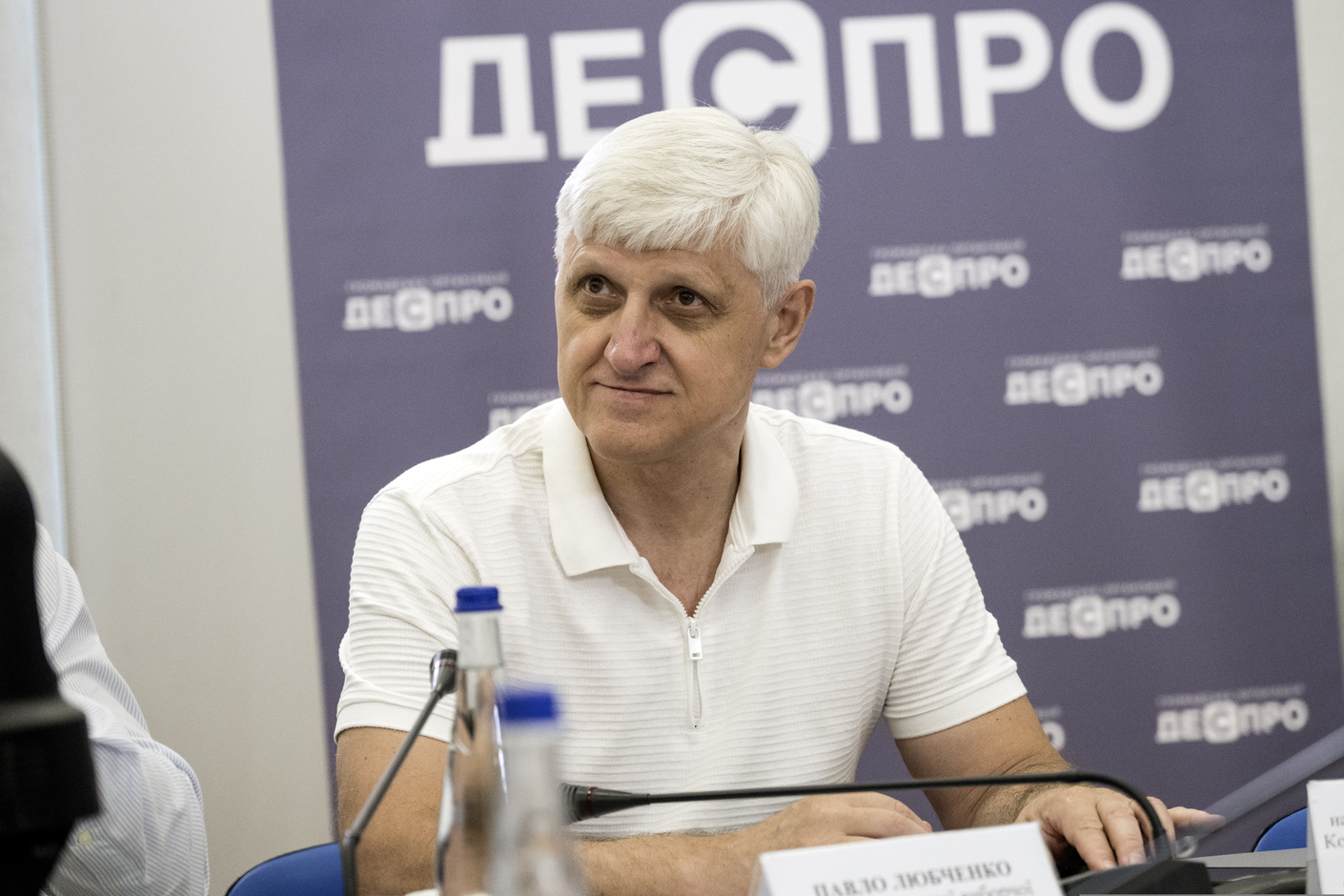
The position of the Central Election Commission was presented by CEC member Pavlo Liubchenko, who confirmed that the Commission is also observing a trend towards the gradual loss of quorum in local councils.
"Indeed, this problem exists. We also try to track the processes occurring at the local level, and we see decisions by councillors to terminate their powers early—both via personal resignation and at the initiative of political parties."
At the same time, Pavlo Liubchenko highlighted another issue that directly affects the renewal of council members—the work of territorial election commissions. According to him, TECs are operating under difficult conditions today, as their members perform their duties on a voluntary basis, making it difficult in some cases even to secure a quorum for the election commission itself.
"Territorial election commissions are permanent bodies, but this is a challenging time for them. Let me remind you that they work without remuneration. Very often, situations arise where it is difficult for the TEC itself to gather a quorum to make decisions."
Despite this, the CEC member noted, the Commission has mechanisms to respond.
"If a territorial election commission fails to make necessary decisions over a long period, the Central Election Commission can independently recognize the next candidate as elected and register them. Such cases have already occurred. Therefore, I wouldn't say the problem lies exclusively with the work of the TECs."
At the same time, he pointed out that the situation differs fundamentally depending on the electoral system.
"We need to clearly distinguish between communities where elections were held under the proportional system and those where the majority system was in place. While in communities with more than 10,000 voters there is a possibility to replace councillors, no such possibility exists for communities where the majority system applied. There, every early termination of powers automatically reduces the total composition of the council."
The CEC Lacks Full Information on All Vacant Seats
Pavlo Liubchenko also explained why the Central Election Commission's data sometimes differs from research data. According to him, current legislation does not ensure the prompt receipt of information from territorial election commissions.
"Not all TECs send us their resolutions in a timely manner. Some documents arrive a month, two months, or sometimes even later. Therefore, when we are asked about the number of vacant seats, we can only report the information that has officially reached the Central Election Commission."
In his view, Ukraine should move towards creating a dedicated register of local council councillors.
"In many countries, there is a separate register of councillors maintained by an authorized body. Thanks to this, information is updated promptly. Ukraine does not have such a mechanism yet."
Separately, Pavlo Liubchenko emphasized that part of the problem is purely objective in nature.
"Regarding the occupied territories, the situation is clear. The Central Election Commission decided to suspend the activities of territorial election commissions in these areas, so they do not replace councillors. The process is objectively impossible there."
At the same time, he confirmed the study's conclusions regarding the reasons for the early termination of powers.
"There were particularly many such cases among female village council councillors who, due to the restrictions in place at the time, were forced to resign their seats. This process has slowed down somewhat now, but the problem remains."
Concluding his speech, the CEC member directly supported the need for legislative changes.
"Undoubtedly, this issue needs to be addressed. The quorum of local councils is already under threat. Moreover, this process is not unique to frontline communities—it affects practically the entire territory of Ukraine. The number of vacant council seats is constantly increasing, so these matters require parliament's attention."
Mykola Rubchak: Communities share information voluntarily, but the state needs a statutory monitoring mechanism
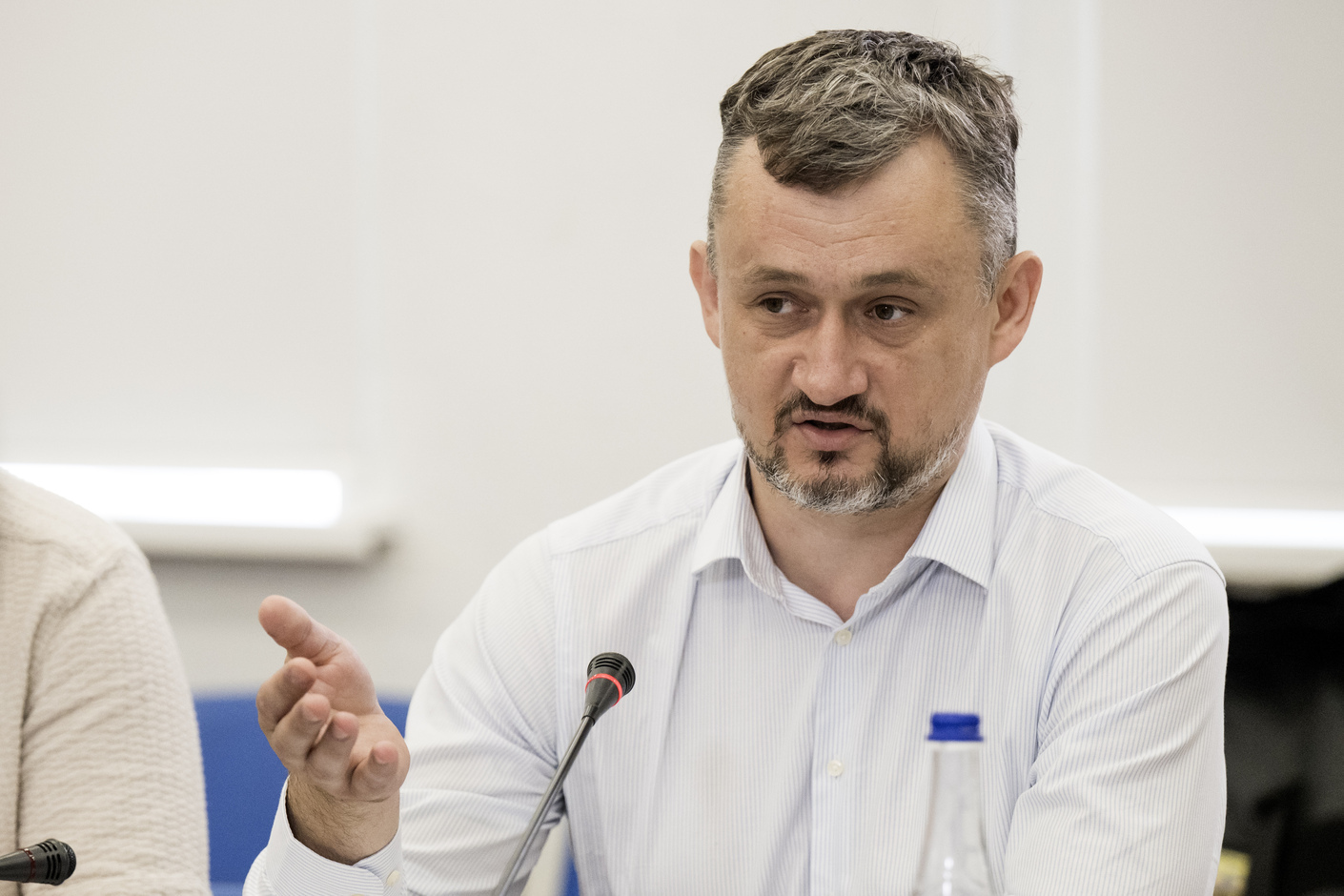
The Director of the Department of Multi-Level Governance at the Ministry for Communities and Territories Development, Mykola Rubchak, emphasized that the Ministry also tries to constantly monitor the quorum status of local councils. However, today this process largely relies on the voluntary provision of information by the communities themselves.
"We have repeatedly gathered information from the regions. In the occupied territories, the situation is clear—councils are not working there, and military administrations are operational. For other regions, the information varies, but generally, councils continue to function. The problem is that we lack a legislative mechanism for such monitoring. We are very grateful to those communities that share this information, but today it is essentially a matter of goodwill. We have no statutory tool for permanent monitoring."
He supported the idea of establishing a state register of local council councillors.
"We previously discussed creating a register of councillors. This aligns with European principles of openness and transparency. Such a tool would allow for a much better understanding of the actual functioning of local councils."
The Draft Bill Is Supported but Requires Refinement
Mykola Rubchak noted that the Ministry generally supports Draft Bill No. 14405, but has a number of technical proposals for it. Primarily, this concerns ensuring that certain critical decisions continue to be passed based on the total statutory composition of the council.
"It might be worth providing a list of issues that, even under martial law, must be adopted based on the total statutory composition of the council. This refers to the most fundamental decisions—amendments to the community charter, the material and financial foundations, and other key issues."
At the same time, the Ministry representative stressed that the overall position of the Ministry remains unchanged.
"The Ministry supports this draft bill. Our main task is to ensure that democratic mechanisms work in the country. Communities know their own problems best and must have the opportunity to solve them independently. Therefore, the word now rests with parliament."
Yuriy Hanushchak: "The bill must be passed, but it is only putting out a fire"
The Director of the NGO "Institute for Territorial Development", Yuriy Hanushchak, supported the necessity of passing Draft Bill No. 14405, while noting that it only addresses an urgent problem, whereas the root causes of its occurrence remain unaddressed.
"In reality, this looks like putting out a fire. We need to look at why this problem arose in the first place."
In his view, the root cause lies in the model used to form local councils.
"Firstly, it's the entirely corrupt majority system. It was eliminated at the Verkhovna Rada level once before, but the problem remained at the local level. And until there is the political will to change this approach, we will constantly return to similar crises."
At the same time, the expert acknowledged that changing the electoral system before the end of martial law is unlikely, making temporary solutions necessary for now.
One such solution, he suggested, could be introducing a mechanism for the automatic replacement of councillors elected under the majority system.
"If it is impossible to change the majority system right now, a mechanism for automatic replacement could be introduced. When a majority councillor steps down, their place could be taken by the candidate who finished next in the election. This practice exists in several countries around the world."
"A council exists to make discretionary decisions"
Yuriy Hanushchak paid special attention to the role of representative bodies of local government. In his conviction, the problem of councils losing their quorum is much broader than just the number of councillors.
"The main task of a council is the comprehensive discussion and adoption of discretionary decisions. Discretionary decisions can only be made by a council. This is the very essence of local self-government."
Therefore, according to the expert, the public's lack of understanding regarding the role of local councillors is a serious challenge.
"I heard today that many people do not understand why local council councillors are needed at all. This is a very bad symptom. In reality, local government exists precisely so that a representative body can make decisions on behalf of the community."
Military Administrations Must Remain an Exception
A separate segment of Yuriy Hanushchak's speech was dedicated to the activities of military administrations. In his opinion, it is necessary to clearly differentiate between different models of territorial governance during the war.
"We need to finally define what constitutes full-fledged local self-government, what civil-military administrations are, and what military administrations are. These are different models, and they should operate under different rules."
He stressed that a military administration should not completely replace local government where the latter is still capable of functioning.
"A budget is a political document. It must be passed by the council. If the council is non-functional, then the limits within which a military administration can operate must be clearly defined, protecting both the community and the head of the administration from potential legal risks."
The Bill Is Necessary but Needs Supplementing
Summarizing his speech, Yuriy Hanushchak backed the adoption of Draft Bill No. 14405, but emphasized that work must simultaneously be carried out on comprehensive changes to electoral legislation.
"The bill must certainly be passed. But ideally, amendments to the Electoral Code should be made at the same time. Because holding by-elections every time means unnecessary budget expenditure. The problem needs to be solved systematically."
Roman Reshetnyak: The problem has long extended beyond small communities
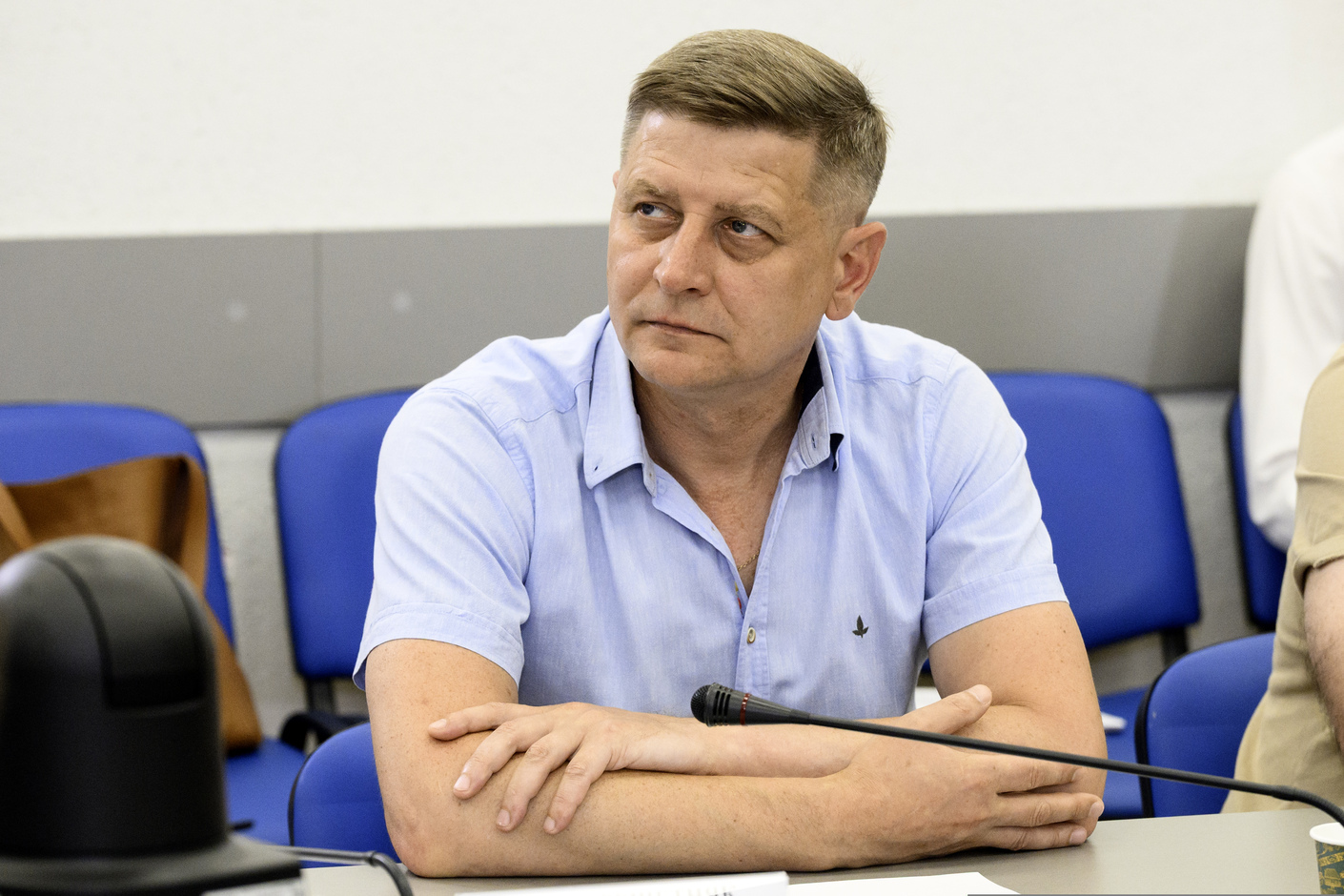
The Vice President of the Ukrainian Association of District and Regional Councils and Chairman of the Starobilsk District Council, Roman Reshetnyak, noted that while Draft Bill No. 14405 is vital primarily for small communities, the study findings showed that similar issues are already emerging at the district level.
"The statistics demonstrated very well that the problem has long gone beyond communities with a population under ten thousand. It affects communities with larger numbers of voters, the district level, and even regional councils."
According to him, the situation remains particularly difficult in the temporarily occupied territories.
"For nearly three years, certain district councils have not held any sessions at all, but there is no legislative mechanism to resolve this situation. The Constitution stipulates the existence of district councils, but if they cannot actually work, the state must define the subsequent procedure for exercising their powers."
Roman Reshetnyak drew particular attention to the problem of territorial election commissions in occupied territories.
"In the Luhansk Oblast, territorial election commissions effectively no longer exist. Because of this, it is impossible even to legally formalise the termination of councillors' powers, including those who are openly collaborating with the occupying authorities. This is another legislative gap that needs to be closed as quickly as possible."
He called on parliament and the relevant ministry not to limit themselves to Draft Bill No. 14405, but to prepare comprehensive changes regarding the functioning of the district level of local government under martial law.
All-Ukrainian Association of Amalgamated Territorial Communities: The bill must be passed, but it is not enough
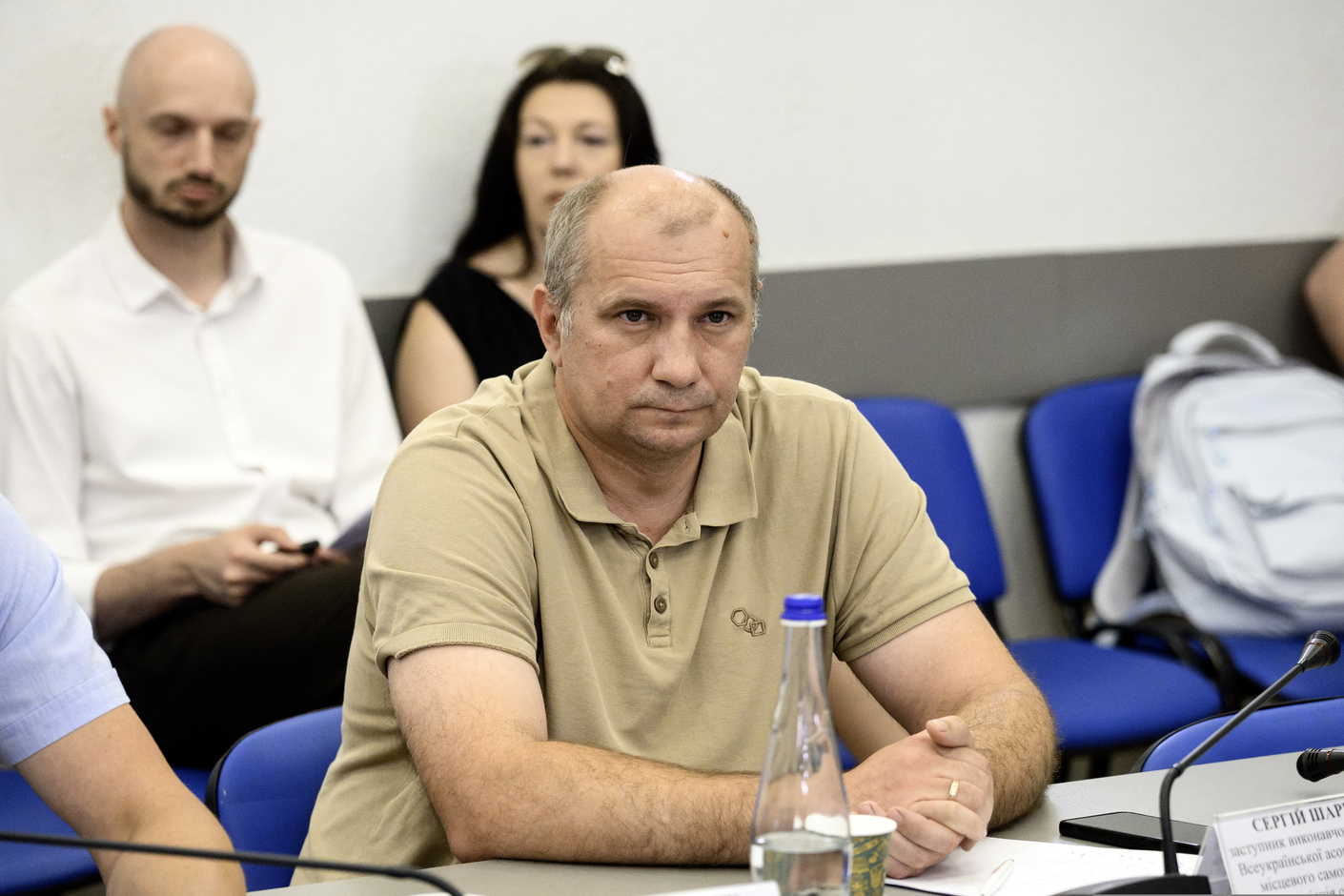
The Deputy Executive Director of the All-Ukrainian Association of Amalgamated Territorial Communities, Serhiy Sharshov, supported Draft Bill No. 14405, but emphasized that it does not resolve all the problems related to local government activities during the war.
According to him, the situation should be viewed differently for communities where municipal military administrations have been established versus those where they are absent.
"In reality, the greatest number of problems regarding the quorum of local councils arises precisely where municipal military administrations are functioning."
As an example, he cited communities located far from the front line.
"Take the Hostomel Settlement Council, for instance. Formally, the council exists and the councillors are active, but at the same time, a military administration is operational. A perfectly legitimate question arises: what is the actual status of such a council, and how should full-fledged local government be restored after the military administration completes its work?"
Serhiy Sharshov reported that the board of the All-Ukrainian Association of Amalgamated Territorial Communities has already endorsed Draft Bill No. 14405.
"We supported its adoption. But simultaneously, we believe that the procedure for restoring the activities of local government bodies after the termination of municipal military administrations needs to be regulated at the legislative level."
In his view, this should be the next step following the passage of the bill.
All-Ukrainian Association of Communities: We must address the root causes, not just the consequences
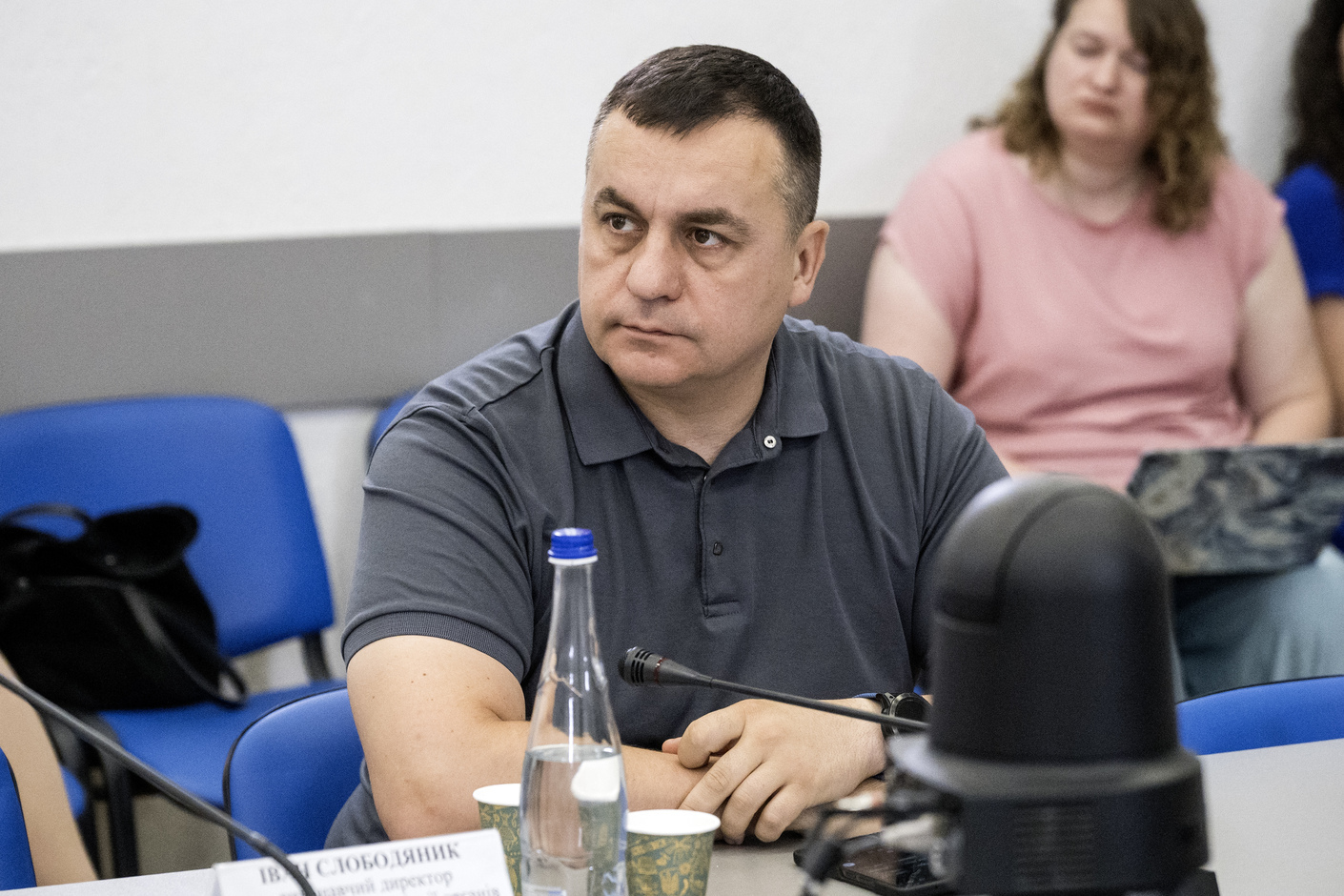
The Executive Director of the All-Ukrainian Association of Communities, Ivan Slobodyanyk, noted that the problem of local councils' quorum has been a focus of the Association's attention since the first months of the full-scale war. According to him, the research findings presented during the round table merely confirmed the scale of the issue.
In his conviction, Draft Bill No. 14405 is meant to address only the consequences, while the state needs to work with the root causes as well.
"Today, we are effectively fighting the consequences. But it would be very useful to separately analyze the reasons why councillors are resigning. After all, over 70% of cases are personal resignations."
Ivan Slobodyanyk is convinced that one of the main reasons was the restrictions imposed on local council councillors during martial law.
"A key reason was the inability to travel abroad freely. Initially, this acutely affected female councillors; today, the issue is relevant for men over the age of 60. For many councillors, this created additional psychological pressure and became one of the reasons for resigning their seats."
At the same time, he emphasized that it is necessary not only to pass the bill but also to eliminate the very factors driving councillors to leave representative bodies.
"We will support the bill and work with MPs to ensure its adoption. But at the same time, we need to remove the restrictions that are currently driving local council councillors to step down."
Ivan Slobodyanyk drew attention to the legal conflicts arising in communities where municipal military administrations have been established.
"Today, there are communities where military administrations have been formed, but the Verkhovna Rada has not yet transferred the relevant powers to them. If the head of the community and the head of the military administration are the same person, the system still functions. If they are different people, a serious legal conflict arises. This also needs to be regulated legislatively."
OPORA: The problem is long-term and requires a comprehensive solution
The Legal Advisor to the Civil Network OPORA, Pavlo Romaniuk, noted that a study conducted by the organization in 2025 confirmed most of the conclusions presented during the round table.
"Thank you to the organizers for two thorough studies. They are very timely. Our study also touched upon certain aspects of local government quorum, and its results largely coincide with the conclusions we heard today."
At the same time, he urged for the problem to be viewed much more broadly.
"At the beginning of the war, we spoke about short-term risks for local government. Later, about medium-term ones. Today, it is obvious that we are dealing with long-term risks, and this requires legislative solutions of an entirely different scale."
Pavlo Romaniuk expressed the opinion that the proposed bill does not fully resolve the problem.
"To be honest, after reviewing the draft bill, a question arose for me: does it truly solve the problem completely? Yes, it offers a certain mechanism, but at the same time, it leaves a number of internal contradictions."
Nonetheless, he emphasized that the problem is cumulative.
"A mass loss of quorum in local councils has not occurred yet. But every councillor who terminates their powers early gradually inches the council closer to a critical threshold. That is why we need to act right now."
A separate part of Pavlo Romaniuk's speech was dedicated to the impact of banning certain political parties on the functioning of local councils. According to him, OPORA's study showed that the party bans themselves were not the primary reason councils lost their quorum.
"The main reasons for councils ceasing operations were territorial occupation, hostilities, or the transfer of powers to military administrations. However, the ban on political parties effectively blocked the possibility of replacing individual council seats."
In his view, this is another argument in favour of making comprehensive changes to the Electoral Code.
"We need not only to pass individual draft bills but also to adapt the Electoral Code, the law on the legal regime of martial law, and local government legislation to the conditions of post-war recovery."
Olena Boyko: War kills democracy exactly where it is needed most
Summarizing the discussion, local government expert Olena Boyko pointed out the symbolic conclusion of the two independent studies.
"The methodology of these studies was different: one is based on a survey of local government bodies, the second on statistical data. Yet despite this, they led to absolutely identical conclusions."
According to her, the greatest cause for concern is the fact that the war is destroying democratic institutions most severely in border and frontline communities.
"We are fighting for democracy today, but it is literally being killed by Russian aggression. The border areas suffer the most from this, where local government, unfortunately, is often already effectively ceasing to function."
At the same time, the expert emphasized that problems are accumulating in regions far from the front as well.
"We can explain the situation in frontline areas. But it is very difficult to explain why councillor vacancies are accumulating in Zakarpattia or Chernivtsi oblasts. Why did the Khmelnytskyi District Council fail to hold a single session over the course of a year? These specific questions require separate analysis."
Olena Boyko also supported the necessity of passing Draft Bill No. 14405.
"Its urgency is confirmed even by practical examples where local council decisions are passed by fewer councillors than the law requires. This proves that the problem already exists and cannot be ignored."
At the same time, she is convinced that the next step must be a revision of the legislation governing the status of local council councillors.
"If we took the role of a local councillor more seriously, many of the current problems simply would not have arisen. A councillor must be responsible to the community, accountable, and genuinely engaged in the council's work. Evidently, the Law 'On the Status of Local Council Councillors' already requires a major overhaul."
The expert stressed that the analytics presented that day should mark the beginning of systematic work to improve legislation rather than the end of the discussion.
"The discussion is only just beginning. But it is already obvious: if we want to preserve viable local government under war conditions, decisions must be made without delay."
06 July 2026
In June, UAH 38.5 billion transferred to...
In June 2026, the Ministry of Finance, in compliance with budgetary legislation, ensured the transfer of...
06 July 2026
Open Call for National Short-Term Legal Experts U-LEAD with Europe Phase III – DRD-ES Team
Open Call for National Short-Term Legal Experts...
Open Call for National Short-Term Experts: Legal Expertise on the Delimitation and Distribution of Powers among...
06 July 2026
U-LEAD training inspired the creation of Local...
The training programme ‘Steps for professionals. Participation of municipality residents in addressing local issues’...
03 July 2026
‘Ukrainian communities are now fully-fledged participants in the European dialogue’
‘Ukrainian communities are now fully-fledged...
Shyroke community in Zaporizhzhia region works in conditions that many European municipalities would find difficult...