How communities can learn to invest in results: Team of the Centre for Innovations Development held a training session on public resource management
It is not enough for a community to have a good project idea in order to receive funding for it. It has to prove that this particular solution meets people’s needs and the community’s strategic objectives, delivers measurable results, and will remain effective in the long term. Community representatives practised this approach during a training programme organised by the Centre for Innovations Development.
On 10–11 September in Odesa and 14–15 September in Poltava, the first in-person module of the training programme “Managing Public Resources at Local Level: From Project Idea to Systemic Change in the Community” was held, implemented with the support of the “Partnership Fund for a Resilient Ukraine”. A total of four such training modules are planned.
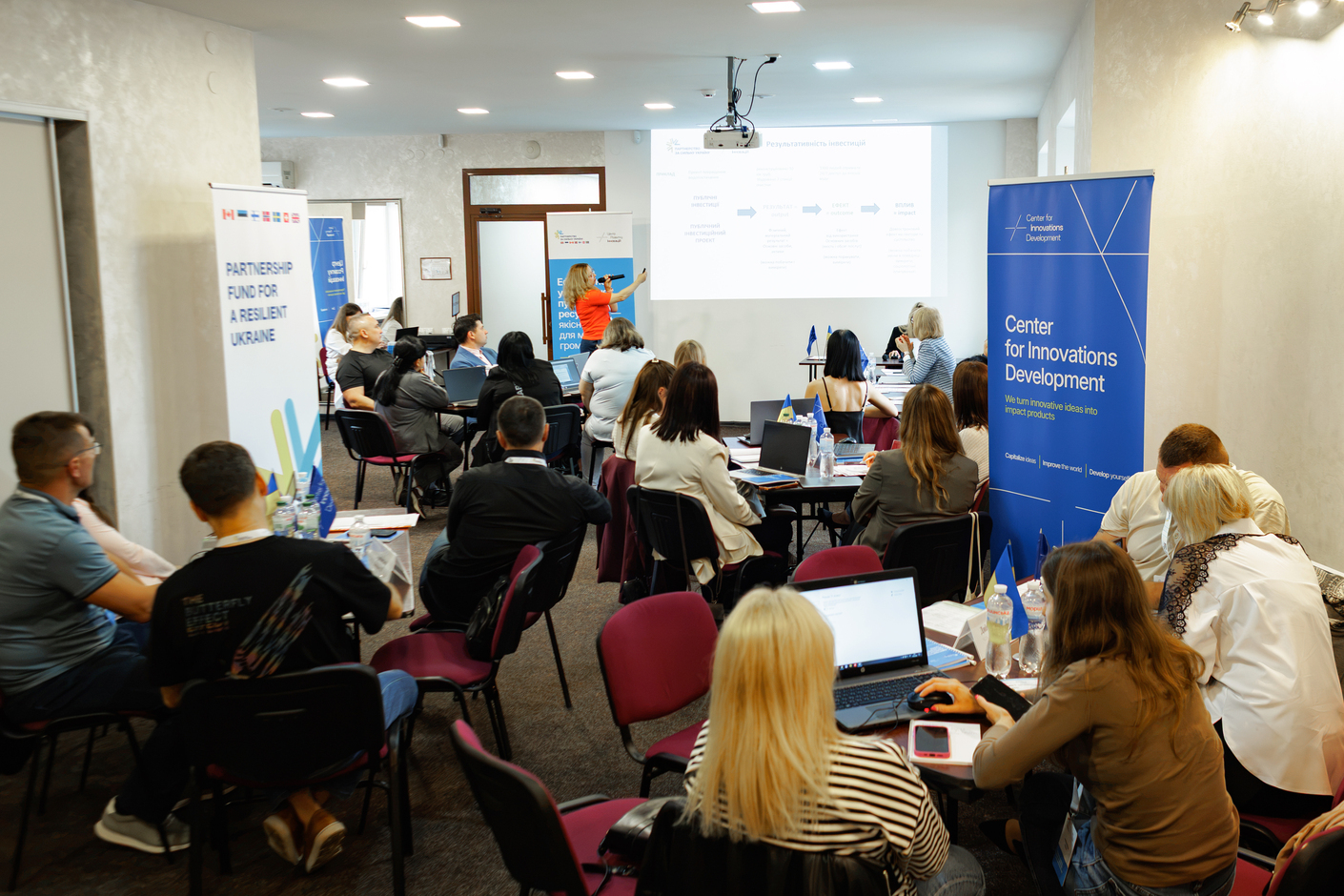
The participants, supervised by experts, worked on their own project ideas, analysed how well these aligned with the community’s strategy, identified problems and needs, compared alternatives, and assessed future costs, risks, and outcomes. One of the key principles of the training was the “learning by doing” approach. Each subsequent exercise built on the results of the previous one, so that by the end of the training, community representatives would have gained not only new knowledge but also a practical foundation for further developing their own investment project.
From seeking funding to choosing the right solution
A change in approach to public investment begins with a simple yet fundamental question: where exactly should the community invest its limited resources?
According to Kateryna Ivanchenko, Director of the Centre for Innovations Development, it is important today to move away from the logic whereby the main task is to find funding for a project that has already been developed.
‘Our aim is not simply to learn how to follow the procedure correctly, but to choose the best solutions for their communities. Today, the question is no longer just about where to find the money for a project, but about where to invest limited resources in order to create the greatest value for people and the community,’ said Kateryna Ivanchenko.
During the training, therefore, the participants examined public investment not as a separate budget item, but as part of the full project implementation cycle: from strategic planning and needs assessment to preparation, selection, step-by-step management, and the ongoing management of the resulting asset.
Is the project a real investment?
One of the first practical tasks for communities was to define the boundary between public investment and routine capital expenditure. In practice, this is not always obvious. For example, a community may allocate significant funds for the repair or renovation of a facility. However, the mere fact of capital expenditure does not in itself mean that it is a public investment.
The experts suggested that the participants should look at such decisions primarily in terms of their outcome. The key questions that communities should ask themselves are: what problem the project solves, what need it meets, whether there is demand for it, what will change for people once it has been implemented, and whether the quality of services will improve.

During the practical exercises, the participants analysed specific examples and determined whether to invest or simply to repair and maintain, whether to build a new facility or maintain an existing one, and whether public investment was necessary to solve a particular problem. This “screening” of project ideas helps to filter out solutions that do not create sufficient long-term value, even before the community spends resources on their detailed preparation.
Another important principle that the participants explored was the need to compare alternatives. If a community faces a problem, this does not automatically mean that the solution should be the construction of a new facility or a large-scale refurbishment. Sometimes a problem can be solved through organisational changes, a new service delivery model or another management decision. It is therefore important to consider different options and compare them against specific criteria before making an investment decision.
During the training, the participants also worked on the theory of change and economic justification, analysed different options, and determined which one was optimal. In other words, the logic shifts from “we want to build this facility” to “we have a problem, we have identified the desired change, and we are looking for the best way to achieve it”.
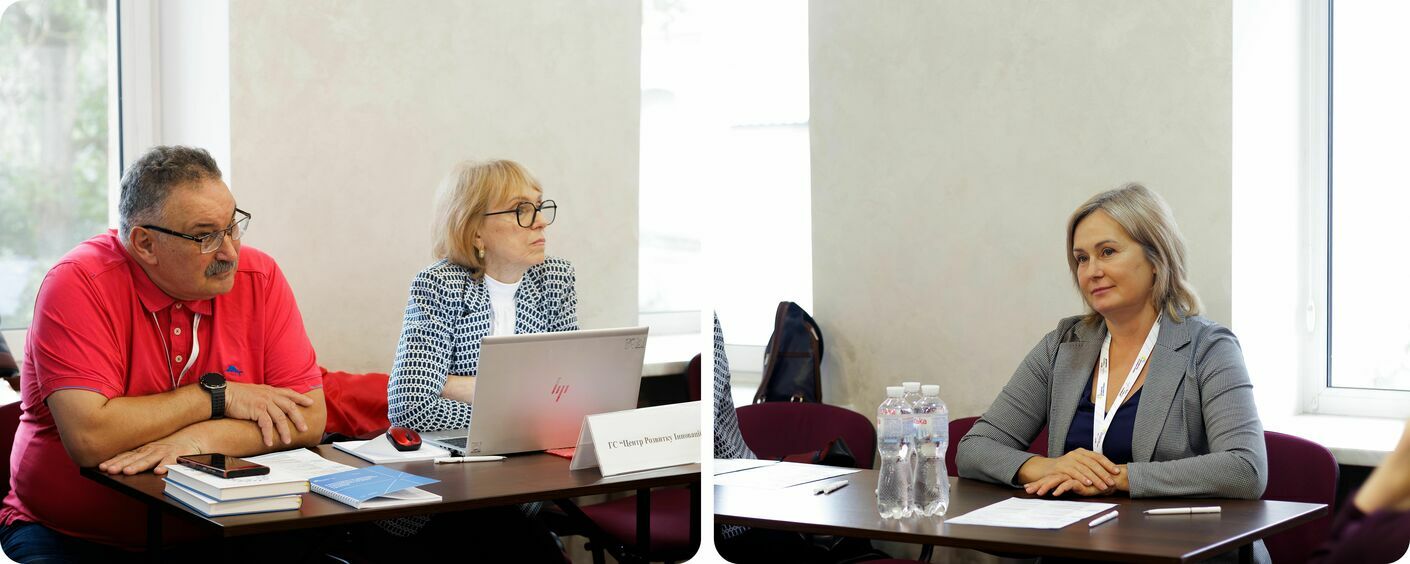
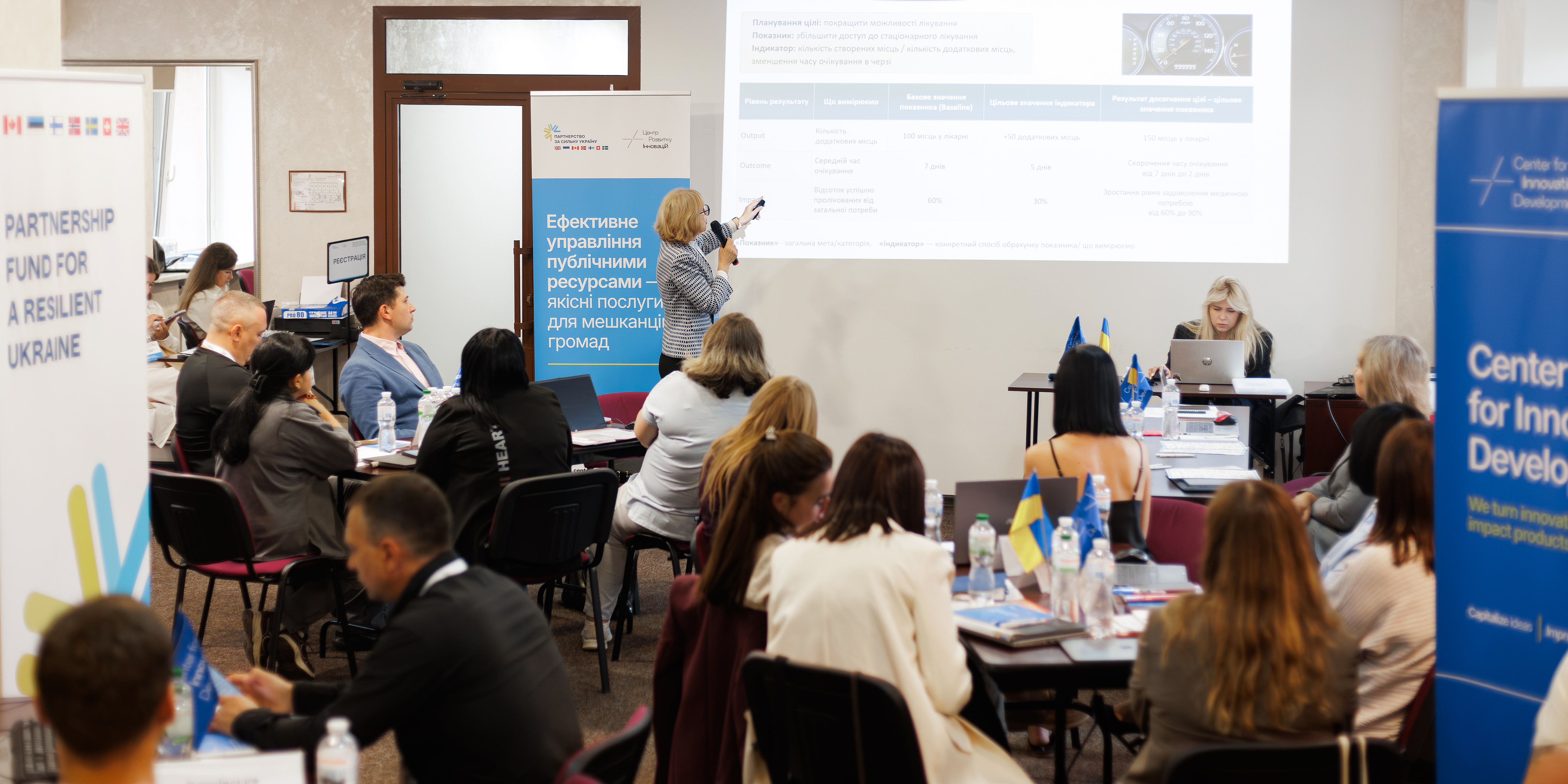
A separate training module was devoted to the link between strategic documents, the medium-term public investment plan, and the budget. The participants undertook practical exercises to define objectives and indicators for selected sectors, and then linked these to the indicators of budget programmes. This helps to determine whether a future investment genuinely contributes to the community’s strategic goals, rather than existing as an isolated project with no connection to the overall vision for its development. Indeed, a good investment decision does not begin with the question “how much will it cost?”, but with the question “which of the community’s strategic problems are we addressing?”
During the training, special attention was paid to the preparations for the Feasibility Study – the stage at which the community has to gather sufficient information to make a justified decision. The participants identified what data was needed, where to find it and how to use it to justify the project. They worked with the data in terms of economic, financial, commercial, managerial and other aspects of the assessment. At the same time, they analysed funding sources, costs, and the project’s life cycle.
During practical exercises, the participants drew up a brief financial justification sheet for their own project idea, identifying those responsible, the type of expenditure and investment, the expected improvement in service quality, and the next step in preparation prior to the feasibility study. This is important because the project cost is not the only financial factor that needs to be taken into account. The community needs to understand how much funding will be required not only to create the asset, but also to ensure its ongoing functioning.
Another module of the workshop focused on risks and the capacity to implement the project. The participants analysed potential suppliers and contractors, management risks, and measures to minimise and control them. Such an analysis allows the project to be assessed not only in terms of the desired outcome, but also to answer the questions of whether the community can implement it in the proposed format, what risks may arise, and what needs to be done to mitigate them.
From an idea to a justified investment decision
During the training, the participants generally followed a step-by-step process, moving from the analysis of strategic objectives and challenges to the initial economic and financial justification of their own project ideas. This can be schematically represented as the following sequence: community strategy – problem and need – project idea – analysis of alternatives – strategic justification – economic and financial justification – risk assessment – preparation for the preliminary feasibility study. For communities, this signifies a shift in the culture of decision-making about public funds. It is no longer just a question of how to implement a project and find funding for it, but of whether it is worth implementing at all, which option will be best, and what long-term value it will create for the community. This approach enables a shift from the logic of spending funds to results-oriented public investment management.
The training programme is implemented by the Centre for Innovations Development within the framework of the project “Effective and Transparent Management of Public Resources at Community Level”, with the support of the “Partnership Fund for a Resilient Ukraine”, funded by the governments of the United Kingdom, Estonia, Canada, Norway, Finland, Switzerland and Sweden.
Source:
Центр розвитку інновацій
21 September 2026
Від типу території - до конкретних пріоритетів: що функціональна типологія означає для громад
Від типу території - до конкретних пріоритетів:...
Українські громади працюють у дуже різних умовах. Для одних першочерговими залишаються безпека, відновлення...
21 September 2026
Держава і місцеве самоврядування: від взаємодії до спільної відповідальності за розвиток України
Держава і місцеве самоврядування: від взаємодії...
Стаття присвячена розвитку партнерства між державною владою та місцевим самоврядуванням у підготовці й реалізації...
21 September 2026
Не після перемоги. Міжнародна співпраця прифронтових громад
Не після перемоги. Міжнародна співпраця...
Коли за кілька десятків кілометрів тривають бойові дії, думати про міжнародні партнерства здається майже недоречним....
21 September 2026
European RDA Trends that Made Them Successful
European RDA Trends that Made Them Successful
Across Europe, Regional Development Agencies (RDAs) are now redefining what it means to drive regional growth. They...