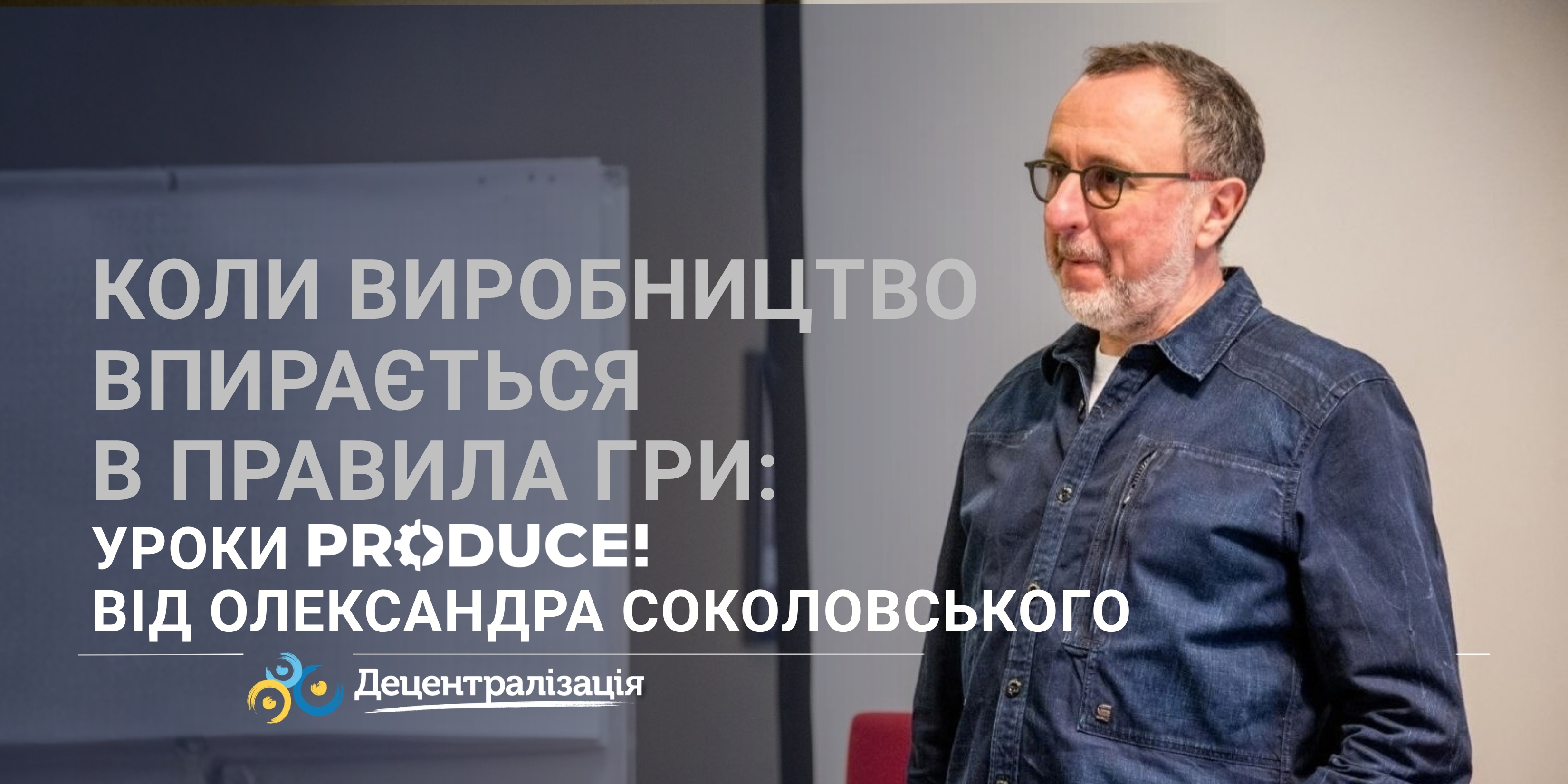
When production conflicts with the rules of the game: Produce! lessons by Oleksandr Sokolovskyi
A high-quality product, modern equipment and a strong team do not guarantee a manufacturer’s success. A company may lose out not to competitors, but to shadow schemes, unequal tax conditions, weak state support for exports or restrictive market access rules.
This aspect of industrial development was addressed during the final module of the Produce! training initiative “Leadership in Economic Development through Production”. The programme is implemented by the KIEF Academy under the auspices of the Ministry of Economy and Environment of Ukraine, with the support of the Swiss-Ukrainian “Ukraine’s Cohesion and Regional Development” (UCORD) project, which is implemented with Swiss support by NIRAS Sweden AB.
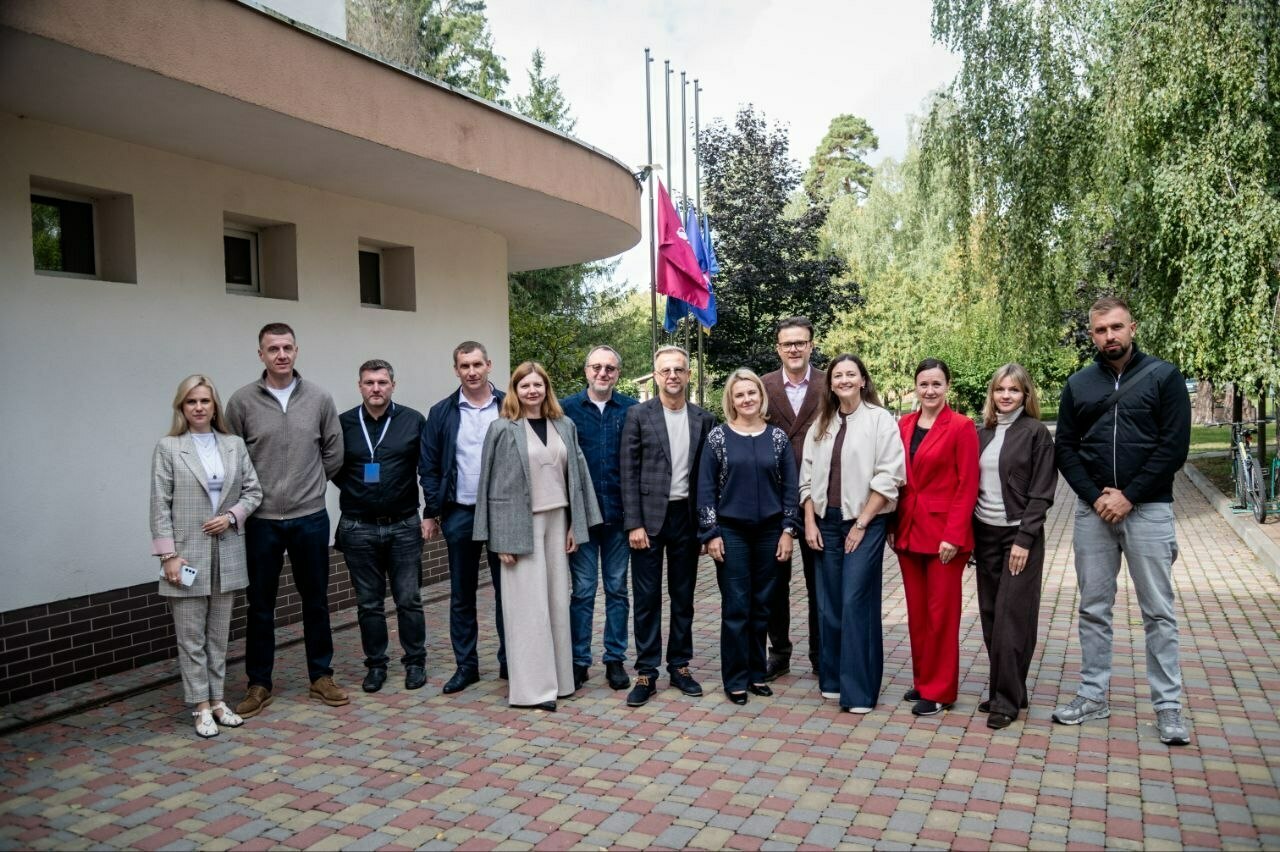
Participants in the programme from the six UCORD pilot regions – Vinnytsia, Volyn, Odesa, Sumy, Ternopil, and Khmelnytskyi – talked to Oleksandr Sokolovskyi, the founder and president of the Tekstyl-Kontakt group of companies, about their experience of setting up and relaunching production facilities, investing during the war, and the rules without which Ukrainian industry cannot grow.
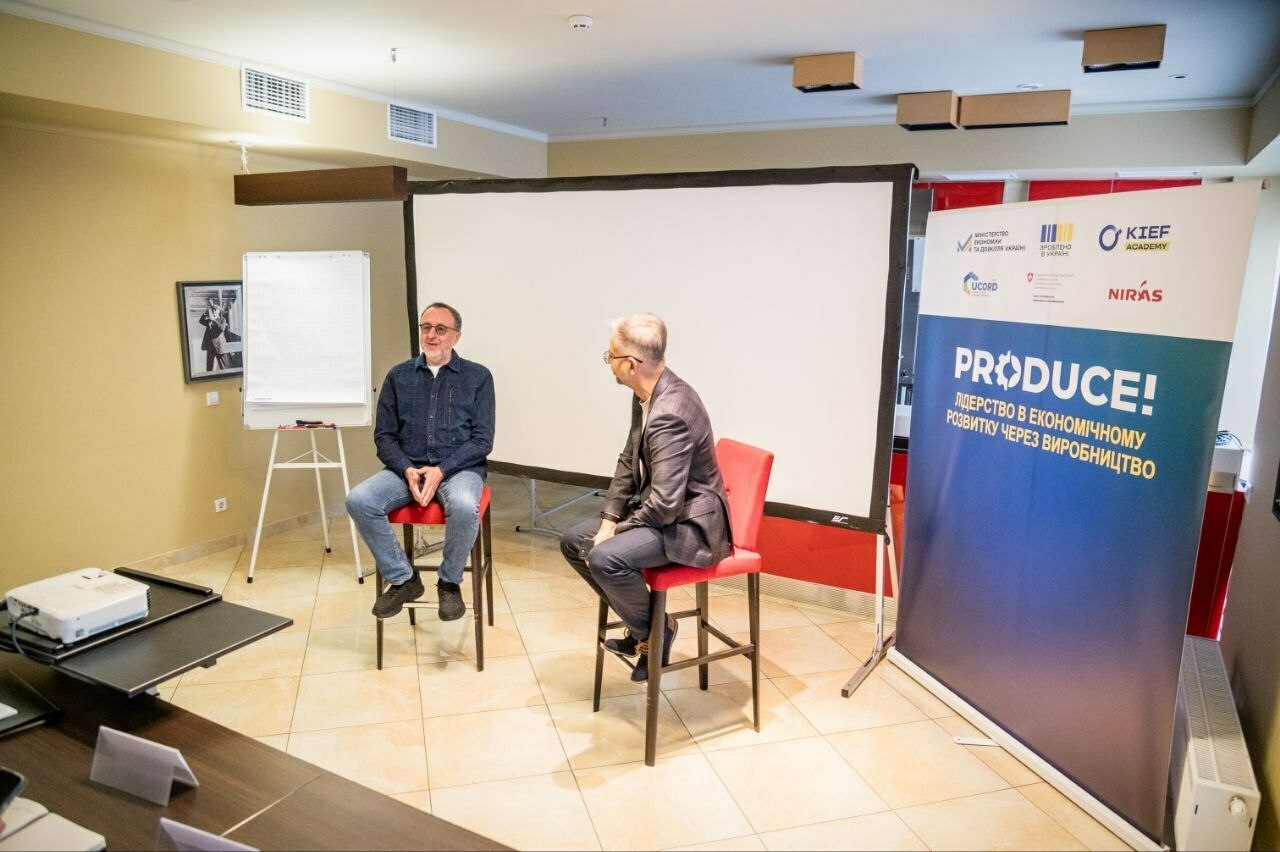
The history of Tekstyl-Kontakt began with a small garment factory, which later grew into a large group of light industry enterprises. Over the course of a decade, the company evolved from trading in fabrics and working with customer-supplied raw materials, to launching a textile mill in Donetsk and establishing production facilities in other regions. The company also began exporting and manufacturing workwear and military uniforms.
In 2014, the group lost the Donetsk complex, into which it had invested considerable capital and years of work. However, the company’s manufacturing expertise, team and market knowledge did not disappear with it. The company resumed textile production at a new site in Chernihiv and continued to develop its other factories.
This experience is important for regions seeking opportunities for economic recovery. A derelict industrial asset, an unfinished workshop or an empty site does not constitute a ready-made project. However, with the right entrepreneur, team, market knowledge, technical model and understanding of customer needs, they can form the basis for new production.
Production during wartime requires the readiness to make decisions in situations where the outcome cannot be guaranteed. Oleksandr Sokolovskyi explained how the group purchased equipment from a bankrupt Polish textile company in 2023 and transported it to Ukraine. Further investment in the project had to be adjusted due to the risks posed by the war, but acquiring the equipment was an investment in the country’s need for its own manufacturing base.
In addition to the risk of war, Ukrainian manufacturers face another systemic problem: competition from the shadow economy. According to Oleksandr Sokolovskyi, legitimate businesses that pay taxes, formally employ staff, and invest in production are often at a disadvantage compared to those who use tax minimisation schemes or import cheap goods.
‘We are forced to compete with the shadow economy. In the shadow economy, costs are significantly lower. This means we have no profit margin to increase staff salaries and retain them in Ukraine,’ said Oleksandr Sokolovskyi.
He stressed that the problem does not lie with small businesses or the simplified tax system itself. Rather, the issue arises when it is used as a tool for large-scale trade, smuggling, and tax evasion. In such circumstances, manufacturers find it more challenging to modernise, pay competitive wages and invest in expansion.
Oleksandr Sokolovskyi also drew attention to the policies adopted by competing countries to support their own producers. This is not just about tariff barriers. These countries assist companies in entering foreign markets, funding their participation in trade fairs, product promotion, and engagement with buyers. For a Ukrainian manufacturer, this means competing not just with individual Turkish or Chinese products, but with the entire support systems behind them.
The discussion on economic patriotism was also important. It should not be reduced to a single campaign or a call to “buy Ukrainian”. In order for consumers to choose domestic products, the latter must be of a high quality, modern, affordable yet competitive standard. For producers to be able to deliver all this, fair playing rules are needed.
‘If there are fair playing rules for everyone, the economy will benefit. The Ukrainian economy is highly adaptable and capable of rapid growth, but this requires state support and determination,’ noted Oleksandr Sokolovskyi.
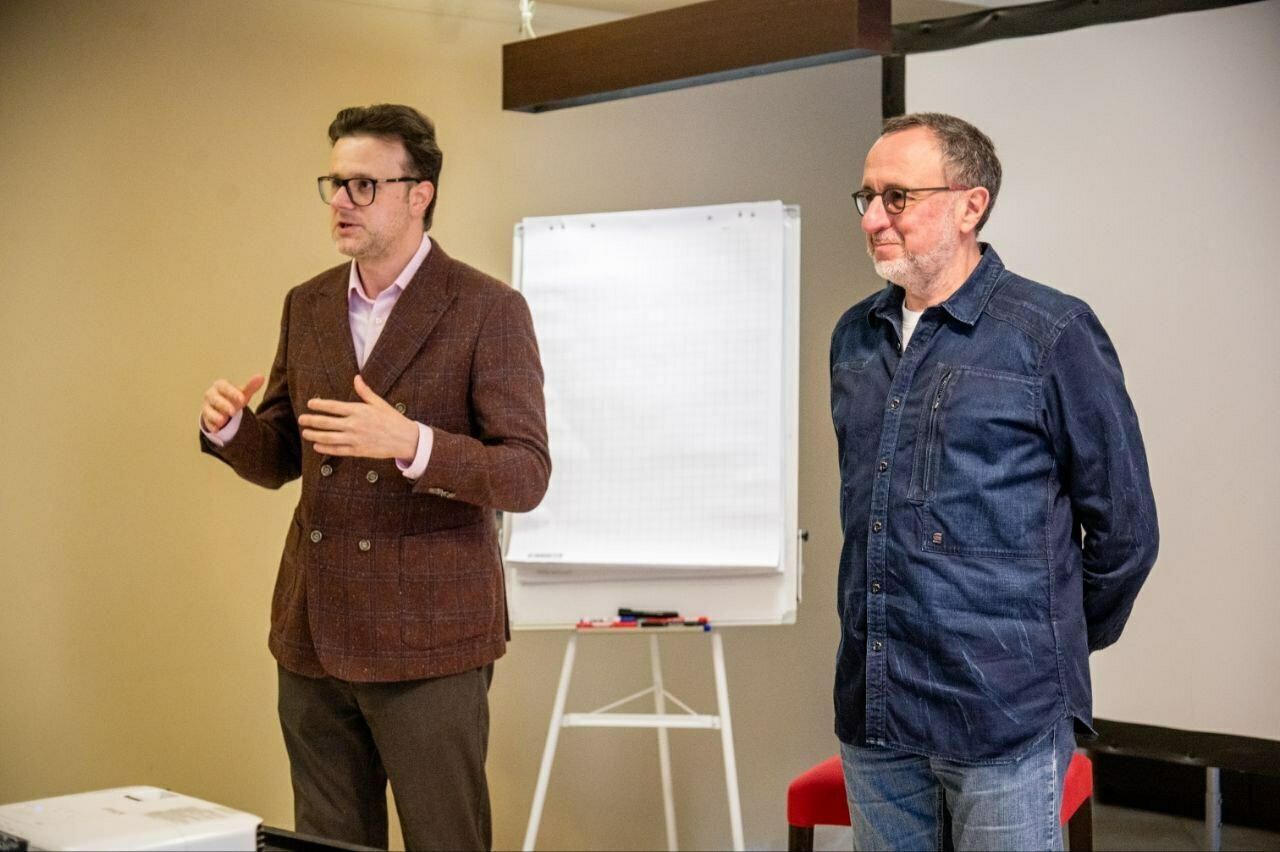
At the end of the session, Viktor Halasiuk, CEO of the KIEF Academy and UGF, member of the KIEF Supervisory Board, Adjunct Professor at kmbs, and Doctor of Economics, suggested that participants view Oleksandr Sokolovskyi’s experience as a set of practical lessons for their own regional projects.
The first of these is transparency. In a challenging business environment, it becomes a protective tool. Openly discussing the industry’s problems, articulating one’s position, building a reputation, and garnering support should be approached systematically, rather than only in response to conflict.
The second lesson is not to limit oneself to improving the efficiency of a specific production process. Even a competitive product can lose out due to external regulations: taxes, customs policy, public procurement, access to finance or export support.
‘We need to look at the rules of the game as an architect, not just as a user. They can act as either obstacles or springboards for development,’ concluded Viktor Halasiuk.
For the Produce! teams, this means that a regional project should not merely answer the questions “what to produce?” and “where to find an investor?”. It is equally important to identify exactly which barriers restrict the sector, who can help remove them, and what changes to the rules should be proposed to the government.
Read the previous report on the first day of Produce!: “From resources to factory: what regional teams learn through the Produce! Initiative”.
Tags:
regional development study ucord European Cohesion Policy
Source:
Портал "Децентралізація"
28 September 2026
Poltava Oblast: Strategic Development, Recovery and Cooperation with Sweden
Poltava Oblast: Strategic Development, Recovery...
During the visit to Poltava, the Polaris Programme management and experts discussed strategic development and support...
28 September 2026
Від аудиту до бюджету: громади обговорили, як зробити безбар’єрність частиною управлінських рішень
Від аудиту до бюджету: громади обговорили, як...
Безбар’єрність у громаді починається з розуміння потреб людей, визначення пріоритетів, планування коштів і перевірки...
28 September 2026
Vacancy: Team Lead for Municipal Enterprises
Vacancy: Team Lead for Municipal Enterprises
Description of the context To address the changing needs of Ukrainian municipalities and national-level...
28 September 2026
В Україні вперше відзначили громади за практики рівних можливостей
В Україні вперше відзначили громади за практики...
22 вересня у Національній філармонії України в Києві відбулася церемонія нагородження Національної відзнаки...