Train Kyiv – War. Interview with Head of Kostiantynivka City Military Administration
‘I would very much like the state to change its attitude towards utility workers in communities like ours. These people are real heroes, yet their heroism goes unrecognised. If a soldier dies, their family receives substantial compensation. But if a utility worker or military administration employee dies, their family receives nothing... They are easy targets for Russian snipers, drone operators and artillerymen, yet formally they are no different to those living peacefully in the rear,’ claims Serhii Horbunov, Head of the Kostiantynivka City Military Administration in the Donetsk region.
By Dmytro Syniak
Since 2014, the Intercity train from Kyiv to Kostiantynivka has been nicknamed the ‘Kyiv–War’ train because the Ukrainian Donbas region, which was affected by hostilities, began in Kostiantynivka. The train was used by military personnel, volunteers, journalists, and civil servants travelling to the war zone. During the eleven years of the war, Kostiantynivka was the closest major transport hub and one of the few nearby major cities. The wounded were brought here and thousands of tonnes of humanitarian aid were distributed from here to communities on the front line. However, at the end of 2023, Kostiantynivka station stopped accepting trains, and in February 2024, Russian guided bombs reduced the station to rubble. Trains no longer run to the Donetsk region. Serhii Horbunov, Head of the Kostiantynivka City Military Administration, described how the community, which is surrounded on three sides by the front line, is currently living.
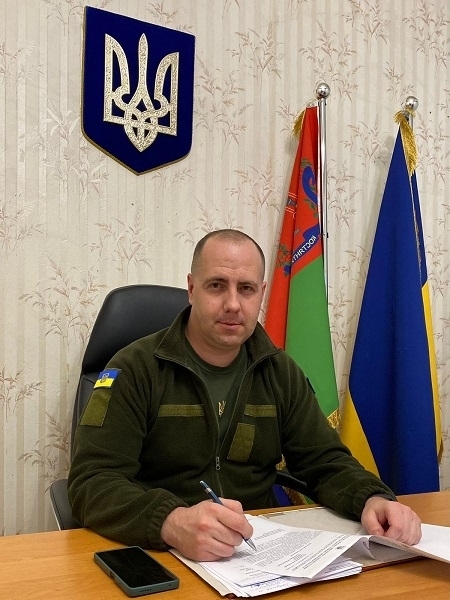
Serhii Horbunov, Head of the Kostiantynivka City Military Administration
After the summit in Alaska, the Russians seemed to run wild
What can you reveal about the situation in Kostiantynivka? How is the community living nowadays?
The situation is extremely tough: Russian drones control all entrances and exits from the city, and we are under constant, daily and even minute-by-minute bombardment from all types of enemy weaponry. They are hitting us with guided bombs from aeroplanes, artillery and multiple launch rocket systems. We are also under attack from swarms of drones that target both the military and civilians. Because of this, we have an extended curfew from 3 p.m. until 11 a.m. the next day. However, this does not provide much protection; not a day goes by without casualties. As soon as the enemy spots a gathering of people or vehicles, they strike immediately. As soon as they detect any movement, they dispatch a drone or artillery. It makes no difference whether you are travelling by car, motorbike or bicycle... Sometimes the drones are so powerful that not even armour can protect against them. Recently, a drone pierced the armour of a vehicle carrying employees of a volunteer organisation to Kostiantynivka. Luckily, everyone managed to jump out before the strike. Employees of the military administration and utility companies have been repeatedly targeted, and unfortunately, there have been casualties and injuries... The enemy is also relentlessly destroying our utility vehicles and armoured transport, which are used to deliver humanitarian aid and evacuate residents.
Is there any urban infrastructure that functions under such dire conditions?
Since the full-scale invasion began, Kostiantynivka has been under constant enemy fire, whether from guided bombs, missiles or shells. Every strike means the destruction of infrastructure and outages of power, gas and water... It is a struggle to restore all of this. A guided bomb hit the railway station, tearing off the roofs of nearby buildings. The military administration was looking for slate. We found it with great difficulty, and our utility workers repaired the damaged roofs of high-rise buildings. But the very next week, another guided bomb hit and our slate flew off in all directions like feathers... Before the summit in Alaska, things were still somehow tolerable. However, as soon as the summit ended, the Russians ran wild and started levelling everything to the ground. Since then, we have almost given up trying to repair anything except invincibility points. We are now focusing solely on evacuating people and helping those who remain.
How many residents remain in the community?
Around 5,000 in Kostiantynivka itself and several hundred more in the surrounding villages. Before the full-scale invasion, Kostiantynivka was home to around 70,000 people. We are trying to evacuate everyone and are asking residents to leave every day. After all, this is their only chance to survive. Just today, three people were wounded... Since the invasion began, the number of civilian casualties has exceeded 300, and unfortunately, this figure is likely to rise. However, it is very difficult to count the losses due to such intense shelling. There are many casualties that we simply do not know about. Casualties are everywhere, including among utility workers and military administration employees. Most of them were people who tried to do their jobs until the very end. And they did it well. Real people...
Why are so many local residents remaining there despite the constant fire?
Everyone has their own reasons. Some people are refusing to leave their homes because they are afraid of being looted. Others are convinced that it will all be over soon. Regardless, many residents hope that the Russians will not reach them and that their community will recover quickly. They want Ukraine to always be here. Over the years of full-scale war, we have also distributed a great deal of humanitarian aid. We work closely and constantly with many international funds and organisations. Consequently, some private homes are literally packed to the ceiling with food and personal hygiene items.
Or perhaps some of those who refuse to evacuate are waiting for the Russians to come? Are there any pro-Russian sentiments within the community?
There are none, and there never have been. I am not counting the votes of a few lunatics here. We have always told supporters of the “Russian world”, ‘Pack your bags, go to the station and head to Russia!’ If you want to live in Russia, then please do! No one is stopping you. The UKRAINIAN Donbas has always been, is, and will always be UKRAINIAN! Russia has not attracted anyone here for a very long time. Especially since 2014, when it became clear who was who.
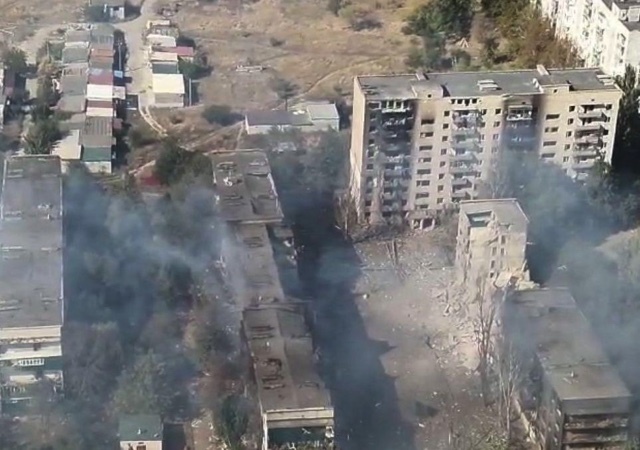
One of the neighbourhoods of Kostiantynivka, photographed from a drone
Serhii Horbunov on one of the streets of Kostiantynivka
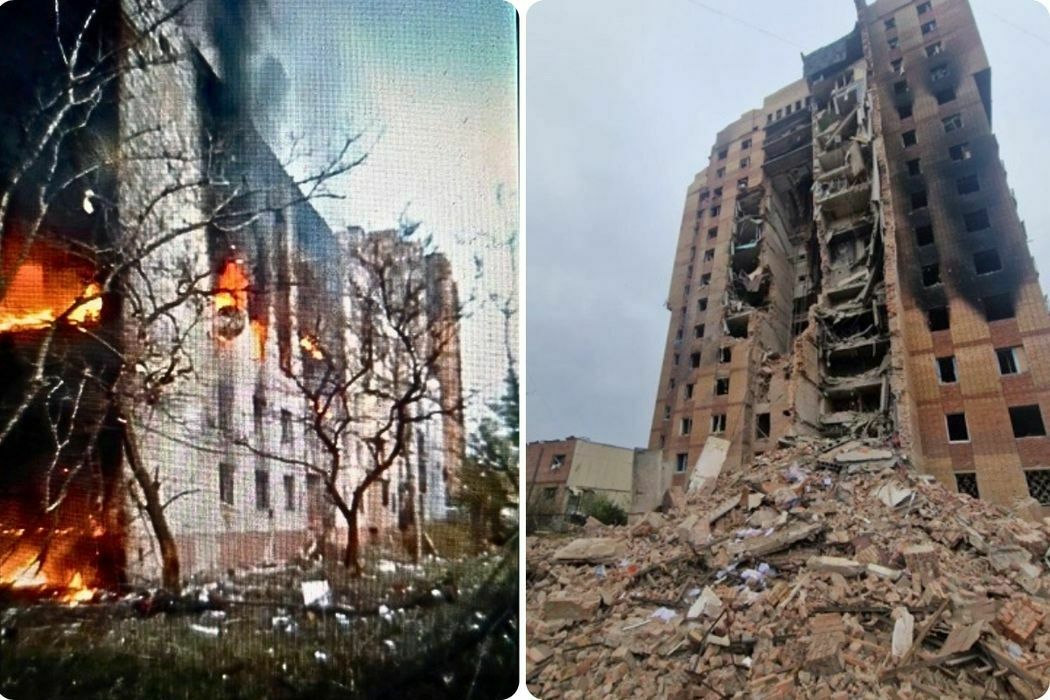
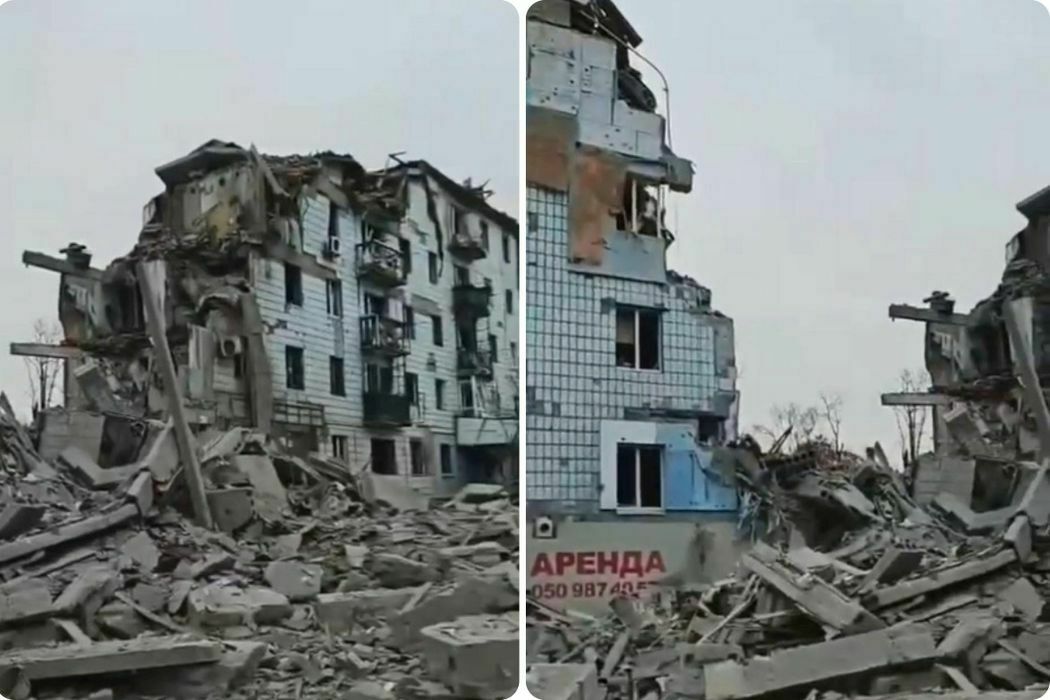
Damage inflicted on the Kostiantynivka community by the Russian army
‘We have to remove the debris from the roads by hand...’
Have you stopped bringing humanitarian aid into the city?
Sometimes we do, but this is starting to feel more and more like a bad Western film. Our heroic utility workers rush into the city at high speed. They remove the debris from the roads by hand because it is impossible to bring in vehicles. Then they make their way to one of three invincibility points. Then they evacuate those who need to be and make it back through. Evacuation is another quest. People who ask to be taken away often have no idea where they are. In some ruins, in some basements… How can we find them? And the search becomes harder and harder every day. It is especially difficult to transport the wounded. Ambulances have not run to Kostiantynivka for a long time, and our vehicles are not equipped for this purpose. It also cannot stop anywhere for long to carefully load people and make sure they are comfortable in the vehicle.
How do invincibility points work? What do people get there?
An invincibility point is often the only place in a neighbourhood where a generator can be started to pump water from wells or charge phones. It is also the only place with internet access, meaning it is the only place where people can communicate with their relatives. I should mention that one part of the city had a functioning water supply until recently. So people there had water. In all the other areas, people have had to use generators to power the artesian well pumps for a long time. Now the water supply has gone too, and it is becoming increasingly difficult to obtain fuel for the generators. This poses a significant risk to life. In fact, our utility workers are trying to deliver fuel to Kostiantynivka at every opportunity because demand for humanitarian aid is generally low. However, fuel is worth its weight in gold.
What does the city look like now? What did you see the last time you were there?
I was in the city today! I think I should go myself, rather than sending someone else, because this trip could be one-way. I do not want to be responsible for the death or injury of my colleagues. That is why I go to Kostiantynivka myself when necessary. What did I see there? Ruins, smoke and burnt-out buildings… High-rise buildings are burning everywhere and cannot be put out because rescuers cannot enter the city. There are clouds of Russian drones everywhere, and even when vehicles are equipped with electronic warfare systems, they are not always effective because there are so many ‘waiting’ and fibre-optic drones, which, in most cases, reach their target and cause damage. This has already happened to me and my colleagues. Luckily, everyone is alive and well, and we all got away with concussions.
You mean it is impossible to enter or leave the city without an EW?
Sometimes, some of the locals manage to travel to or from Kostiantynivka. But doing so is always a gamble. Just yesterday, a Russian drone hit a vehicle trying to do just that. Fortunately, the driver survived. But not everyone is so lucky.
How much damage has the enemy caused to the Kostiantynivka community?
Something is being destroyed every day, so it is very difficult to keep count. This is especially the case since there are areas that are very difficult to drive or walk into. I would say that 90 per cent of our high-rise buildings have been damaged or destroyed. The situation in the private sector is not much better.
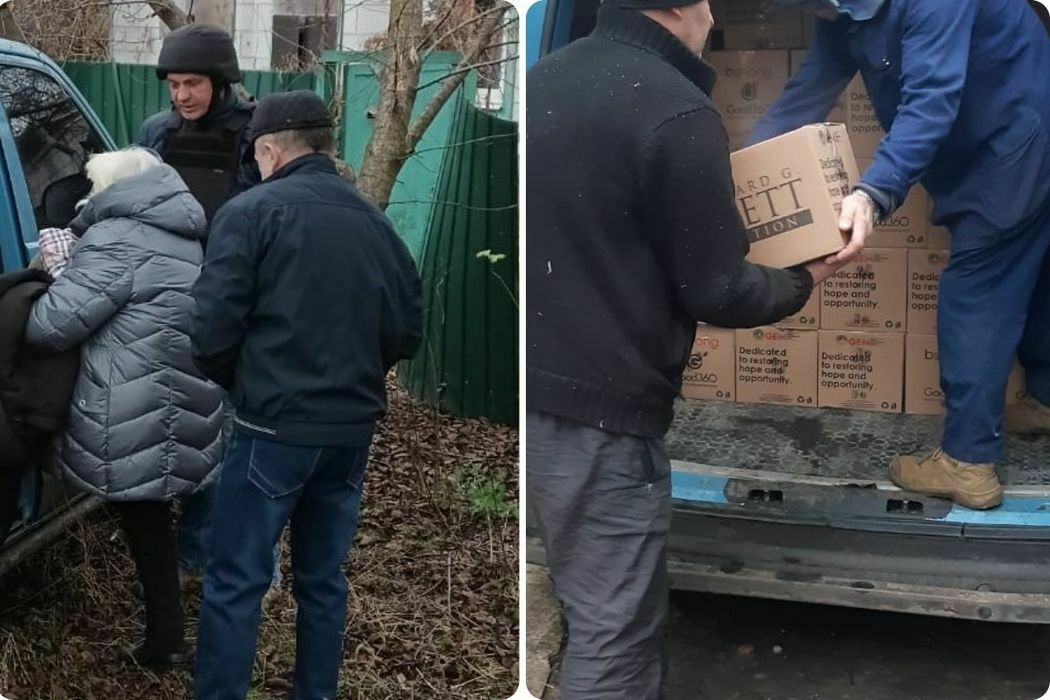
Evacuation and distribution of humanitarian aid in the Kostiantynivka community
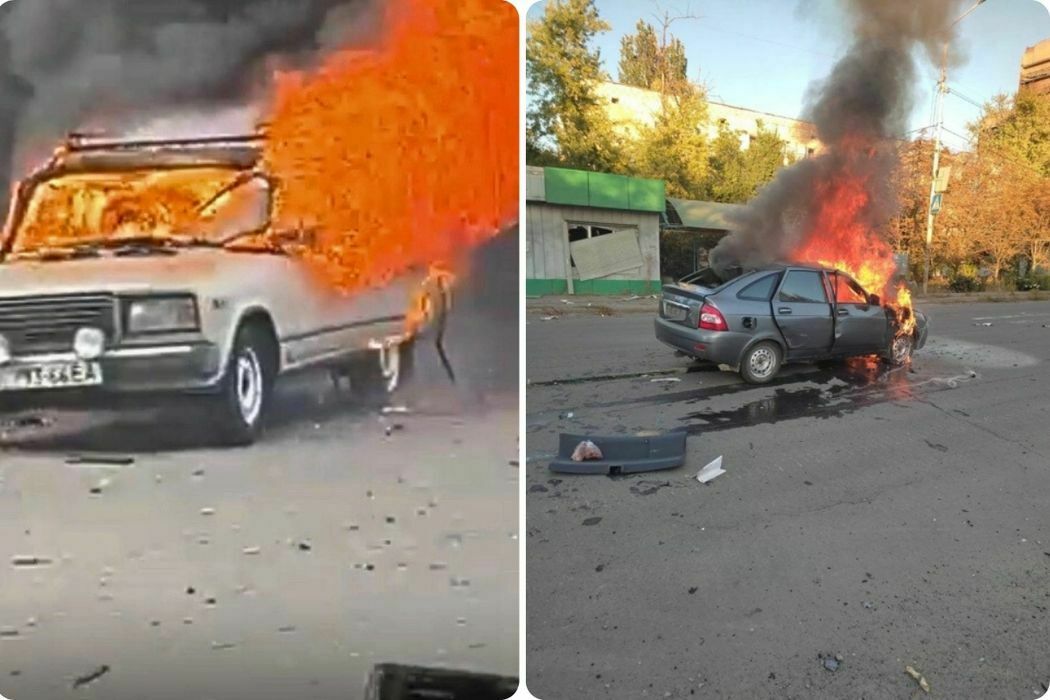
Civilian cars in Kostiantynivka burned by Russian drones
This year alone, the community has transferred over UAH 100 million to the Armed Forces of Ukraine
Are local businesses and farmers still operating under these conditions?
Occasionally, you can still come across an open shop selling goods. But this is the exception rather than the rule. As a result, the community’s budget has been declining since 2022, when it suddenly became the target of Russian attacks. At that time, all the businesses left in a hurry. Later, when things had calmed down somewhat, some people returned, but not the businesses.
How do education and healthcare systems function in conditions of full-scale war?
Our hospital continued to operate until the very end. Everyone understood how important it was to the frontline. All wounded soldiers from Toretsk and Bakhmut were transported here, as we were the closest facility. However, after the summit in Alaska in August 2025, we realised that we had to start evacuating the hospital. First, we transported bedridden patients, doctors, and equipment. As soon as we had finished, the hospital building was completely destroyed by Russian guided bombs. Now, we only provide primary medical care, both online and offline, in Dnipro. Our schools have been operating online since the outbreak of the COVID pandemic. All school and kindergarten buildings were destroyed a long time ago, and we evacuated everything we could. Where possible, we are reducing or merging schools. However, it should be noted that many children have remained in their schools with their teachers. Therefore, there have been no mass reductions.
Do you still work with donor organisations that can provide the Kostiantynivka community with humanitarian aid and transport? Has it become easier to access this aid now that Kostiantynivka is at the forefront of defence?
As I said, we work very closely with various donors. We receive ongoing support from the Rapid Response Mechanism project of the Partnership Fund for a Resilient Ukraine. This multilateral initiative is funded by the governments of the United Kingdom, Estonia, Canada, Norway, Finland, Switzerland, and Sweden. We also work with the organisations World Central Kitchen and Global Empowerment Mission (GEM) on an ongoing basis. While we are not currently in dire need of humanitarian aid, we are constantly cooperating with these foundations. We have certain reserves, as do the people, and it is currently difficult to bring in humanitarian aid. We bring it in when we can, of course, but… Instead, we now need premises in the rear regions to give to our various units. Ideally, I would like these premises to be provided free of charge, rather than at market value. We cannot afford to be ripped off. Most of our people have gone to Dnipro and Kyiv. I would like to place some of our departments and social workers near them. However, the rent in these cities is quite high. I find it offensive because we had our own wonderful premises, but the Russians destroyed them.
Is Kostiantynivka taking part in the ‘Shoulder-to-Shoulder: Cohesive Communities’ project? What can you comment on regarding this initiative?
It is a wonderful project! Anything that strengthens Ukraine’s defence and unites its people is necessary and right. Our partners in this Project are the Uzhhorod community in the Zakarpattia region and the Oleksandriia community in the Kirovohrad region. Uzhhorod recently transferred UAH 1 million to us ‘for the implementation of measures to increase resilience to crisis situations caused by the cessation or deterioration of services vital for its functioning’. Oleksandriia also provided the premises where we are planning to open a hospital for people with reduced mobility. This was provided free of charge, which is very important to us. Until now, we have only been offered such services on a paid basis. As you know, there is not much money in our budget. I am also convinced that we should now spend all our available funds on helping the army, rather than on rent.
Please describe in more detail how the Kostiantynivska community assists the Armed Forces of Ukraine.
Overall, we work closely with the military. Rather than sitting in my office, I always try to communicate with our soldiers defending our community in person, in order to better understand their needs. This year alone, we have transferred over UAH 100 million to various military units and purchased items they require for the same amount. It is essential for us to invest all available funds in defence because this determines whether we will be able to preserve our territory. When transferring funds to the military, I never view it as providing them with assistance. First and foremost, it is a contribution from the community to protect our land.
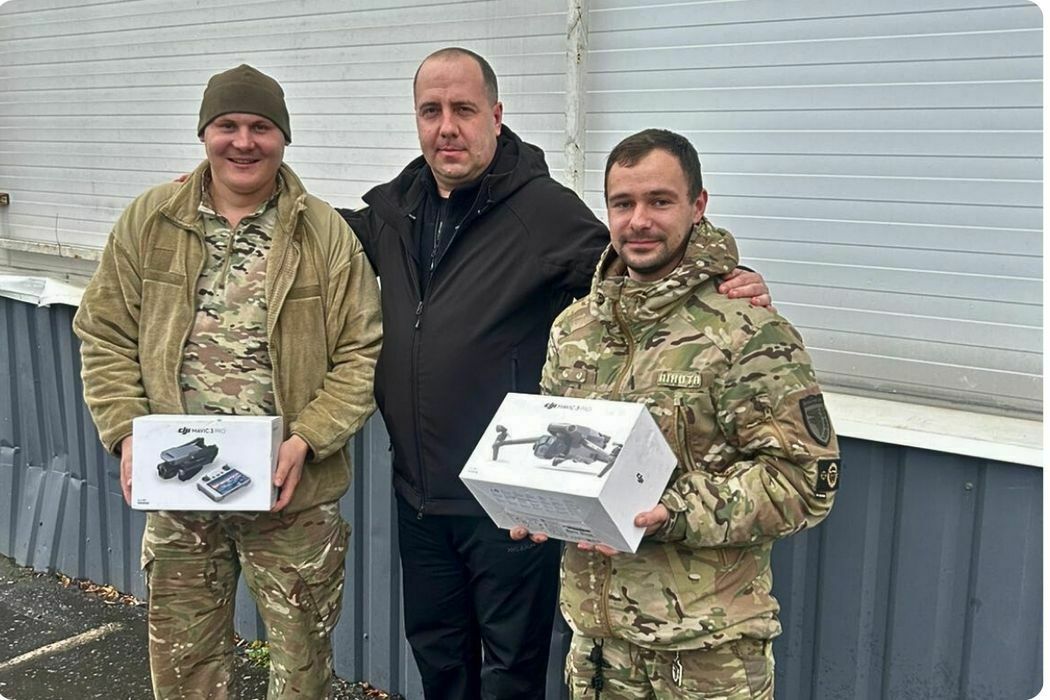
Serhii Horbunov, Head of the Kostiantynivka City Military Administration, handing over drones to the military
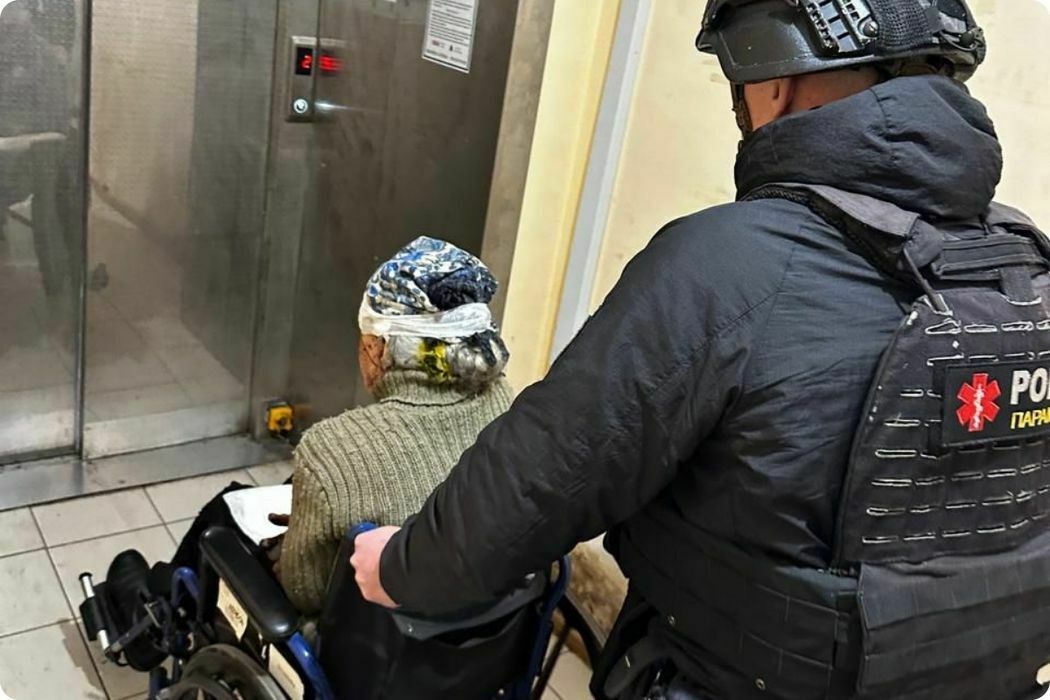
A local resident of the Kostiantynivka community who was injured during Russian bombing, in hospital
Serhii Horbunov in his work truck, ‘I prefer to drive to Kostiantynivka myself so as not to endanger my employees.’ He was once attacked by a Russian fibre-optic drone. The head of the Kostiantynivka City Military Administration suffered a concussion
About the tank monument that ‘went to liberate Bakhmut’
In what ways does the Kostiantynivska community support its residents who have relocated to other regions?
We have many social programmes. For example, there is a programme through which the wounded can receive funds for treatment and the relatives of the deceased can receive funds for burial. We also have programmes for those released from captivity, the children of the deceased, and the families of the deceased. The assistance provided under these programmes varies greatly, ranging from utility bill payments and one-off payments to full rehabilitation. I am talking strictly about civilians; we have separate programmes for military personnel… By the way, we recently relocated an archive from our technical inventory bureau to Vinnytsia. People can now obtain all the information they need to claim compensation for damaged property there. Vinnytsia was chosen because they offered free premises. Our archive employees have also moved there, and I have asked them to start working in Vinnytsia. Destroyed documents are all too common in our time, so archival documents are extremely valuable.
Do many of your residents receive cash certificates for destroyed property?
I would say not very many. Although we are now permitted to inspect houses remotely using drones, we are unable to take advantage of this opportunity in practice. This is because Russian drones prevent us from conducting any inspections. As soon as one of our drones appears to survey a house, enemy drones immediately shoot it down. One positive thing is that we have recognised ten high-rise buildings as completely destroyed, meaning all their residents can receive certificates. The private sector also receives certificates, so our commission is effective. However, this process is very slow because we have to be extremely careful not to lose such valuable drones for the front.
What has stuck in your memory the most during Russia’s full-scale invasion?
I cannot forget the bodies of people who were pulled out from under the rubble right in front of me. The bodies of children, women and elderly people… Many of these people had initially fled to safety at the start of the full-scale invasion, but then returned. We evacuated some of them with great difficulty, thinking we had saved them. But they really wanted to go home. Most of them died in the attack on Ekomarket… Perhaps the worst thing of all was the moans coming from under the rubble of the high-rise buildings. It was awful to realise that there were still living people trapped there, and that it was impossible to help them; they would die under the rubble. Because there was no one or nothing to clear the debris. Sometimes it breaks my heart, and I order the last remaining vehicles to be used in an attempt to save that person. But then the shelling starts and the vehicles are damaged and stop working. After a while, the moans fade away.
Is there anything you would like to change about the regulatory or legislative framework? Are there any regulations that prevent you from working?
Sometimes, certain laws and regulations contradict each other. However, we report these contradictions to the local council associations and the Office of the President. We have good communication channels, and officials from various levels also visit us here. We cannot say that we are not being heard. I would rather ask for your help in reaching out to donors. While I am very grateful for the help that donors provide to our residents here, I would also like this help to reach displaced persons – those who left Kostiantynivka and now live far away. These people have lost everything; they pay rent and often struggle to make ends meet. They really need help with rent or even food because many of them left with nothing – literally barefoot and naked.
We will definitely write about it.
And you know what else? The state should change its attitude towards utility workers in communities like ours. These people are real heroes, yet their heroism goes unrecognised. If a soldier dies, their family receives substantial compensation. But if a utility worker or military administrator dies, their family receives nothing. They are not even combatants, yet they rarely take off their bulletproof vests and helmets. They are easy targets for Russian snipers, drone operators and artillerymen, yet formally they are no different to those living peacefully in the rear. The state does not seem to recognise the value of these people. I fully support the allocation of all possible resources to the Armed Forces of Ukraine. They must endure all this horror and drive out the enemy. However, it would be good if utility workers on the front line were given at least some status…
Please say: are you thinking about the future? What is your vision for it?
I believe that such thoughts are irrelevant now. Our primary task is to protect our community and our land; therefore, we must support the military in every way we can. But what will happen when the guns fall silent? We will have to wait and see. Like many of our residents, I hope that Kostiantynivka will remain under Ukrainian control, and that life will eventually return to normal. People will return and life will resume... We believe in the Armed Forces of Ukraine! We will definitely win!
Thank you for the interview!
Wait, you know, I would prefer it if you did not have a negative impression of this conversation. After all, I was mainly talking about how hard things are for us. The important thing is that we are fighting on! I also want to tell you that, in this situation, people are thinking about more than just their own salvation. On 9 May 2025, I received lots of calls and our social media was buzzing. Everyone was asking, ‘Where did our tank go?!’ In Shevchenko Park, there was a Soviet tank on a pedestal – a World War II monument. It was a rare T-70 heavy tank. So, on the night of 8–9 May, we took it to Kyiv in complete secrecy, so as not to provoke a Russian attack, and handed it over to the National Military History Museum of Ukraine. After all, it is a historical treasure, and we wanted to preserve it. People made such a fuss! To defuse the situation, I told some people that our tank had gone to liberate Bakhmut and I told others that we had exchanged it for a more modern tank and were now deciding which one to choose. Nevertheless, I was glad that people were socially active and cared about the fate of local monuments. The decentralisation reform has clearly taught them something.
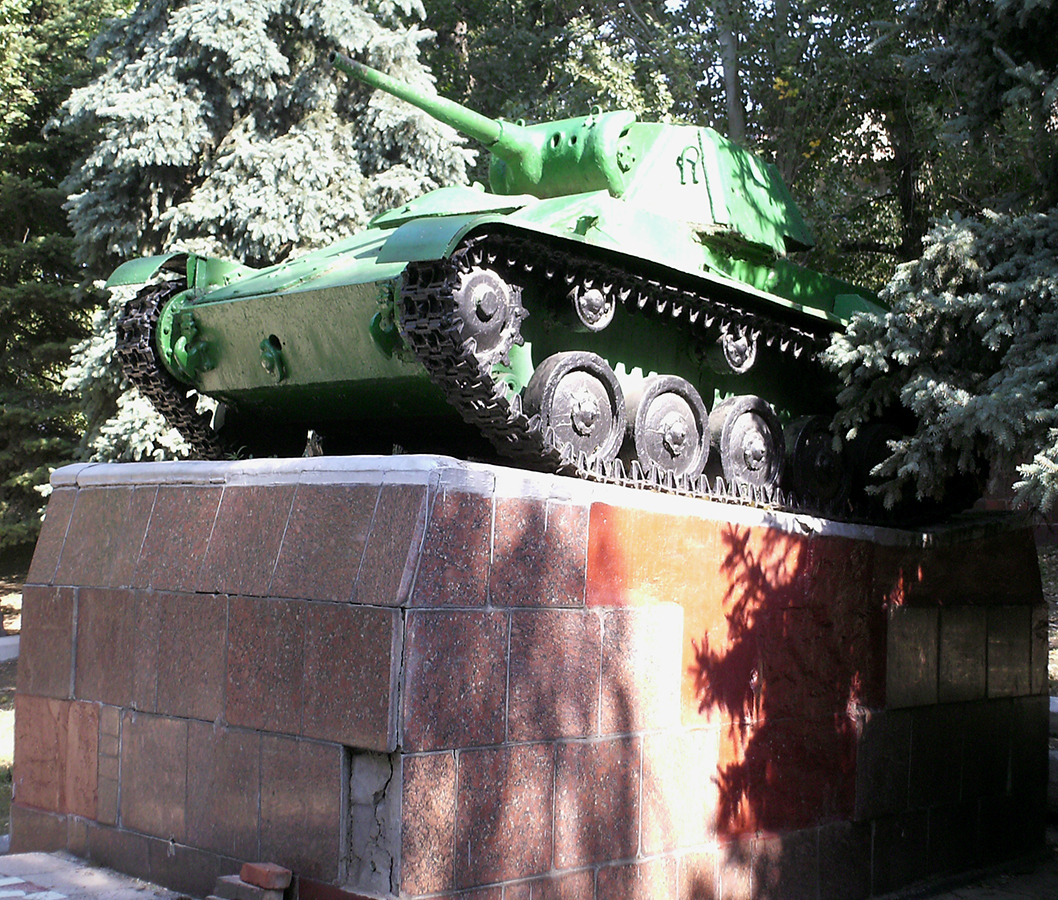 Soviet T-70 tank on a pedestal in Kostiantynivka. It has now been evacuated to the National Military History Museum of Ukraine
17 June 2026
Фінансовий модуль АІКОМ: представлено новий інструмент для аналізу освітніх видатків
Фінансовий модуль АІКОМ: представлено новий...
15 червня відбулася презентація Фінансового модулю АІКОМ для управлінців у сфері освіти, фахівців та фахівчинь з...
17 June 2026
Проєкт DECIDE оголошує грантовий конкурс на...
Швейцарсько-український проєкт DECIDE запрошує територіальні громади-учасниці національного пілотування системи...
17 June 2026
Як у Кременчуці ламають стереотипи про профтех та будують економіку довіри
Як у Кременчуці ламають стереотипи про профтех...
Ще донедавна це було типове приміщення радянської їдальні – із застарілими вікнами, пошкодженими стінами та духом...
16 June 2026
Анонс: вебінар «Кадрові наслідки змін у мережі...
Оптимізація мережі закладів освіти, створення академічних ліцеїв, зміна статусу шкіл та демографічні виклики вже...