136 kilometres of silence. Life in a community that has halved in size. Interview with Head of Semenivka community
Serhii Dedenko, Head of the Semenivka City Council in Chernihiv region, runs a Facebook page that has become a chronicle of the war on the northern border. But behind the posts lies daily, often invisible work: repaired windows, rescued people, preserved businesses, lost hopes. We met with him not to retell his posts, but to understand how to manage a community when the enemy is 9 kilometres away and tomorrow is too much of a luxury to plan for.
By Dmytro Syniak
Semenivka community shares a border with russia that is 136 kilometres long – longer than any other community in Chernihiv region. Although its territory is larger than that of some regional centres, its population density is the lowest in Ukraine. During the four years of war, the community lost half of its businesses and population, and 25 villages were reduced to ruins, with russian drones becoming part of the daily landscape.
Mayor Serhii Dedenko is not looking for sympathy. He is looking for answers to questions that all border territories should be asking themselves today: Does the state have a plan for communities like his? Is it worth investing in the restoration of destroyed villages if they will be destroyed again tomorrow? And most importantly, how can people be persuaded to stay when even a land law specialist refuses a high salary and an apartment after hearing the first explosion on the outskirts?
In an interview with the Decentralisation portal, the Head of Semenivka community speaks about the fine line between the heroism of utility workers and the miscalculations of the forest reform, the price of assistance from international partners, and why the eRestoration programme for border communities could become a ‘disappearance programme’.
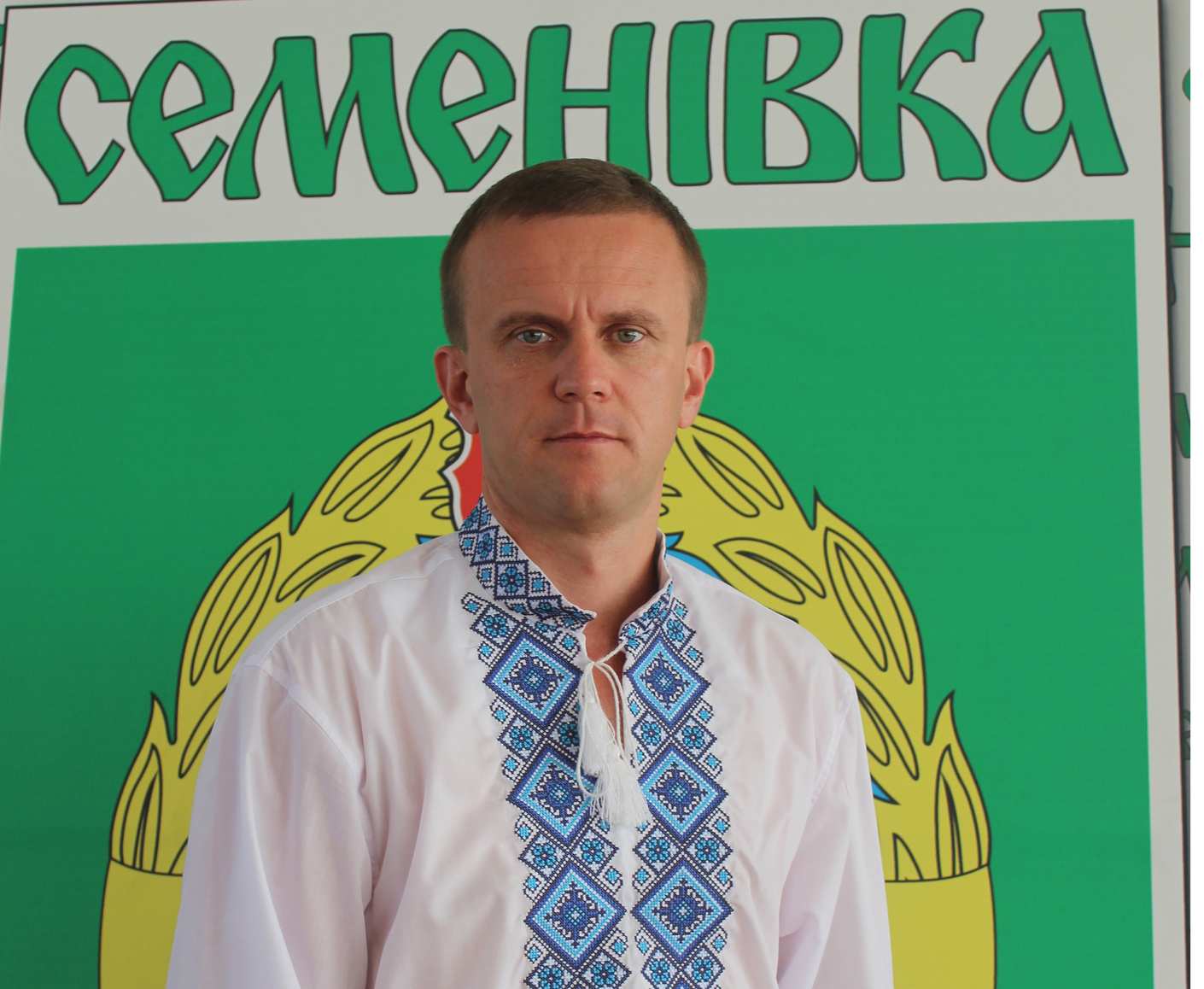
Serhii Dedenko, Head of Semenivka community
‘When you hear the artillery firing, you have three seconds to hide …’
In early February, a russian drone destroyed a civilian vehicle in Semenivka. How risky is it to drive your own car in your community?
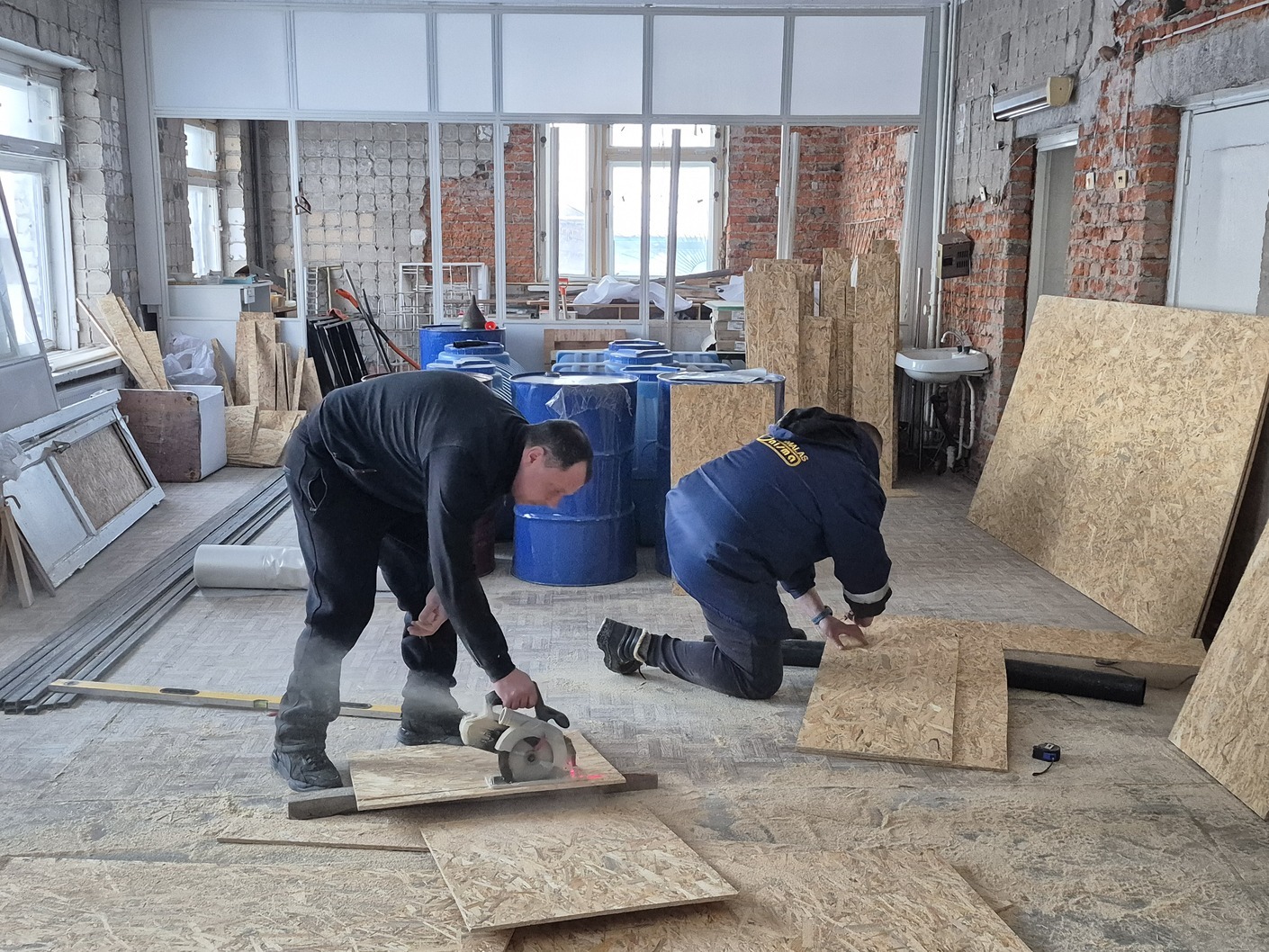
Very risky, so we always drive with the windows open to hear the drone approaching. If it is heard early enough, there is still time to jump out of the car before the drone hits it. Air raid sirens are only sounded for missile attacks, but russian drones are something everyone has to deal with themselves. Semenivka is only 9 km from the border, so they often ‘visit’ us. It is therefore better to hide cars in garages or under trees and only use them when really necessary. This is especially true in winter, when it is difficult to open windows due to the severe frost. Therefore, we try to walk everywhere and wear comfortable clothes and shoes, in which, if necessary, we can quickly dive into a ditch or bushes. (It happened to me more than once). When you hear the artillery firing, you have three seconds to hide. If you hear a drone, you have a little more time and can run to one of the mobile bomb shelters, small concrete modules for 10-15 people, located throughout the city. They provide fairly good protection. We are attacked almost every day. Just yesterday, at half past eight, russian Molniya missiles struck the private sector of Semenivka, so our heroic utility workers had to immediately repair the broken windows with fibreboard panels and patch up the damaged roofs. It was freezing outside. They worked until nightfall.
You published photos of utility workers covering windows with fibreboard panels. Does this mean that after such ‘repairs’ people will have to live in darkness?
Yes, but it is important to note that fibreboard panels increase safety. With the windows covered, glass will no longer fly out at breakneck speed from a nearby explosion. These boards are also excellent camouflage at night, when every ray of light can be a target for drones. We have not turned on street lighting since the outbreak of the war. So if someone has not covered their windows tightly, they are taking a big risk. When russian drones struck the centre of Semenivka last year, two-thirds of the windows in two multi-storey buildings with 90 flats were blown out. We quickly covered them with fibreboard panels, and people still live behind them and thank us for it.
In January, several HESA Shaheds 136 Geran attacked an energy facility in your community. What steps are being taken to make it energy independent?
Over the four years of the war, we received precisely 90 generators of various capacity from all sources. We used them to help businesses and our key organisations. Now, if something goes wrong with our power grid, we immediately start up the generators, and people hardly notice any problems. And, of course, like probably all communities now, we have considerable reserves of fuel, petrol, and diesel. Even before the war, we switched all our boiler rooms to wood, because it was much cheaper. So now we are even prepared for potential gas shortages.
On 2 February, you reported that the temperature in Semenivka was minus 30 in the morning. How did people survive such severe frosts? Did the city council help them?
If necessary, we set up additional invincibility points where people can not only warm up and drink hot tea, but also connect to free Wi-Fi and charge their gadgets, charging stations, power banks... When the power was cut off, people also often came to these invincibility points. During the cold spells, the invincibility points also came in handy.
You warn people to walk only on ‘previously cleared paths, avoid snowdrifts unless necessary, and pay attention to unnatural structures that may be sticking out of the snow’. How serious is the danger from drones and unexploded ordnance?
Quite serious. Once the snow has melted, we will feel it even more. In 2022–23, several of our residents died after coming into contact with explosive materials. The most striking case occurred last year. Our tractor driver saw a drone in the field, stopped the tractor and picked it up for some unknown reason. The drone exploded, tearing off his arm, knocking out his eye, and rupturing his stomach. He survived, but was left virtually incapacitated. Such senseless, destructive actions are precisely what we warn people against.
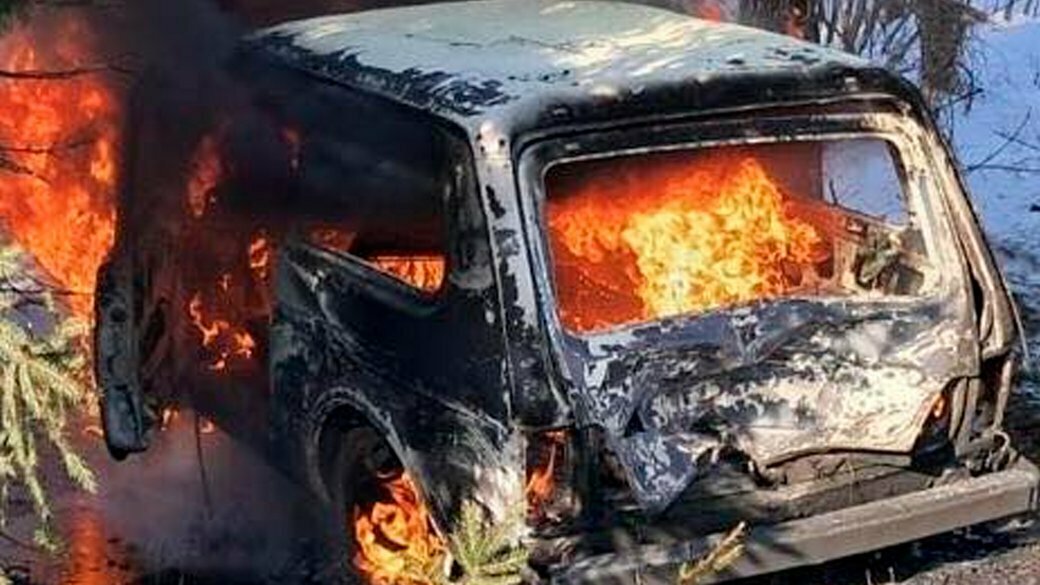
A civilian car destroyed by a russian drone in Semenivka on 1 February 2026
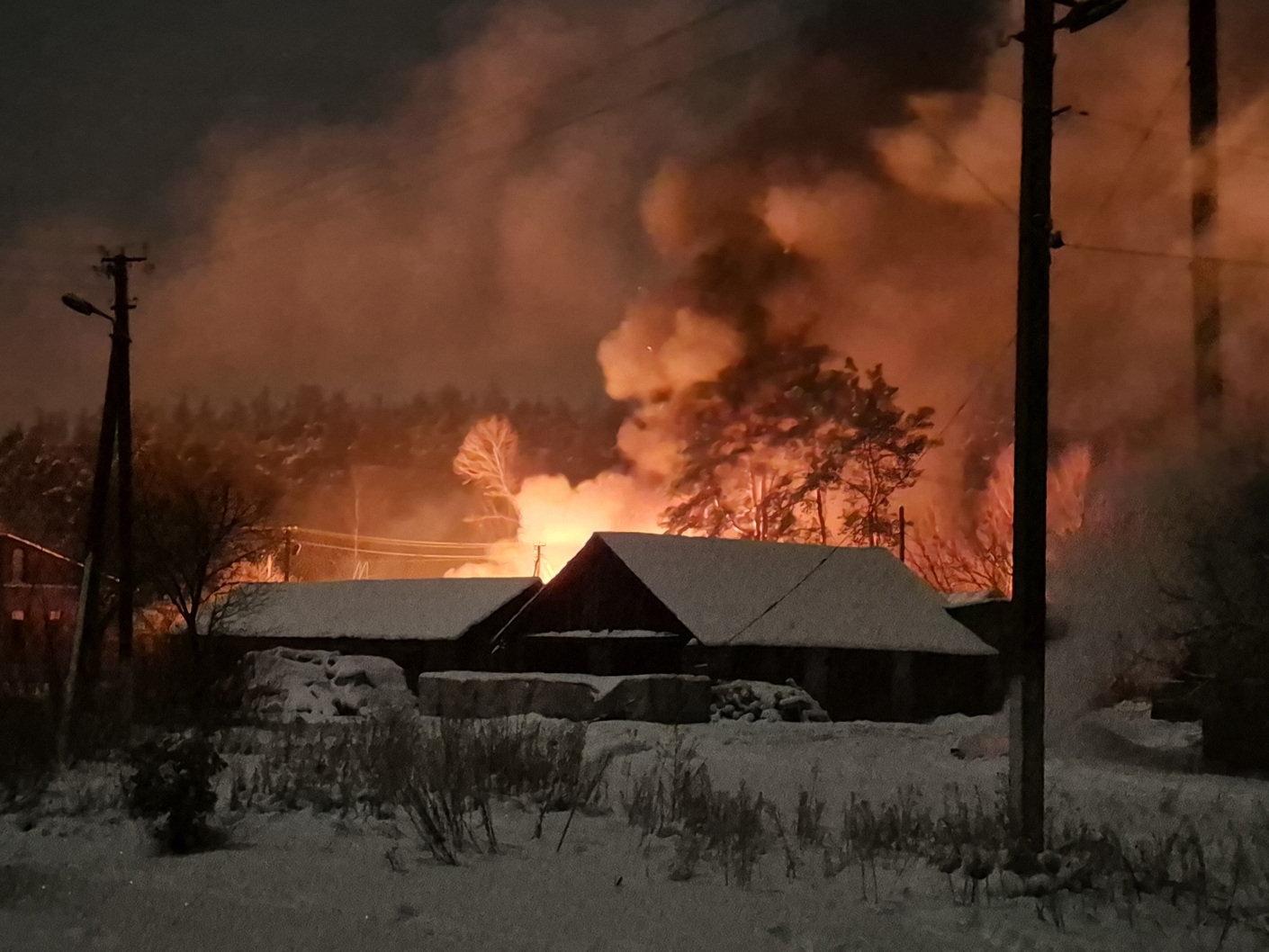
Strike on the utility premises of the Semenivka hospital
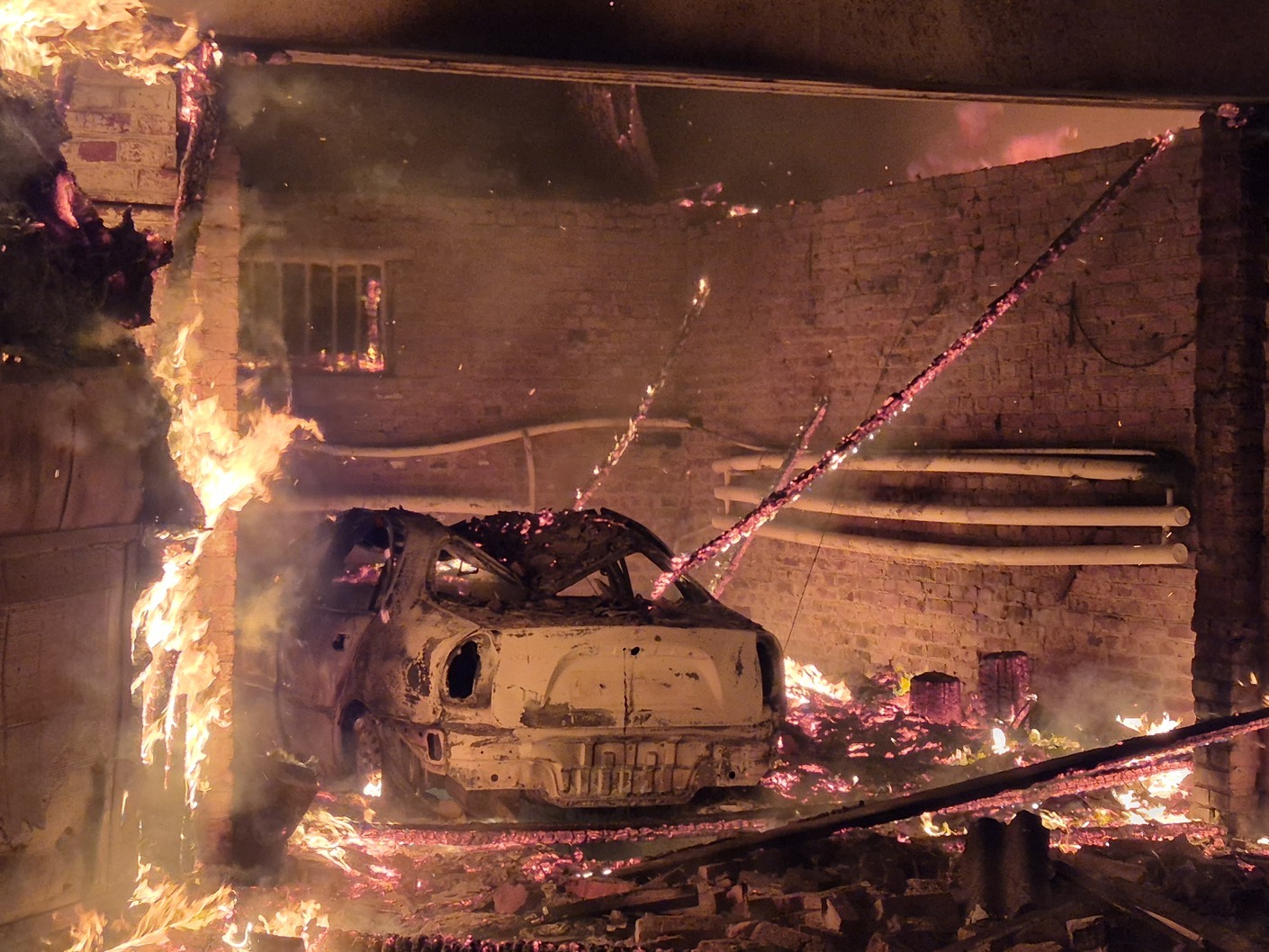
The strike burned down the car that doctors used to visit patients…
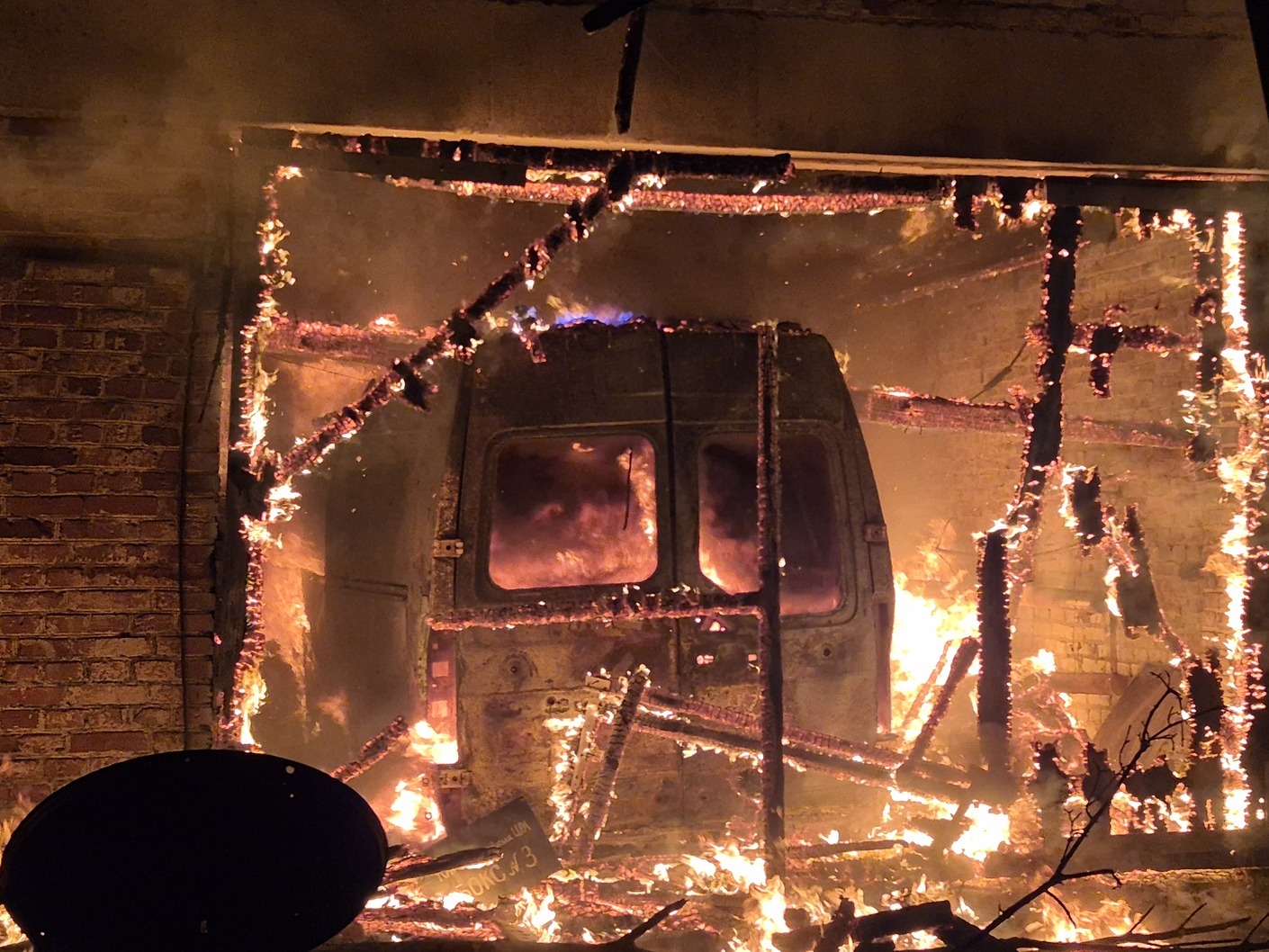
… and the ambulance
‘We lost half of our business and half of our population...’
In February, the enemy attacked one of the community’s agricultural enterprises in Zhadove with missiles and drones, damaging ‘several dozen pieces of vehicles, production facilities, and equipment’. A russian FPV drone struck a private enterprise in Semenivka via fibre optic cable. The frequency of russian strikes suggests deliberate attempts to destroy local businesses. How are local entrepreneurs responding to this?
The russian invasion has cost us half of our business. The amount of land we farm and the amount of timber we harvest – our main sources of income – have fallen sharply. Our once famous and prosperous shoe factory has been severely damaged, as have the community’s timber processing enterprises. Before the full-scale invasion, there were also many small farms, primarily focused on meat and dairy production. About half of them went bankrupt, relocated or were destroyed. And since business is the main factor in maintaining the population and increasing the birth rate, along with the enterprises, we have lost about half of the population. We never had a large population to begin with: about 15,600 people. Now we have only 5,000 in Sementsivka and 7,500 in the entire community. These figures are based on indirect data: the amount of water used, bread purchased, and so on. Even when only artillery and mortars were being used against us, internally displaced persons were coming to us. Now, with russian drones constantly appearing in the sky, people are only leaving us.
Why do you think the russians are using so much ammunition against civilian infrastructure?
Over the past four years, we have had different answers to this question, but now we all agree that it is done purely for show, to impress their superiors and receive awards. We sometimes look at what official russian sources report about the attacks on our community. If we are to believe them, they have destroyed an entire army here in four years. But what is really happening? A russian lieutenant orders an attack on our civilian facility, knowing full well that there are no military personnel there. Then he reports to his superiors that he has destroyed 25 Ukrainian tanks and a Right Sector base, for example. Of course, their superiors could easily verify this information, but they want orders and medals, and are also afraid of being reprimanded for a lack of results. This is what we are paying for with our infrastructure and housing!
Why are you opposed to forest reform, and what specific consequences has it had for the economy of the border community?
Our state-owned enterprise, Semenivske Forestry, has been destroyed as a result of the so-called forest reform. The enterprise provided around 15 per cent of our total revenue, and almost 40 per cent of our community's territory – no less than 1,400 square kilometres – is covered by forests. This enterprise employed more than 100 people and was one of the most powerful in the region. It had modern dryers and machine tools... Now, however, there is nothing left. I am therefore categorically opposed to such a ‘reform’. There are already few businesses in the border area, so why destroy the last one?
What is the current situation in the border villages of the community, especially Halahanivka? How many localities remain inaccessible due to the war?
More than 25 villages, spanning the entire northern and north-eastern territories of our community. Some of these villages had almost no inhabitants prior to the full-scale war, while others were very promising. For instance, Tymonovychi had a population of over 300, many of whom worked on a farm where nearly 500 head of livestock were raised. Nestled in the basin of the Snov and Strativ rivers, the land in Tymonovychi has always been fertile, providing local farmers with abundant harvests. Tymonovychi used to have a school, a club, a library and a first-aid post... Now, all of these buildings lie in ruins, the bridges have been blown up and most of the wooden houses have been burned down. I personally saw a drone video of the area. Everything there has been reduced to ruins. The enemy did this deliberately, wanting to devastate all the territories adjacent to the border. There are no people left in Tymonovychi, and it is unlikely that they will ever return. There is nowhere to return to. Most people have already bought new houses and apartments through the eRestoration programme. This is a wonderful social programme and people are very happy with it, but… I must say that, for our community, such programmes are deadly because they guarantee that our small population will be lost forever. I support programmes that will encourage people to stay in the communit.
Vehicle belonging to a company in Semenivka damaged by a drone strike on 15 February
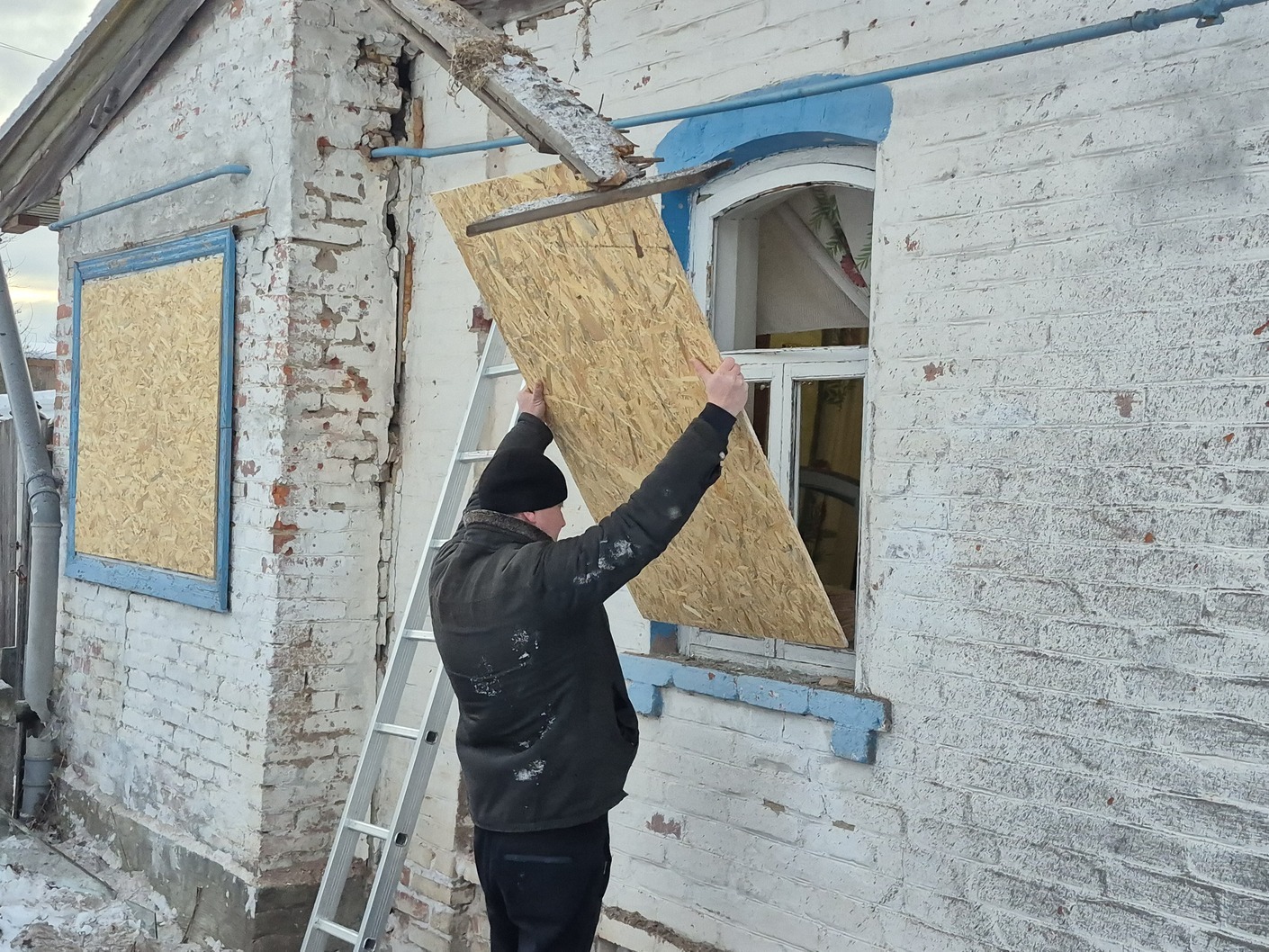
Semenivka utility workers are preparing to board up windows with fibreboard
What is done after almost every russian artillery or air strike
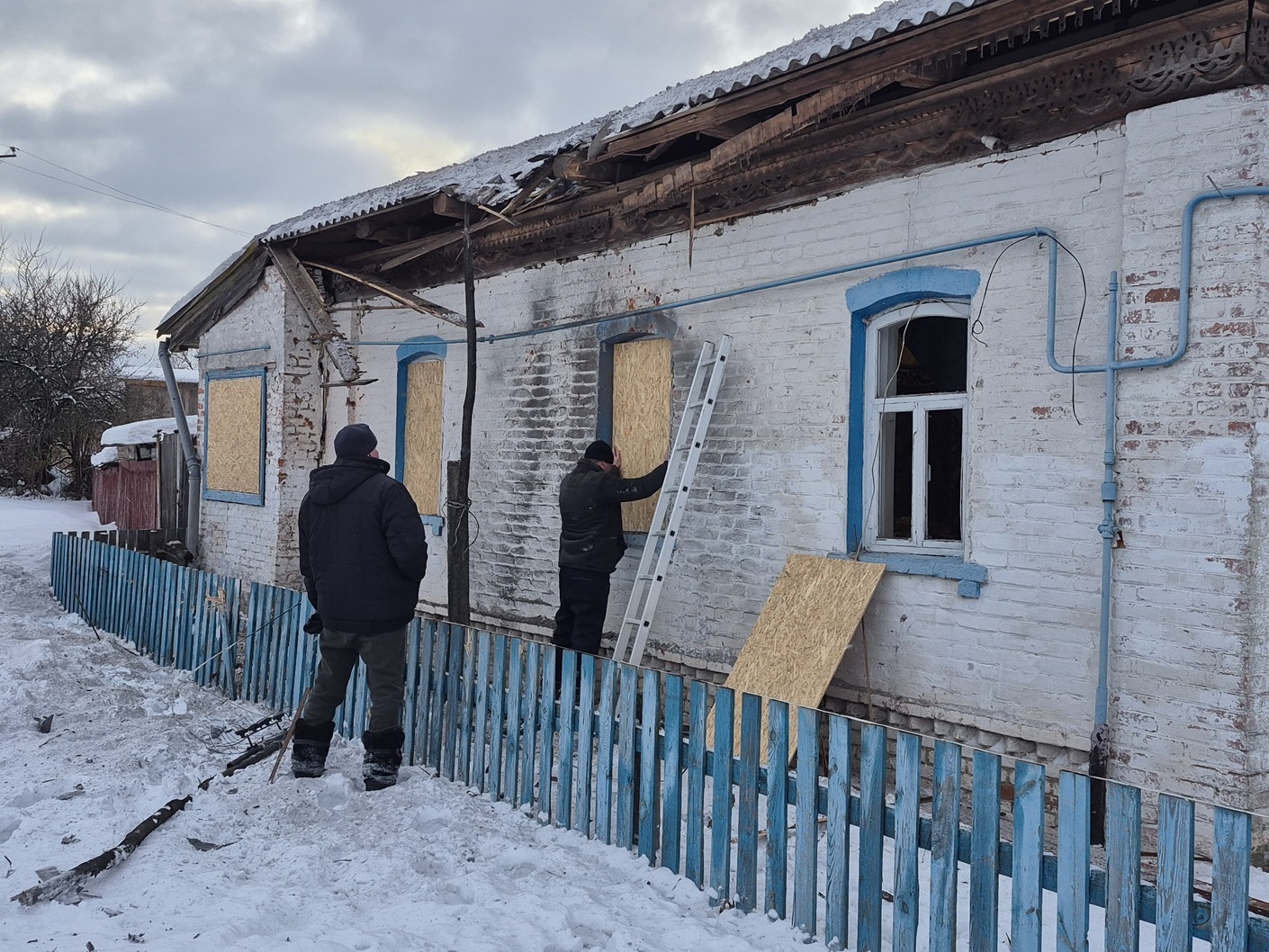
Fibreboard provides good light protection at night and retains heat better than glass
How the 18th-century advance of the Swedish army through Semenivka community helped it to obtain a modular town from Sweden
The International Committee of the Red Cross is one of the partners that provides ongoing assistance to Semenivka community. Thanks to materials provided by the Committee last year, ‘53 households with a total area of 2,500 square metres were able to repair their roofs. Another 350 households received emergency assistance to board up their windows and doors with plywood and plastic sheeting’. How did you manage to get the Red Cross to help? What other international partners are helping Semenivka community?
We have been working fruitfully with the Red Cross since 2022, when they first approached us to offer their assistance. Since then, we have worked on various projects together. In one of these, the Red Cross has provided us with building materials to repair homes damaged by shelling. Even though no one is currently living in the damaged houses, we are still repairing them. If we do not do this, they will turn into ruins in a year or two, and people will have nowhere to return to. We are not restoring administrative buildings as this would probably require all of the resources of the Red Cross. In general, we have many partners: U-LEAD, GiZ, Expertise France and Chemonix, as well as charitable foundations from Latvia, Slovakia and Taiwan…
Once, on social media, you thanked Professor Ragnar Lund of Stockholm University for his help in building the modular town. You said that you had been ‘negotiating with him for several months’. You wrote, ‘Thank you, Sweden, for supporting Semenivka! We have a shared history. Long ago, the army of King Charles XII of Sweden returned home through our forests, and since then we have had the village of Shvedchyna and the “Shved” surname.’ Could this shared history have attracted the attention of the Swedish professor?
In fact, it was quite the opposite. We gained our first experience of building a modular town with the help of a Slovakian charitable foundation. Ukrainian MP Valerii Zub was aware of this, and Professor Lund got in touch with him somehow. He wanted to donate a dozen or so buildings from a decommissioned modular school to Ukrainians, as they were no longer needed once a permanent building had been constructed. I negotiated this with the eminent professor over several months using my limited English language skills. Although the ‘Swedish page’ of our community did not play a significant role in this matter, it turned out to be useful in motivating the Swedes. Everything went well, and people who have lost their homes will be living in the Swedish buildings this summer. Such projects are very important to us because they enable people to stay in the community instead of moving elsewhere. For safety reasons, we are building the modular towns as far away from the border as possible, in areas where russian drones rarely appear.
You met with a delegation from Great Britain. Among them was Stephen Patrick Gethins, a Member of Parliament, who had donated a fire engine to Semenivka community a few months earlier. How was this visit arranged?
I was introduced to the English delegation at the Chernihiv Regional Administration, where they had come to offer their assistance. We started talking, and everything fell into place. Jordan Meade, the founder of ‘Kent with Ukraine’ and a member of the delegation, is the head of a British foundation associated with firefighters. When he discovered that our three local fire brigades had equipment older than their members, he brought us a fire engine to Lviv. We take great care of this vehicle because the russians attack such vehicles at the first opportunity. One such attack resulted in two firefighters being wounded, one of them seriously. This winter, a russian drone burned our most expensive vehicle, a 20-tonne dump truck. Thankfully, the people inside were unharmed.
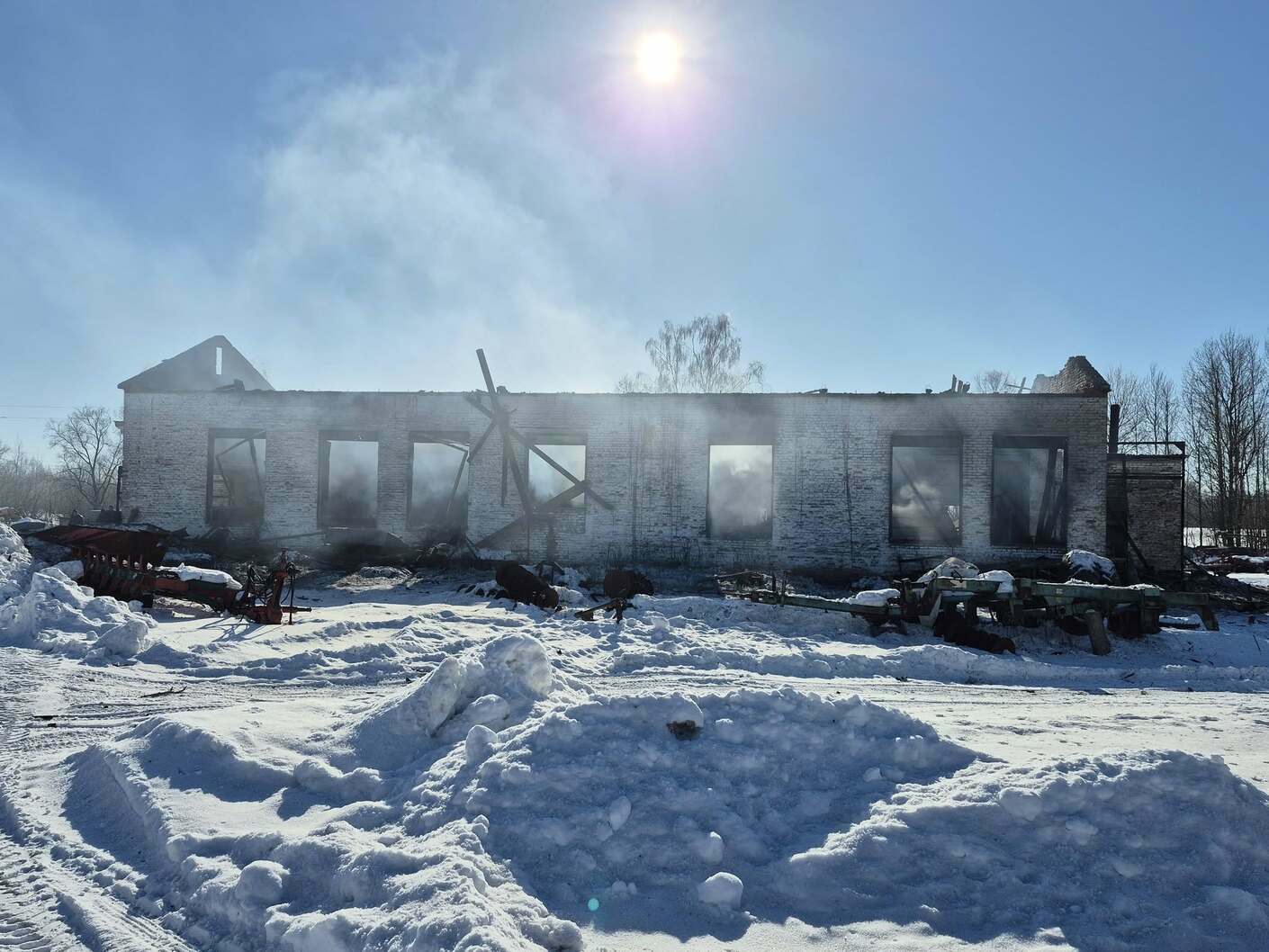
Remains of an agricultural enterprise in Zhadove after russian attack
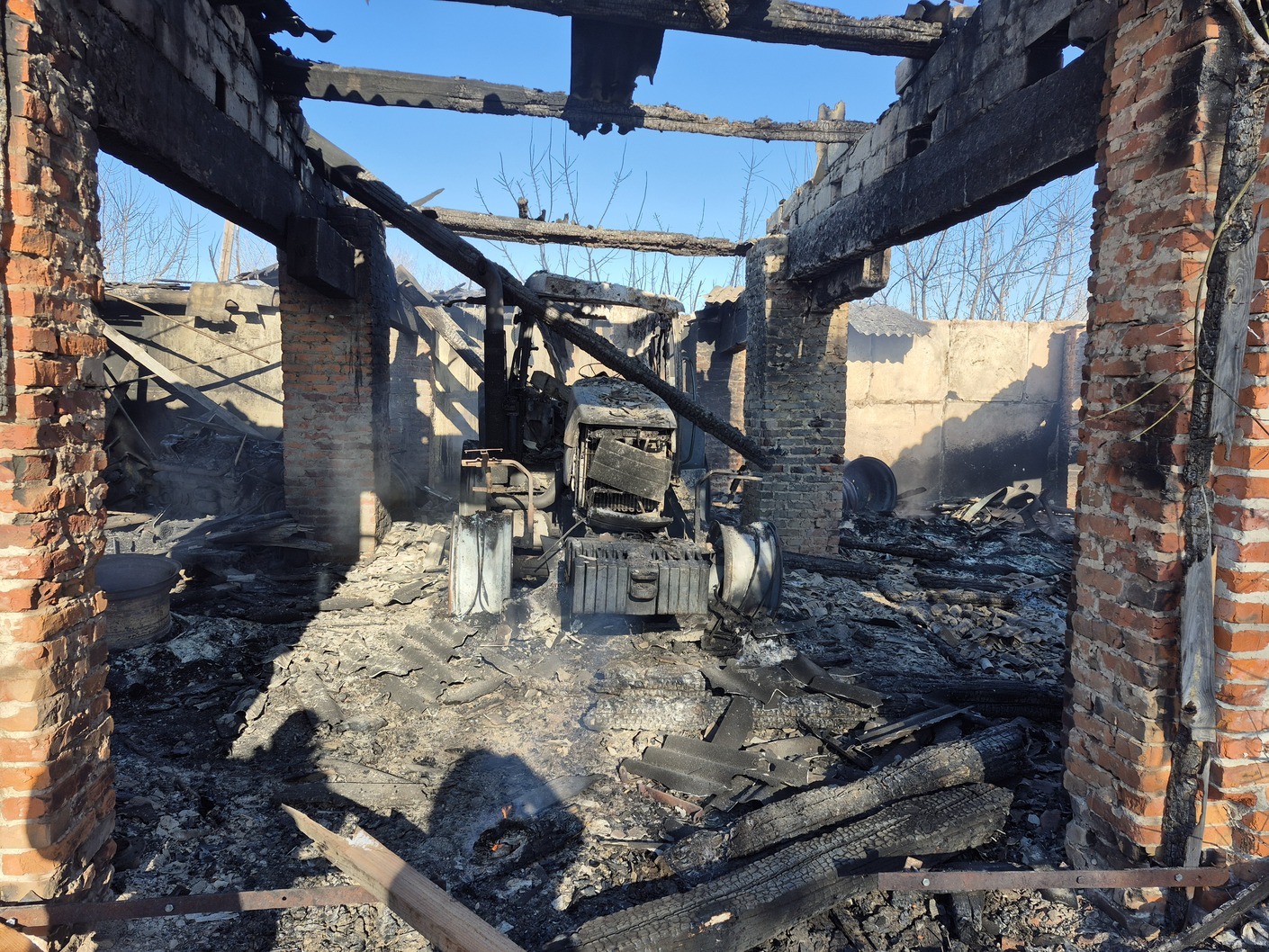
Agricultural enterprise in Zhadove, Semenivka community, after russian drone attack. Burnt tractor in the centre
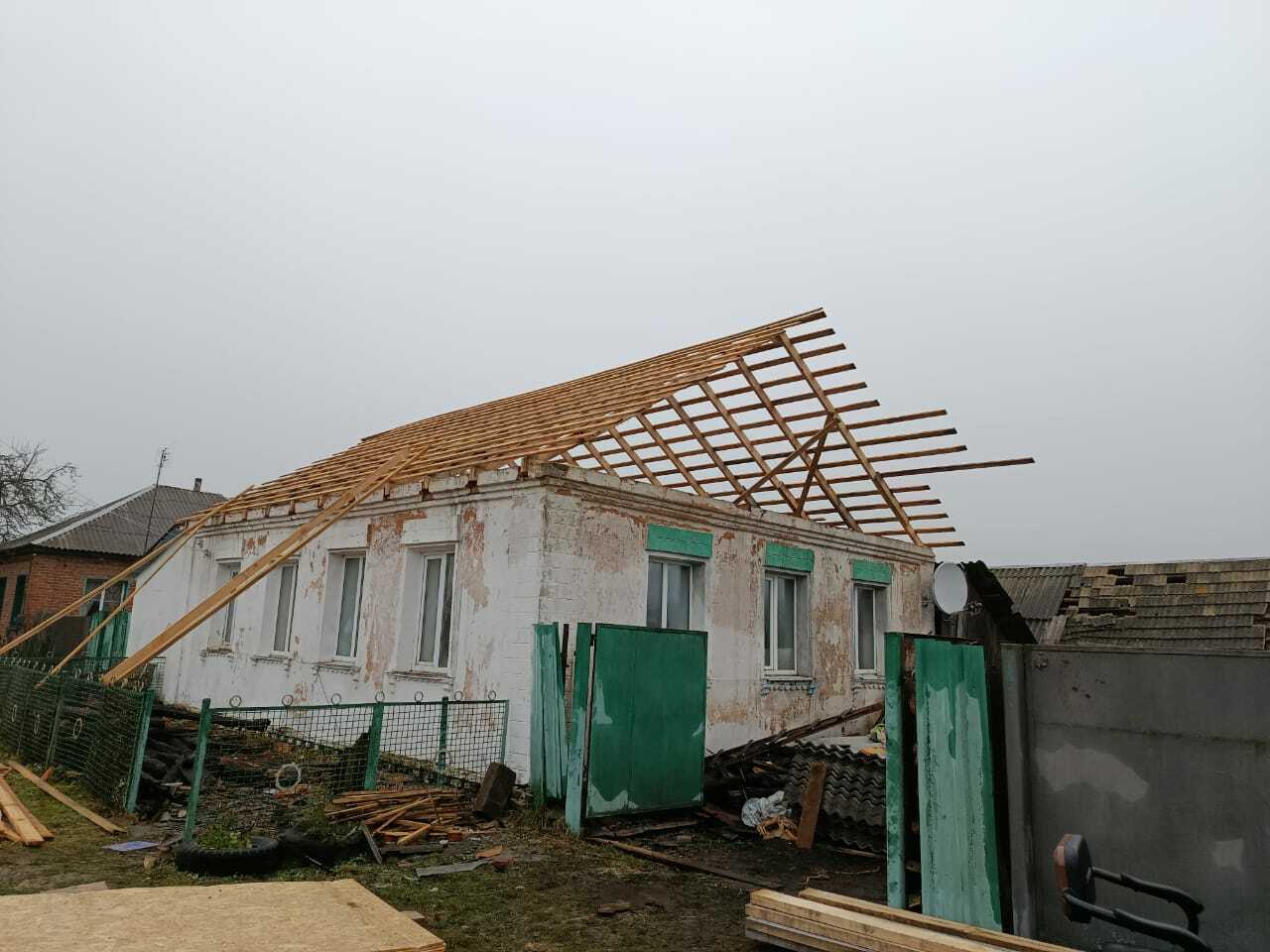
Restoration of a house in Semenivka with materials provided by the International Committee of the Red Cross
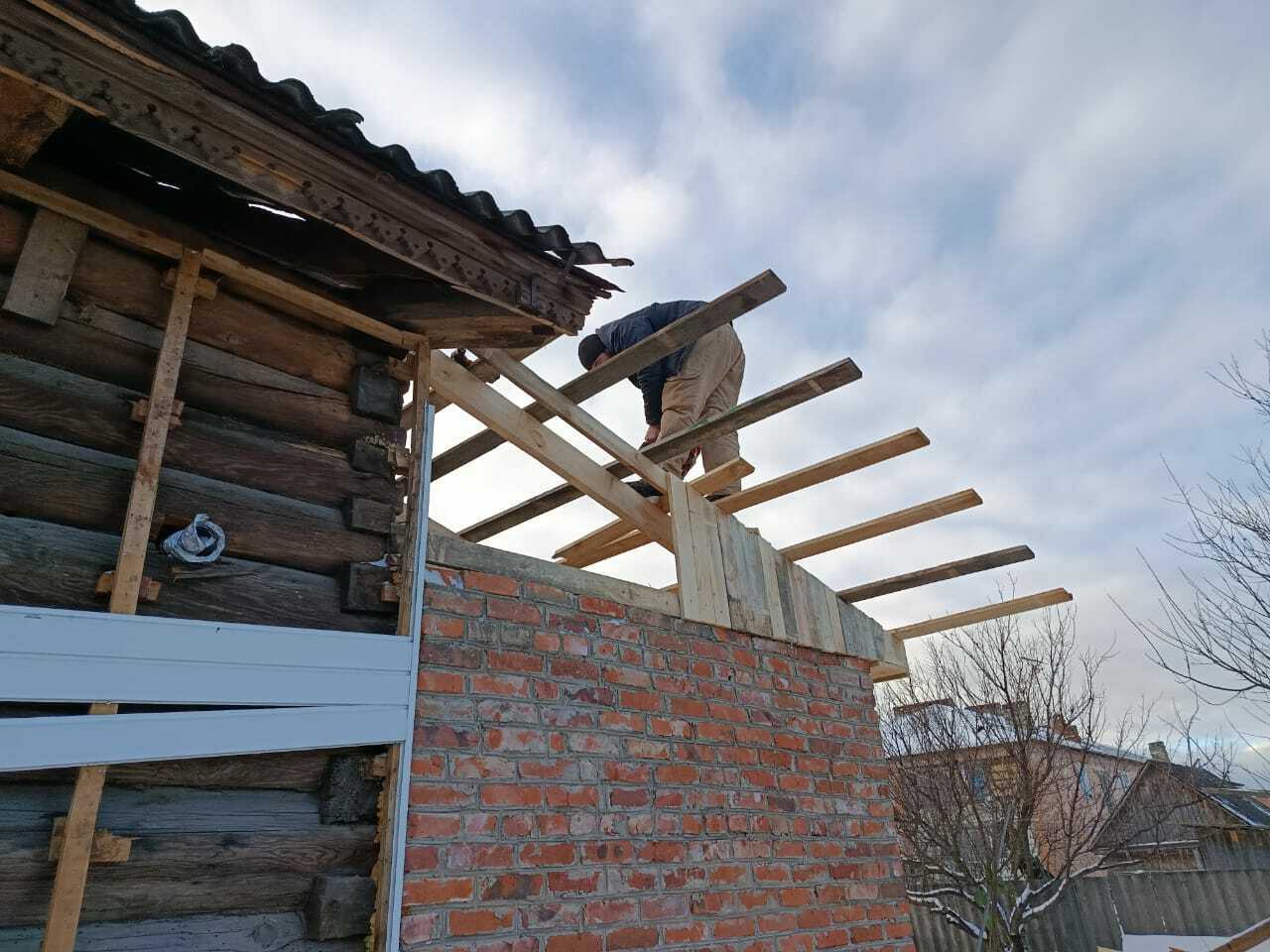
Even if no one lives in the damaged houses, Semenivka’s utility workers are repairing them. So that people have somewhere to return to
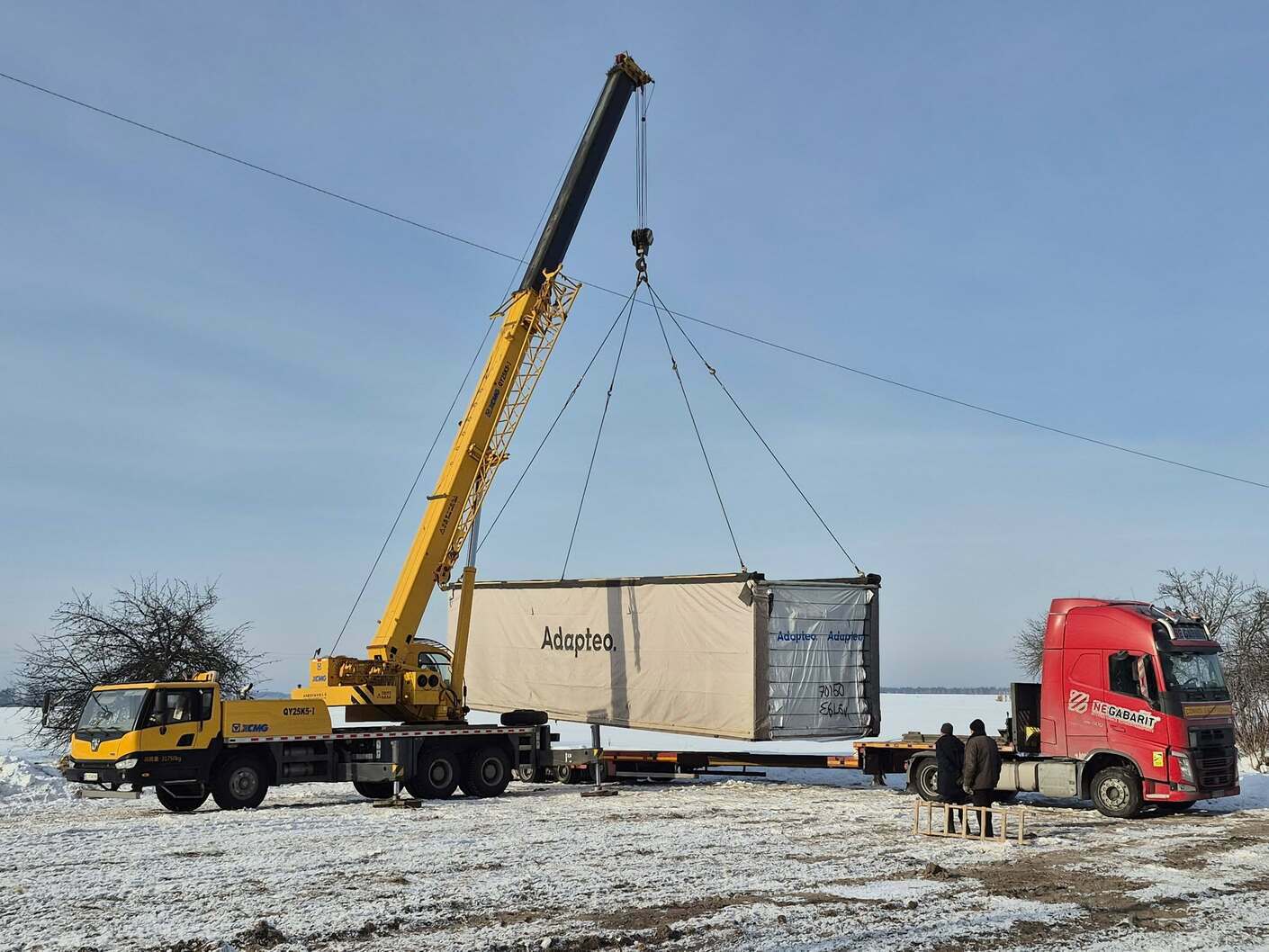
Unloading a Swedish modular school in Semenivka community
‘Helping the military means protecting our homes in the literal sense...’
Tell us about the community’s cooperation with the military.
We are a border community, so even before the full-scale invasion, we worked closely with border guards, who had their posts, commandant’s offices, offices, and so on here. They also paid personal income tax to our budget – tens of millions of hryvnias a year, almost 10 per cent of our own revenue. In 2023, this personal income tax was withdrawn, but our cooperation with the border guards did not stop. We also help other military units that are stationed here from time to time. And we help a lot. It would seem that we wrote about one Mavic, so why is this such a big deal? But it costs UAH 250,000, and last year alone we spent about UAH 5 million on similar items. We bought not only quadcopters, but also cables, monitors, fuel, building materials... For us, helping the military means protecting our homes in the literal sense.
Your community’s special attitude towards military personnel is evident on your Facebook page, where you not only report on the death of each soldier, but also mark the anniversary of their death every year since 2014. In what other ways does the community honour these people? How does it help their families?
We want the sacrifice of every soldier to be remembered. That is why one of our activists carefully monitors all the dates in our Calendar of Remembrance. Unfortunately, there are more and more of these dates. But we must still remember everyone, without exception. This is also important because not all of our soldiers’ graves are accessible at the moment… To show our gratitude to these people, we have completely exempted their families from paying utility bills, compensating them for the corresponding expenses. We also allocate UAH 50,000 for the installation of monuments in the cemetery for each fallen soldier. Moreover, we do not take into account the circumstances of death: even if a person died of illness or a heart attack while serving in the military, we enroll their relatives in all of our ‘military’ social programmes. Among the deceased are those who died while serving in the army or even committed suicide. We make no exceptions – we help all the families of the deceased. We also have programmes for contract soldiers, each of whom receives UAH 10,000 from us as a one-off payment. Not much, but it is our contribution to the defence of Ukraine.
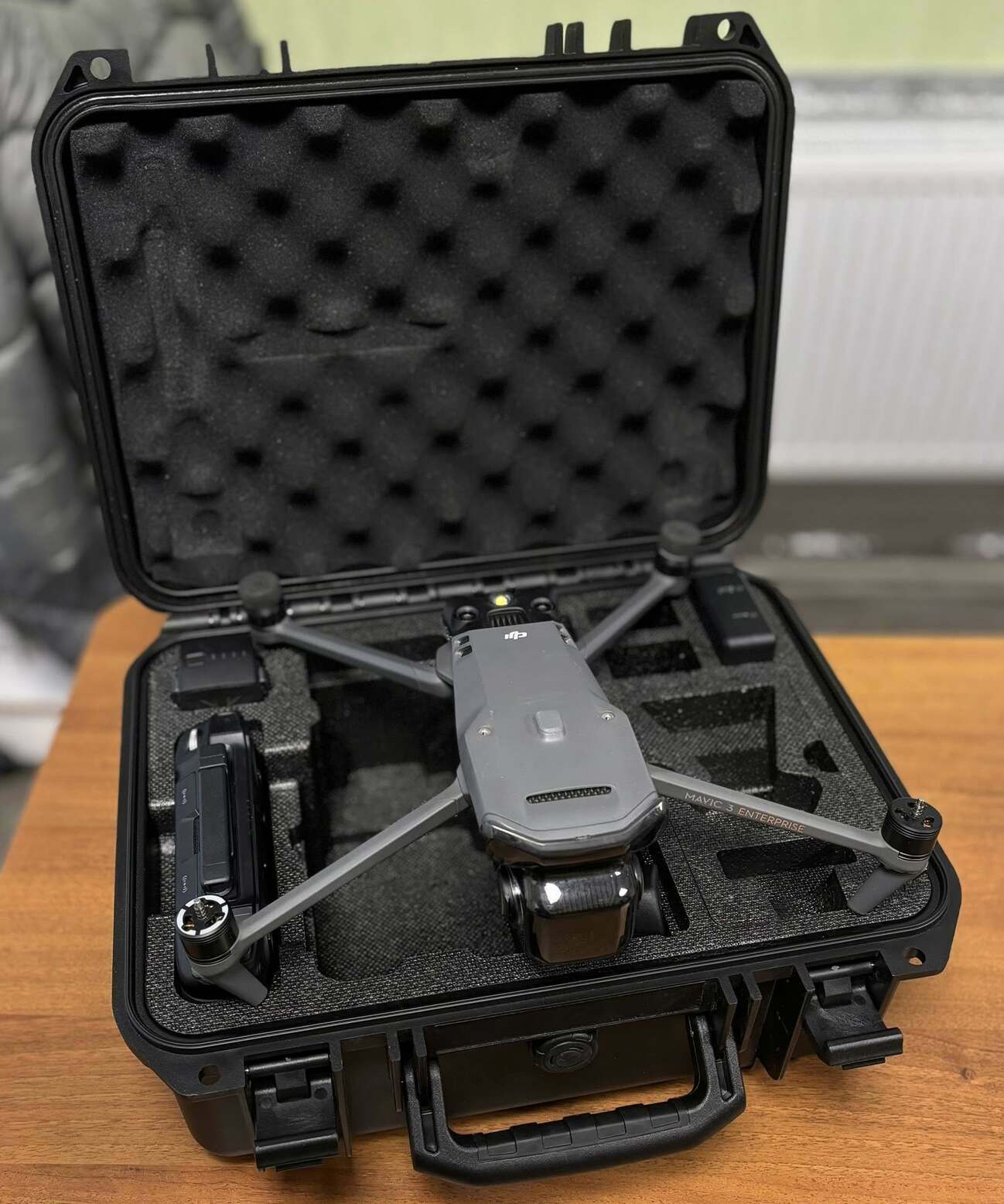
Mavic 3T quadcopter purchased for the military by the Semenivka City Council
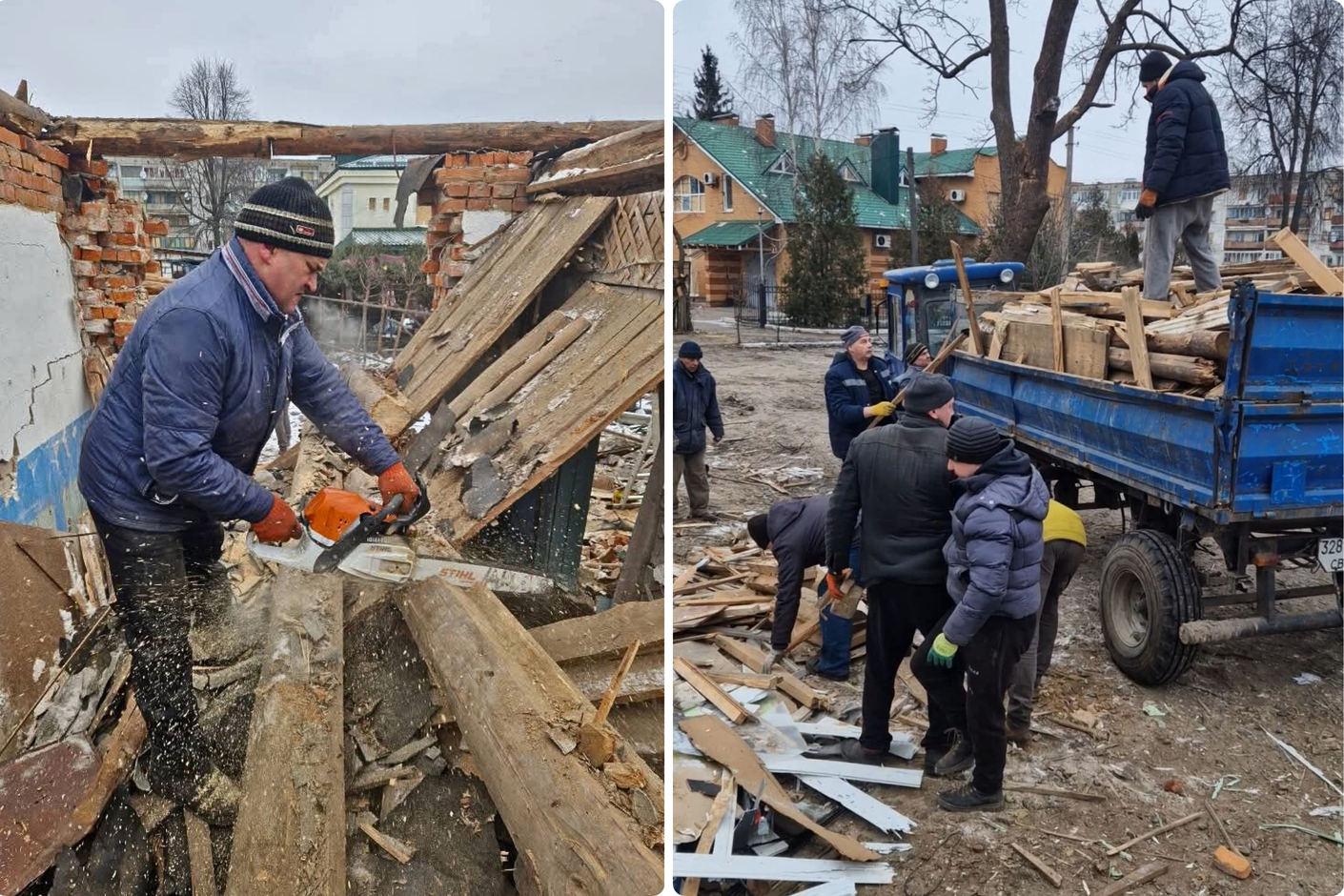
Employees of the Semenivka City Council clearing debris left behind by russian artillery attacks
The future of a community on the border with the enemy
Teachers from your Centre for Children's and Youth Creativity won the III Open Competition of Professional Skills for Teachers of Extracurricular Education Institutions ‘Modern Club Activities. Mastery. Innovation’. In other words, your educators not only work, but also win various competitions?
Based on the decision of the Regional Defence Council, offline work in schools within a 20-kilometre zone from the border is prohibited. Therefore, all our schools operate online, except for one in Zhadove, where children study in a mixed mode. And I am really satisfied with the work of the teachers. For example, for two years in a row, we had graduates who scored 200 points on a multi-subject maths test after studying online for three years. Unfortunately, due to the full-scale russian invasion, we lost about a third of our children. But at least we still have 700 students. And children are still enrolling in first grade.
Speaking of staffing policy, not long ago, the Semenivka City Council was recruiting a specialist for the land department. The main requirement was a degree in a relevant field or law. Did they find someone?
No, not yet. The specialists are still with us because the state has allowed us to pay them salaries with a coefficient of 2. But it is extremely difficult to find new specialists. I used to attract people here with high salaries and free apartments. But that is no longer enough. Recently, I brought an excellent doctor to Semenivka. He really liked our community, our hospital, and all the other conditions suited him. But as soon as russian artillery struck our neighbourhood – which is a common occurrence for us, we hardly even pay attention to it – this man apologised and said that he could not work in such conditions. I do not blame him; it is normal for a person to value their life above all else. One can talk endlessly about the advantages of working in Semenivka, but all of this is negated by one drawback: you can go out to buy bread and never return. Where can we find a lawyer in such conditions? Where can we find a specialist in land law? Here again, we cannot do without the help of the state. If there is a state programme to boost the development of border regions, this could have an impact on the situation with personnel.
What is your vision for the future of Semenivka community?
Unfortunately, I cannot answer this question because everything depends on the state. If it wants people to live in our community, it must develop various programmes to attract investment, create jobs, provide people with housing, and restore infrastructure. Special salary coefficients must be introduced. We are far from logistics centres – Chernihiv is 170 km away, and the roads are in poor condition. We have nothing particularly valuable here except forests. However, I still do not know what the state plans to do with communities like ours. Does it need people here or not? And if it does, how far from the border? Will Semenivka continue to exist, or should we move our administrative centre further away from the border? We already have probably the lowest population density in Ukraine: 10 people per square kilometre. What will happen in five or ten years?
You regularly post on Facebook. Why? How important is communication and what other channels do you use for it?
How can we solve security issues without constant communication with residents? How can we report on our work without it? How can we give people hope? That is why we use not only Facebook, but also, for example, the local newspaper, part of whose circulation we buy for low-income people and pensioners. This year, we have allocated UAH 0.5 million for this purpose. Telegram and WhatsApp groups are also very important information channels. They allow anyone to instantly notify others about the approach of a russian drone. Such communication saves lives.
What helps you stay mentally strong, keep your spirits up, and find the strength to support others?
Knowing that people voted for me and put their trust in me. So, I have to do right. If they tell us to leave the community, I will be the last one to go.
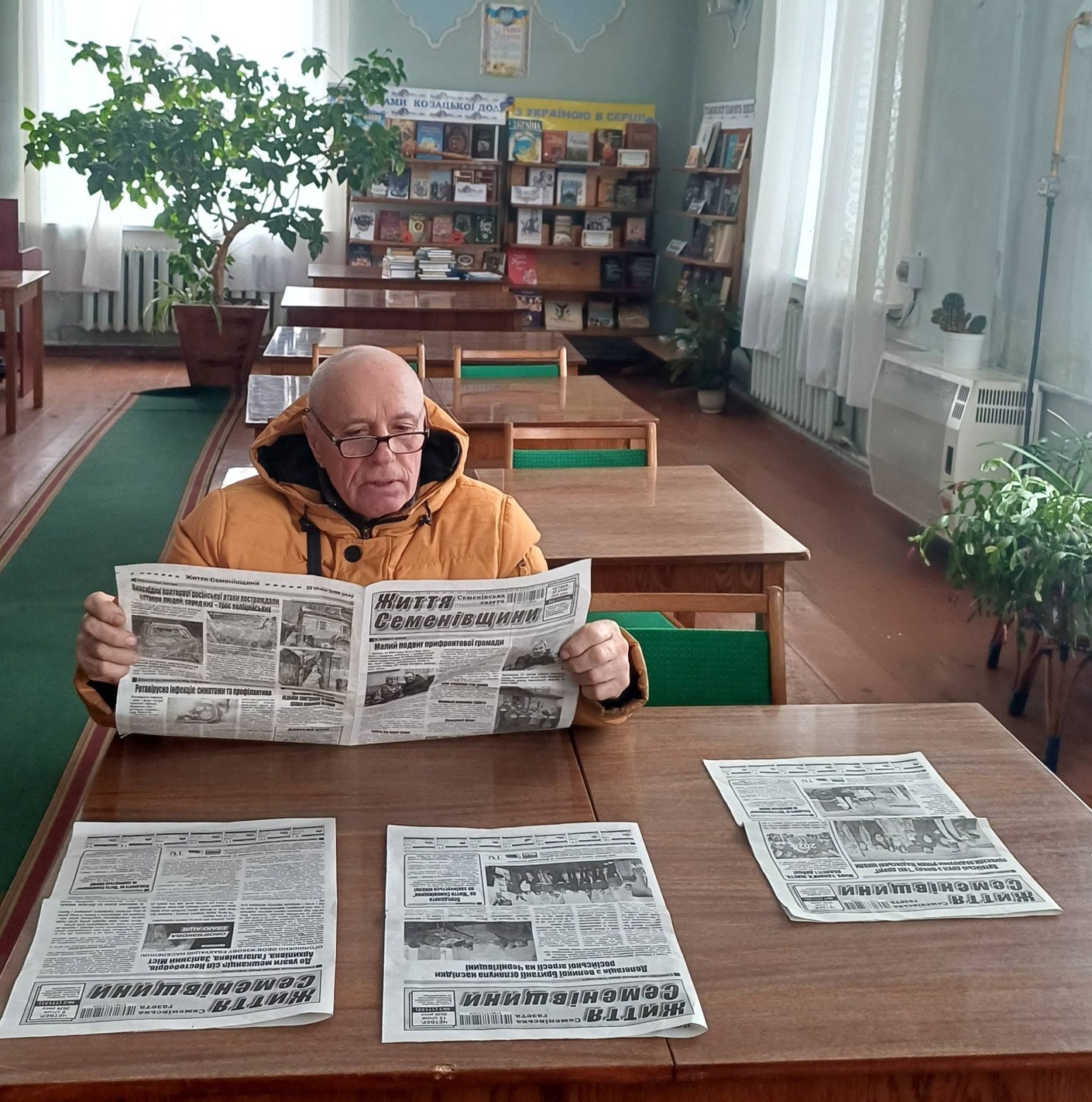
The newspaper Zhyttia Semenivshchyny is still in demand among pensioners
27 February 2026
4 березня – онлайн-лекція «Емоційний інтелект: як управляти емоціями?»
4 березня – онлайн-лекція «Емоційний інтелект:...
4 березня 2026 року о 14:30 відбудеться безоплатна онлайн-лекція «Емоційний інтелект: як управляти емоціями?» для...
27 February 2026
Language of Development Part 3: Institutions Behind EU Cohesion policy
Language of Development Part 3: Institutions...
“Language of development” is a shared voice of many — from key EU institutions to the governments of Member States,...
27 February 2026
Tax administration by communities: Ministry for Development to launch experiment
Tax administration by communities: Ministry for...
The Ministry for Development of Communities and Territories has initiated a pilot project that will allow communities...
27 February 2026
Ministry for Development prepares draft...
The Ministry for Development of Communities and Territories of Ukraine has developed a draft resolution of the...