‘Give a fishing rod, not a fish’: How a frontline community is refusing to remain an eternal beggar. An interview with Ihor Ostrivnyi
Ihor Ostrivnyi, Head of the Bilozerka Settlement Military Administration in Kherson region, on how his community not only survives but also thrives amidst daily russian shelling
By Dmytro Syniak
Before the full-scale invasion, this was a prosperous and promising community. Just a step away from Kherson, the banks of the Dnipro estuary enchant with their beauty, the land is fertile, the people are hard-working, and the location could not be better. Putin’s russia, which was in control here in 2022, wiped out all the achievements and destroyed almost all the assets. Now Bilozerka is a dead end on the border with the russians. Yet the people here remain the same – hard-working and devoted to their land. That is why they do not flee, even in the face of daily shelling. Even those who previously lived in the now utterly destroyed coastal villages often do not leave the community, but move a little further north to safer villages.
Life in Bilozerka community today can hardly be called normal, as russian drones hunt down civilians everywhere, mercilessly killing and injuring them. And yet, life goes on here: the community is implementing various development projects, and its people are working, raising children, and growing crops, gathering together for various festivals and concerts, and dreaming of a time when the russians will disappear forever beyond their own Urals. Ihor Ostrivnyi, Head of the Bilozerka Settlement Military Administration in Kherson region, shared his thoughts on this community’s life near the front line, which is as close to normal as it can be.
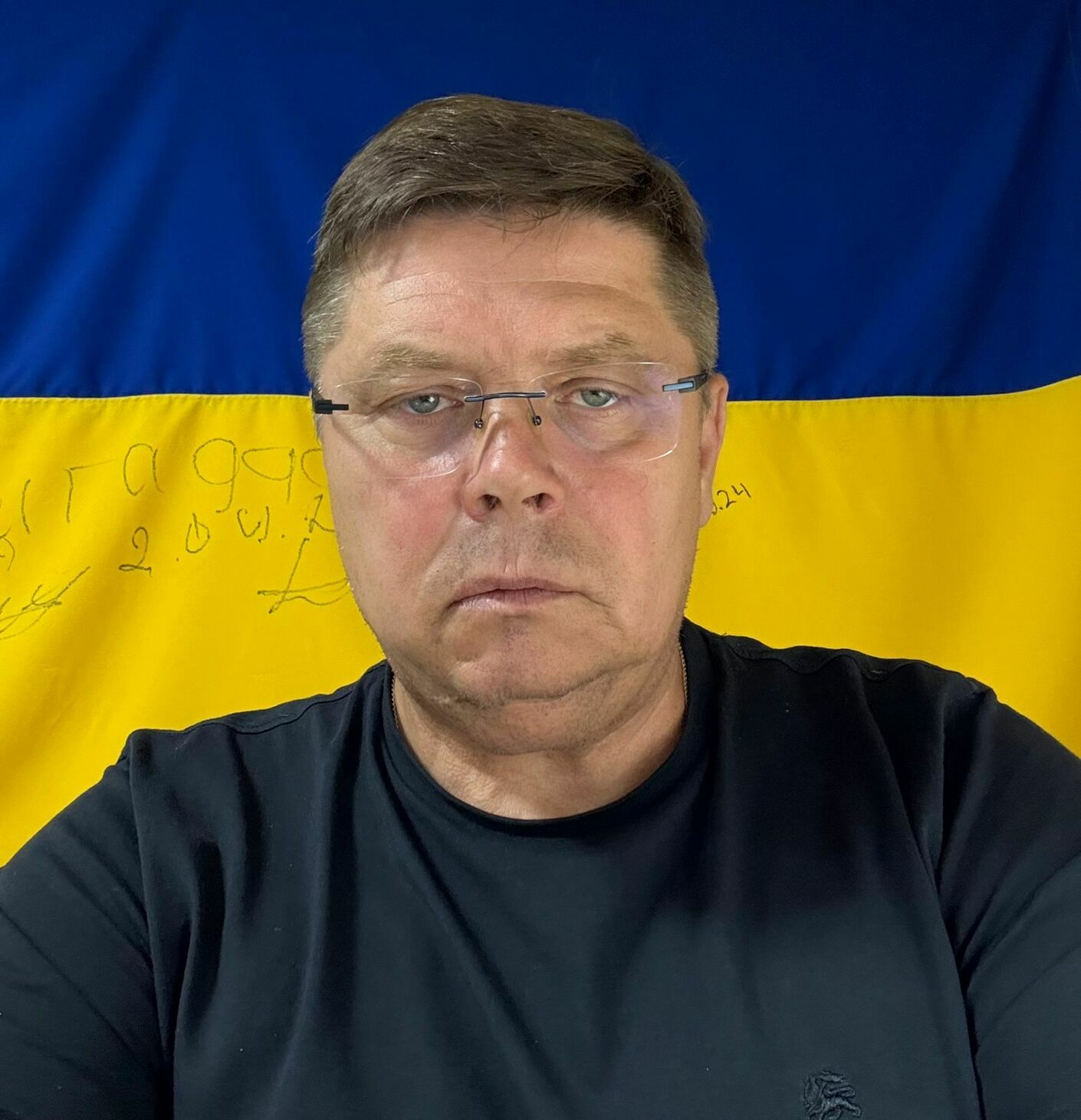
Ihor Ostrivnyi, Head of the Bilozerka Settlement Military Administration in Kherson Region
‘Don’t give people humanitarian aid – give them seeds!’
I think that during the war, your community has developed, so to speak, a ‘virus of resilience’. Where did this resilience come from? Why did people decide not to flee and to stay in their homes, despite the immense risk?
Because of a thirst for life and a strong desire to live in our own country, on our own land. We have no intention of giving up this land of ours to anyone; we will stand up for it to the very end. At least, that applies to one-third of our residents who have chosen to stay. Before the full-scale invasion, over 23,000 people lived in our community; now there are around 7,500. These are rough estimates based on the distribution lists for humanitarian aid and other data. Mostly elderly people have remained, who either live in their own homes here or do not wish to endure the hardships of living in hostels or accommodation centres for displaced persons. Moreover, people will now gradually begin returning to their villages. As spring approaches, those who moved to Kherson and Mykolaiv for the winter will return home to work on their gardens. One’s native land does not let you go so easily.
How does this seasonal return of people affect the work of the military administration?
We take seasonal factors into account, of course. We are in dialogue with various charitable foundations to ensure that they do not simply deliver food to people, but also provide our residents with planting materials. This is exactly what is needed right now. I would not want people to become eternal beggars and consumers. Metaphorically speaking, if they really want to help, they should not give people fish, but a fishing rod to catch fish with.
Tell our readers about these ‘fishing rods’ – what have you managed to ‘catch’ with their help?
One such project was the Red Cross initiative last year, which distributed quite a few small ready-made greenhouses in our villages. Our residents have mostly set them up right in their own backyards and are now growing tomatoes, cucumbers, and other vegetables in them. And in 2023, a charitable foundation distributed several hundred chicks and feed to anyone who wanted them. So they could have their own meat and eggs. And the year before last, another charitable foundation brought us a dozen or so hand-held cultivators. And people are actively using them to cultivate their gardens. We strongly support this approach to donations. Because when you have a successful household, you no longer feel the need to leave. I can tell you that, given the current provisions, life here is not so bad. If only it were not for those bloody shellings…
You mentioned that you are in dialogue with various foundations. Please describe in more detail how you communicate with them. And how difficult or easy is it to find them these days?
The Kherson Regional Administration periodically hosts various meetings with representatives of foundations and community leaders. We share our perspective on the situation and explain what we need, whilst the donors tell us which of our requests they can fulfil. People, of course, are very pleased to receive food parcels regularly, but it is a shame that over four years of war we have got them used to this. We have wonderful land. Give people seeds, and they will grow vegetables, greens, and beans on this land, and then there will be no need to give them anything. They will start helping others themselves.
Many donor organisations refuse to work with communities on the front line. Do you have this problem?
I would say the problem is not so much that donor organisations do not want to allocate funds to us, but rather that the military and the Security Service of Ukraine do not allow their representatives onto the banks of the Dnipro. That is why we are forced to invest exclusively in the starosta districts furthest from the Dnipro. We are not repairing or renovating the other three starosta districts, nor the administrative centre of our community itself Bilozerka – at all.
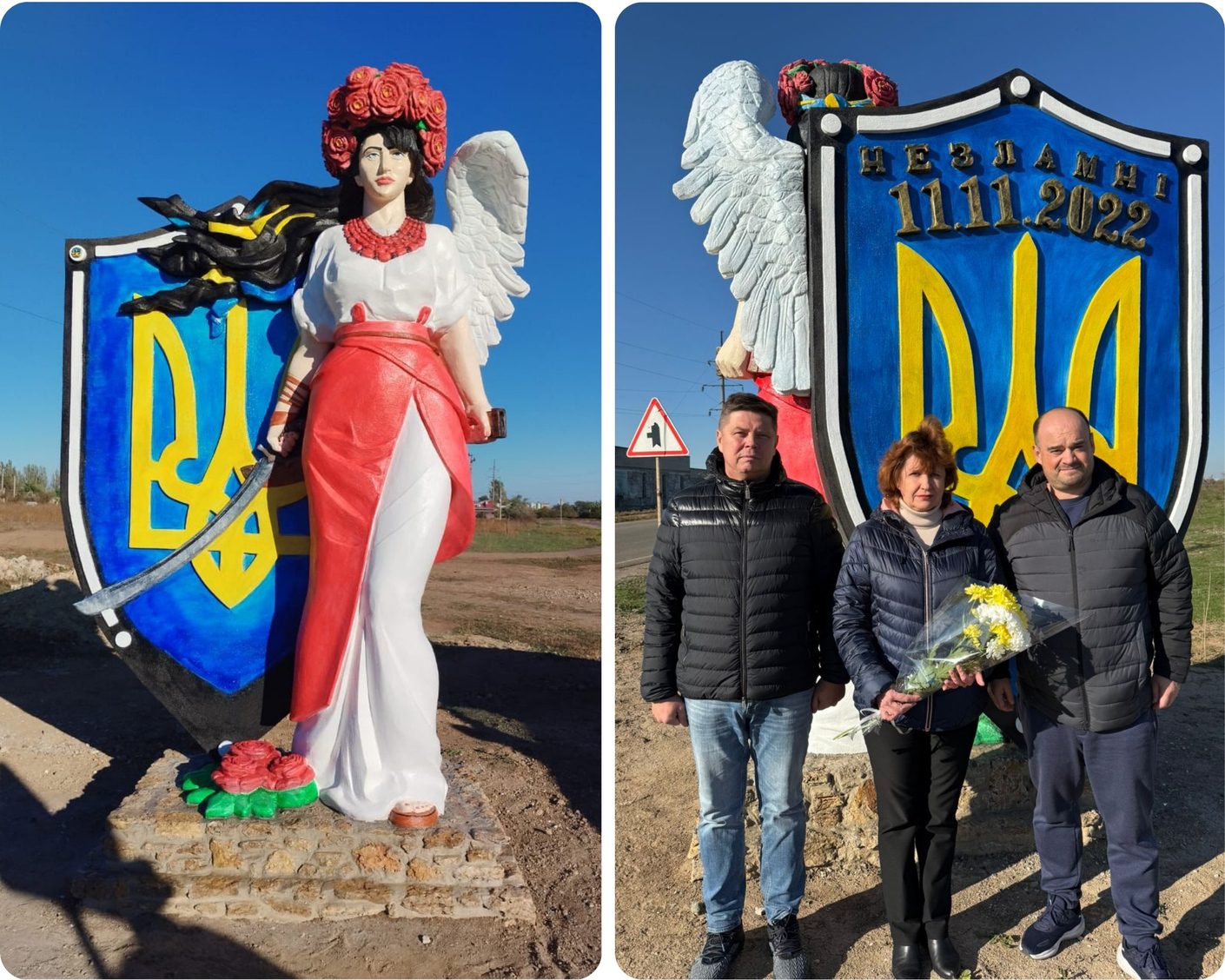
A sculpture commemorating the second anniversary of the community’s liberation, erected at the entrance to Bilozerka from Stanislavskyi Highway
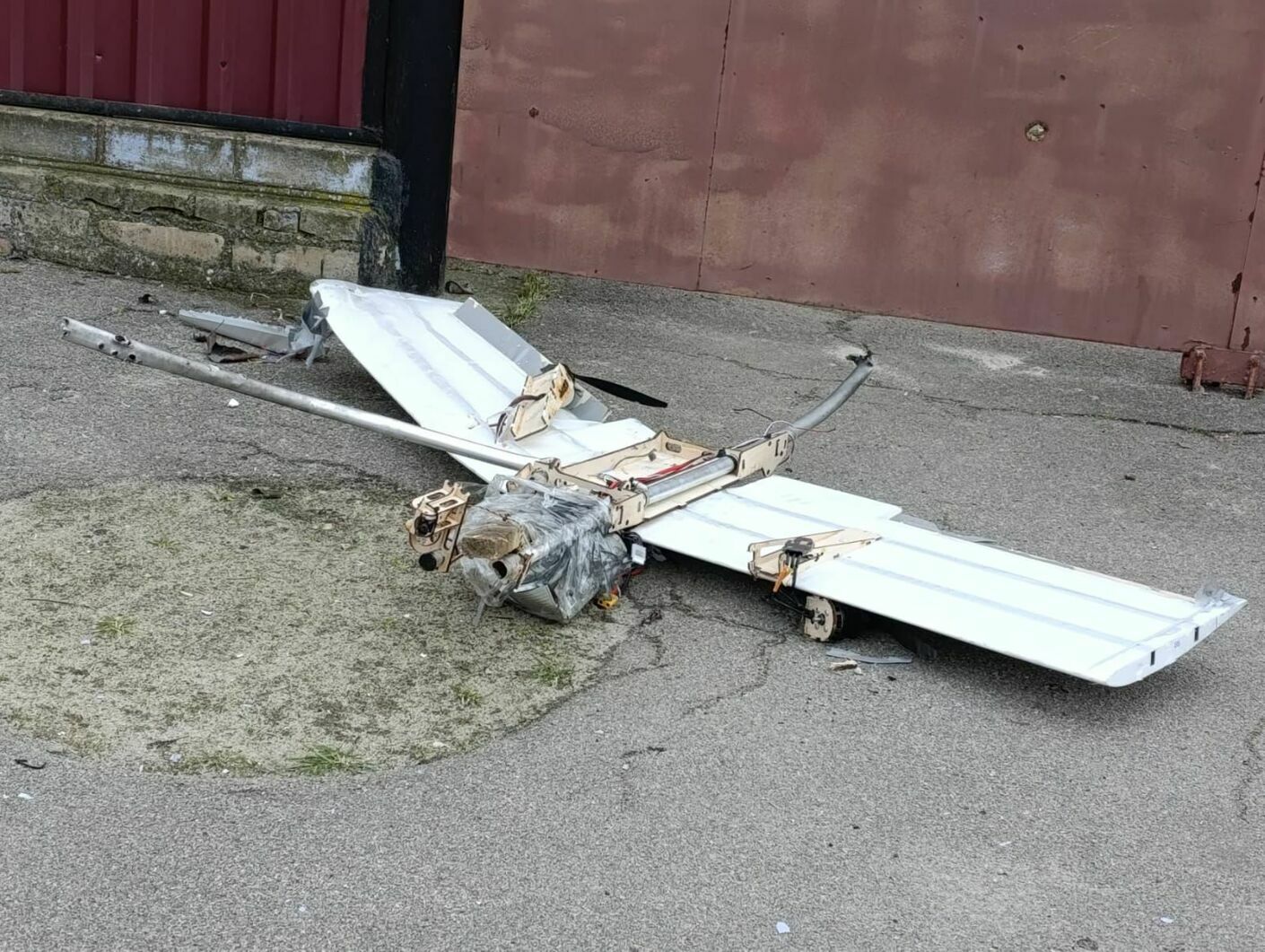
The remains of a russian drone used by the russians to hunt people
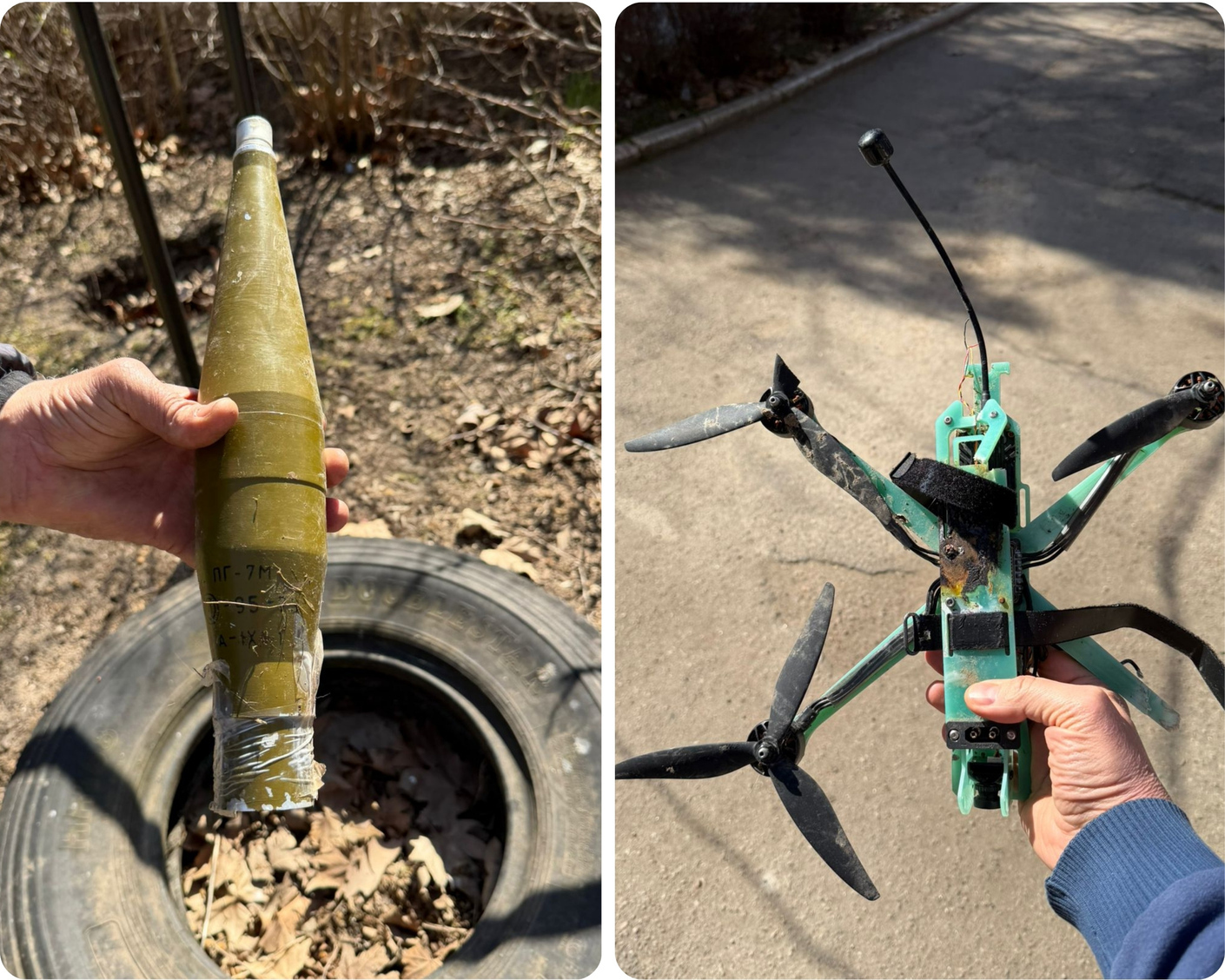
A russian shell dropped from a drone in Bilozerka that failed to detonate (photo on the left). One of the russian killer drones (photo on the right)
Farming under russian fire
Are there any opportunities to obtain vehicles and seeds for your heroic farmers, who continue to work despite the risks?
At the moment, farmers are practically the only ones still working here. Our land yields very good harvests, so people are holding on to this land. And to be honest, they have nowhere else to go: you cannot take the land with you, and other regions have their own farmers. However, ever since the russians destroyed the Kahovka Dam, we have had almost no rain in the summer. Previously, the water in the reservoir was constantly evaporating, and we had no shortage of rain, but now the fields are drying out terribly under our hot southern sun. To support the farmers, the regional administration has enlisted the Warren Buffett Foundation, which plans to award them grants ranging from USD 5,000 to USD 150,000. With these funds, farmers will be able to purchase various agricultural machinery – to replace those destroyed or stolen by the russians during the occupation of our community. So we really hope this initiative of ours comes to fruition. Our residents should see more than just war! They should be able to live a normal life, as far as that is at all possible in such abnormal circumstances.
It seems that the settlement and regional military administration act as links between businesses and donors. What is your view on this role of the local authorities?
We have been trying to fulfil it since the community was formed in July 2017. That is still the case today. Large charities liaise with the regional administration, which then liaises with us, and we liaise with entrepreneurs and farmers in particular. If necessary, we arrange meetings between the charitable foundations and farmers so that they can work with them directly. Last year alone, there were two such meetings with representatives of the Warren Buffett Foundation. At these meetings, farmers were taught how to write a short business plan and how to correctly prepare and submit a grant application. For their part, the farmers explained the situation on their farms and what agricultural machinery they needed. For example, one farmer requested a 12-metre-wide seed drill which, thanks to new technology, conserves moisture. Another farmer, who grows vegetables, requested a tractor with a sprayer. After all, watermelons, peppers, and tomatoes need to be sprayed constantly. Many farmers also ask for funds for irrigation. As I have already said, we do not have rain in the summer, and crops only grow well where there is irrigation. And for irrigation, you need canals, pipes, and pumps, and it is preferable for all of this to be powered by alternative energy sources, such as solar panels.
Do farmers pay taxes to the local budget?
They pay personal income tax, but not land tax. But that is not really important to us right now. What matters far more is that people are getting jobs on the farms and a regular income from their land shares. What is a community without people? Nothing! And the farmers keep people here. And for that, we are extremely grateful to them. Moreover, thanks to the produce from these farms, our community gains a degree of food self-sufficiency. This strengthens, as you said, our resilience. And most importantly, people see that life goes on and everything seems to be alright. The level of fear and internal panic decreases; the shelling no longer seems such a big problem. If you do not neglect safety and hide in bomb shelters in good time, it seems you can carry on living…
Can farmers insure their fields, just as is done, for example, in those parts of the world where hurricanes and other natural disasters frequently occur?
- Unfortunately, no insurance company will cover this. After all, we are in an active combat zone. So it turns out that our farmers are playing roulette, as it were.They sow their crops, but have no idea whether they will be able to harvest them. And despite this, they carry on working. After all, they cannot abandon their land! Sometimes drones or shells accidentally or deliberately set their fields on fire, and then the whole community rushes to put them out. It is a remarkable moment of unity. The military usually join in too, and we all work together to save the grain…
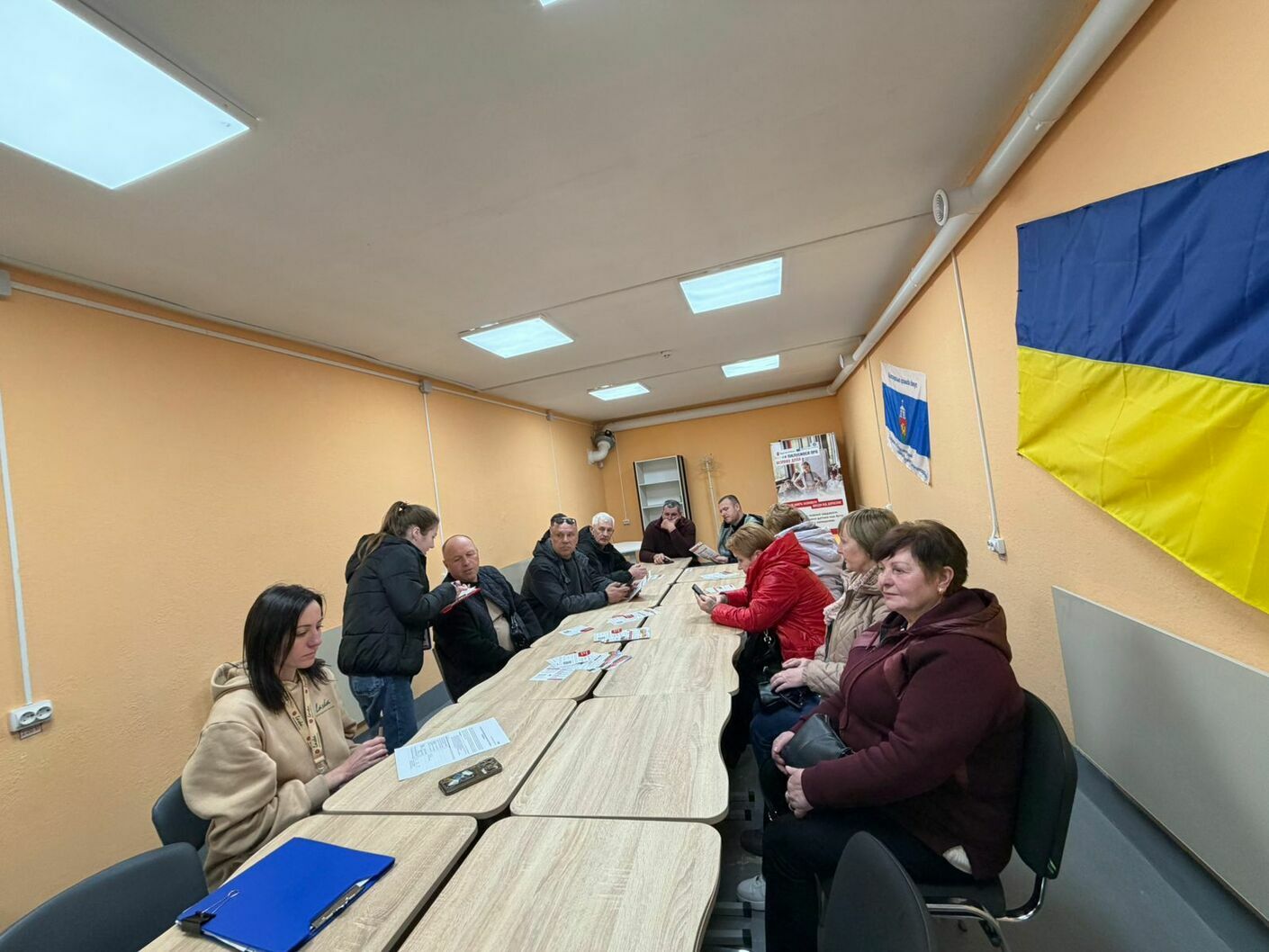
During the ‘Dialogue with Bilozerka Farmers on Grant Support Opportunities for Agricultural Producers’ in Kherson on 13 March 2026
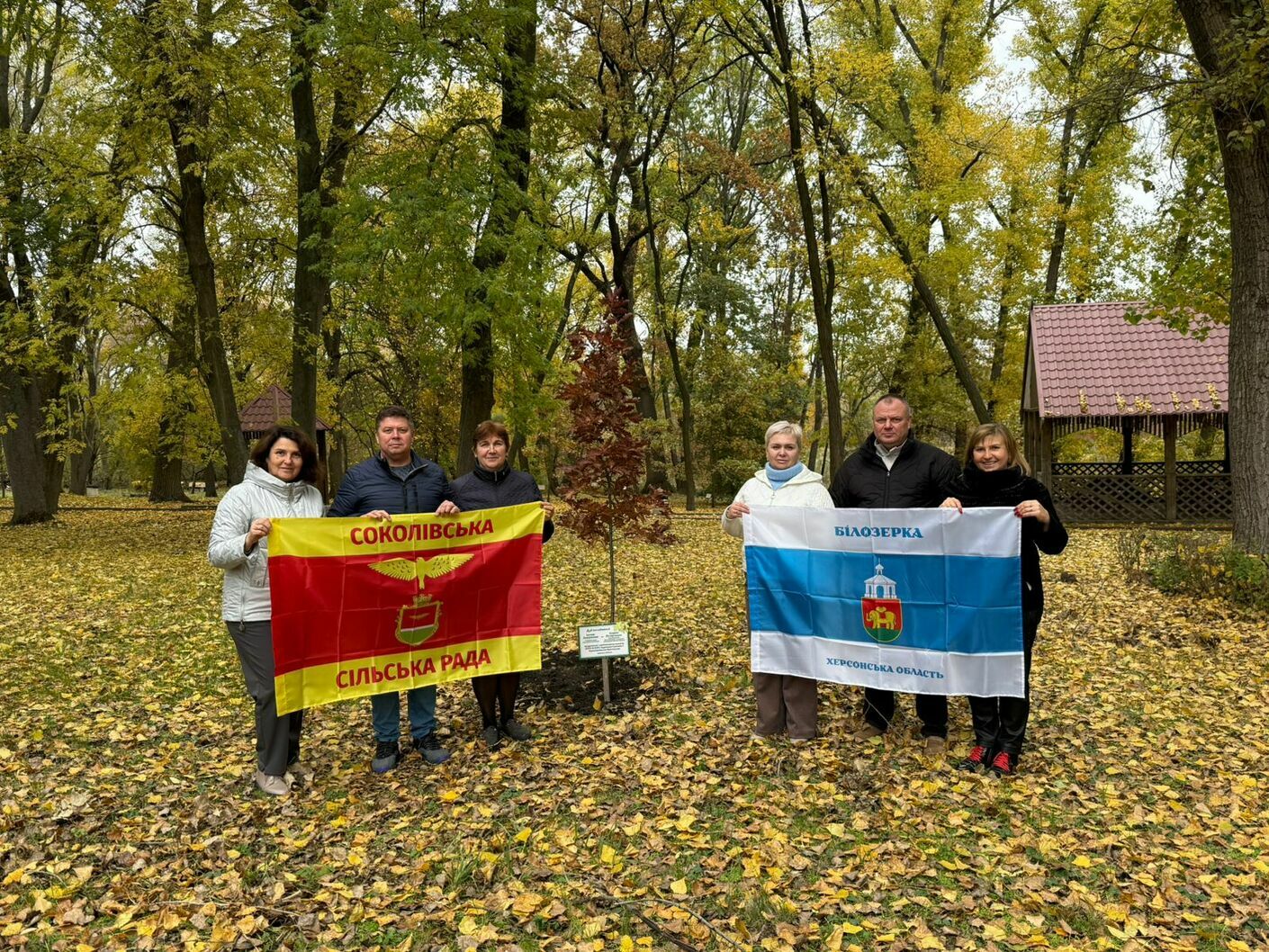
A delegation from Sokolivske community in Kirovohrad region, a partner of Bilozerka community in the ‘Shoulder-to-Shoulder’ project, in Bilozerka, October 2025
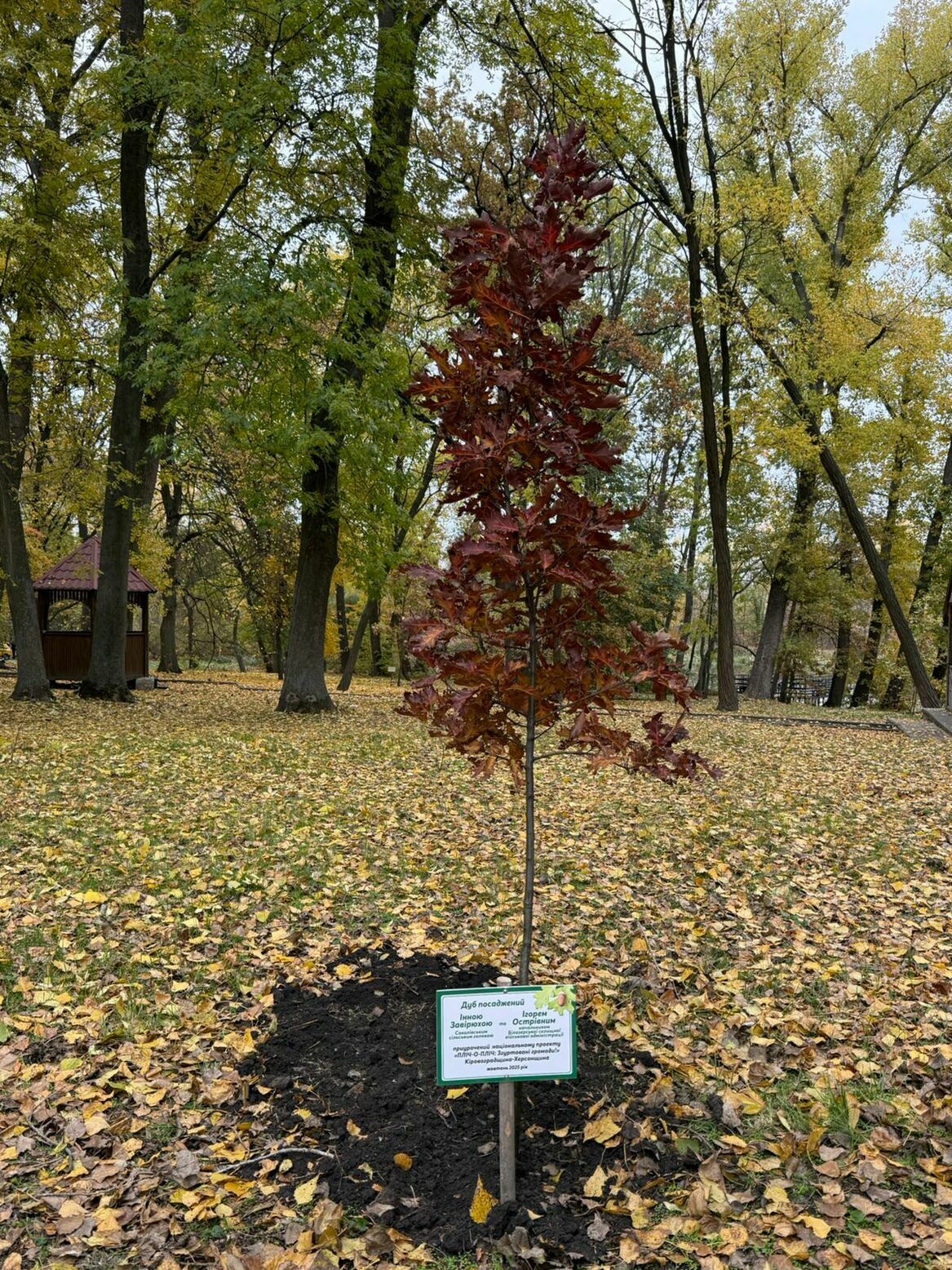
An oak tree planted by Ihor Ostrivnyi and Inna Zaviriukha, Head of Sokolivske community, in Bilozerska
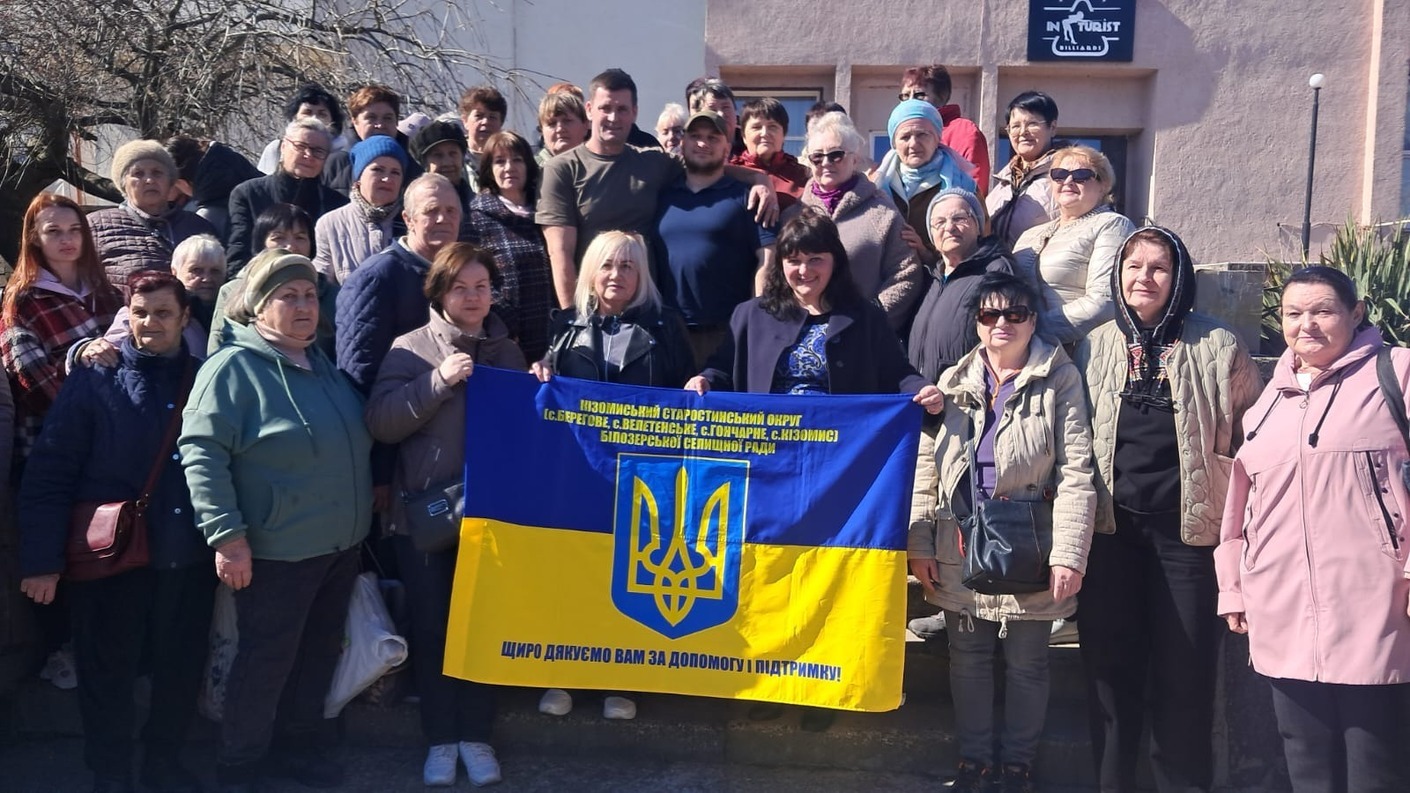
Residents of Berehove, Veletenske, Honcharne, and Kizomys of Bilozerka community outside the “Free Together” hub in Mykolaiv, 13 March 2026
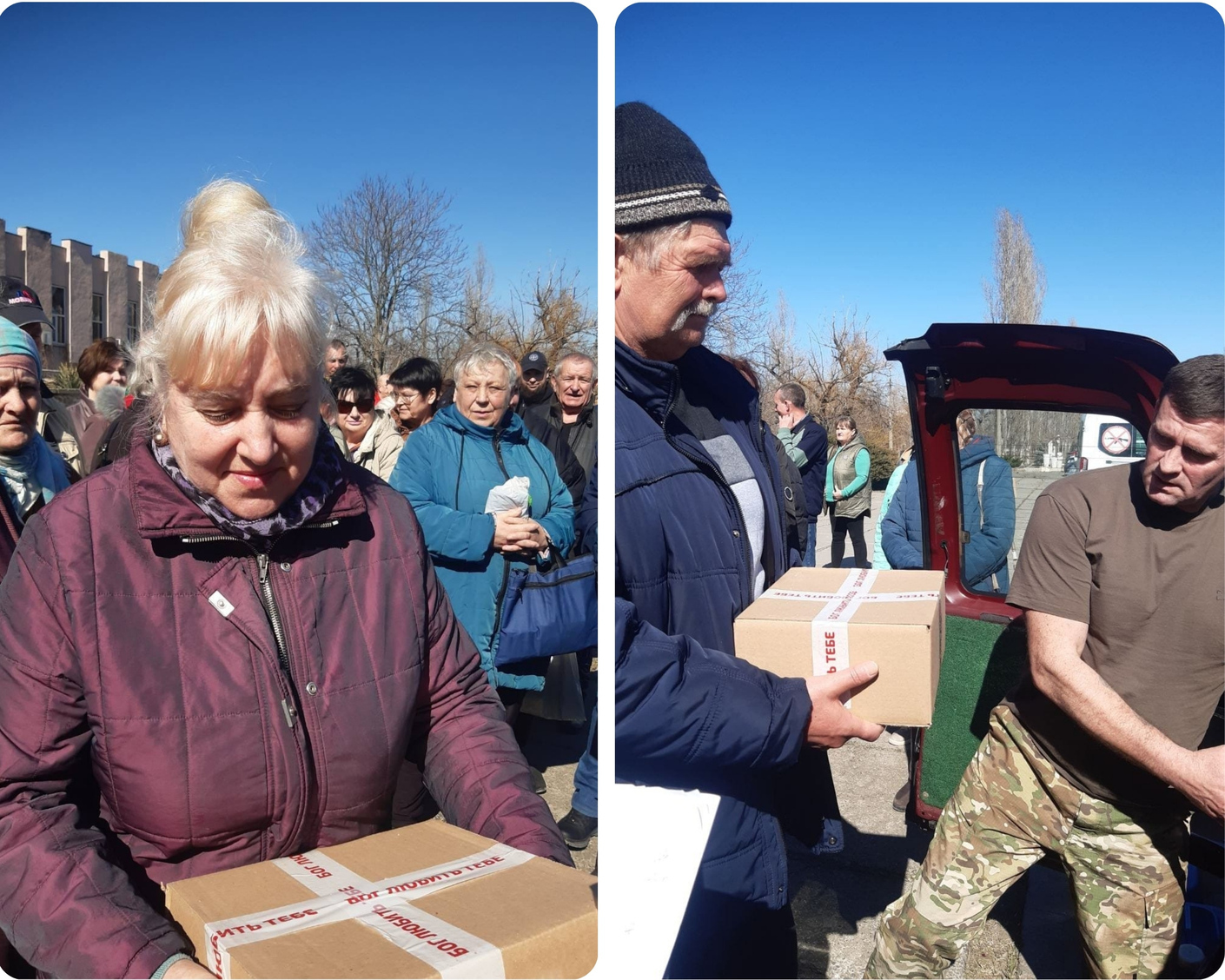
Distribution of humanitarian aid to residents of Bilozerka community in Mykolaiv
How the war provided an unexpected boost to community development
You recently opened a Security Centre with a veterans’ space. Was there any point in implementing such a project right next to the enemy?
Of course there was, because we want to give our people a mental break and show them that there is more to life than just the war. So, with the support of the regional administration and various foundations, we secured funding for the major refurbishment of a large barracks-style building that had stood empty since 2007. Now we have several rooms there with all the necessary furniture and a large hall for meetings. This hall even has an interactive whiteboard so that presentations can be given. The building now houses the local fire brigade and community police, and veterans gather there when needed. We have over 300 veterans, if we include those from the war in Afghanistan and the ATO. It is very important to us that they gather there with their families, so that this serves as part of their psychological rehabilitation. By the way, a psychologist works with the veterans in this building, visiting us twice a week. We have also fitted out a gym there so that veterans can recover more effectively from injuries and illnesses.
What other projects have you implemented in your community during the full-scale war?
We have significantly upgraded the equipment of our fire brigade and even provided it with a fire engine, which we received from donors in Britain. We built a garage for this vehicle, created a separate rest room for the firefighters, as well as a canteen, laundry room, and shower facilities. As firefighters are on duty around the clock, we try to make their shifts as comfortable as possible. In conditions where enemy shelling is part of our daily lives, an effective fire brigade is absolutely vital. I mentioned that we now have an office for the community police officer; we did not have such a position before the war. It is very timely now, as we have over 2,000 internally displaced persons, and a lot of work needs to be done with them – both regarding all the necessary documents and crime prevention. I would like to emphasise that all development projects relate exclusively to the northern part of our community, the three relatively safe districts where life is currently concentrated. The banks of the Dnipro, however, are completely deserted and extremely dangerous.
Does the community have a specialist who seeks out donors and grants?
Are you kidding? Specialist? We have a catastrophic staffing crisis; there is a severe shortage of people. We have vacancies for a housing and utilities manager, a lawyer, a land surveyor, a chief accountant… Are you kidding? Specialist? We have a catastrophic staffing crisis; there is a severe shortage of people. We have vacancies for a housing and utilities manager, a lawyer, a land surveyor, a chief accountant… But make no mistake, we are not sitting idly by. My two deputies and I are constantly on the lookout for grants and new partners. We reach out to everyone, exploring various options. For instance, my deputy is currently in talks with the German Agency for International Cooperation (GIZ), which is set to provide us with solar panels for artesian wells. The American company Chemonics International is also due to provide us with a drilling rig in the near future. We want to develop and realise that now, during the war, there is a unique opportunity to do so. Because we are currently on the front line, the eyes of the whole world are literally on our community. And as soon as the war ends, we will become one of thousands of applicants for international aid for restoration.
Could we say, then, that the war provided a certain unexpected impetus for the development of the community?
Indeed, no matter how terrible and unbelievable this statement may sound. Our shared grief has brought us closer together, and this unity is worth a great deal. We also received aid from literally every corner of the world and got to know the leaders of organisations we would hardly ever have reached out to under different circumstances. For example, Howard Buffett himself. In fact, his foundation provides food parcels to every household in our community every month. Had it not been for the war, would we be as closely connected with other communities as we are now, thanks to the ‘Shoulder-to-Shoulder: Cohesive Communities’ project? We have six partner communities, and each of them has allocated between UAH 1 million and UAH 1.5 million to us. And this is not to mention other forms of assistance – such as hosting our children on holiday, providing us with contacts from foreign municipalities, and so on.
How do you spend the funds received from partner communities?
Law says communities in active combat zones cannot be included in any state restoration programmes. The state can provide transport to such communities, for example, and we have received a tractor, a loader, and even an armoured vehicle worth UAH 10 million to evacuate the civilians. But state funds cannot be channelled into capital construction programmes. How else can we build a bomb shelter? This is where partner transfers really come in handy.
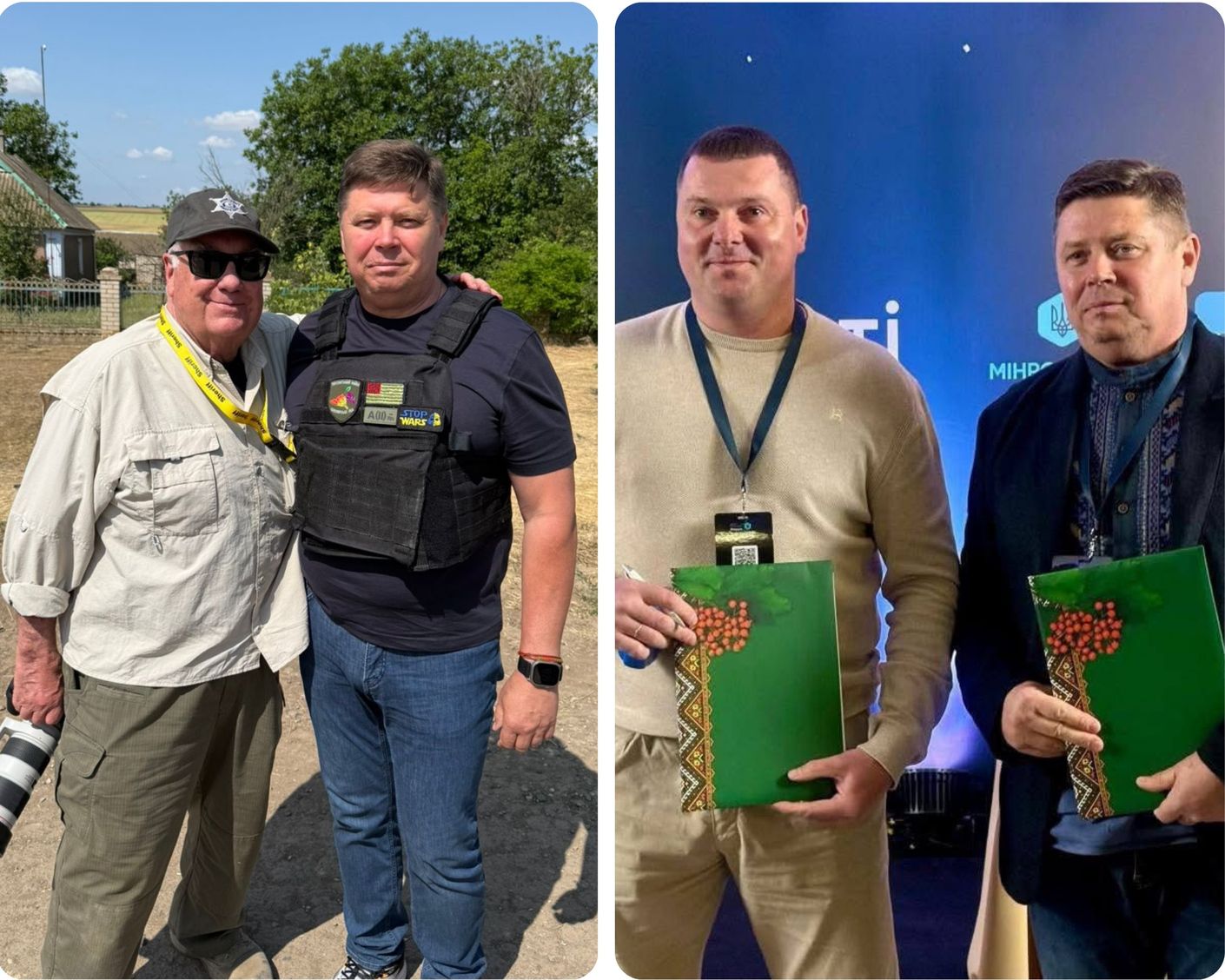
Howard Graham Buffett, an American businessman, farmer and philanthropist, son of billionaire Warren Buffett, and Ihor Ostrivnyi, Head of Bilozerka Settlement Military Administration in Kherson region. Summer 2025 (photo on the left). Volodymyr Tsykalenko (left), Head of Feodosiivka community and a partner of Bilozerka community in the ‘Shoulder-to-Shoulder’ project, and Ihor Ostrivnyi (photo on the right)
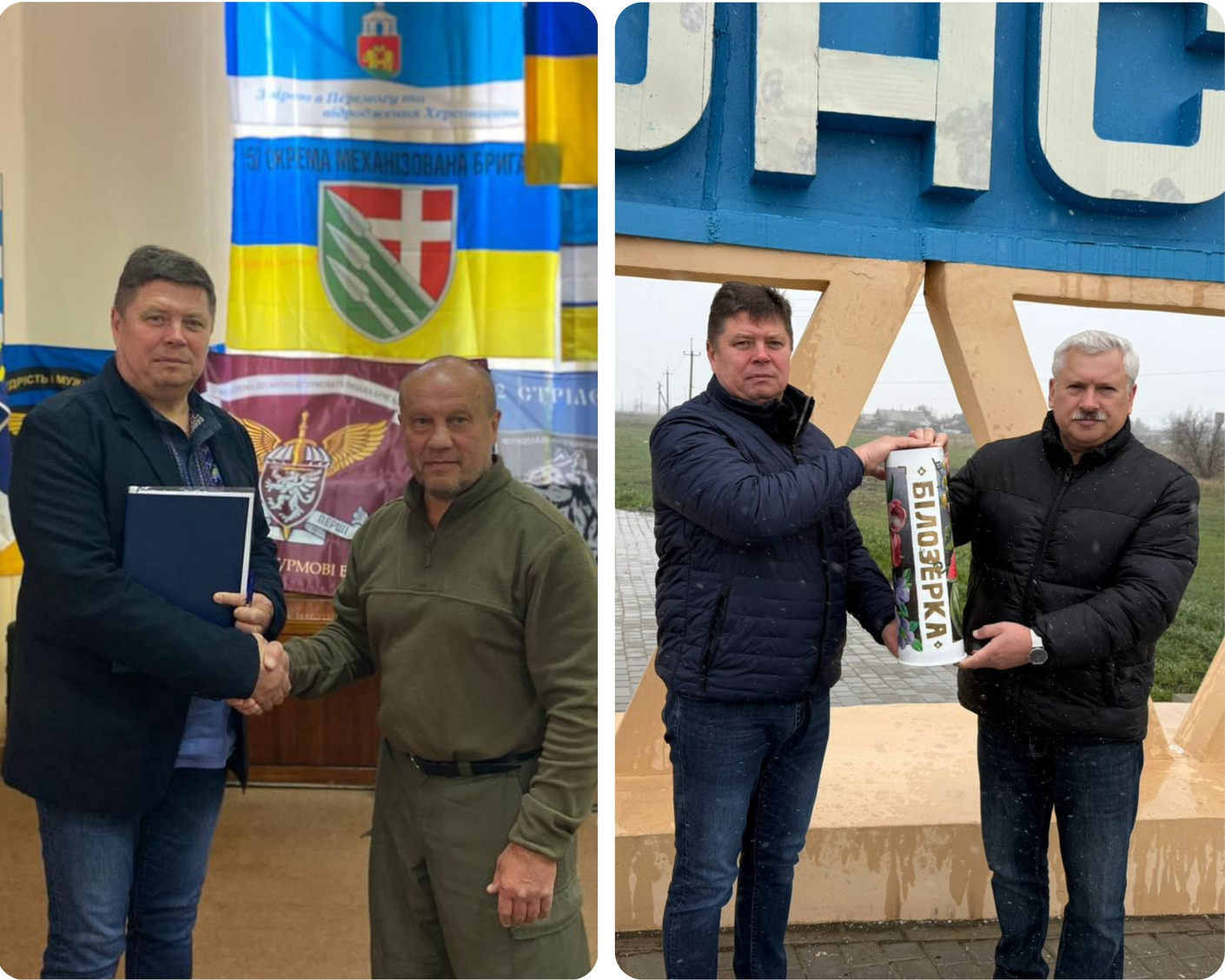
Фото 12. Valerii Samardak (right), Head of Chop Community and a partner of Bilozerka community in the ‘Shoulder-to-Shoulder’ project, and Ihor Ostrivnyi (photo on the left). Фото 13. Oleksandr Hrytsaienko (right), Head of Lubny community, a partner of Bilozerka community in the ‘Shoulder-to-Shoulder’ project, and Ihor Ostrivnyi (photo on the right)
‘Russian drones stage a real safari here, hunting people …’
Where do you look for staff? Is it possible to bring them into a community like yours at all?
The premises where our Security Centre is located are very large. There is enough space there to equip four more apartments for staff. I think that if we managed to do that, we could try to find, for our people, for example, a GP and other specialists that I have already mentioned. There is no guarantee we would find them, but who knows? We have to at least try.
Is it possible to invite experts from partner communities in the ‘Shoulder-to-Shoulder’ project?
I am very fond of this project; it is very timely. However, when it comes to experts, the human factor usually comes into play. One thing is seeing the war on TV, and quite another when that war is right in front of you. When you personally see russian drones hunting you down; when you hear the sounds of explosions every day; when you bury the dead. There have already been five shelling incidents since this morning. Of course, this is mainly along the banks of the Dnipro, but still. There are places we never go under any circumstances, because they are death traps. Every year we have dozens of wounded and dead. These are ordinary civilians. Sometimes the russians stage a real safari here, hunting people. In February, for example, a russian drone killed a woman, a mother of three, near her yard. Her child was inside the house at the time. And two weeks ago, a russian drone struck a woman in the back as she was simply cycling about on her bicycle.
You mentioned a child who was at home when her mother was killed by a russian drone. Does that mean there are still children living in the so-called ‘safe’ starosta districts?
Yes, there are. There is even a school operating there – in a hybrid format. Basically, our life now is like life in the state that once existed in the steppes of southern Ukraine and was called the Zaporizhzhia Army. Back then, the peasants never went out to work in the fields without weapons. We have no weapons, but each of us knows how, when and where to take cover from shelling, what to do if wounded, how to administer first aid, and so on. Many of us can tell from the sound of the explosions what kind of weapon is being used against us. But come what may, life goes on. We even hold various cultural events and concerts in the bomb shelters. The Regional Military Administration sends artists to perform for us. In our bomb shelters, people sing, put on plays, and recite poetry. We celebrate all public holidays there. Basically, everything happens just as it did before the war, only underground… Excuse me, an air raid alert has just been announced, and I need to check that all administration staff have gone down to the bomb shelter. We will talk another time. Another time!
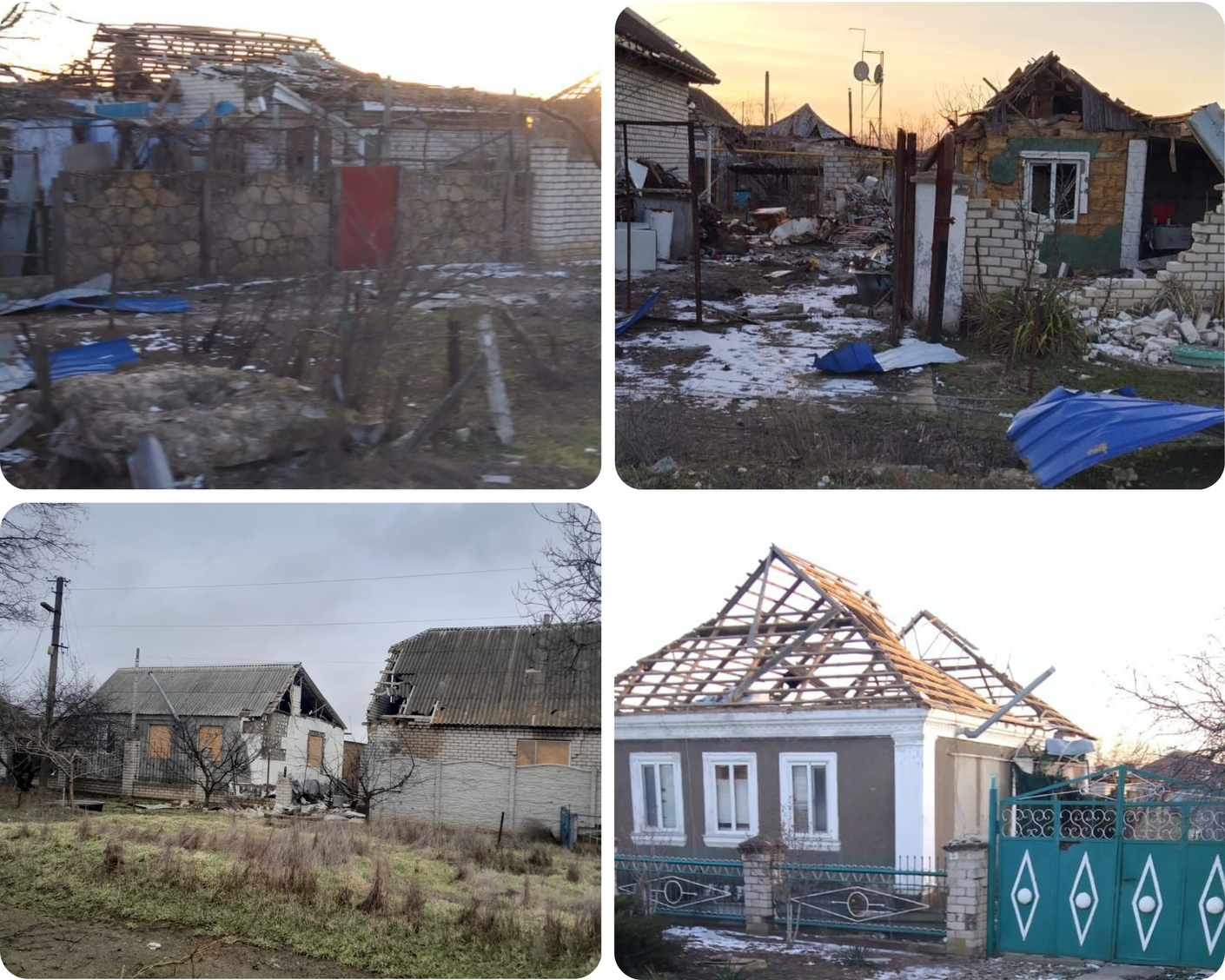
Destruction in Bilozerka caused by the russian army
Tags:
20 March 2026
Всеукраїнська асоціація громад закликає...
Всеукраїнська асоціація громад виступає за виділення додаткових коштів із Державного бюджету для оплати праці...
20 March 2026
Невдовзі відкриється подання заявок на участь у Європейському тижні регіонів та міст 2026
Невдовзі відкриється подання заявок на участь у...
Вже дуже скоро відкриється кампанія з подання заявок на участь у Європейському тижні регіонів та міст (EURegionsWeek)...
20 March 2026
АНОНС. Громади як інфраструктура...
23 березня о 15:00 відбудеться експертне обговорення на тему «Громади як інфраструктура євроінтеграції: роль...
20 March 2026
«КРОКУС — живий організм. Він зростатиме разом...
У Києві завершився дводенний тренінг для представників агенцій регіонального розвитку, організований...