‘This is not just a job, it is our mission.’ How Rudkivska community in Lviv region builds a career guidance system
What would happen if, instead of lofty conversations about vocations and tedious lectures “just for the sake of it”, we gave teenagers a real-life taster of different professions? For example, taking them to a massive grain silo, setting up a technical workshop right in the schoolyard, and being honest about local wage levels. The result would be a mild shock, a sudden interest in the exact sciences, and a bunch of shattered stereotypes.
Early surveys in Rudkivska community in Sambir district of Lviv region revealed a classic pattern: students dream of careers in IT or architecture, driven by the prospect of high salaries. Meanwhile, profitable jobs in the agricultural sector or manufacturing remain overshadowed by prejudices and stereotypes.
To show teenagers the real labour market and opportunities for professional fulfilment in their own community, a career guidance system has been developed and is implemented in partnership with the Swiss-Ukrainian DECIDE Project. How it works, what the students have discovered for themselves, and why teachers call it a mission rather than a job – read on to find out.
‘The community needs brains and working hands’
For the leadership of Rudkivska community, careers guidance is not merely a social initiative, but a pragmatic calculation and a development strategy. The key question that the local government faces today is: who will live and work here tomorrow? When young people leave en masse for major cities or abroad, the community loses its most valuable asset – its people.
‘The community is keen to ensure that as many young people as possible stay here,’ explains Svitlana Ferents, Deputy Mayor for Executive Bodies. ‘Rudkivska community is large – it comprises 34 localities, and we are in desperate need of both brains and hands: from schools and hospitals right through to the private businesses operating here. Career guidance is our way of showing children an alternative to leaving. Even if someone commutes to work in Sambir, Horodok, or Lviv, but continues to live at home, this is already a major benefit for the local budget and demographics.’
However, the deputy emphasises that single events or chaotic trips do not yield long-term results. For teenagers to really change their attitude towards local professions, a comprehensive programme is needed, one that begins whilst they are still at school.
‘The “take the children on an excursion once a year and then forget about them” approach does not work. It is simply a wasted resource. Career guidance only makes sense when it becomes an ongoing process. First, the child works with a careers counsellor to identify their inclinations, then sees a real production facility with their own eyes, tries their hand at something – and only then makes a conscious choice. Moreover, teenagers’ compelling arguments are often capable of convincing even very conservative parents,’ emphasises Svitlana Ferents.
Therefore, the community became involved in DECIDE project consciously, fully realising that the future lies in career guidance.
How it all began: Surveys and training for career counsellors
Natalia Podulko, a specialist in the Education Department who holds the position of community career coordinator, coordinates career guidance efforts in the community. She acts as the manager: seeks direct contact with business owners, organises regular workshops, and introduces students in Grades 7–9 to real companies.
However, they did not start with excursions or workshops, but with a survey: to find out what parents, students, teachers, local authorities, and business owners think about career guidance in the community.
‘And what did we find out? That mums, dads, families are super influential – families have the biggest impact on career choices. Children are not sure about the profession of the future, but are interested in a good income and job security,’ says Natalia Podulko.
These findings set out the objectives: to break down stereotypes about “prestigious” and “non-prestigious” professions, to help each child identify their strengths, aptitudes and skills, and to immerse them in the diverse world of professions.
The results of the follow-up survey – conducted a year after the classes and excursions – showed that 51% of the children had started thinking about their career choices and could see a clear direction to follow.
‘Children are very hard to impress these days. But ours ask for more – they want to see a wider range of professions and opportunities. That is the greatest achievement,’ says the coordinator.
JOBS course: First, get to know yourself
At the community’s pilot educational institution – the Volodymyr Zherebnyi Lyceum in Rudky – two career counsellors work with the children: social educator Iryna Kuzbyt and teacher-organiser Tetiana Ruslabudova.
The specialists underwent training under programmes adapted to the Ukrainian context, delivered by experts from the Swiss-Ukrainian DECIDE Project and the Zurich University of Teacher Education. The training covered several key components: deepening understanding of career guidance as a vital component of a community’s economic and social development, as well as developing a holistic view of life skills as one of the key areas of modern education.
Afterwards, the careers counsellors held sessions for students in Grades 8–9 to introduce them to their role and explain what support they could offer in choosing future educational and career trajectory. The JOBS course formed the basis of their work. During the lessons, using interactive methods, students explore their own interests, abilities, and aptitudes, get to know themselves better, and gradually form a vision of their future.
‘One of the things the children enjoyed most was the “Get to Know Yourself” workshops: after these, they found it easier to understand what they really enjoy and which professions are in demand in the job market. They were also impressed by the “Jobs of the Future” session, where the children used artificial intelligence to create different professions of the future,’ says Tetiana.
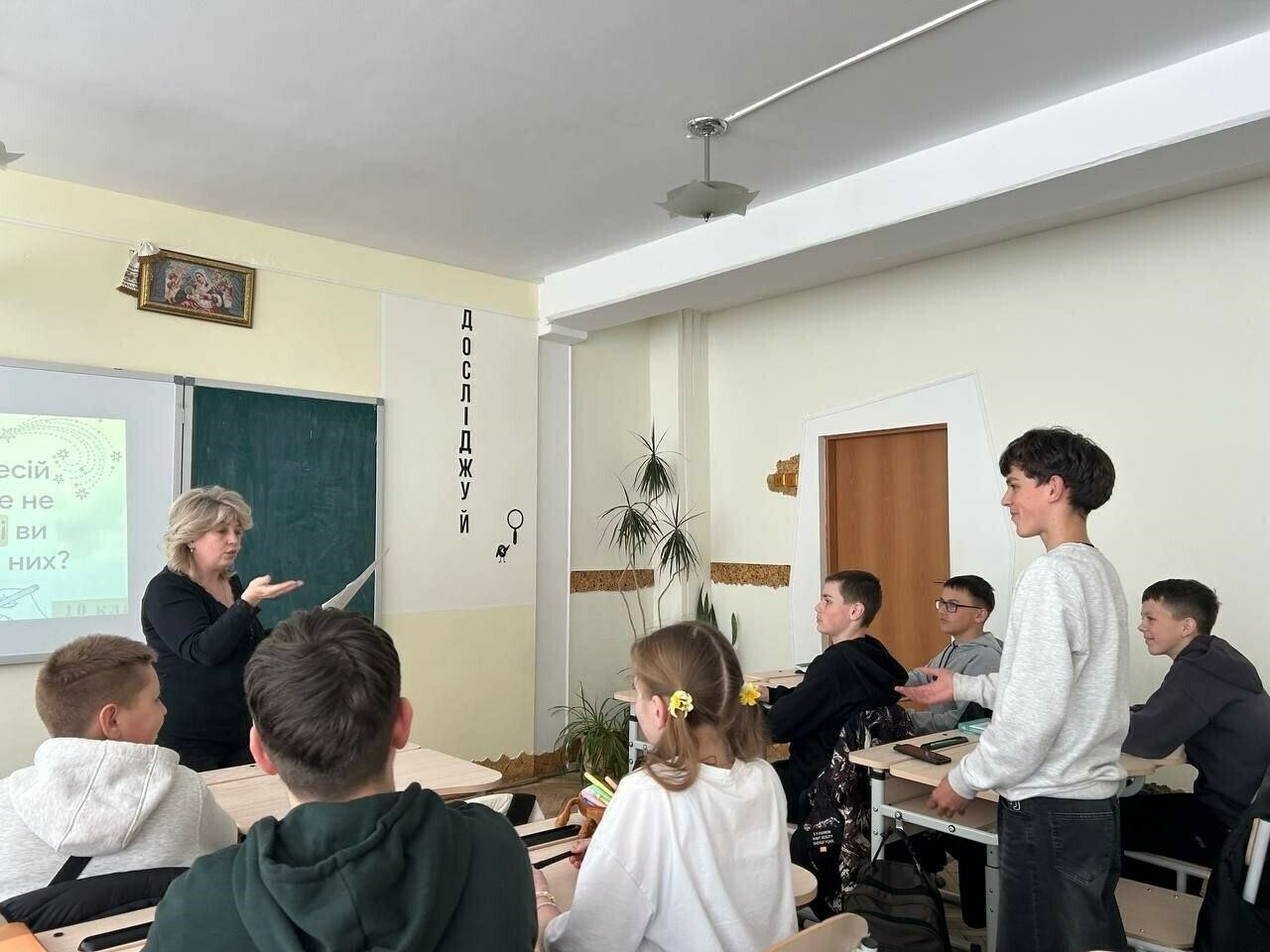
During the JOBS course
The counsellors also work on the psychological aspect of decision-making. Both are class teachers from the first cohort of the New Ukrainian School: their eighth-graders will move up to ninth grade next year, and they will face their first major decision about their educational trajectory.
‘We found that the children are very dependent on their parents. So, we wanted to ease their anxiety and teach them to listen to themselves. This course offers the chance not only to learn the theory, but also to experience it in practice,’ explains Tetiana.
The counsellors’ toolkit also includes classic diagnostic tools: the “interest square”, the Holland questionnaire, and individual and group counselling sessions. Iryna Kuzbyt is convinced that sometimes an outside perspective is exactly what helps a teenager see themselves clearly. She recalls a story that happened before she became a career counsellor, but which served as personal proof to her that this approach works.
‘A few years ago, two students in Grade 11 had a challenge deciding on a profession, and time was running out. I called them into my office. We completed the “interests square” and the Holland questionnaire to determine which type they belonged to. And then I said, “Let’s go on a visit to Lviv Polytechnic.” The children, their parents, and I went along. We were given a warm welcome; everything was explained to us, the children learnt about the specifics of different specialisations and realised what appealed to them most. They are now third-year students on state-funded courses: the boy is studying management, and the girl is studying design. And they are happy with their choices,’ says the teacher.
Career counselling, the experts add, develops communication skills and critical thinking, and most importantly – helps a child navigate a potential period of setbacks with ease.
“Test drive” of professions
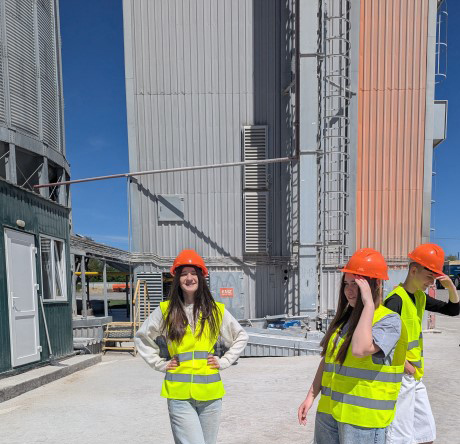
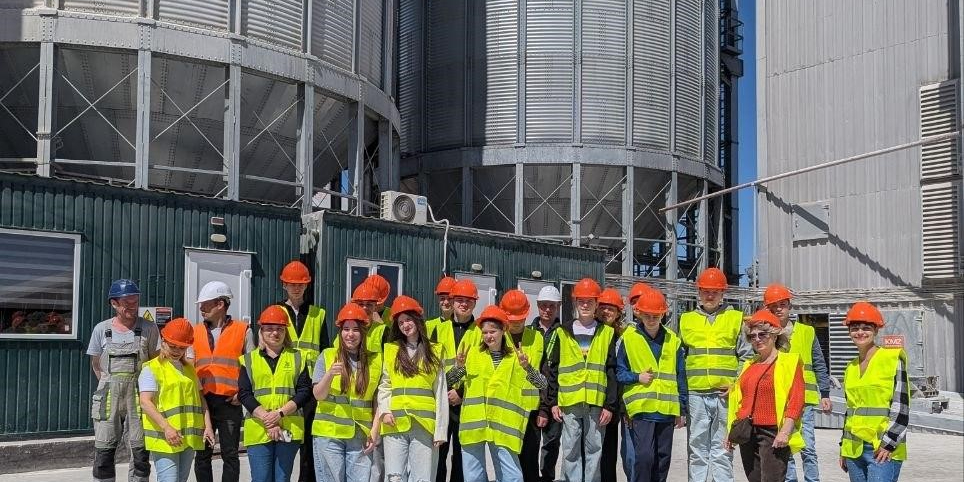
The most striking part of the project is the excursions. For example, the children visited a local agricultural giant – MHP. At the grain silo, the students followed the entire grain-drying process.
‘At the “Zerno” bakery and café, the children turned from guests into chefs: they prepared the ingredients themselves, baked the pizza, and then tasted it. The excitement lasted a long time – back at school, they kept asking if there would be another trip like this. And the bakery owners also showed the teenagers that small businesses are not something to be afraid of: they held a workshop for the children, in which two teams created their own ‘restaurant’ and presented how they would develop it,’ says Iryna Kuzbyt.
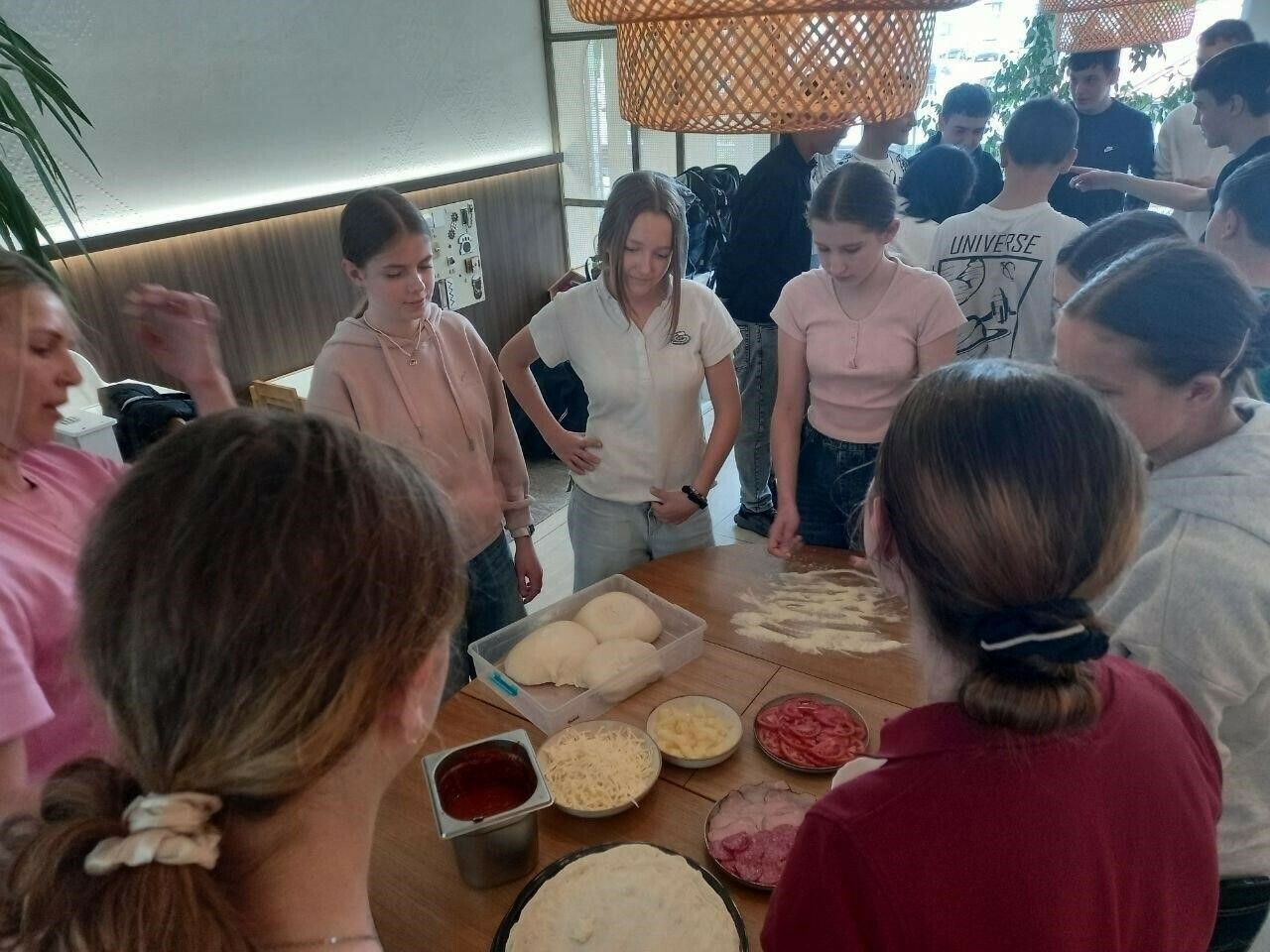
At the “Zerno” bakery and café
The excursions also included a visit to a neighbouring village, where a printing house has recently opened. The children tested their skills in the printing industry, received souvenirs, and learnt about opportunities for career growth. Natalia Podolko highlights a detail that impressed the team itself: the businesses do not simply show the children around the workshops, but help them map out a career path.
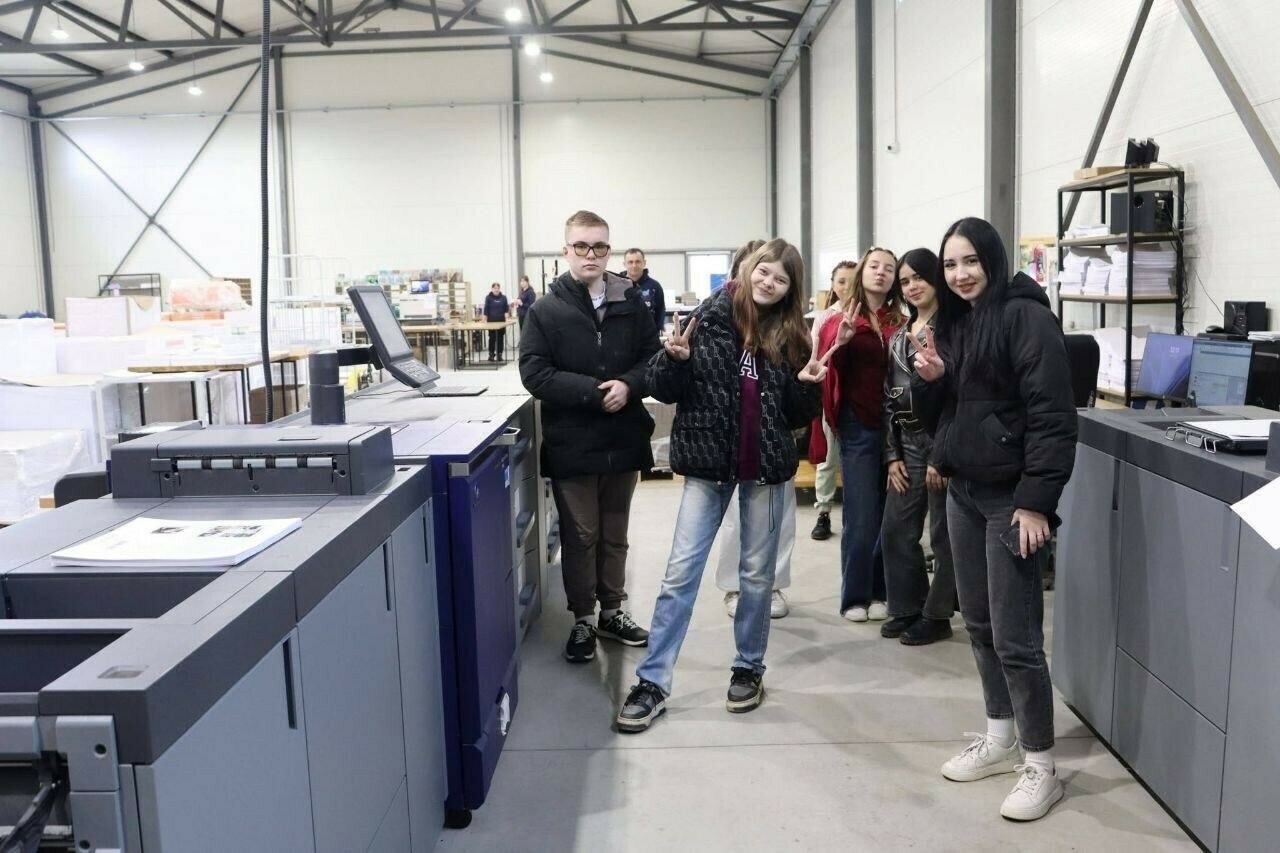
At the printing house
‘The staff explained, “We work with these schools – listen to where you should study, how to enrol, so that you can come and work for us later.” A child who shows an interest can immediately see a possible career path,’ explains the coordinator.
Negotiating with businesses turned out to be much easier than expected. Natalia admits: she was preparing herself for lengthy negotiations, but instead heard, ‘Great, bring the children along.’
‘Our companies responded with great enthusiasm and prepared thoroughly. At first, I thought it would be a standard “come and have a look” sort of visit, but the companies were keen to really inspire the children; they made sure the teenagers were fully immersed in the work process, got a feel for the vibe and atmosphere, and saw how the organisation looks after its staff,’ says Natalia Podulko.
Schoolchildren used to associate the agricultural sector with something archaic, but here they were shown modern mechanised machinery. The children saw that a modern tractor driver is a specialist who operates high-tech machinery, constantly learns and develops professionally.
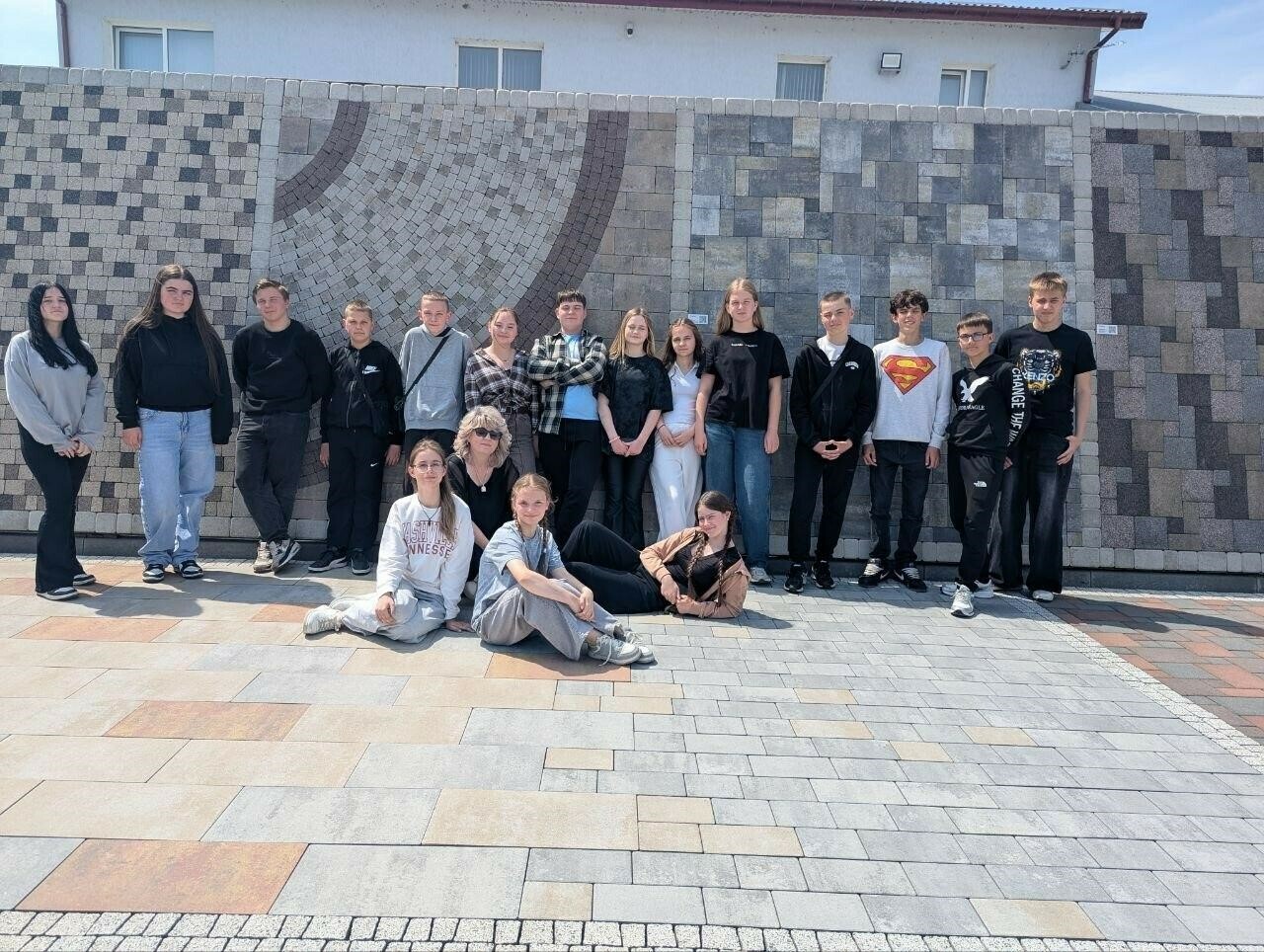
During the excursion
‘We also visited the “Ozon” factory, where we were shown the fully mechanised process of producing paving stones – from cleaning the raw material to processing the smallest component. We were told straight out, “We need you; come and join us, we’ll teach you everything; we offer good salaries and social benefits,”’ says Natalia Podulko.
Educational hackathon: Academic education or a profession
A separate event was the careers guidance hackathon, which was held at the lyceum in May. Iryna Dymii, Deputy Director of the Rudky Lyceum, speaks about it.
‘Professors from Donetsk National Technical University, which has now relocated to Drohobych, came to visit us. We also invited the “ToloKar” mobile makerspace. And in a single day, students from the Rudky Lyceum and four local gymnasiums were able to see that they have a choice after Grade 9: a vocational or an academic path,’ she says.
The university organised workshops on chemical analysis, first aid, criminology (including fingerprinting), and elements of robotics. And in the schoolyard, in the maker lab, the children learnt about blue-collar trades; in particular, they made chairs and engraved their chosen designs onto them using a laser engraver.
‘What do I like about this project? The fact that it is systematic. Throughout the year, the team works at different levels to ensure that careers guidance is not a sporadic process, but is tailored to the specific needs of Rudkivska community. We need our school leavers to stay here so that the community has a future,’ concludes Iryna Dymii.
‘The children were so well-behaved and attentive – they never behave like that in lessons.’
Perhaps the best indicator of success is the behaviour of the children themselves. Iryna Dymii quotes the words of a class teacher of Grade 9, who had just returned from a school trip: the children were so well-behaved and attentive – unlike they ever are in lessons. They simply had no time to mess about – it was all so fascinating.
Natalia Podulko recalls a trip to the grain silo: children who had never seen industrial scales before stepped onto them, weighed themselves, had their photos taken, and roared with laughter. They asked why everyone was given a hard hat before the tour – and came up with such theories that even the adults laughed – and then listened to real stories of how a hard hat had saved a worker’s life.
And, in their childlike straightforwardness, they asked questions that an adult would have been too embarrassed to ask: ‘Do people steal your grain? Are you weighed on your way out?’ Moreover, the teachers admit that the question about wages was the most important one on every excursion. And that was their motivation.
‘When the children realised the difference in salaries, some of them asked, “Why go abroad when we can develop here, in our own community, and even set up our own small businesses?” At “Ozon”, for example, they realised why they needed to study maths and chemistry. After the excursions, their motivation to study changed dramatically,’ says Tetiana.
When parents listen to their child
Another important area is work with families, as the survey showed that the family has the greatest influence on a teenager’s choices.
During the final lesson at the end of the year, Tetiana asked the parents what they thought of the course. The response was unanimous: these sessions are necessary because a child comes back from an excursion and says, ‘Mum, you know, there’s a decent option for me’ – and a discussion begins at home.
The school also runs “parent partnership lessons”, to which parents themselves are invited to talk about their professions. For example, a mum who works in the beauty industry discussed with the teenagers the risks and financial rewards of the profession, and how it is possible to set up one’s own small business right in the community.
‘Parents listen to their child, exchange views, and discussions arise. Because mum or dad might not even notice what talents their child has, and will insist on a profession that the parents want. But the child has travelled somewhere, seen something, tried something out – and might then make up their mind,’ says Iryna Kuzbyt.
Natalia Podulko describes this as one of the main objectives of the whole project: to overcome the parental stereotype of “go there because there’ll be work”, when the child has no interest in it.
Future plans
Plans for the next academic year have already been finalised: field trips for Grades 8-9, the JOBS course in two Grade 9 classes, and there are plans to introduce this course from Grade 8 onwards. The main goal is to establish a careers guidance hub based at the Rudky Lyceum, for which the community hopes to receive a grant from DECIDE. There are also plans to sign memoranda of understanding with employers.
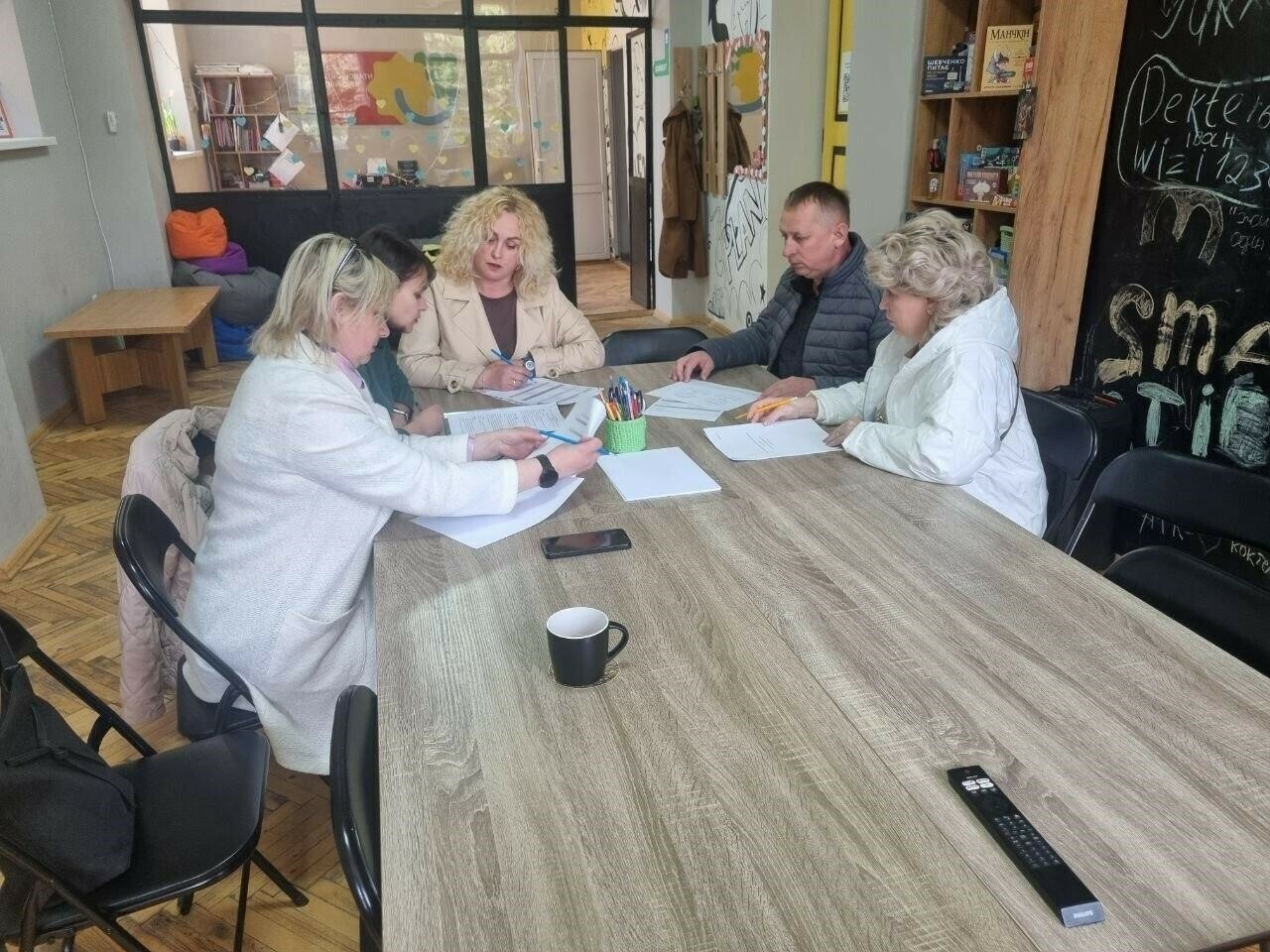
During a meeting of the working group on career guidance activities in Rudkivska community
‘First, we will improve and refine all our processes at the Rudky Lyceum – and then we will start involving children from other educational institutions in the community. Many of our children come from villages, and for them this is like a breath of fresh air. There are many career guidance events in Lviv at the moment, but they all come at a cost. We, however, will be offering this free of charge. In parallel, we have been actively establishing contacts with other organisations and businesses with whom we will work in the future. The feedback has been overwhelmingly positive, and careers guidance has become a real passion for us. We want the very best for our children,’ says Natalia Podulko.
The community is already planning a major field trip to the forestry sector so that the children can see for themselves how timber harvesting and wood processing work. They also plan to visit another grain silo.
The financial foundation has already been laid: the community has approved a local three-year programme for 2026–2028. Funds have been allocated for fuel for the trips (the businesses themselves welcome the children free of charge and even treat them to refreshments), for setting up the future hub – in case the grant is not secured – and for materials to support the work of the career counsellors.
Svitlana Ferents sees yet another resource: a participatory budgeting competition, through which schools could select additional equipment or organise career guidance events – the community already has experience of this. In general, for Rudkivska community, career guidance is not just a job, but a mission. During the conversation, they mentioned this many times.
‘And when, after a school trip, a child approaches a teacher and says, “I don’t know who to thank, but you’ve changed my world view. This profession seemed unimportant to me, but now I’ve had a change of heart” – it becomes clear what it is all for,’ concludes Nataliia Podulko.
Mariia Buleiko (Markovska)
14 September 2026
Моніторинг громад – серпень 2026
Моніторинг громад – серпень 2026
Як змінюється стан справ у територіальних громадах? Як на їхню спроможність впливають безпекові умови в регіонах та...
14 September 2026
Літня школа UCORD: від проєктних офісів до...
У прифронтових регіонах легко мати десятки термінових завдань і не мати часу визначити головне. Саме тому третій день...
14 September 2026
Анонс: публічне обговорення: «Безпечне...
Дата: 18 вересня 2026 року Час: 11:00 Місце проведення: буде повідомлено додатково Організатор: Громадська...
14 September 2026
16 вересня - інформаційна сесія грантового конкурсу IMPACT NETWORKS у межах проєкту EUroBRIDGE_UA_MD
16 вересня - інформаційна сесія грантового...
Агенція регіонального розвитку Одеської області, яка виступає координатором проєкту EUroBRIDGE_UA_MD, повідомляє про...