How Khmelnytskyi community allocates nearly a fifth of its own revenue to defence. Interview with Mayor Oleksandr Symchyshyn
Oleksandr Symchyshyn, Mayor of Khmelnytskyi, on how the record-breaking support for the army was achieved, on the future, and on what inspires him most in his work
By Dmytro Syniak
This interview stems from a news post on one of Ukraine’s largest Telegram channels. It stated, word for word: “In just one month, Khmelnytskyi community donated to the military: 30 quadcopters, 3 powerful hexacopters, 3 electronic warfare systems, ground-based robotic systems, 35 fibre-optic FPV drones, and 20,000 batteries.” The news piece also mentioned that the community supports more than 100 military units, to which it allocated over UAH 670 million in the first four months of that year alone. We were shocked by these figures and asked Oleksandr Symchyshyn, Mayor of Khmelnytskyi, to tell us more about the support for the army, as well as how Khmelnytskyi community lives in the fifth year of the full-scale russian invasion.
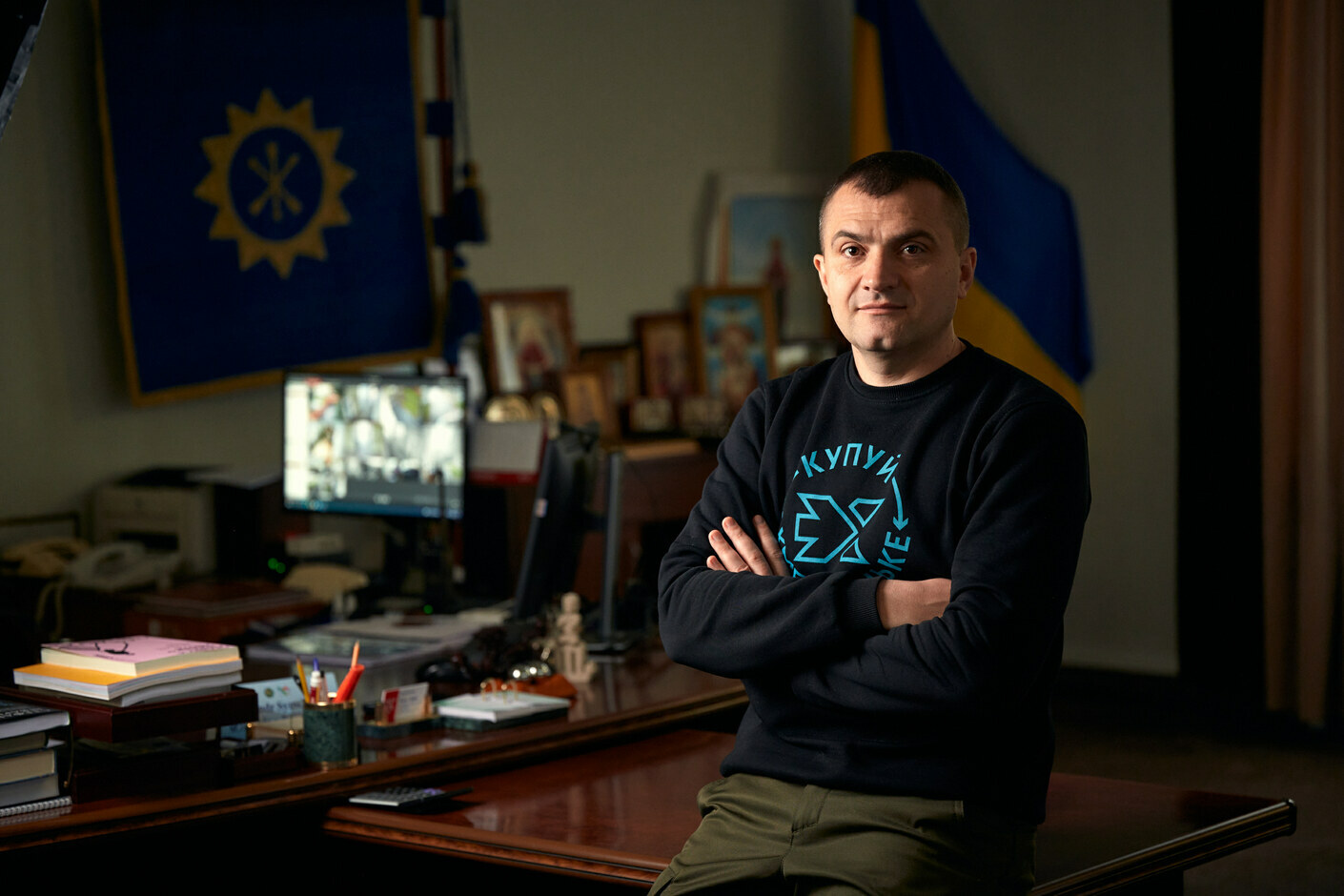
Oleksandr Symchyshyn, Mayor of Khmelnytskyi
What Khmelnytskyi sacrificed by allocating a fifth of its budget to the military
If I am not mistaken, Khmelnytskyi City Council has earmarked UAH 552 million this year to support the Defence Forces. Moreover, you declared that this sum would increase further over the course of the year. How is that possible?
Your information is somewhat outdated. As of 1 September this year, our budget allocated UAH 788 million to strengthening the country’s defence. This does not include the construction of bomb shelters or infrastructure protection facilities, nor does it include funds to compensate for veterans’ subsidised travel or other items that many communities include in the list of “defence” expenditure. We do not include these items. Therefore, the UAH 788 million is earmarked for the direct support of military units and individual servicemen. Just a few weeks ago, the Apostrophe portal published the results of its research into how much Ukraine’s regional centres spend on national defence. Khmelnytskyi tops this ranking, allocating 15% of its revenue to this purpose. That says something, doesn’t it? This has been going on for five years now – ever since the full-scale invasion began. There were times when we allocated up to 25% of our revenue to supporting our defenders. Even before the full-scale invasion, we were actively supporting the defence forces, having set up our first programmes as far back as 2016. In fact, we plan to increase our expenditure on supporting the armed forces to UAH 1 billion by the end of the year. This may be a somewhat ambitious target, but I believe we will reach at least UAH 900–920 million in any case. This would mean that Khmelnytskyi has allocated 17–18% of its revenue to the army. However, I would ultimately like this figure to reach 20–22%.
This is despite the fact that the city’s budget for this year stands at…
In terms of our own revenue – UAH 4.7 billion. There is no point in mentioning state transfers, as we are simply transferring them for their intended purpose. We cannot give them to the military.
The level of detail in news reports about the Khmelnytskyi City Council’s support for the army is also surprising. They often list specific equipment, which suggests you are quite familiar with weapons. How important is such knowledge for a community leader these days?
Everything is quite simple: this knowledge stems from our support for the army. To prevent fraud with our money, we purchase a significant proportion of the equipment for the military ourselves. In order to buy what is needed, you need to understand the subject. There are different types of EW (electronic warfare systems – Author) and GRCs (ground-based robotic systems – Author). And when it comes to drones, there is a huge variety, as there are aeroplane-type UAVs – these are interceptor drones; there are fibre-optic FPVs, and many others. You do not want the community’s money to be wasted. So you have to understand everything yourself. I will tell you more. We have a grant programme to support innovative projects in the defence sector. In other words, whenever any developers from Khmelnytskyi come up with an interesting idea, we are prepared to invest up to UAH 1 million in it. This usually results in innovative products such as repeaters and interceptor drones. UAH 32 million has been allocated for this in our 2026–2027 budget.
15% of the budget for defence is a stunning figure. How much can a city allocate to defence without starting to compromise its own development? Where do you draw the line?
Khmelnytskyi restricted its own development and put it on hold in 2022! In fact, we halted some truly impressive development projects at that time. For example, we stopped work on the construction of the Sports Palace, which I believe is the best sports palace in Ukraine since independence. We also stopped many urban improvement projects, including the renovation of parks and public gardens... Since 2022, we have not repaired any roads from scratch, only carrying out routine maintenance. I am genuinely astonished when I see local authorities in frontline cities spending money on installations, planting flowers or beautifying parks, when a russian invader could knock on the door at any moment with the butt of a Kalashnikov.
Prior to the full-scale invasion in 2021, Khmelnytskyi was at the top of USAID’s competitiveness ranking of Ukrainian cities. It also came third in “Focus” magazine’s ranking of the most comfortable Ukrainian regional centres. Does that mean we have to abandon these goals now?
We are deeply sorry to have been forced to put our development plans on hold for the time being. Before the full-scale invasion, our motto was “Khmelnytskyi: new every day”. We were actively building, renovating and creating new facilities. Not just ones like the Sports Palace... Since gaining independence, we have built 12 educational institutions, repaired hundreds of kilometres of roads and opened hundreds of playgrounds and sports grounds. However, at the start of 2022, we had to put all of this on hold. From this point onwards, I believe that nothing should be more important to every Ukrainian than supporting our defence forces. Everything else can wait. Therefore, we are dedicating all our resources to the military, sacrificing development and our position in the rankings. After all, the defence forces represent our chance of survival — they are our future. This is our number one priority. Without them, every Ukrainian city will become like Bakhmut. This must be made very clear to local government officials across Ukraine.
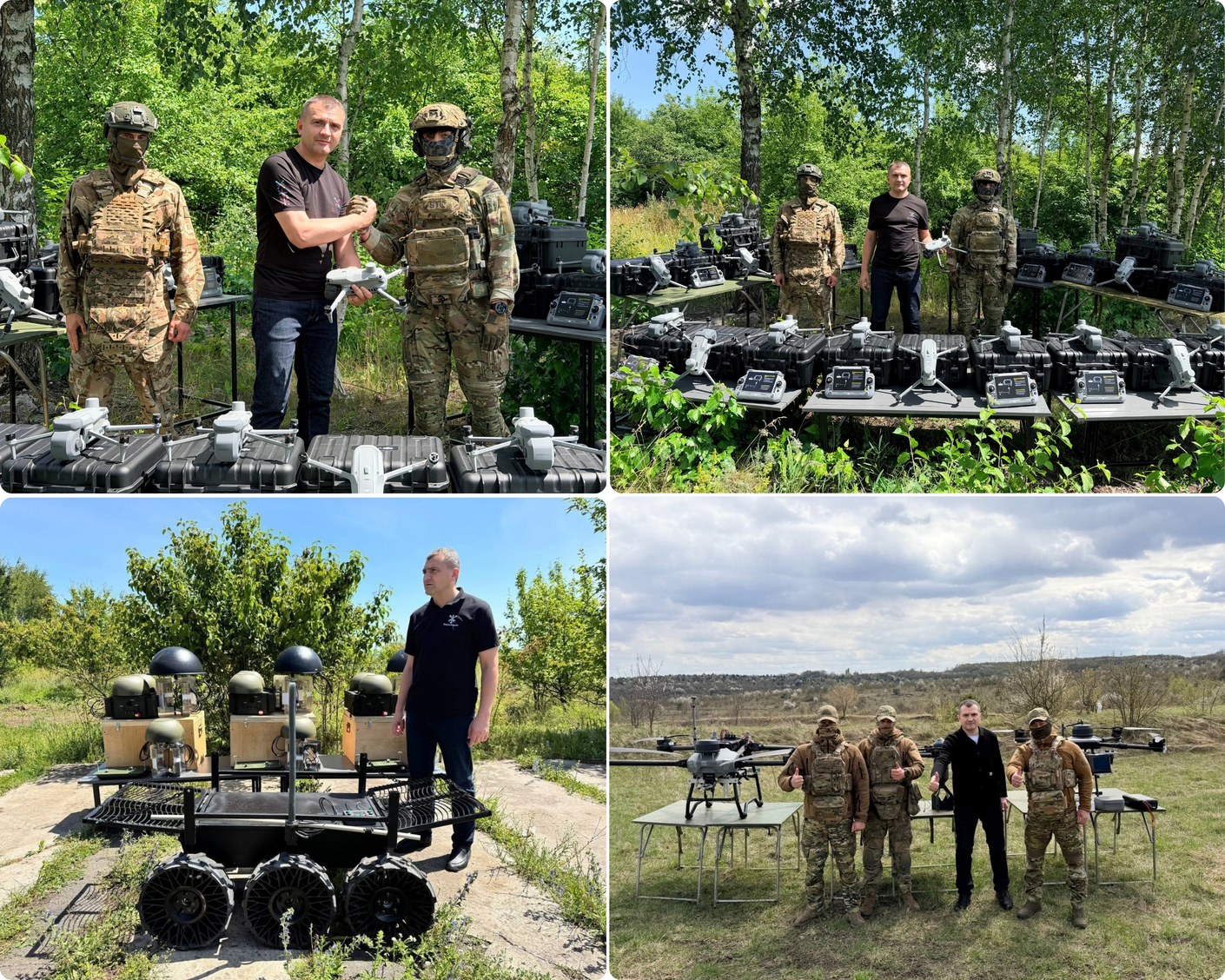
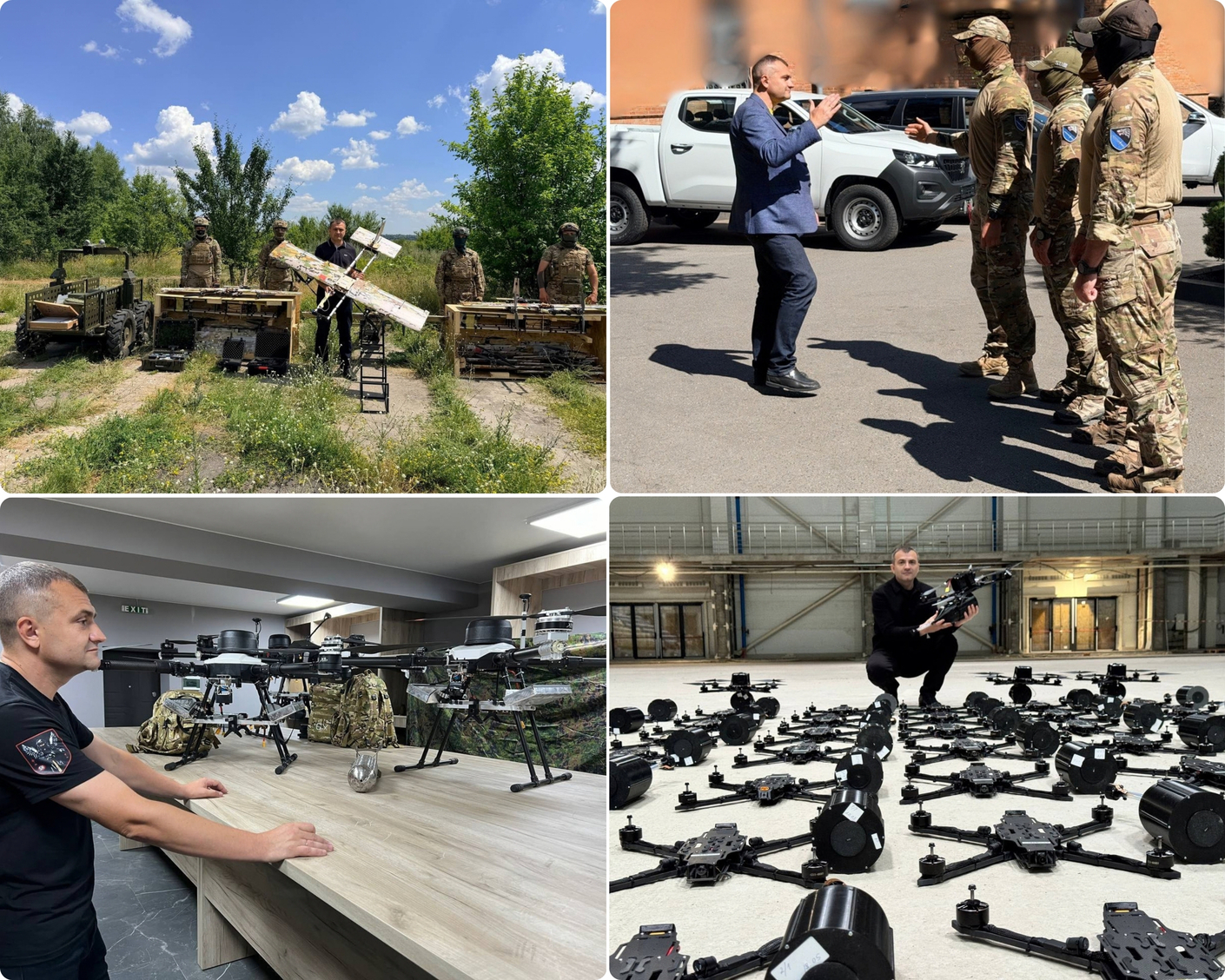
Khmelnytskyi’s support for the military in practice looks like this
How the community cares for veterans and the families of military personnel
You mentioned the programme that grants veterans the right to subsidised travel on public transport. What else is Khmelnytskyi doing to support veterans?
This year, the city council has allocated over UAH 1 billion to a four-year programme supporting service personnel and veterans. Last year, 9,500 military personnel benefited from the programme. A further 2,500 people received funds for medical treatment and rehabilitation. Additionally, we have allocated almost UAH 1 billion over four years to the “Families of Heroes” programme, which supports the families of fallen soldiers, prisoners of war, and those missing in action. In total, UAH 204 million was spent on these programmes last year alone. At least UAH 50 million of these funds goes towards what is a key priority for most people: the provision of housing.
How do you select those who receive flats? After all, there are presumably many applicants.
Yes, indeed, despite the fact that we were providing around 60–70 flats a year up until 2022, the number of service personnel who still require housing stands at over 1,000. However, I should clarify that the state also provides housing for service personnel and their families, so this waiting list is moving forward, not standing still. To ensure transparency, the city council has set up a dedicated committee, which, in addition to our officials, includes veterans and serving military personnel. This committee determines the priority for the allocation of housing. Priority is given to the seriously wounded, those recently released from captivity, soldiers who have been awarded major state honours, as well as those for whom military units have interceded. Incidentally, when allocating housing, we try to maintain a balance between the different branches of the armed forces. This ensures that special forces personnel or National Guard members, for example, do not feel neglected. I am proud that we provided a flat to a legendary soldier. Three months after we handed him the keys, he was awarded the Star of the Hero of Ukraine. This proves that we were moving in the right direction.
The material support is clear. But does the community invest in the psychological rehabilitation of military personnel?
Of course, as it is psychological rehabilitation that enables veterans to be fully integrated into society. Most of our work focuses on the Veterans’ Centre, a municipal organisation. This means that the psychologists, rehabilitation specialists and other experts working there, including those who support veterans’ businesses, are paid from the city budget. In addition, we have two rehabilitation departments that work with veterans. One operates as a branch of Khmelnytskyi City Hospital and specialises in musculoskeletal rehabilitation. The other, called “'Bereh Nadii” (“Shore of Hope”), has 60 beds and focuses on psychological rehabilitation.
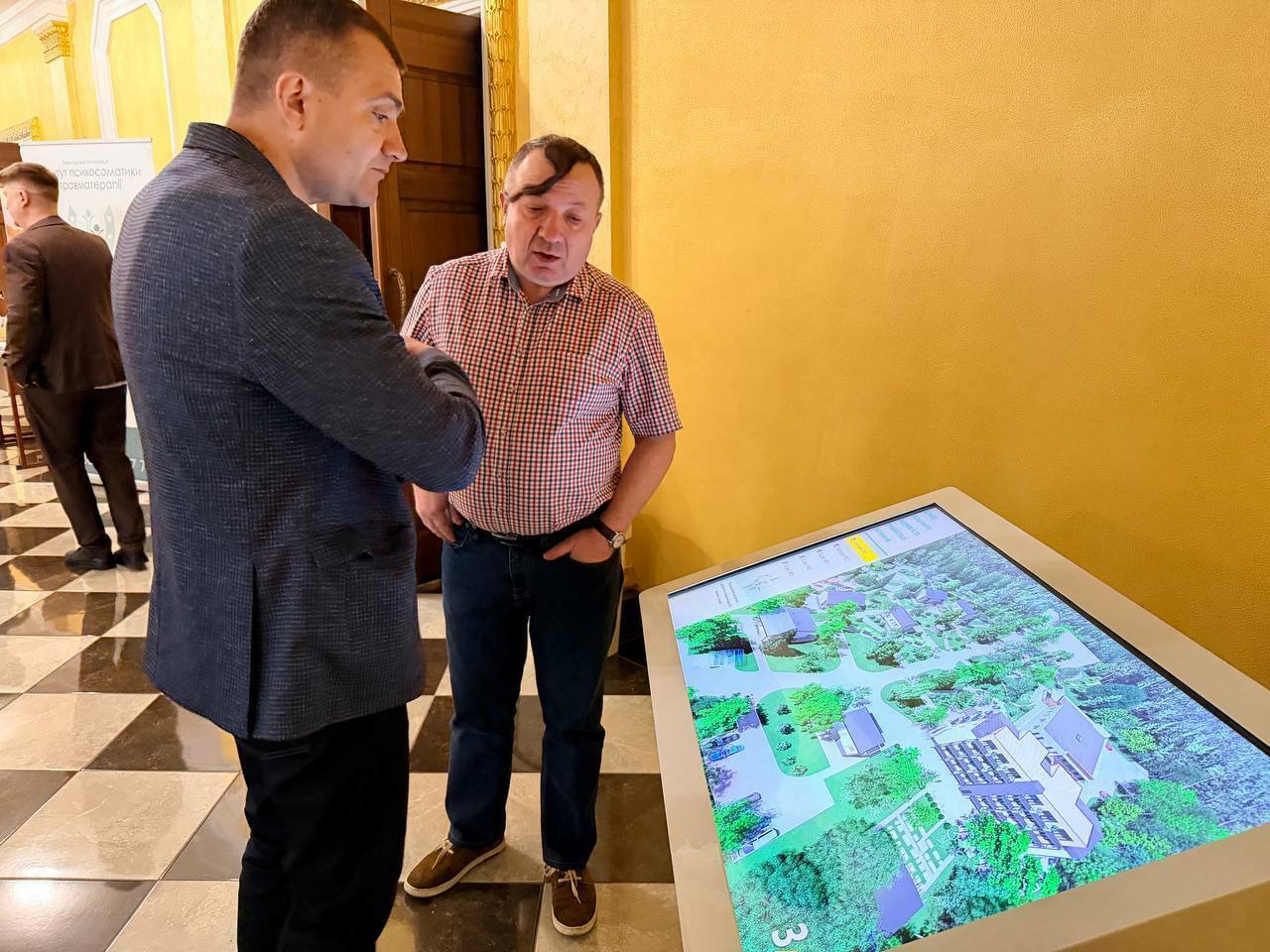
Visualisation of the planned Mental Rehabilitation Centre for military personnel
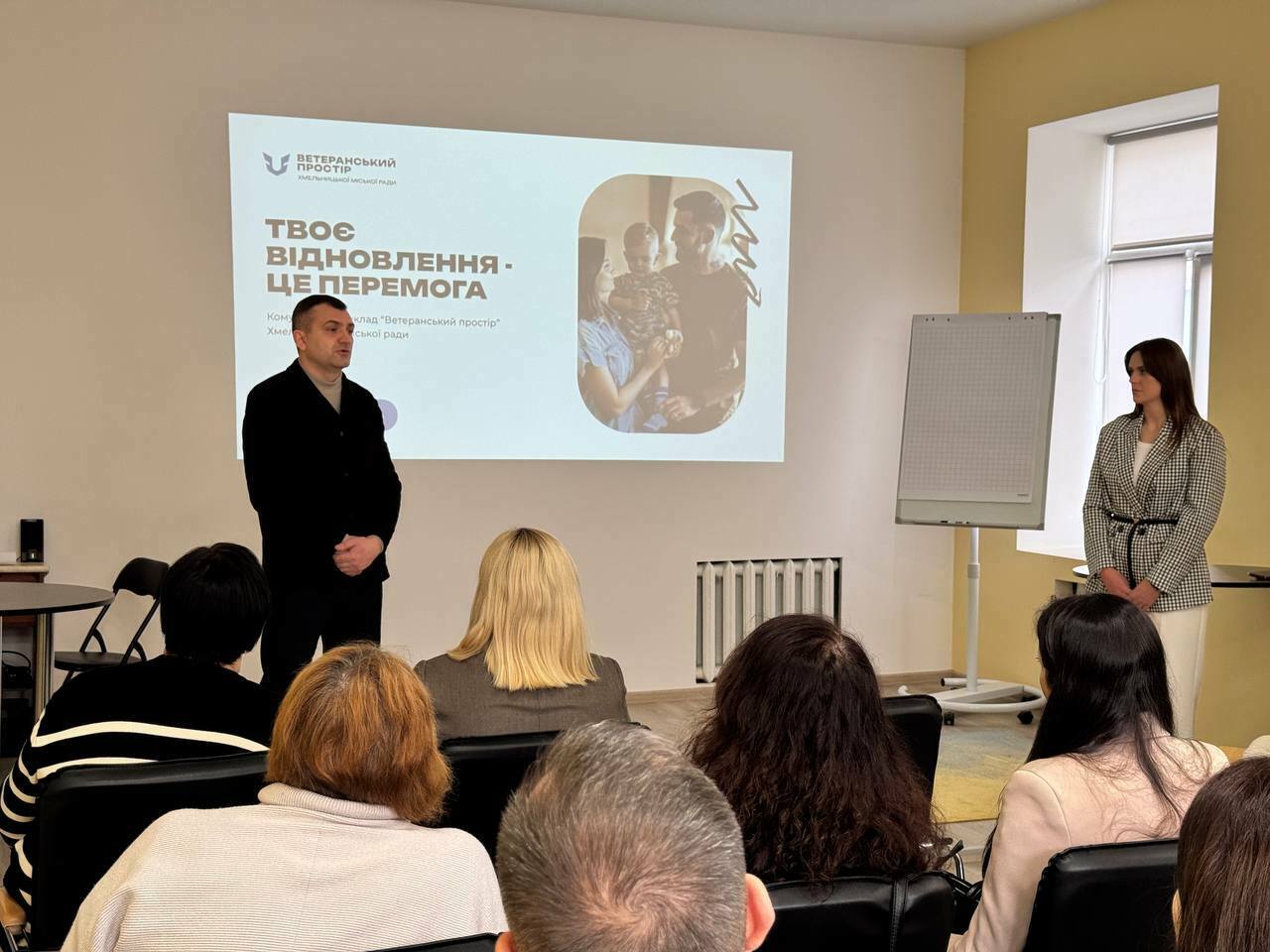
A performance in the veterans’ centre
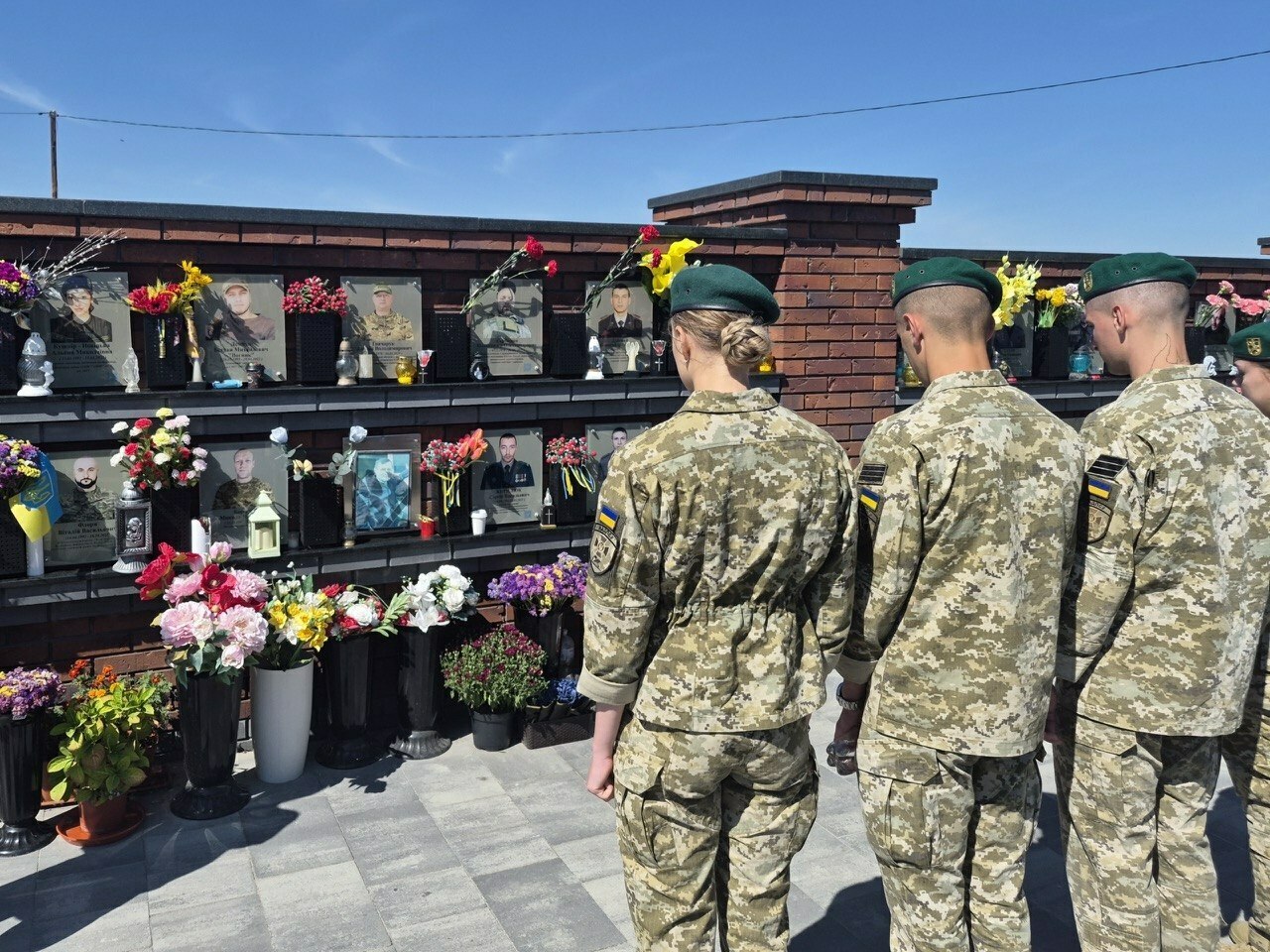
In front of the columbarium, where the remains of fallen heroes – residents of Khmelnytskyi whose bodies could not be found – are mostly buried
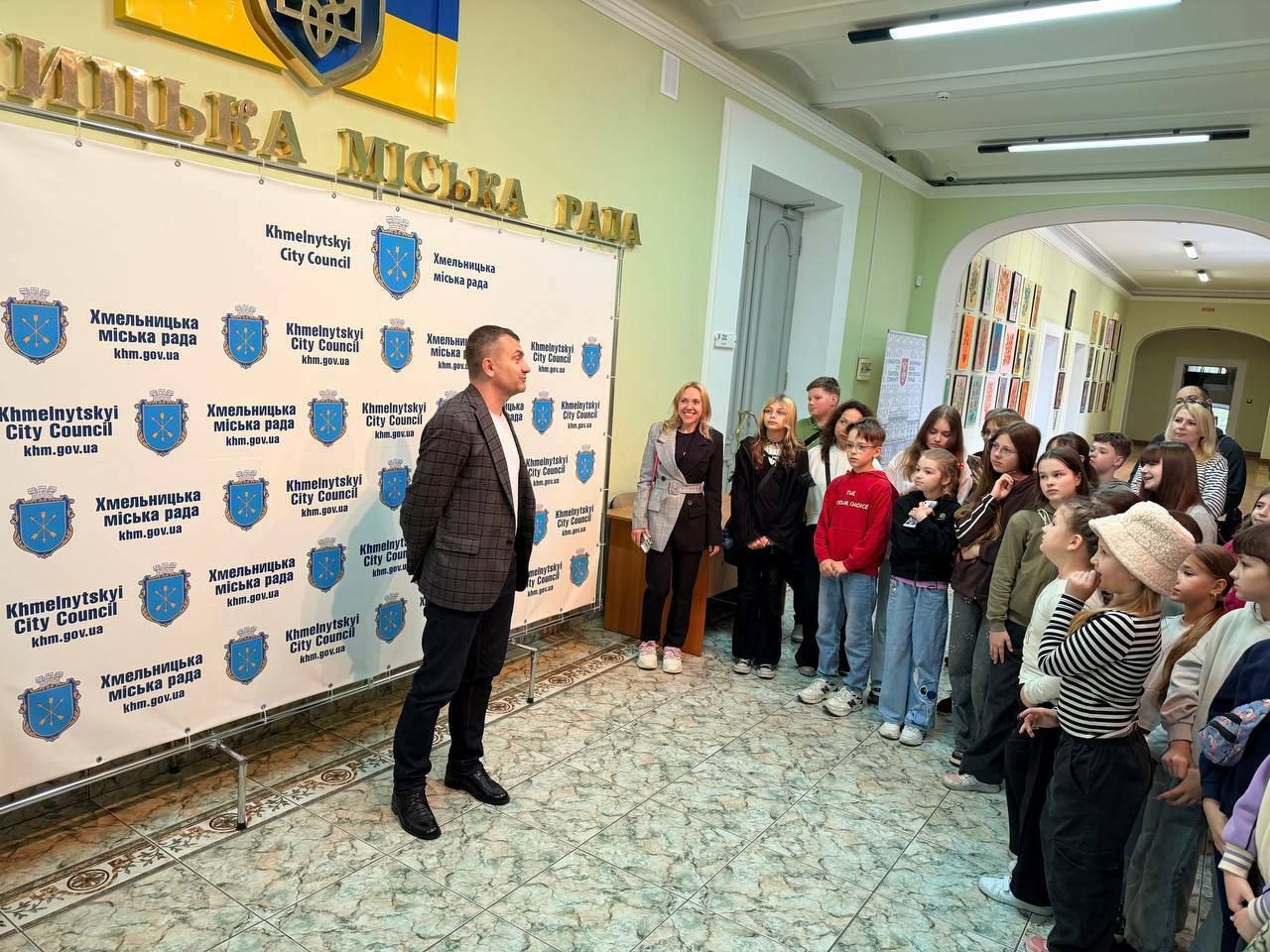
Oleksandr Symchyshyn during a tour of the city council for a group of children of veterans and those killed in the current war
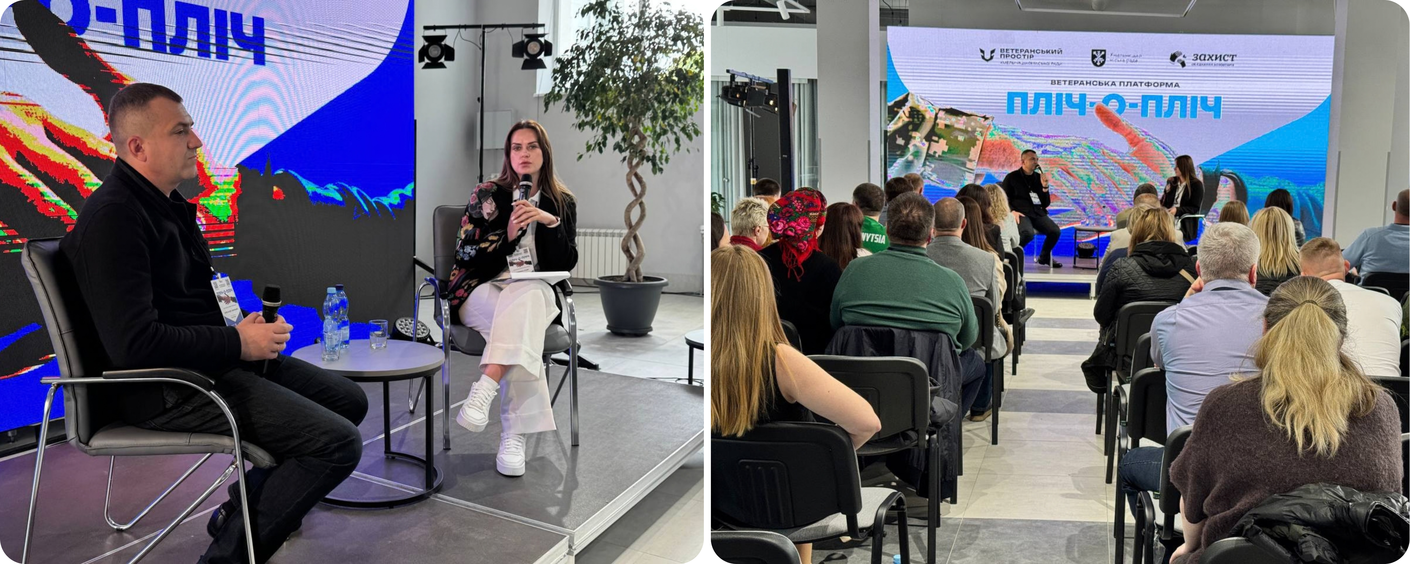
During the “Shoulder-to-Shoulder” Veterans’ Platform event in Khmelnytskyi
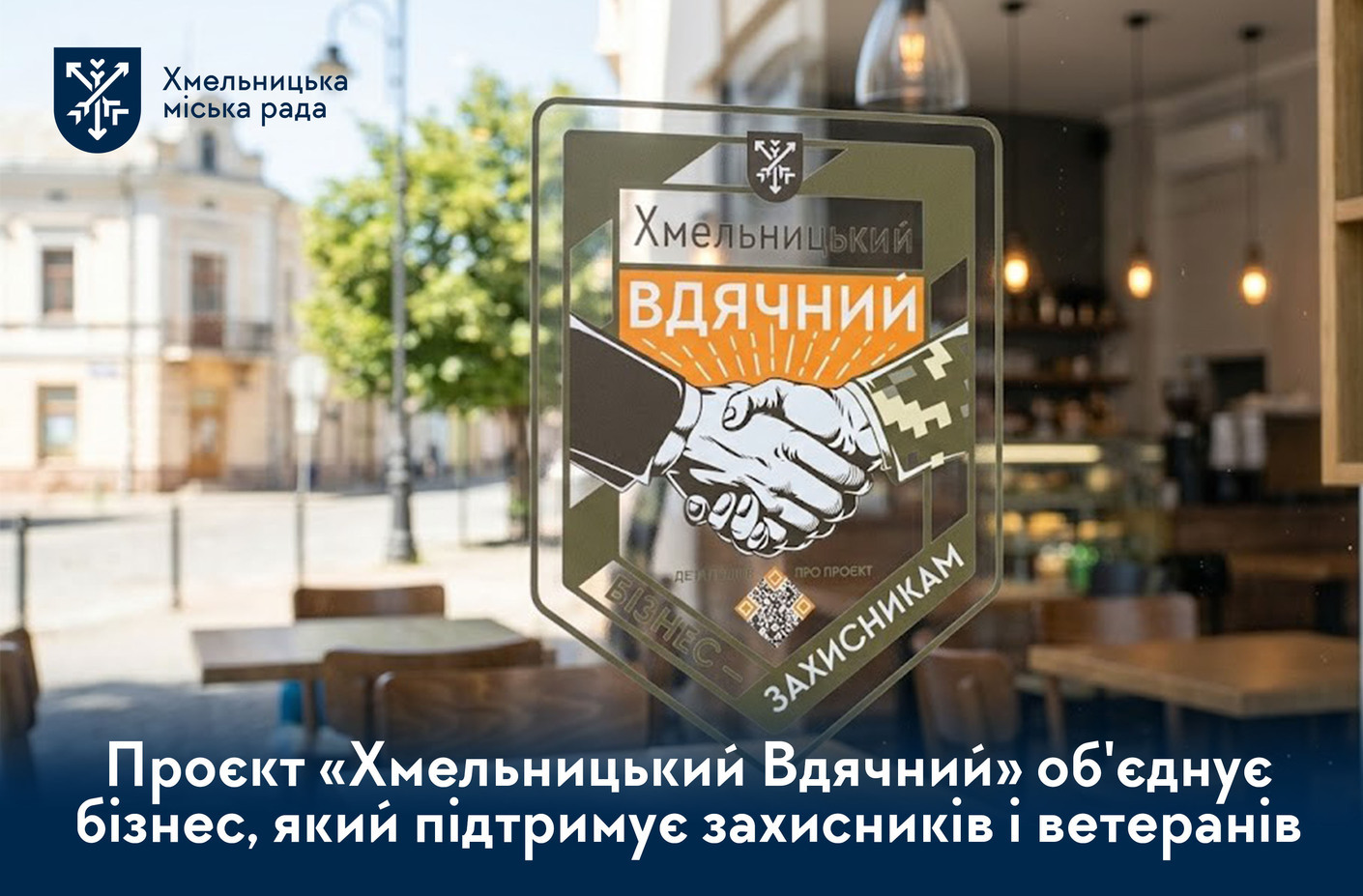
The municipal project “Khmelnytskyi is Grateful” brings together businesses that support defenders and veterans
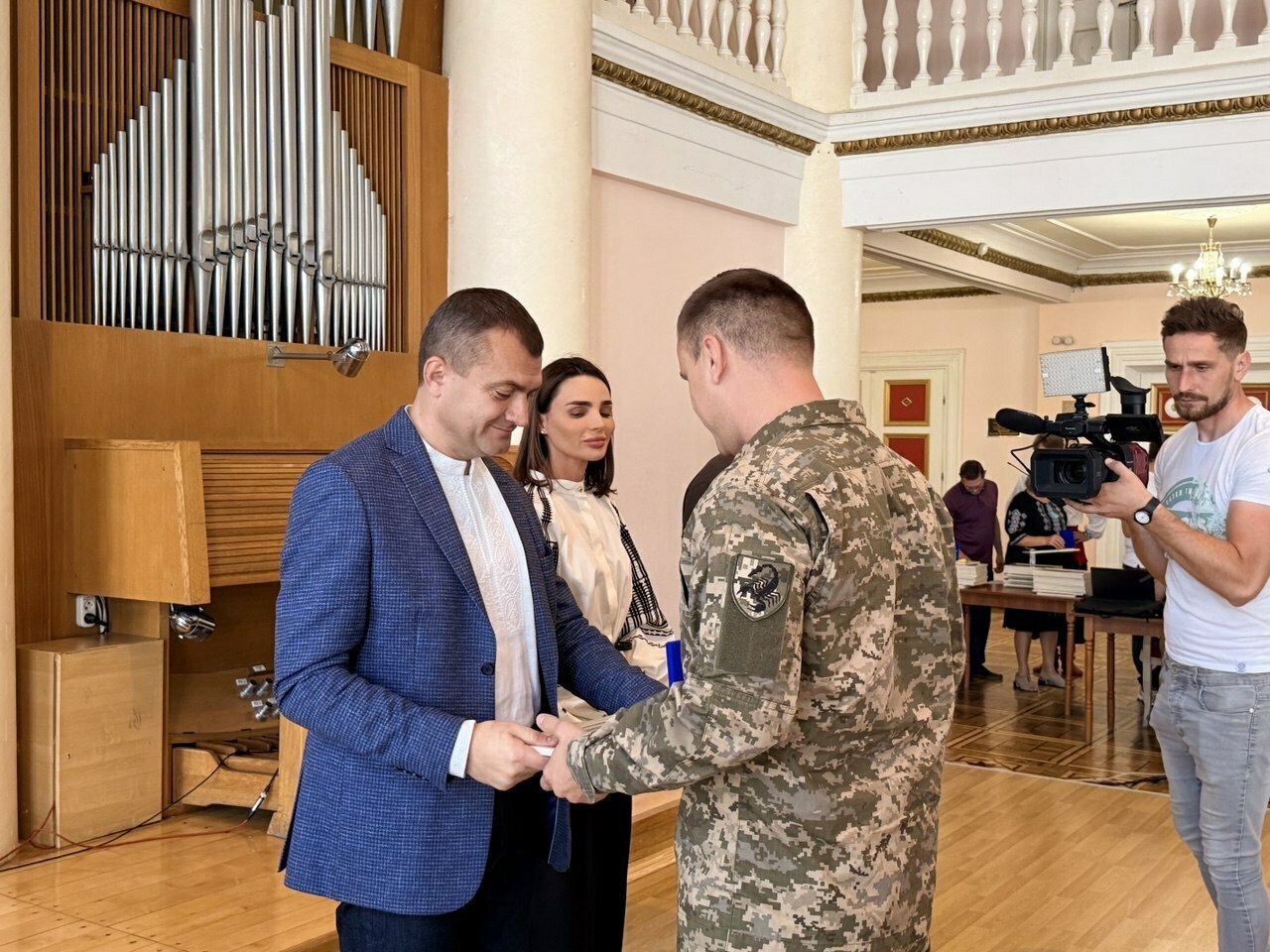
Oleksandr Symchyshyn awards military personnel the “Will and Courage” medal and presents them with housing certificates marking Independence Day 2026
A new home for internally displaced persons
How many internally displaced persons have chosen Khmelnytskyi as their second home? Does the Khmelnytskyi City Council have a strategy to ensure that internally displaced persons gradually become permanent residents?
In total, since 24 February 2022, our community has hosted approximately 320,000 Ukrainian men and women from occupied and frontline territories. Around a tenth of these – approximately 35,000 people – have remained with us. This figure fluctuates as people constantly arrive and leave, but we base our calculations on this number. I am truly proud that the majority of displaced people are now fully integrated. They have jobs and homes, they run their own businesses and their children attend our schools and nurseries. They also receive all necessary medical and social services here, and they participate in community life, which is very important. In fact, we were the first community in Ukraine to amend our charter to grant IDPs the same rights as local residents. The most pressing issue in this regard is housing. However, I am proud that, in partnership with the European Union, we have implemented a EUR 1.5 million project to convert two of our halls of residence into “smart flats”. Additionally, we received a EUR 8.4 million grant from the EU to build two apartment blocks. I think people will be living there in a few months' time – exclusively internally displaced persons. Our community contributed the plot of land, the engineering infrastructure, and the connection of all utilities.
Does the community help displaced persons find work? After all, not everyone wants to do low-paid manual labour; some people may need to retrain.
I would not say that anyone here has a problem finding work. If you want to work, you will always find a job in your field. We also offer everyone access to a range of municipal retraining courses. We also have programmes in place to help people start their own businesses. All of these are organised either through the Employment Centre or the Social Protection Department. Many residents of Mariupol, for example, work as trolleybus drivers. There are always vacancies in the trolleybus fleet, and we are ready to hire people – provided they have undergone the necessary training. In the public utilities sector, we currently have almost 400 job vacancies and can start hiring as soon as today.
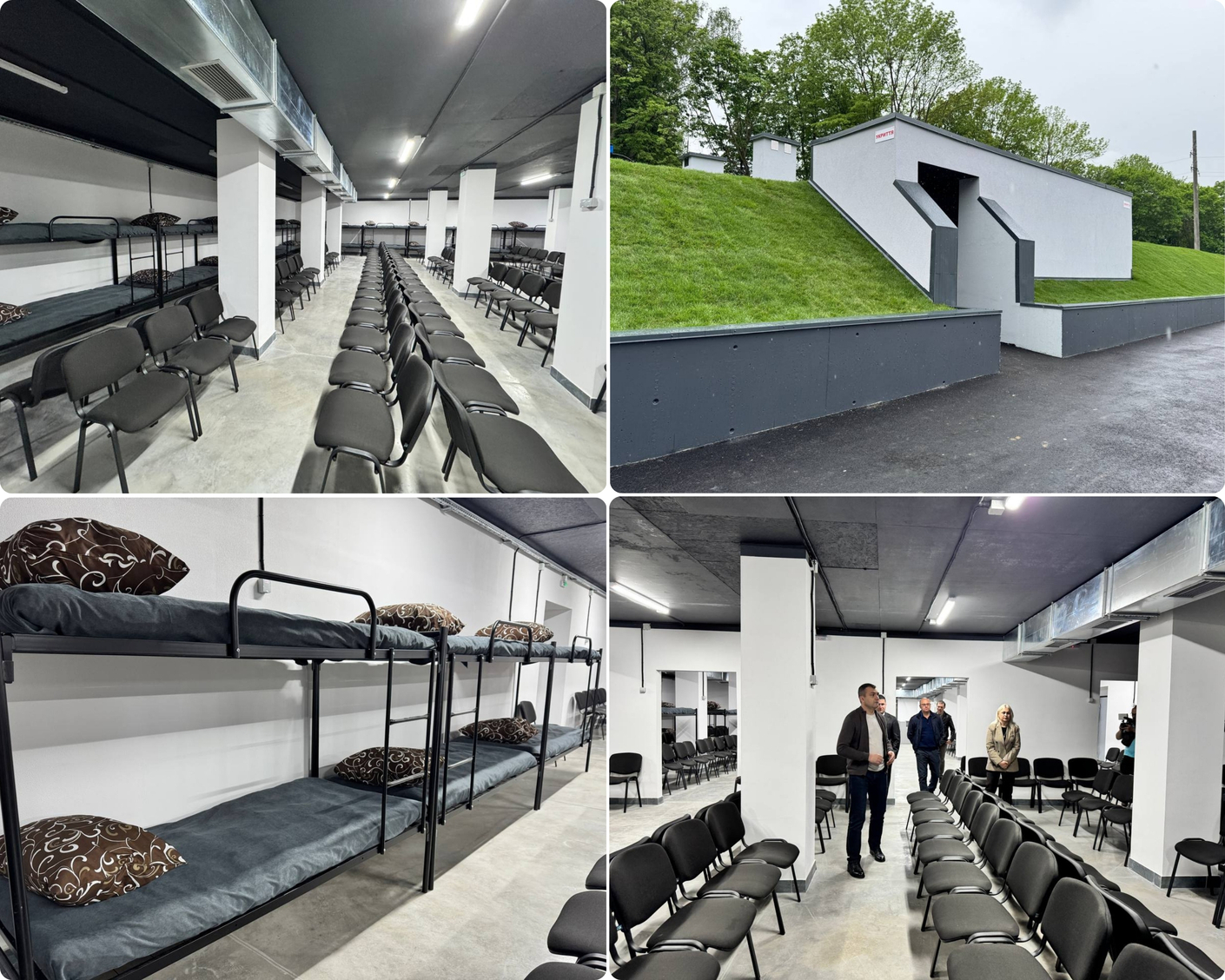
One of the newly built school bomb shelters in Khmelnytskyi
Peaceful economy
On the subject of trolleybuses, Khmelnytskyi is continuing to develop its programme to expand the electric transport network, which is set to run until 2030. So, can we talk about any progress being made in the community? On the other hand, is now the right time to be expanding the network when experts are saying that there will most likely be a shortage of electricity this winter due to russian attacks?
Even now, in the midst of a full-scale war, we are not willing to abandon our vision of a future in which Khmelnytskyi is, above all, a healthy city. This is why environmentally friendly transport remains one of our priorities. Despite channelling the majority of our financial resources into defence, we have not halted this programme. In partnership with the European Bank for Reconstruction and Development and the European Union, we have implemented a EUR 16 million project to modernise public transport in Khmelnytskyi. Although only a third of these funds came from grants, we now have 44 brand-new trolleybuses on the city’s streets. We are proud to have carried out such a large-scale project amidst the war. Overall, during my ten years as Mayor of Khmelnytskyi, we have purchased 76 new trolleybuses, which are modern and comfortable with air conditioning, internet and Wi-Fi. These trolleybuses are also wheelchair accessible. Of course, power cuts are a major problem with so many electric vehicles, but we have got used to them. During power cuts, we simply put more buses from our reserve fleet into service – which we keep precisely for such occasions.
Your community has gained a wealth of experience in defence production and procurement during the current war. Do you think that Khmelnytskyi could use this experience to establish a dedicated defence technology cluster after the war?
Why limit it to defence technology? Many military technologies can be used in civilian life too. Unmanned ground robotic systems, for example, could be used in agriculture, logistics and housing and utility services. So is the idea of having a robot that mows the grass in summer or spreads a sand-and-salt mixture on pavements in winter really so crazy?
What kind of economy would you like to see in Khmelnytskyi in 10 years’ time? Manufacturing? Logistics? Tourism?
Khmelnytskyi remains unchanged. Its key strength lies in its favourable location, which makes it ideal for logistics. Consequently, it has long been a hub for the construction of major logistics centres. Alongside its famous market, another of Khmelnytskyi’s strengths is trade and micro-enterprises, and we will continue to develop these to the fullest extent possible. We also have a highly developed light manufacturing sector. For example, did you know that Khmelnytskyi is one of Europe’s leading producers of wedding attire? Despite the war, several industrial parks are also emerging in our region. We already have three industrial parks: two private and one municipal, covering 92 hectares. More are under construction, and we are currently connecting them to utilities such as electricity, gas, access roads, water and sewage... Several investors have already expressed an interest in setting up there.
You are one of the few mayors to have openly spoken out in favour of retaining the simplified tax system for individual entrepreneurs and micro-businesses. Why is that?
The answer is quite simple: individual entrepreneurs are absolutely vital to Khmelnytskyi. Firstly, we do not subsidise them – they are self-employed individuals who create their own jobs. On top of that, they usually support the military. We cannot stifle them, put them under pressure or drive them into the “shadow economy”! What use would they be if they stopped paying taxes? For Khmelnytskyi, the single tax is in fact the second-largest source of budget revenue. The first is personal income tax and the second is the single tax. Therefore, we must do everything we can to enable these people to survive and work in wartime conditions. Just the other day, there was an air raid on the market where all the vendors are individual entrepreneurs. Can you imagine? Those russian monsters simply struck the market! Up to 20 stalls were destroyed, and the people who owned them lost a lot of goods. On top of all that, should we also squeeze them with taxes?
You have mentioned the community’s public utility companies several times in different contexts. Do they require subsidies? In some communities, these companies have been closed down, with certain services being handed over to the private sector, or have been brought to the point of breaking even. What is your position on this?
If the tariffs for heating, hot and cold water, transport, sewage and waste collection were economically justified, these companies could make a profit. However, we are following the national policy of curbing tariff increases, so the utility companies need to be subsidised. Over the last ten years, Khmelnytskyi City Council has invested heavily in modernising and renovating the city’s utility companies, making them quite modern and cost-effective compared to similar companies in other communities. Nevertheless, they all operate at rates that are not economically viable.
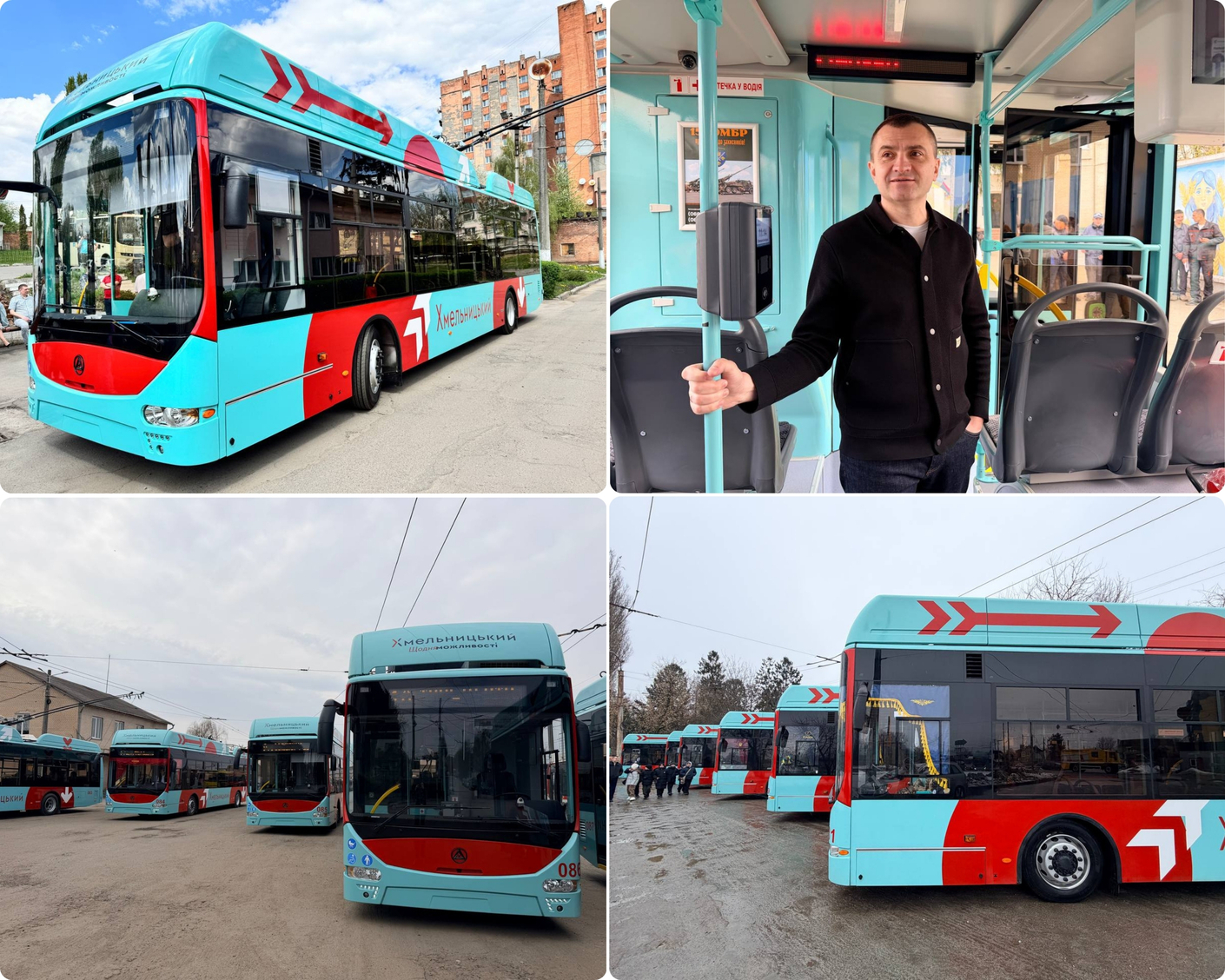
Oleksandr Symchyshyn’s pride and joy are the brand-new trolleybuses that Khmelnytskyi City Council purchased with funding from the European Bank for Reconstruction and Development, and also with funding from the European Union
The greatest achievement
Are there any decisions that, as mayor, you cannot afford to make, either financially or politically?
At heart, I am a builder – someone who creates, repairs and develops. I always feel a sense of satisfaction, or even happiness, when we open a new nursery, a new school – one that is fully equipped and modern… The same goes for a new children’s playground, sports ground or renovated stadium. Even a new trolleybus fills me with inspiration and gives me the feeling that my life has not been lived in vain. Of course, the war and record-breaking defence spending severely limit me...
Have you ever had to make risky, unconventional decisions during the full-scale invasion, even though you had doubts about them?
For example, before the full-scale invasion, we set ourselves the task of organising a large-scale public event every weekend of the year to create a “lively atmosphere” in the community. Movement is what matters most! When there is movement, the city comes to life and begins to breathe and develop. However, since 24 February 2022, everything has changed. Our work now mainly focuses on supporting the defence forces, which may seem risky and unconventional from a certain perspective. After all, an increasing number of residents are raising issues about everyday life, roads and infrastructure, and more and more criticism is being aimed at me. Yet I stand by my approach.
Well, people are used to war, to air raids, to damage…
Therefore, they start criticising us for not carrying out enough repairs. Yes, we are indeed repairing hundreds of times less than before 2022, but we are still investing in critical infrastructure, as well as in schools and hospitals. (Thanks to this, by the way, we did not send our children on extra winter holidays, unlike many other cities.) However, it is impossible to allocate 20% of the budget to defence while maintaining the city’s pre-war level of development.
Imagine that, ten years from now, the residents of Khmelnytskyi will say, ‘Symchyshyn did one thing that shaped the community’s development for many years to come.’ What would you like them to remember you for?
Firstly, I would like to distinguish between the two periods of my tenure as mayor: before and after 24 February 2022. Prior to that date, Symchyshyn had transformed Khmelnytskyi into a city that was new, vibrant, and comfortable every single day – perhaps the most comfortable city in Ukraine. After 24 February 2022, Symchyshyn did everything possible to ensure that Khmelnytskyi remained part of Ukraine, a country that triumphed in the war for its freedom and independence. No matter how much I am criticised for not paying enough attention to municipal affairs, I tell everyone that the most important thing right now is that Ukrainians survive and Ukraine remains a sovereign state. Nothing else matters. Polls and elections are nonsense. The most important thing is that Ukraine’s next Members of Parliament are elected to the Verkhovna Rada, not the State Duma. I would very much like every mayor – indeed, every Ukrainian – to think exactly like this.
Tags:
Область:
Хмельницька областьГромади:
Хмельницька територіальна громадаSource:
Портал "Децентралізація"
22 September 2026
Ukrainian local government associations learned from Moldova’s EU accession preparations
Ukrainian local government associations learned...
On 9–11 September, representatives of Ukrainian local government associations made a working visit to Chișinău. The...
21 September 2026
Від типу території - до конкретних пріоритетів: що функціональна типологія означає для громад
Від типу території - до конкретних пріоритетів:...
Українські громади працюють у дуже різних умовах. Для одних першочерговими залишаються безпека, відновлення...
21 September 2026
Держава і місцеве самоврядування: від взаємодії до спільної відповідальності за розвиток України
Держава і місцеве самоврядування: від взаємодії...
Стаття присвячена розвитку партнерства між державною владою та місцевим самоврядуванням у підготовці й реалізації...
21 September 2026
Не після перемоги. Міжнародна співпраця прифронтових громад
Не після перемоги. Міжнародна співпраця...
Коли за кілька десятків кілометрів тривають бойові дії, думати про міжнародні партнерства здається майже недоречним....