From audit to budget: Communities discussed how to make accessibility an integral part of management decisions
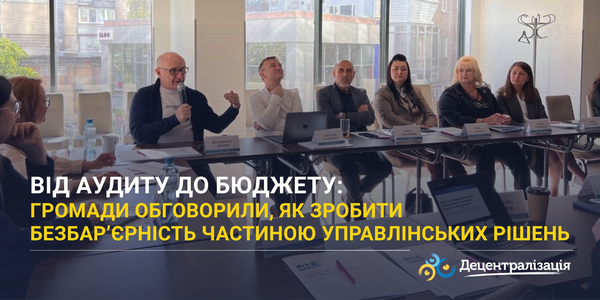
Accessibility in a community begins with understanding people’s needs, setting priorities, planning resources, and evaluating results. Participants at the roundtable “Creating an accessible environment in communities: challenges and best practices”, which took place in Kyiv, discussed this approach.
The event brought together local government representatives, experts, and partner organisations to discuss how communities can transition from making isolated decisions to taking a systematic approach to ensuring the accessibility of services, public spaces, and infrastructure.
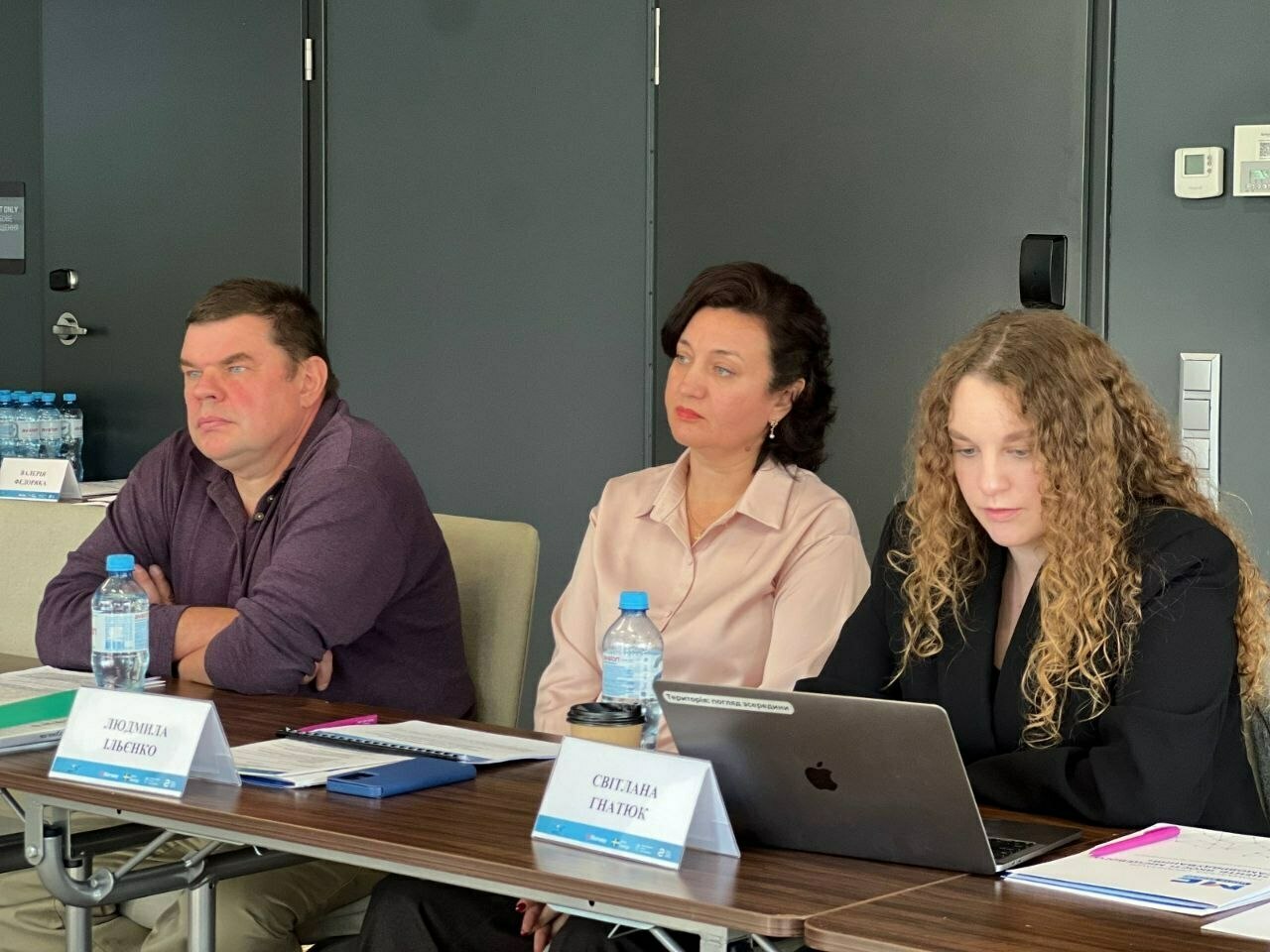
Tetiana Lomakina, Advisor – Presidential Commissioner for Barrier-Free Environment, emphasised the importance of translating political decisions into tangible changes for people in communities.
Participants in the discussion noted that an accessibility audit alone cannot change the environment. Its results must form the basis for setting priorities and making budgetary decisions, as well as further monitoring. However, in order to take this approach, communities need data on different groups of residents and their access to services and resources.
Volodymyr Kuprii, Senior Monitoring and Evaluation Manager at East Europe Foundation, emphasised that a community’s capacity lies not only in implementing individual decisions, but also in its ability to plan changes, carry them out, and evaluate the results.
Representatives from several communities shared their practical experience.
In Nemishaiv and Ukrainka communities, within the framework of the “Barrier-Free Community” project, audits of public facilities were carried out and action plans were drawn up to develop barrier-free spaces.
In Obukhiv community, an accessibility council was established, an accessible route was marked on the LUN Misto map, and a number of measures were implemented: an accessible entrance was fitted to the general hospital and the dental clinic, a social taxi service was introduced, and a mobile rehabilitation unit was launched.
Hora community presented its experience of ensuring accessibility at the Administrative Service Centre, which has “Dіa.Centre” status. The centre features a ramp, tactile guidance, a universal toilet facility and a digital self-service point. The community also operates an inclusive resource centre where children with special educational needs can receive services from specialist professionals.
‘It is important for us not just to develop individual barrier-free solutions, but also to foster a culture of accessibility and empower communities to create an accessible and inclusive environment independently,’ concluded Valentyna Poltavets, Chair of the NGO “Centre for Quality in Local Self-Government” and moderator of the event.
The round table was organised as part of the “Barrier-Free Community – A Path to Cohesion and Development” project, implemented by the NGO “Centre for Quality of Local Self-Government” within the framework of the “Impulse” Project, which is carried out by the International Renaissance Foundation and the Eastern Europe Foundation with funding from Norway (Norad) and Sweden (Sida).
This material reflects the views of the authors and does not necessarily reflect the views of the International Renaissance Foundation, East Europe Foundation, the Government of Norway or the Government of Sweden.
Tags:
barrier-free amalgamation of hromadas spromozhnist
Область:
Київська областьГромади:
Немішаївська територіальна громада Обухівська територіальна громада Українська територіальна громадаSource:
Портал "Децентралізація"
26 October 2026
«Свобода бути там, де хочеш»: як соціальне таксі допомагає Людмилі та Олегу пересуватися Дніпром
«Свобода бути там, де хочеш»: як соціальне...
Портал «Децентралізація» продовжує серію матеріалів про рішення громад, які роблять публічні послуги та простори...
26 October 2026
«Держава поруч. Старости»: на початку грудня стартує національна ініціатива
«Держава поруч. Старости»: на початку грудня...
На початку грудня стартує національна ініціатива «Держава поруч. Старости». Вона має наблизити важливі послуги до...
26 October 2026
Як релокована лікарня стала частиною життя громади: досвід Мирнограда й Оринина
Як релокована лікарня стала частиною життя...
Майже два роки тому Мирноградську лікарню з Донецької області евакуювали до села Оринин на Хмельниччині. Медики...
26 October 2026
Мобільність без кордонів: як громадам з’єднати транспорт, дані й фінансування
Мобільність без кордонів: як громадам з’єднати...
Мобільність не закінчується на межі громади, але транспортні системи часто залишаються розділеними між містами,...