Produce!: What turns a region’s potential into an economic project
‘We are used to talking about Ukraine’s potential: its resources, strong agricultural sector, educated workforce, and favourable geographical location. However, potential alone does not create a strong economy. The question is how much added value we can create here in Ukraine. For the regions, this means shifting focus from merely listing their advantages to identifying which modern industries can be developed based on those advantages,’ says Yurii Pyvovarov, CEO of the Kyiv International Economic Forum.
Ukrainian regions are indeed rarely short of lists of strengths. Agricultural resources, a favourable location, industrial traditions, universities, proximity to the border, and available industrial sites regularly feature in development strategies and investment proposals.
It is much more difficult to answer another question: how can a region’s competitive advantages be transformed into new industries, jobs, technologies, exports, and revenues?
This requires an economic framework in which there is a market for the future product, an entrepreneur willing to invest, access to capital, workers with the necessary skills, an education system capable of responding to the needs of the economy, decisions by local authorities, infrastructure, technology, and favourable conditions at the national level. If any of these elements is critically lacking, a region’s strength may never become its economic advantage.
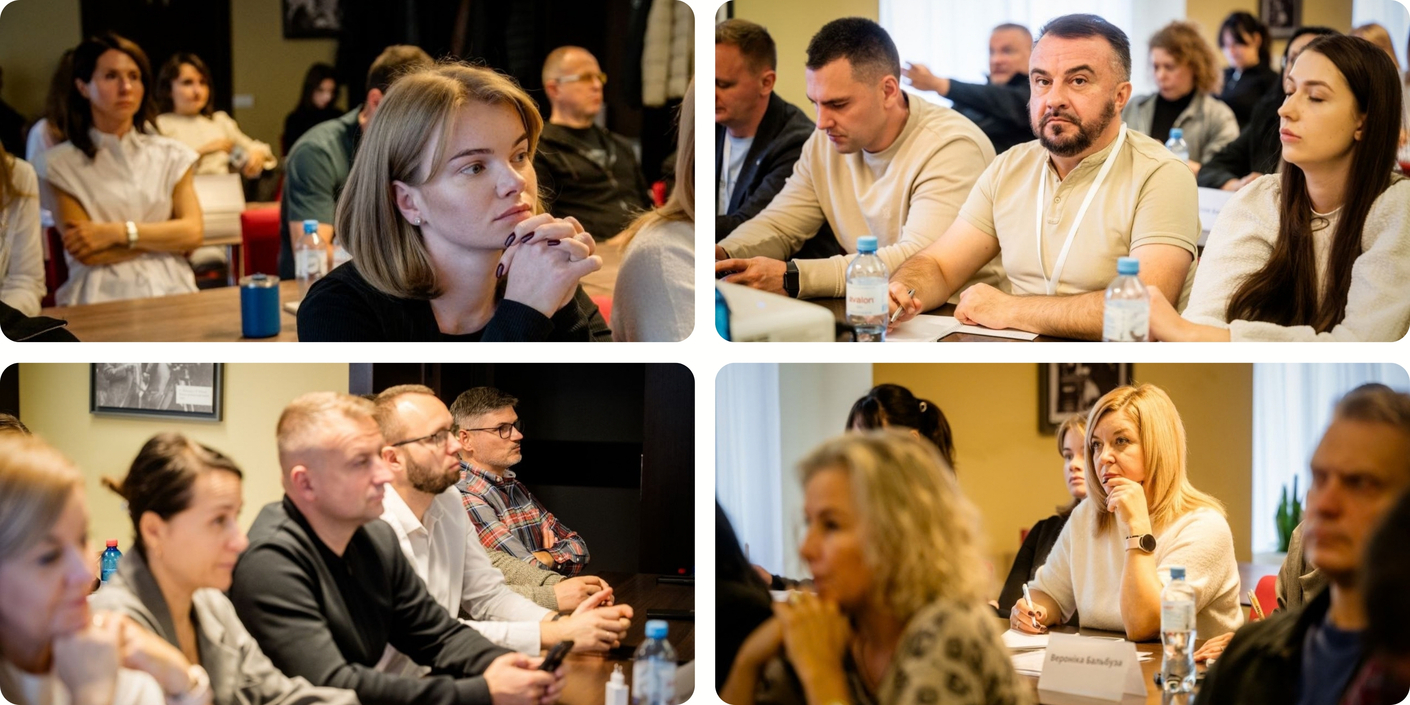
Teams from Vinnytsia, Volyn, Odesa, Sumy, Ternopil, and Khmelnytskyi regions explored this logic within the framework of the Produce! educational initiative “Leadership in Economic Development through Production”. Representatives of regional authorities and local self-government, regional development agencies, business, and education, together with entrepreneurs and experts, worked on how to transform the territories’ production potential into concrete regional development projects.
Produce! initiative is implemented by the KIEF Academy under the auspices of the Ministry of Economy and Environment of Ukraine, with the support of the Swiss-Ukrainian “Ukraine’s Cohesion and Regional Development” (UCORD) project, which is implemented with Swiss support by NIRAS Sweden AB.
Resources do not determine where the added value will remain
The availability of raw materials seems to be an obvious advantage for a region. However, this does not in itself indicate where these raw materials will be processed, who will manufacture the end product, to whom it will be sold, or where the added value generated will remain.
A region may grow significant volumes of agricultural produce but export the raw materials. It may have long-standing industrial traditions but lack advanced production technology. It may be situated near the border with EU countries but not be integrated into European production chains.
Therefore, the viability of a production idea has to be assessed not only on the basis of available resources, but also in terms of the future product and market.
During Produce!, Ihor Liski, the founder and chairman of the supervisory board of EFI Group, emphasised this fact. For future production, the key questions are: what problem does the product solve, who is willing to pay for it, how large is the market, where will the added value be generated, and why exactly might this region be a competitive location for such production.
Hence the fundamental difference between the two questions: “What do we have?” and “What can we develop on this basis?” The first describes potential. The second forces the search for an economic model for the use of that potential.
Specialisation should be based not on desire, but on economic logic
A region can identify almost any sector as promising. It is much more difficult to demonstrate that the conditions for its development exist in that particular region.
Electric mobility, light industry, biomethane, agri-processing or any other sector may be suited to the region’s resources and characteristics. However, there is a whole system of interdependencies between a promising sector in a strategy and a viable production project.
Economic specialisation should address more complex questions: why this particular type of activity has potential in this specific area, on what its competitiveness will be based, and which part of the value chain the region is capable of securing for itself. It is important to assess not only existing advantages, but also the extent to which they can be converted into sustainable economic activity: whether it is capable of attracting investment, creating demand for local skills, forging links with other enterprises and, over time, generating new businesses.
In this sense, the SWOT analysis used by the Produce! teams is important not merely as a formal methodology. Its value lies in its ability to test a regional idea against reality.
Here, a project’s weakness is not necessarily an argument against it.
If promising industries are known to lack certain engineering capacity, specialists in a particular field or a logistical solution, this presents an opportunity for action. The situation is far worse when a region identifies a promising sector but does not know exactly what needs to happen for businesses to settle there.
Investors assess time and risk, not just land plots
For communities, this difference is very noticeable. The availability of vacant land is often perceived as a ready-made investment proposition. For businesses, a plot of land is merely one factor in a much more complex decision.
Investors are interested in how long it will take from the decision to invest to the start of production. Are the utilities connected? Is there sufficient power capacity? Is the spatial planning clear? What will the logistics be like? Where can staff be found? How predictable will local procedures be? Will the business be able to expand in a few years’ time?
The Produce! team analysed this logic using examples from UNIT. City and the Bila Tserkva Industrial Park, together with Vasyl Khmelnytskyi, the founder of UFuture, UNIT.City and the Bila Tserkva Industrial Park, Vasyl Morskyi, Deputy Mayor of Bila Tserkva, and Andrii Ropitskyi, Director of the Bila Tserkva Industrial Park.
One of the key lessons from this experience is that a developed industrial site offers investors more than just land and infrastructure. It reduces the time and uncertainty between the decision to invest and the start of production.
Therefore, a site’s investment potential is formed long before the first meeting with a potential investor. Spatial planning, the allocation of industrial sites, engineering infrastructure, transport solutions, and staff training – all of this is work that the community and the region should do in advance.
Economic specialisation needs to be planned alongside human capital
The question of human resources often arises too late in discussions about investment – when the company is already ready to recruit staff. For complex modern manufacturing operations, this sequence does not work.
The experience of Kostiantyn Yefymenko, President of BIOFARMA, offers a different perspective. If a region wishes to develop a specific area of industrial specialisation in five to ten years’ time, it has to understand today what knowledge, professions, and research expertise it will need.
In this model, education ceases to be a sphere separate from economic development. It forms part of a sequence: education – research – technology – product – production.
Educational programmes, laboratories, research teams, suppliers, and new technology companies may develop around a strong enterprise. Once there are enough of these links, industrial specialisation no longer relies on a single major employer. It develops its own ecosystem for the reproduction of knowledge, technologies, and new businesses.
However, competition for human capital does not end with the training of a specialist.
The region also has to persuade them to stay. Therefore, housing, transport, children’s education, healthcare, safety, energy security, and the quality of the environment directly influence the region’s ability to compete for modern manufacturing industries.
In this sense, a region’s economic development extends far beyond simply attracting investment. It involves creating a place where it makes sense to invest, work and live all at the same time.
An ecosystem cannot be created by a single decision
Alongside the concept of “investment” in regional development, another term is heard more and more often: “ecosystem”. But the mere number of institutions does not in itself create an ecosystem.
It is possible to register an industrial park, establish a cluster organisation, sign a memorandum of understanding between a university and businesses, or set up a working group. Economic links only emerge when it becomes both beneficial and necessary for the participants to cooperate.
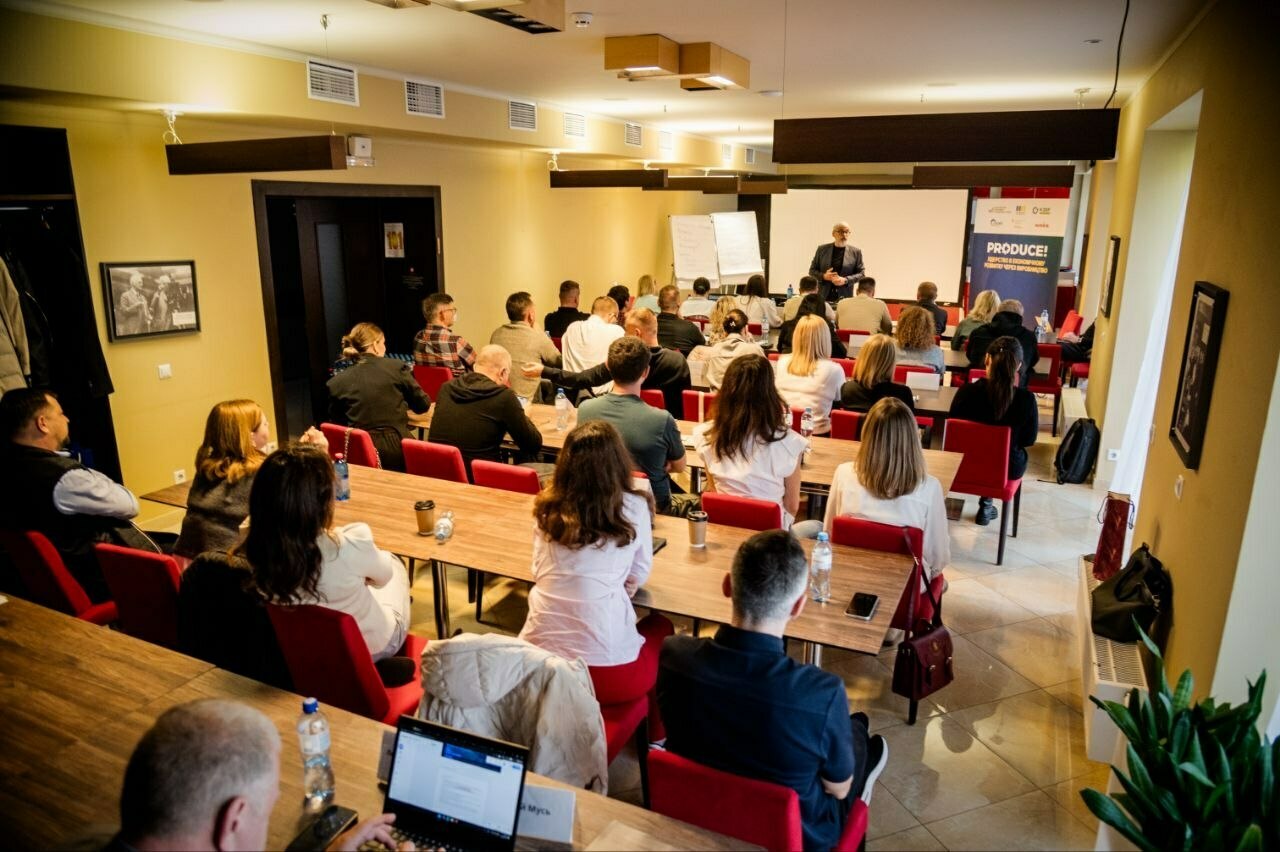
For manufacturers, this could mean shared suppliers, laboratories, logistics, or access to external markets. For the university, it means students and researchers gaining access to real-world manufacturing. For the community, it means employment and new economic activity. For business and education, it means jointly developing the skills that future manufacturing will require.
A strong ecosystem is therefore defined not by the number of its participants, but by the density of economic links between them.
Vasyl Khmelnytskyi also emphasised this point, advising regions not to attempt to mechanically replicate the scale of large innovation centres. For a small city, several interconnected manufacturing facilities, an educational partner, and a well-developed infrastructure can constitute a far stronger model than a structure that is formally large but economically weak.
The region cannot create some of these conditions on its own
Even a well-prepared territory operates within the framework of national economic policy.
A business can modernise its equipment, boost productivity, train staff, and find new markets. A community can prepare an industrial site and infrastructure. A region can bring together partners around a specific specialisation.
However, tax and customs regulations, public procurement, access to financial instruments, export support, and part of the regulatory framework are determined at the national level.
Oleksandr Sokolovskyi, the founder and president of the Tekstyl-Kontakt group of companies, spoke about the impact of such factors on the competitiveness of Ukrainian manufacturing during Produce!
Hence the statement by Victor Halasiuk, CEO of the KIEF Academy and UGF, and a member of the KIEF Supervisory Board:
‘We need to look at the rules of the game as architects, not just as users. They can act either as obstacles or as opportunities for development.’
For a regional project, this means clearly dividing the levels of responsibility.
What can businesses do? What depends on the community? What decision should the region take? Where is state involvement needed? What tools are already available, and where do systemic barriers exist?
Here is where one of the key concepts of Produce! comes into play – the “business – region – state” interaction.
Without it, the region risks compiling a list of problems it cannot solve on its own. The state risks creating tools without a sufficient understanding of the real constraints producers face. Business risks remaining a passive user of the environment, lacking a channel for meaningful feedback on how to change it.
Regional development needs a coalition, not a single leader
One of the least obvious problems with economic development is that all the necessary elements may already exist, but in isolation.
A region may have a strong university, several successful manufacturers, a regional development agency, active communities, industrial estates, vocational education, and access to government programmes. However, their mere existence does not in itself create a new economic direction.
Someone needs to bring these resources together around a common goal.
For this reason, Produce! works with regional teams made up of representatives from public authorities, local self-government, regional development agencies, business, and education.
‘It is important to us that, once the training is complete, it is not just knowledge that remains in the regions. There should be a functioning team that knows how to reach agreements, shares a common goal, and is capable of driving projects forward together. We assign a key role in this to regional development agencies – as institutions capable of uniting government, business, and communities around shared priorities, transforming a region’s competitive advantages into concrete projects, and ensuring their further development. After all, regional development can only be stimulated through partnership – when different stakeholders pool their resources, expertise, and responsibility for a shared outcome,’ emphasises Maryna Bryl, UCORD Project Leader.
For Yurii Pyvovarov, this interaction is one of the conditions for its effectiveness.
‘You can invite the best experts and provide teams with the best tools, but part of the outcome will always depend on the people themselves. It depends on whether they continue to communicate with one another after the programme ends, whether they can unite their different interests around a common goal, and whether trust develops between them. Major economic changes are never achieved in isolation,’ says Yurii Pyvovarov.
Regional projects as part of a new economic model
Ultimately, the question of regional development is far broader than simply finding a few investors for a particular region.
Ukraine should simultaneously rebuild what has been destroyed, adapt its economy to a protracted war, integrate into the European market, compete for talent and capital, and modernise its manufacturing sector.
Under such conditions, restoring the pre-war structure of the economy cannot be a sufficient goal.
‘The question is not merely how many businesses we will be able to restore or attract. Much more important is the kind of economy we are building. Will we remain a supplier of raw materials and labour to other economies, or will we create high value-added products, technologies, strong manufacturing companies, and jobs here – things that will make people see their future in Ukraine? And the regions should not merely be executors of this transformation, but its active participants,’ notes Yurii Pyvovarov.
The six projects that teams from Vinnytsia, Volyn, Odesa, Sumy, Ternopil, and Khmelnytskyi regions are working on should be assessed within this broader framework.
Their value will not lie in how convincingly they describe the potential of their territories.
The project has to explain what new economic activity the region wishes to create or scale up, where added value will be generated, who will form the core of this activity, what people and technologies are required for it, what businesses that depend on the community and the region, need to do, and where government intervention is required.
Based on the results of Produce!, six regional teams should finalise their projects with the support of experts from the KIEF Academy. They should then prepare the projects for presentation to the Government of Ukraine, the Office of the President of Ukraine, and international partners.
‘Produce! does not end on the final day of the training programme. Now the most important stage begins – turning the teams’ ideas into projects that can be discussed in detail with investors, the government or international partners. Such a project has to demonstrate not only the region’s potential but also its economic rationale: what added value it creates, what barriers need to be removed, what support mechanisms should be applied, and what benefits the region will gain,’ says Viktor Halasiuk.
Each of the six regions will have its own specialisation, resources, constraints, and partners. However, the requirements for the projects are the same: they have to show not only what the region wishes to develop, but also why this is economically viable, who is prepared to carry it out, and what is needed to move to implementation.
Tags:
regional development study ucord
Source:
Портал "Децентралізація"
02 October 2026
«Середа з U-LEAD»: каталог інформаційних заходів для громад на жовтень 2026 року
«Середа з U-LEAD»: каталог інформаційних...
У жовтні Програма «U-LEAD з Європою» проведе серію відкритих інформаційних заходів для представників органів...
02 October 2026
Comprehensive support programme for frontline territories to be launched in early 2027
Comprehensive support programme for frontline...
MinRehion is working on the “The State is Nearby. Frontline” programme, which aims to bring together support measures...
02 October 2026
Як реалізувати проєкт Interreg без проблем – поради від ДАСУ
Як реалізувати проєкт Interreg без проблем –...
Державна аудиторська служба України є Національним контролером програм Interreg. Вона перевіряє усі проєкти Interreg...
02 October 2026
Віталій Безгін підтримує тимчасову перереєстрацію великих держпідприємств у прифронтових громадах
Віталій Безгін підтримує тимчасову...
Великі державні підприємства, зареєстровані в Києві, варто на період воєнного стану перереєстровувати у прифронтових...