How Blyzniuky community turns war challenges into development opportunities. Interview with the community leader
Hennadii Korol, Mayor of Blyzniuky in Kharkiv region, talks about implementing large-scale projects 100 km from the russians, the sharp rise in his community’s population during the full-scale war, and the importance of fostering a different perspective on the state
By Dmytro Syniak
Blyzniuky community is situated at the junction of Donetsk, Dnipropetrovsk, and Kharkiv regions. From Blyzniuky, the community’s administrative centre, it is only about 100 km to Lyman, Pokrovsk, and Kostiantynivka, where fierce fighting is currently taking place. Nevertheless, Hennadii Korol, the head of the community, is far from pessimistic. He has many ambitious plans for the future, most of which are already being realised. While one might accuse Mr Korol of being out of touch with reality, he actually knows more about it than anyone: he volunteered for the front line at the start of the full-scale invasion and served in the 92nd Brigade of the Armed Forces of Ukraine for over a year. The village mayor’s optimism is therefore well-founded: during the invasion, his community did not lose any of its population, but actually grew by a third thanks to internally displaced persons. Mr Korol, who could well be awarded the unofficial title of chief optimist of Kharkiv region, spoke to Decentralisation about this phenomenon, as well as his long-term plans.
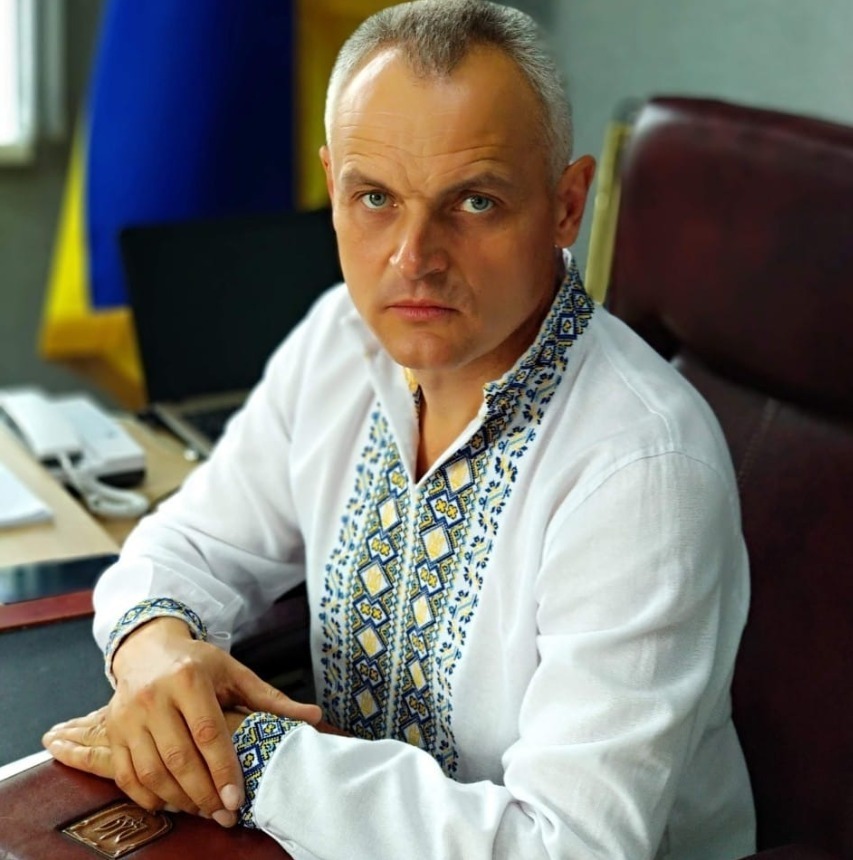
Hennadii Korol, Mayor of Blyzniuky, Kharkiv region
‘People are the community’s greatest asset, and we want to make it grow…’
Blyzniuky has, in fact, been experiencing conditions for five years now where the front line is, to put it mildly, not too far away. Moreover, the distance to it is constantly shrinking. What are the greatest risks for the community today: shelling, power cuts, problems with the water supply, staffing issues, issues with internally displaced persons, or something else?
Everything you have listed is part of the bigger picture – the very thing that makes up the quality of life of our residents. If we want people to stay, we have to tackle all these problems comprehensively. How can people survive without bomb shelters, for example? No matter how good the healthcare services are, people will not benefit if they feel vulnerable. Similarly, if we protect people and provide them with jobs, but fail to offer their children a quality education, they will not stay with us for long. In short, if the community is to grow, it must be self-sufficient to a certain extent. Most importantly, it must provide people with housing. This is the most pressing issue!
What is the current situation with the community’s population? Are people returning, leaving, or has the number of residents stabilised?
Before the full-scale war, the community had 17,000 residents. Now, that number has increased to 23,000. Our community’s localities are very well situated, so people fleeing the front line or occupied territories often choose to make them their second home. However, a good location is not the only factor. We therefore constantly run a media campaign across different regions, announcing that we are looking for builders, energy specialists, welders, bus drivers, doctors, teachers and others. We emphasise that we will provide housing for everyone. It works.
How can a settlement community provide people with accommodation?
Firstly, we carefully recorded our entire housing stock and began registering properties under a simplified system. For instance, we now dispatch all the relevant experts to buildings erected prior to 1992. This process enabled us to identify a dozen or so empty houses and flats, and we subsequently offered their owners a decent sum of money for them. This has had a tangible effect: many of our residents have taken in their elderly parents and put their own homes up for sale. The community is already purchasing some of these properties as part of its own programmes. Once acquired, this housing is transferred to internally displaced persons for their free use. Separately, we have joined the state’s “Rural Home” programme and have submitted properties from our housing stock that have been selected for purchase. We plan to purchase these using state funds, and in some cases with co-funding from the community. In future, these houses will also be provided to internally displaced persons free of charge. I would also like to mention that we are currently renovating a former hall of residence with the intention of converting it into a block of twelve flats, with a chemist's, a shop and a small office on the ground floor. We also plan to build a residential complex here. A considerable amount of documentation for this project has already been prepared.
You said that Blyzniuky community constantly needs a variety of specialists. Does this mean that business is growing in your community? Or are specialists needed exclusively in the public sector?
We have no factories here, but the service sector is booming: there are lots of cafés, restaurants, coffee shops, hairdressers, and beauty salons. When I was demobilised from the Armed Forces of Ukraine in 2023, I was shocked to see that all the bins in the settlement were overflowing with rubbish. I asked the deputy, whom I had left in charge of “running the place”, about the mess. He replied, ‘Well, so many people have moved in that we can’t keep up...’ Entrepreneurs always go where there are people. We take this into account and try to do everything we can to make it easy for businesspeople to operate here. Therefore, we provide every new entrepreneur who moves here – not only from areas where hostilities are taking place, but also from the rear – with all possible services free of charge: from registration in numerous registries to connection to all utility networks. In some parts of Blyzniuky, there is already serious competition between entrepreneurs, but on the other hand, there are so many people there – the place is absolutely packed. There is enough for everyone!
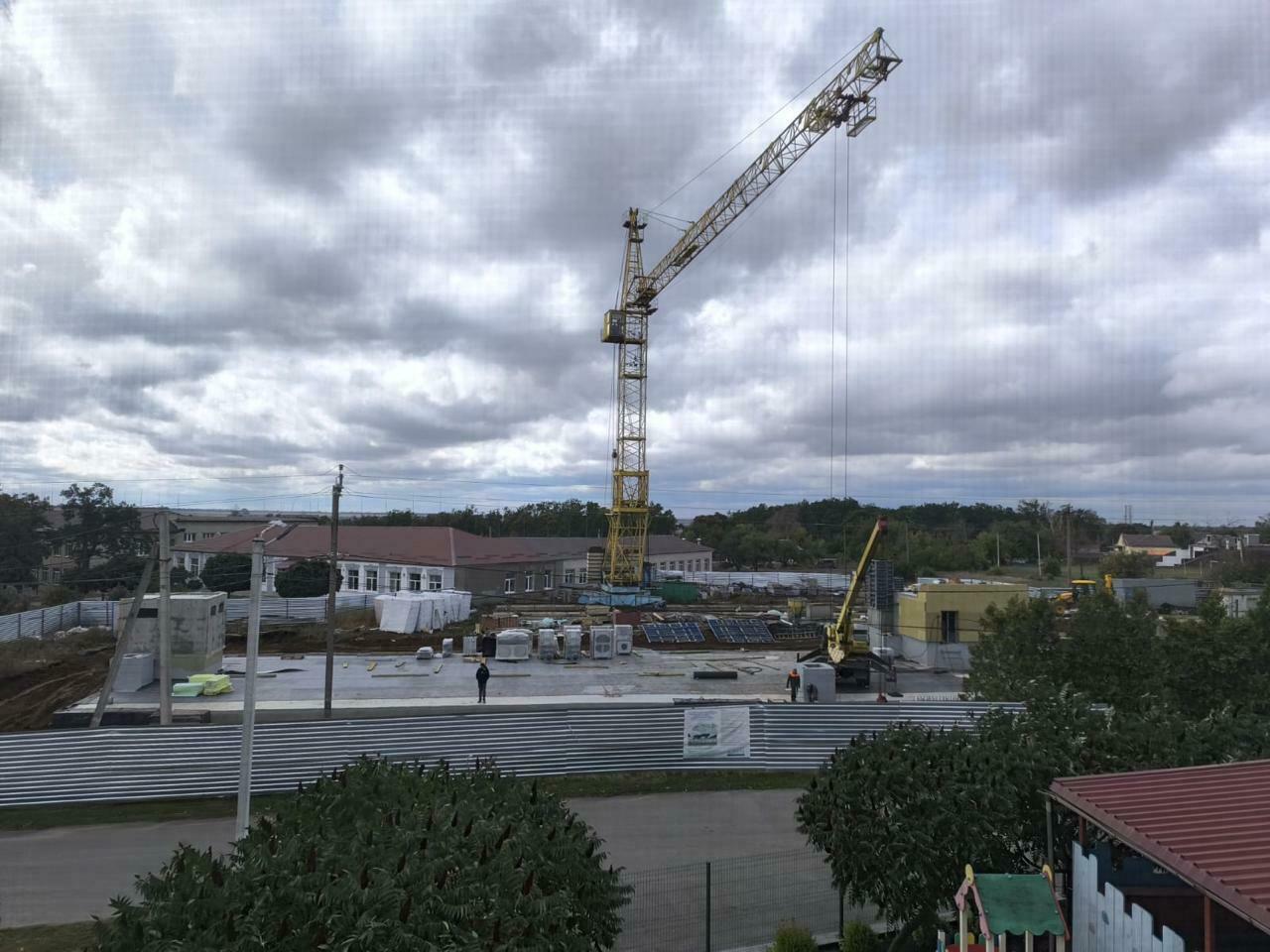
Construction of an underground nursery in Blyzniuky
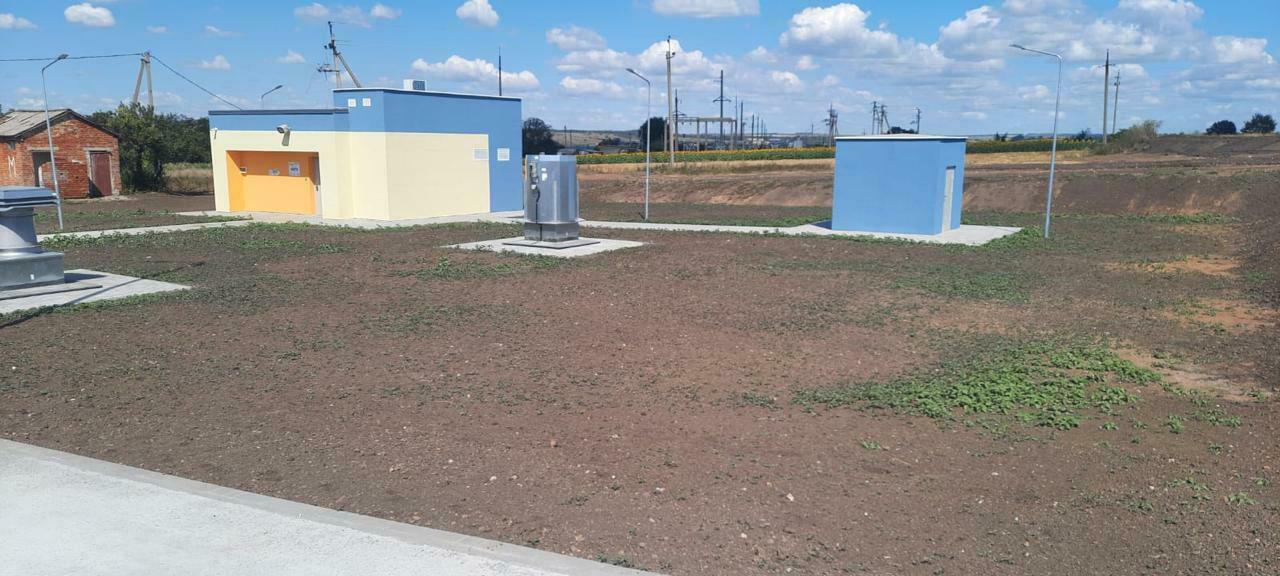
Entrance to the bomb shelter at the school in Dobrovillia village, Blyzniuky community
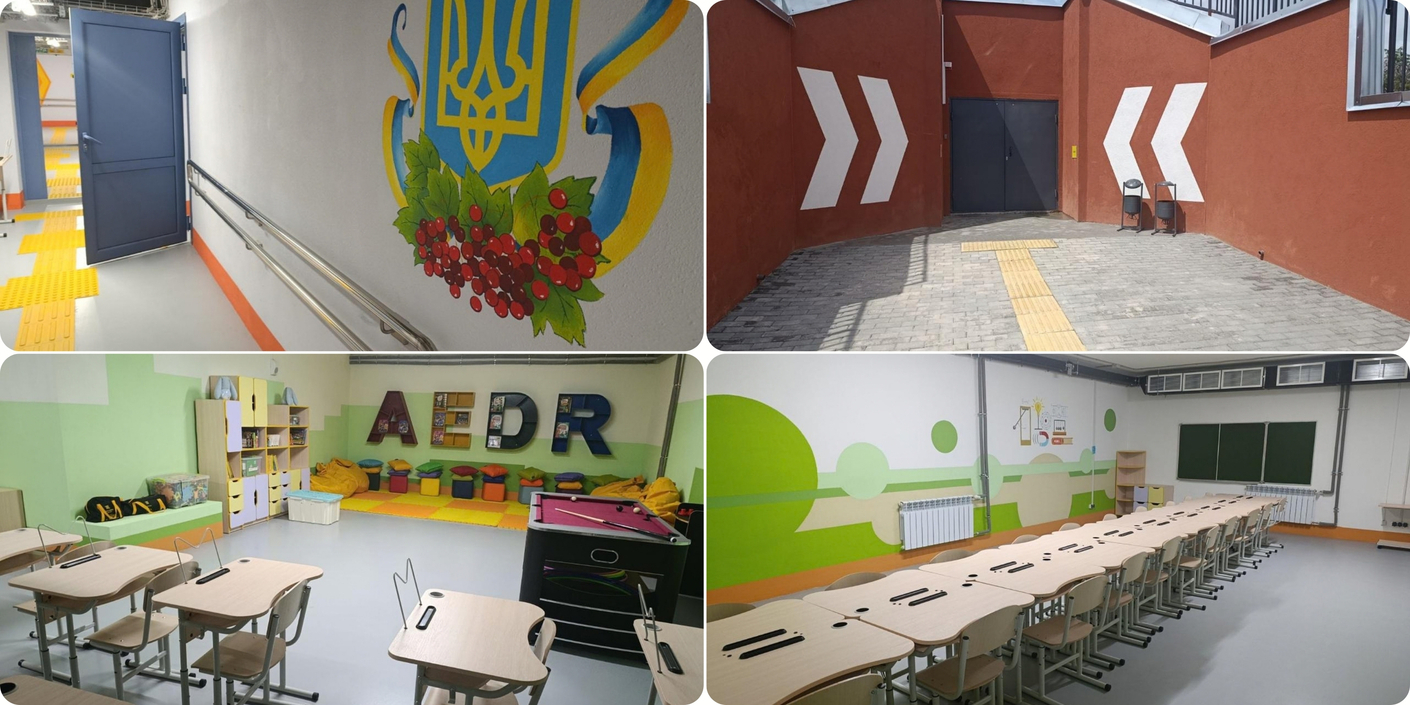
Underground school in Blyzniuky
‘People are a community’s greatest asset…’
Two underground schools are being built in Blyzniuky community, right? When are they due to open, and what exactly will this mean for children and parents?
In fact, two underground schools are already operational, and we plan to complete two more by the New Year, as well as a two-storey underground nursery. Why is this important to us? Because parents will have no qualms about sending their children to these schools. The existence of these schools alone will encourage internally displaced persons to come to our community. The more pupils there are, the greater the education subsidies, which means a larger fund for teachers’ salaries. That is how we see it.
Does this approach apply only to schools?
No, this is our general approach – we apply it to every sector. Take healthcare, for example. The more patients are treated at our hospital, the more funding it will receive. In fact, the hospital ranks fifth in our list of taxpayers. And the more tax revenue flows into the budget, the more opportunities we have to develop the community, particularly to support medical professionals and maintain nurseries, libraries and other facilities. We support educators in the same way. For example, the community provides young teachers with a salary supplement so that their actual income is UAH 25,000. For us, this is one way of attracting and retaining young professionals in the community. What am I getting at? People are the community’s greatest asset, and we strive to build on that. To do so, we need to create the best possible conditions for living and working.
And to build underground schools, since that is now a reality?
Exactly! By the way, we set a mandatory condition for everyone who joins our housing waiting list: your children must attend our schools in person. No online learning at other schools whatsoever! In addition, to ensure we retain our pupils, we are the only authority in Ukraine to have introduced incentive scholarships of UAH 1,000 for tenth-graders. Although these are paid to the parents of tenth-graders, they do receive them. Around UAH 0.5 million has been allocated for this in this year’s budget.
Are you serious? Does every student in Grade 10 in Blyzniuky community receive UAH 1,000 a month?
Yes, they do, provided they do not skip classes without a valid reason. Next year, we are due to introduce lyceum classes, which will follow a 12-year curriculum. We introduced these scholarships so that children would not be afraid to enrol in them. Furthermore, we feel competition from other communities and would like to come out on top. Therefore, we also provide tenth-grade students with so-called “defence bonds” from the government loan programme, worth UAH 3,000–4,000, offering a very good interest rate. However, these students will only be able to sell them once they have finished our school. This is not just an incentive, but also an element of patriotic education. After all, these funds do not simply remain in the child’s account; they are used to purchase drones, tanks, missiles and so on. This is our unique approach; no one else in Ukraine has done anything like this yet. In fact, we are still finalising certain legal details and consulting with banks and the Ministry of Finance. But everything is going according to plan.
By the way, how does the community work with young people? Do you use any special approaches here?
When the war began, not sidewalks or streetlights saved people, but motivated, proactive young men and women who knew what to do and how to communicate with one another. These are precisely the sort of people we need to educate. Hence, we never spare any funds for educational projects. Come and visit us, take a look at our children, and you will realise that our country has a bright future! I am telling you this as a teacher with 13 years’ experience! Our children have long since overtaken us when it comes to information technology, languages, and their vision of the future. Whereas for us, speaking English was something of a miracle, for them it is the norm. They also know a great deal about healthy habits and proper nutrition – things that were of no interest to us at their age. Over the years of the full-scale invasion, young people have made an incredible leap forward in their development, and this has had a significant impact on the atmosphere in our community. Young people often do not feel the burden of poor decisions, which we once felt in similar circumstances; they are not afraid to take responsibility. Will there be inspections? Well, so be they. If we make mistakes, we will pay the fines, but we will get the job done and learn from those mistakes. My deputies are young, and I am highly satisfied with their work.
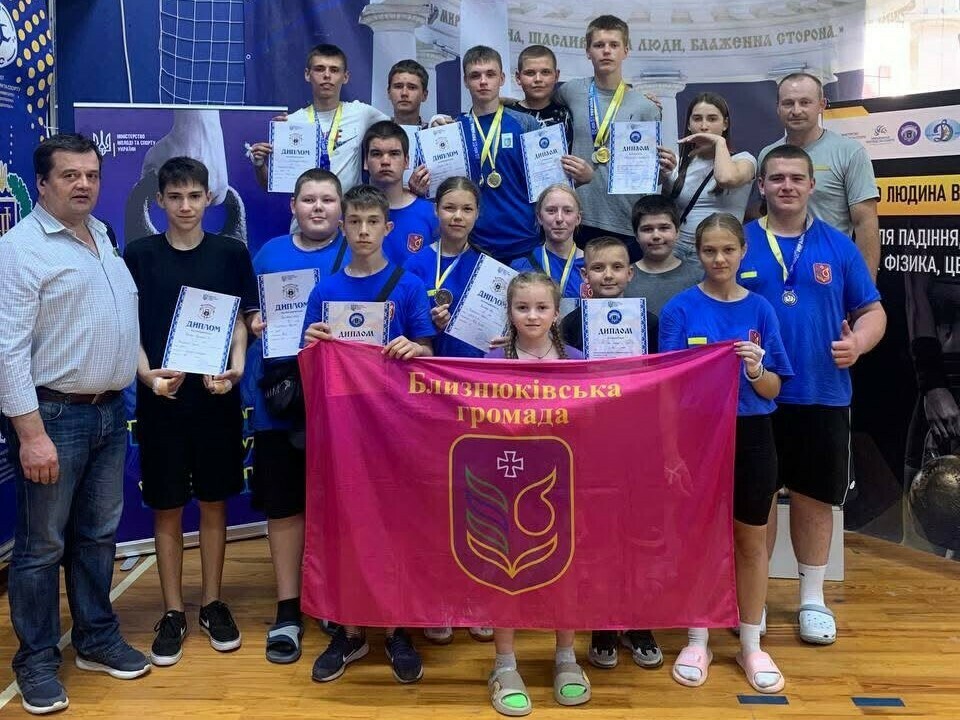
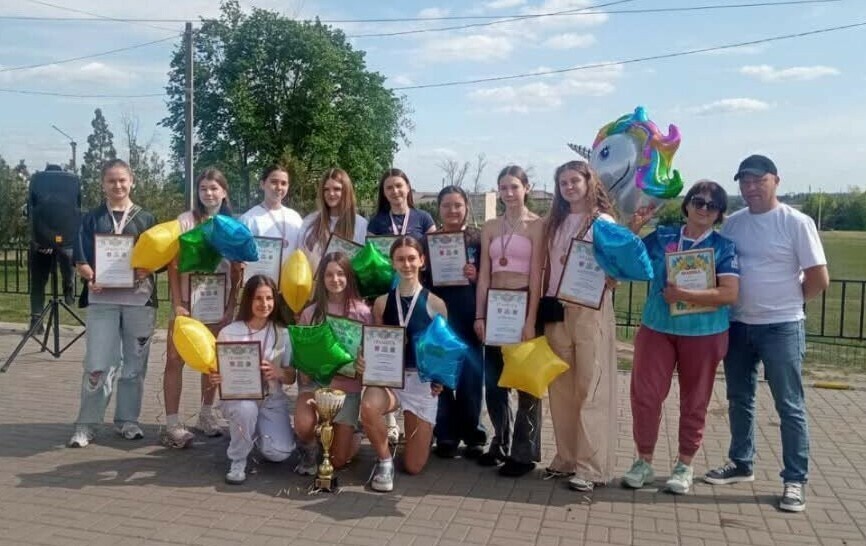
Youth from Blyzniuky community during one of their events
‘The war has opened up incredible opportunities for us…’
If people are a community’s greatest asset, then surely the community has a special obligation to the internally displaced people. Is that right?
Of course! I get really annoyed when I hear people say that displaced persons are our problem. But they are not a problem; they are a huge opportunity, a powerful investment in the community’s development! And this applies to schools above all else. After all, while other communities are closing their schools because there is no one to teach, we are increasing the number of classes and recruiting new teachers, who, once again, pay taxes into our budget. Whereas previously we had just one or two classes, this year we have three full classes, each with around 30 children. All thanks to the displaced people. And if there are children in a community, it has a future.
Well, you still need to make sure these children stay here when they grow up…
We work on this. The most important thing right now is safety, hence the reason we are building underground schools. People also need access to high-quality healthcare, which is why, in partnership with the European Investment Bank, we are currently completing the renovation of our outpatient clinic.
We used to be on the far periphery, and I sometimes got the impression that the state had no idea we even existed. But now it supports us wholeheartedly! The community received UAH 140 million from the national government for the construction of the underground school in Blyzniuky, and UAH 120 million for the project in Samiilivka. We should also mention the support we received from the Howard Buffett Foundation, which funded the construction of two more underground schools – in Kryshtopivka and Dobrovillia – as well as an underground nursery. UAH 115 million was allocated to each of these projects! And this is just one of dozens of international partners! We received such a wide variety of equipment! From the Swedish government, for example, we received a vehicle to provide mobile administrative services centre, an ambulance, and a minibus capable of transporting people with reduced mobility. And 26 modular houses, which will soon be home to internally displaced persons. Wonderful houses, by the way, which are completely self-sufficient and, very importantly, each has its own separate garden and even a fence.
Why is this important?
Because displaced people often come to us with their pets. And these are not just cats and dogs, but also, for example, goats. Moreover, many of the dogs have spent their whole lives in kennels and cannot be taken indoors. So people often leave these dogs out on the street because they literally have nowhere else to take them. We are currently working with donors from Switzerland to set up a shelter for abandoned animals. We will have an animal shelter! We could never even have dreamt of such a thing! A preliminary agreement has already been signed today to purchase a property complex to house it. We plan to use USD 90,000 in donor funding to purchase the property, and a further UAH 5 million will be allocated to renovating the grounds and premises to meet the needs of the future shelter.
How much external funding has the community managed to attract over the past year?
Around UAH 1 billion. This covers an underground hospital with an area of 2,000 square metres, underground schools, family clinics (we have three of them plus one modular one), a complete expansion of the water supply network, and other projects. But I should point out here that practically every project requires co-funding. Therefore, the largest share comes from regional and state funds, with the remainder coming from international donors, such as the European Investment Bank. Thanks to this, four development centres have emerged: in addition to Blyzniuky, these are Dobrovillia, Kryshtopivka, and Samiilivka.
Our talk is so similar to how it was before the war: we are not talking about destruction or the number of residents who have died, but about population growth, business development and investment… But in reality, the war is close by. At the very least, here – as is probably the case everywhere – the electricity is cut off from time to time. Is Blyzniuky community prepared for possible blackouts this winter?
Yes, it has been ready for a long time. Of course, this is a coincidence, as we never actually prepared for war, but we still tried to make every residential building as self-sufficient as possible. Therefore, back in 2014–2015, we rejected centralised boiler houses and switched all residential blocks to individual heating systems, as well as administrative buildings to alternative heat sources. This now makes us more resilient to blackouts and russian attacks on our energy infrastructure. We are now focusing our efforts on renovating our wastewater treatment plants, which will subsequently be powered by solar panels. As the number of users of these facilities has risen sharply, they are currently operating practically at full capacity. Thanks to donors, we are also working to ensure that the ventilation systems in the bomb shelters are powered by solar panels. Similar solar panels have already been installed in the hospital.
Please tell us about the strategy for your community’s development, which was developed during the full-scale invasion. The phrase itself sounds rather strange: “development during wartime”. Is it actually possible?
Yes, and this has been proven in practice, as most of the points in our strategy have already been put into action. We did indeed develop it in 2023 – as a four-year plan. The strategy covered literally every area of our lives, with the exception of roads. We made this exception deliberately, as we realised we would not be able to manage this area. Rural roads are an enormous problem, as their condition often turns villages into islands cut off from the rest of the world. How can you run a business or take children to school under such conditions? But most of our roads fall under regional jurisdiction, and repairing them costs a fortune – money that is better spent on the army at the moment. The roads will have to wait until sometime in the future…
Apart from the roads, some communities in Kharkiv region are facing problems with drinking water. Is this the case in yours too?
Yes, this has been a long-standing problem for us. The centre of the community is more or less well supplied with water, but the situation varies in the villages within the community. Due to droughts and other natural processes, the water in some wells is running dry. But here too, international donors have come to our aid, and thanks to them, this year we are connecting the whole village to the centralised water supply. To do this, we have restored old boreholes that had not been in use since Soviet times.
You mentioned that the community is allocating funds to support the Armed Forces of Ukraine. What sums are we talking about?
This year, we have transferred over UAH 30 million to different military units. In addition, we have spent approximately UAH 15 million on purchasing essential equipment, vehicles, and other supplies for the military. And by the end of the year, I think this figure will rise further. This is despite the fact that the community’s own budget revenue amounts to around UAH 300 million.
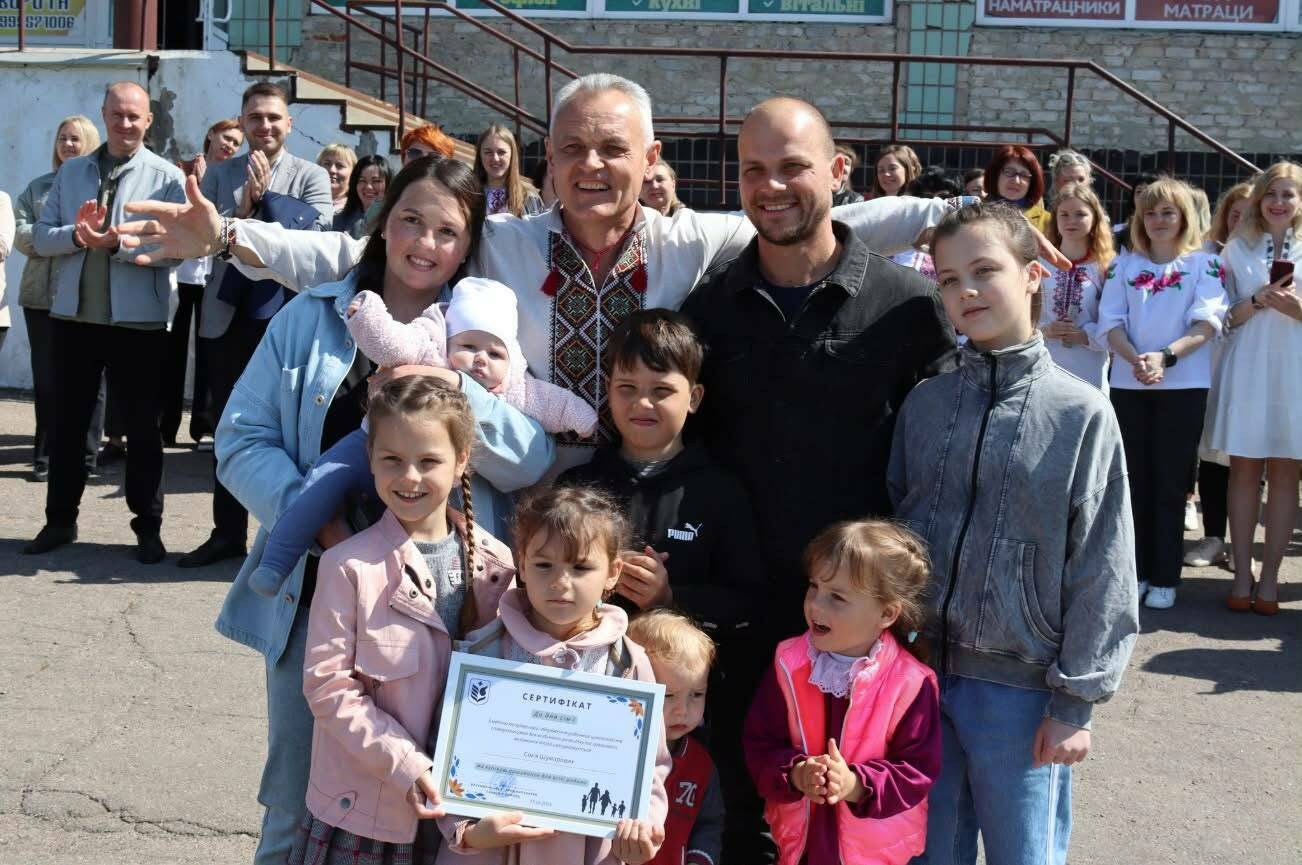
Independence Day in Blyzniuky community
‘We must love our country…’
If we were to do another interview in three years’ time, what would you like to show then as proof that Blyzniuky community has changed?
I would like our community, in three years’ time, at the very least not to have a smaller population – and perhaps even to have grown in that respect. Because people do not stay where they see no prospects. I sincerely hope that in three years’ time we will have built the residential complex we are currently planning. By that time, I would also like to see the renovated sewage facilities that I have already mentioned to you. I would very much like the paediatric rehabilitation, traumatology, and surgery departments – in which we are currently investing – to become some of the best in the region. And finally, I would be very happy if, in three years’ time, we could finally get started on repairing the roads.
How do you see Blyzniuky community in the future?
Effective. To ensure it becomes just that, we sometimes have to make unpopular, difficult decisions – for example, closing under-enrolled schools. Well, you cannot have a class with just five pupils! A school cannot function, for example, without an eighth grade, because eight years ago not a single child started in Grade 1. Education is not just about maths. It is also about nutrition, preventing harmful habits, and mental health…
What would you like to say to the leaders of other communities?
We must respect our state. Before the full-scale invasion, it was almost like an enemy to us. We were always complaining about it; we even fought against it. Whatever the issue, we always blamed the state. But what do we see now? Despite such a gruelling war, the state pays pensions, provides financial support, and invests in the construction of underground schools and hospitals. If we surrender to the russians now, we could lose this country. And then there will be no one left to complain to, because in russia, complaining about the authorities is punished. We need to stop treating the state like a cash cow that we can constantly milk for benefits, financial assistance and payments. If people really need them, that is another matter. However, many people receive financial assistance and payments even though they do not need them, and then take great pleasure in having cheated the state. We must put a stop to this. When you truly love something, you will not cause it harm, and we must love the state.
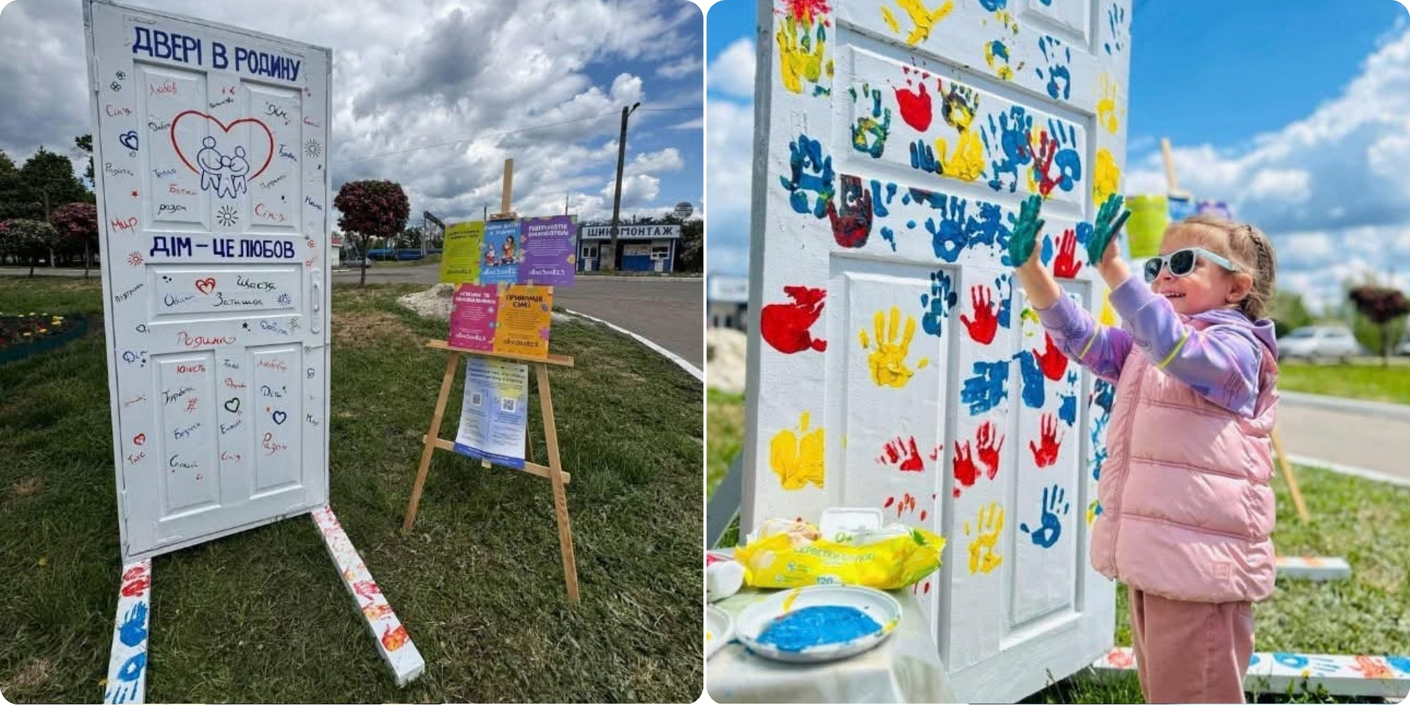
Фото 11-12. Family Day in Blyzniuky community
07 October 2026
21 АРР опановують КРОКУС: UCORD посилює проєктну спроможність регіонів
21 АРР опановують КРОКУС: UCORD посилює...
У Львові представники 21 агенції регіонального розвитку розпочали дводенне навчання з розроблення проєктних ідей і...
07 October 2026
Проєкт Держбюджету-2027: громади обговорили ресурс для послуг, освіти та підтримки дітей
Проєкт Держбюджету-2027: громади обговорили...
Фінансова спроможність громад у 2027 році, міжбюджетні відносини, доступність послуг для дітей і сімей стали темою...
07 October 2026
Молодь Хмельниччини та Івано-Франківщини...
Платформа соціальних змін відкрила набір на акселератор Skills Future For Youth для молоді віком 15–29...
07 October 2026
Short-term (by 2027) and mid-term (by 2030)...
This article of the U-LEAD series consolidates the main short-term (by 2027) and mid-term (by 2030) recommendations...