Reconstruction without costly mistakes: What communities need to know about international rules for project implementation – conclusions from an expert discussion
For Ukrainian communities, attracting international funding to rebuild schools, housing, water supply systems, or other infrastructure is only part of the challenge. It is equally important to prepare a project that meets the requirements of financial partners, to conduct procurement correctly, to manage risks effectively and to ensure professional construction management. Otherwise, even with funding in place, the community risks facing delays, additional costs, or a project that fails to deliver the expected results.
This interrelationship between funding, the quality of project preparation, and the final outcome was the main theme of the event “From Funding to Results: International Rules for the Implementation of Reconstruction Projects”, which was held on 29 October 2026 and attended by representatives of government bodies, international financial institutions, professional engineering organisations, and infrastructure project practitioners.
The event was organised by the public association Interstate Consultants Engineers Guild (ICEG), which invited representatives from the International Federation of Consulting Engineers (FIDIC), the European Federation of Engineering Consultancy Associations (EFCA), the World Bank, the Council of Europe Development Bank and other organisations.
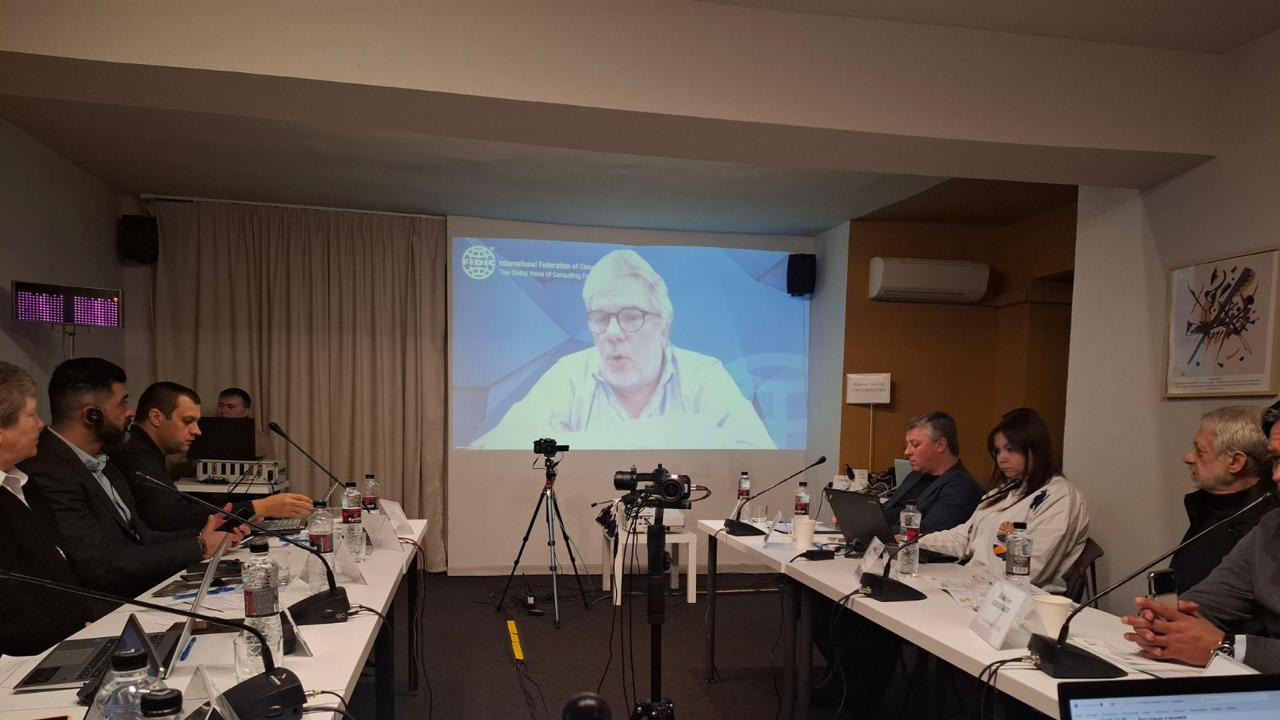
At the start of the event, FIDIC President Alfredo Ingletti addressed the ICEG representatives, highlighting the Guild’s role as the national FIDIC association in Ukraine, and welcomed the participants. He emphasised the importance of professional standards, engineering accountability, and cooperation between clients, consultants, and contractors. According to Mr Ingretti, international contractual approaches help to organise project implementation, define the responsibilities of the parties, manage risks, and establish – from identifying needs and preparing investment decisions to procurement, contracting, construction, and evaluation of results.
For local governments, this discussion has practical significance: international partners assess not only the community’s need for funding, but also the client’s readiness to manage the project, fulfil contractual obligations, and ensure the long-term operation of the infrastructure created.
Why the availability of funding does not necessarily mean the project is ready
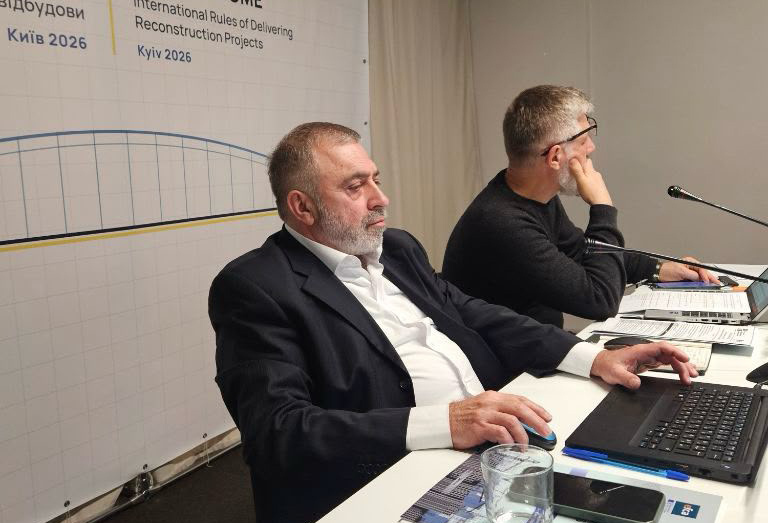
Opening the professional discussion, Oleksandr Nepomniashchyi, President of the Interstate Consultants Engineers Guild, drew attention to a problem that accompanies major infrastructure investments: there is a complex chain of interlinked processes between the decision to allocate funds and the commissioning of a facility.
Inadequate project preparation later complicates procurement; an ill-chosen procurement model leads to contractual problems; and an unbalanced allocation of risks can result in additional costs, claims and disputes.
He also cautioned against the mere formal adoption of international contract models. The use of a standard FIDIC contract does not in itself mean that a project is managed in line with the relevant international principles. This requires a clear division of responsibilities, independent engineering expertise, timely decision-making, and effective conflict prevention mechanisms.
This opinion was elaborated upon by Yevhen Vladimirov, Executive Director of the Interstate Consultants Engineers Guild.
He proposed assessing the readiness of an infrastructure project based on four interrelated components: the quality of preparation, the alignment of procurement with actual needs, the management system, and the professional capacity of the participants.
He explained that project preparation should cover more than just documentation and the source of funding. Technical solutions, economic viability, environmental and social requirements, future operating costs, and potential risks should be determined in advance.
This is particularly relevant for local governments and utility companies, which are increasingly implementing infrastructure projects with international funding but do not always have sufficient specialists to prepare and oversee them.
A practical conclusion for communities: before seeking funding, it is worth determining whether the client has sufficient expertise to prepare and implement the project and what professional services need to be brought in from outside.
Public investment: Why communities need support right from the preparation stage
Nataliia Kozlovska, Deputy Minister for Communities, Territories and Internally Displaced Persons of Ukraine, emphasised that reconstruction should simultaneously address people’s urgent needs and lay the foundations for the long-term development of communities.
She named housing, water supply, heating, accessible social services, safety, energy efficiency, infrastructure resilience, and accessibility as key priorities.
The Deputy Minister explained that the reform of public investment management introduces common approaches to strategic planning, project initiation, preparation, evaluation, and prioritisation.
However, the urgent need to restore a facility does not automatically mean that the relevant project is ready for funding. Between these two stages, alternatives must be analysed, the socio-economic impact assessed, an implementation model defined, technical solutions prepared, and risks evaluated.
Nataliia Kozlovska also drew attention to the inequality in the starting opportunities available to communities. According to the figures she presented, over 60% of Ukrainian communities have fewer than 10,000 residents. For such communities, the preparation of complex investment documentation often requires additional technical, methodological, and professional support.
She emphasised the need to fund not only construction work but also project preparation. Without this, even critically important needs may remain unmet.
As an example of a comprehensive approach, the Deputy Minister referred to the HOPE project, a joint initiative with the World Bank, which provides for different mechanisms for the restoration of damaged housing.
She said that over 160,000 households have already received assistance for the repair of partially damaged housing. Another component covers comprehensive major repairs to blocks of flats with the participation of communities as contracting authorities. Sixty-two clusters, comprising 204 blocks of flats, have been selected for this, notably in Bucha, Makariv, Mykolaiv, and Zaporizhzhia.
This example shows that international funding can involve different implementation models depending on the nature of the damage, the complexity of the work, and the client’s capacity.
Procurement: Why the cheapest bid may turn out to be the most expensive solution
Anna Artemenko, Deputy Minister of Economy and Environment of Ukraine, raised one of the most important issues for municipal contracting authorities.
She explained why, when procuring complex infrastructure works, design, and engineering consultancy services, focusing solely on the lowest price can lead to the inefficient use of funds.
Design errors, inadequate technical specifications, or poor contract management can lead to revisions of technical solutions, delays, additional work, and increased construction costs.
Therefore, she says, it is important to assess not only the initial contract price, but also the full life-cycle cost of the project, the quality of the proposed solution, future operating costs, and the contractor’s ability to achieve the required outcome.
This applies particularly to professional services, where the client is effectively purchasing the expertise, experience, and risk management capabilities of specialists.
Anna Artemenko also spoke about the new procurement tools introduced by legislative changes, in particular competitive dialogue, negotiated procedures, innovation partnerships, framework agreements, dynamic purchasing systems, and joint procurement.
For communities, such mechanisms can be important in different situations. For example, competitive dialogue provides an opportunity to develop complex technical solutions when the contracting authority cannot immediately determine the optimal way to meet a need. Joint procurement can be useful when several contracting authorities have identical needs.
At the same time, the Deputy Minister stressed that each instrument should be applied in line with the subject matter of the procurement, market conditions, and legal requirements.
She also emphasised the need to draw up the terms of the future contract even before the procurement is announced. The contracting authority should understand in advance how it will manage risks, under what conditions changes will be permitted, how the outcome will be accepted, and what the parties’ liabilities will be.
For local self-government, this means that the procurement procedure should be part of the overall project implementation strategy, rather than a separate administrative action.
Critical infrastructure security: From facility protection to service continuity
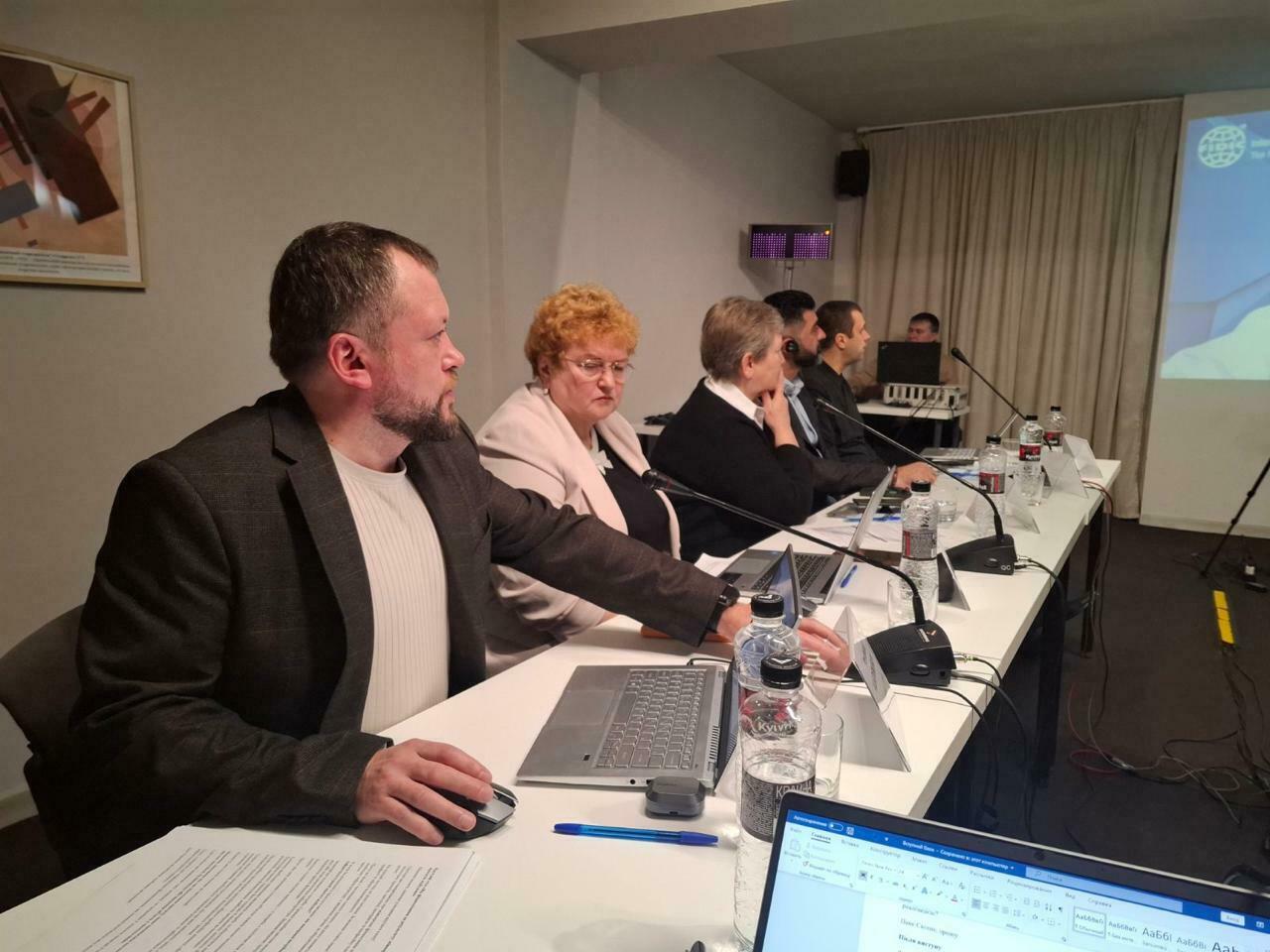
Valerii Novak, Director of the Department for the Protection of Critical Infrastructure at the State Special Communications Service, suggested approaching reconstruction through the lens of the infrastructure’s ability to operate under constant threats.
In his view, Ukraine must create next-generation infrastructure that will not only function effectively in peacetime but will also be able to withstand crisis situations, including military attacks, cyber-attacks, and man-made threats.
Valerii Novak pointed out that resilience cannot be ensured merely by installing additional protective structures after construction has been completed. It should be embedded in the architecture, engineering solutions, and the organisation of the facility’s operations right from the start of the design phase.
The speaker proposed assessing infrastructure based on its ability to detect threats in a timely manner, counter them, continue operating after damage, and restore functionality.
His argument about changing the very object of protection proved significant: the ultimate goal lies not so much in preserving an individual building or piece of equipment, but in ensuring the uninterrupted provision of critical services.
For communities, this is a matter of principle. The resilience of water supply, heating, energy supply, and communications systems should be assessed based on whether residents can continue to receive services even if individual elements of the infrastructure are damaged.
Valerii Novak identified risk modelling, comprehensive physical, and digital protection, redundancy, resource diversification, and disaster recovery planning as essential approaches.
What international financial institutions expect from the client
Olha Klymenko, a representative of the World Bank’s procurement team in Ukraine, presented the position of the World Bank.
She spoke about the Bank’s approaches to project preparation and implementation, emphasising the importance of a procurement strategy, realistic planning, risk assessment, and ensuring documentation is ready in good time.
Olha Klymenko paid particular attention to early market engagement. This approach makes it possible, even before the procurement process begins, to gain a better understanding of potential contractors’ capabilities, obtain information on technical solutions and mitigate risks that may arise during implementation.
According to her, the World Bank is also working to build the capacity of institutions implementing projects by providing them with advisory support on procurement and contract execution.
This is an important message for municipal contracting authorities: procurement preparations should begin well before the tender is announced. It is necessary to verify the feasibility of deadlines, the readiness of technical documentation, the market situation, and the client’s ability to manage the future contract.
The perspective of another international financial institution was presented by Constantino Longares, a representative of the Directorate for Technical Advice and Monitoring at the Council of Europe Development Bank (CEB).
He emphasised that a project’s readiness for financing cannot be determined solely by the availability of funds or the existence of a signed contract.
It is important that the procurement model is tailored to the project’s specific characteristics, that risks are allocated realistically, and that the client has the capacity to make decisions, monitor implementation and manage changes.
The speaker drew particular attention to the fact that consultants, engineers, and project managers can provide the necessary expertise, but do not absolve the client of its own responsibility.
According to his approach, the measure of success for international investment should not be the number of tenders held or contracts signed, but rather the extent to which funding translates into reliable services for people.
For communities, this means the need to assess an investment project in terms of its future social impact. A repaired water main needs to ensure a stable water supply, whereas a rebuilt facility has to meet the actual needs of residents.
FIDIC contracts: Why professional management is more important than the formal application of the standard
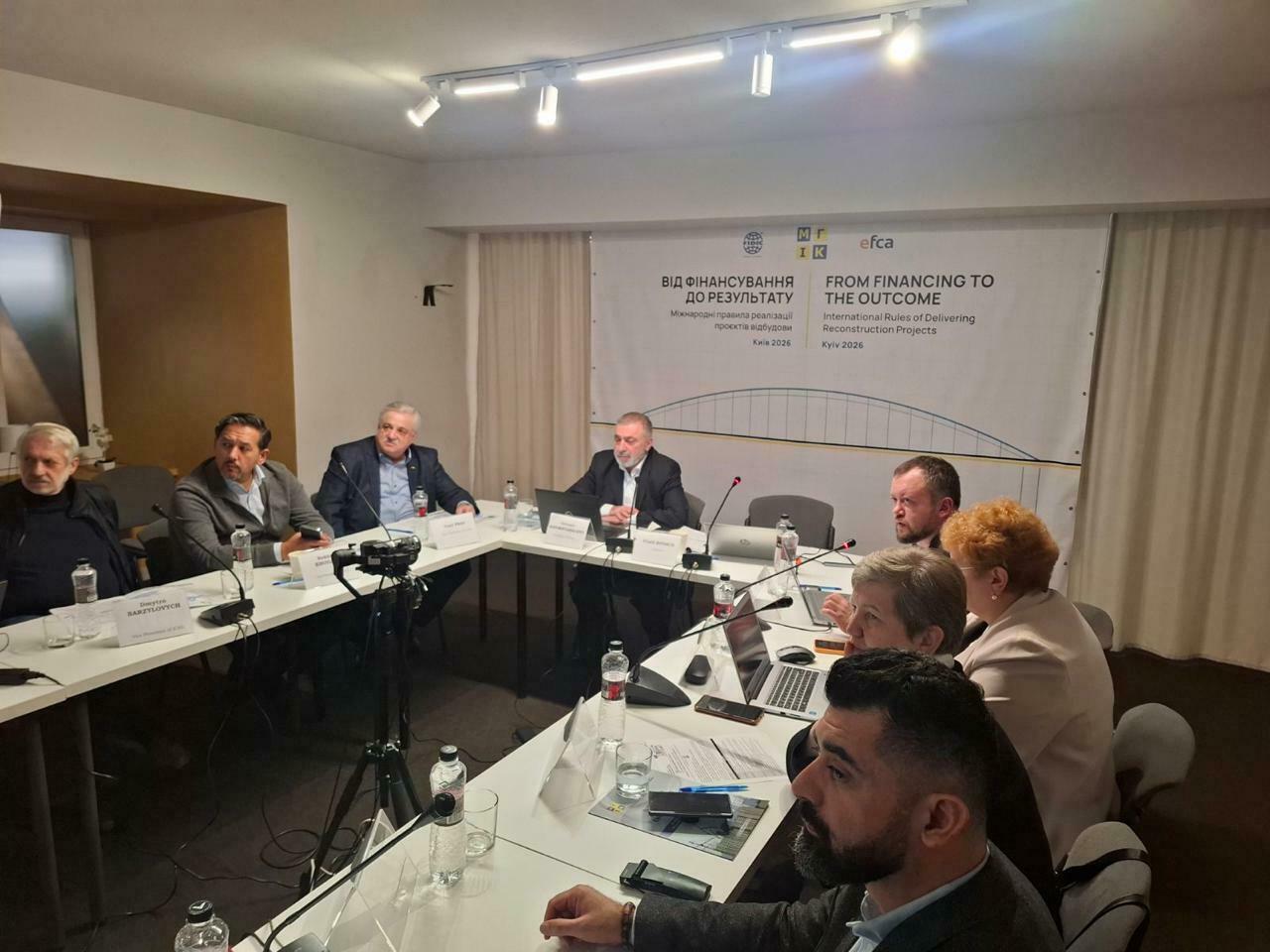
The participants examined international contractual approaches and project management practices separately.
Adam Bialachowski, President-elect of FIDIC, focused on the client’s capacity. He emphasised that the client may delegate specific tasks to consultants, but cannot transfer their own responsibility for the project to them.
Therefore, even before implementation begins, it is necessary to determine who makes decisions, monitors deadlines, assesses changes, and is responsible for fulfilling obligations.
Adam Bialachowski paid particular attention to the allocation of risks. Shifting excessive risks onto the contractor does not eliminate them. If the contractor is unable to manage them, the consequences may include cost overruns, claims, and delays.
He also explained that the role of a consulting engineer extends far beyond standard technical supervision. It involves contract administration, risk analysis, change management, and ensuring effective coordination between the parties.
Taras Khariv, Head of the MGGP Ukraine representative office, provided practical examples. Using the example of a motorway construction project in Poland, he showed how professional contract management helped to avoid a significant complication in the project.
During works on land associated with mining activities, unforeseen changes to the terrain arose. The initial solution might have required additional land acquisition and led to a delay lasting several years.
Thanks to an analysis of alternatives and cooperation between the consulting engineer, the client, and the designer, it was possible to select a different technical solution, which allowed the project to continue without the need for such an expansion of the site.
This example shows that professional support is needed not only to ensure compliance with the contract. It can directly influence timelines, costs, and the ability to complete the project.
Environmental requirements: Factors to consider before construction begins
Gulnara Roll, Chief of the Sectoral Transition Section in the Mitigation Branch of UNEP’s Climate Change Division, highlighted the environmental dimension of reconstruction.
She emphasised the need to take into account climate risks, the use of materials, the impact of construction on the environment, and opportunities for resource reuse.
According to Ms Roll, environmental approaches should be integrated at the early stages of investment planning, rather than being added on during implementation.
The speaker paid special attention to the safe management of construction waste and hazardous materials, particularly when working on damaged sites.
For Ukrainian communities, this has practical implications when preparing projects for the reconstruction of housing, public buildings, and other infrastructure.
It is necessary to determine in advance which environmental and social requirements will apply to a specific project, how to handle materials following demolition, and which solutions will help reduce future operational costs.
European experience: What Ukraine should learn from, and which mistakes to avoid
Sue Arundale, Director General of the European Federation of Engineering Consultancy Associations (EFCA), spoke about trends in the European engineering market.
She focused on the growing importance of engineering expertise in the face of new security, climate and infrastructure challenges. In particular, she discussed the resilience of water and energy infrastructure, transport corridors, digitalisation, and new requirements for information management.
In her view, the European engineering sector must engage more actively with public authorities to ensure that professional expertise is taken into account when formulating policies and making investment decisions.
For Ukraine, this is important in the context of European integration: the adaptation of standards involves not only changes to documentation, but also the development of professional competencies and a new culture of interaction between clients and contractors.
Oskars Zivtiņš, Chairman of the Board of the Latvian Association of Consulting Engineers, shared his experience of the development of the Latvian engineering market following the restoration of independence and the transition to European approaches.
The problems he highlighted included excessive competition based on the lowest price, insufficient attention to the quality of professional services, and unfavourable payment terms.
According to him, such practices limit engineering companies’ ability to invest in their own development, train specialists, and enter international markets.
He also emphasised the importance of improving the competence of clients themselves, who need to understand the value of engineering consultancy services.
Sascha Steuer, Secretary-General of the German Association of Consulting Engineers, presented the German model for cooperation between participants in infrastructure projects. He explained the principle of distinguishing roles between the public client, consulting engineers, and construction companies.
In this model, the public client defines the requirements and financial framework and manages the project, consultants provide planning and professional support, and contractors perform the construction work. This division of responsibilities allows for a clearer definition of each party’s accountability.
The speaker also discussed the role of professional associations in representing the interests of the engineering sector, disseminating information, and fostering cooperation among market participants.
Legislation: What changes are needed for complex infrastructure projects
The legislative aspect of the discussion was presented by Hanna Bondar, a Member of the Ukrainian Parliament and Chair of the Sub-Committee on the Organisation of State Power, Local Self-Government, Regional Development and Urban Planning of the Verkhovna Rada of Ukraine.
She emphasised that the role of the consulting engineer is particularly important for large and complex projects, which public clients often find difficult to manage on their own. At the same time, in her view, the legal status of the consulting engineer in Ukraine remains insufficiently defined.
Despite the existence of relevant concepts in legislation, the issues of a consulting engineer’s powers, responsibilities, and independence need further regulation.
In particular, Hanna Bondar drew attention to the limited ability of a consulting engineer to independently make decisions binding on project participants under the model provided for by international FIDIC practice. In her view, this hinders the full application of the relevant contractual mechanisms in Ukraine.
The Member of Parliament also spoke about the work on the draft Urban Planning Code of Ukraine and the need to harmonise technical regulations with European standards.
She paid special attention to the future use of architectural design competitions in public procurement. According to the MP, the new rules create opportunities for the wider use of competitive procedures when procuring design solutions. However, this will require training for contracting authorities and the development of a professional market for organisers of such competitions.
This is particularly relevant for communities, as by no means every local government has its own specialists capable of independently organising a complex architectural competition.
Hanna Bondar also called for further improvements to procurement legislation on intellectual professional services, where the quality and competence of the service provider are of fundamental importance.
Importantly, the legislative proposals and areas for further work she outlined should not be equated with the legal provisions currently in force.
The takeaways for local governments from this discussion
Despite their differing professional perspectives, the participants in the discussion agreed on one key point: the quality of reconstruction is largely determined by decisions taken even before construction begins.
Several practical guidelines for communities can be drawn from this discussion.
- Start with the residents’ needs, rather than with a ready-made construction solution. It is important to identify the problem the project is intended to solve, what alternatives exist, and how the final result will be assessed.
- Allocate resources for the preparatory phase. Engineering studies, analysis of alternatives, design, risk assessment, and the procurement strategy all require funding and professional expertise.
- Assess the total cost of the project. The lowest initial price does not always mean the lowest overall cost. Future operation, maintenance, risks, and possible changes should be taken into account.
- If the community lacks the in-house expertise to prepare and implement the project, it is advisable to engage a consulting engineer – a business entity with a team of qualified specialists. Such support will help the client prepare the project and manage its implementation professionally, but the local government or utility company will remain responsible for its own decisions.
- Prepare the contractual framework in advance. The distribution of risks, the powers of the parties, and the mechanisms for agreeing changes, or resolving disputes should be clear before the procurement process begins.
- Incorporate sustainability and environmental requirements into the project. For critical infrastructure, it is necessary to plan for service continuity, redundancy, and recovery from damage. For all relevant projects, take into account environmental, social, and operational impacts.
- Monitor changes in legislation and develop expertise. New procurement tools and international contractual approaches will require municipal contracting authorities to acquire additional knowledge and practical training.
Reconstruction as a test of community management capacity
International funding opens up opportunities for Ukrainian communities to restore and modernise their infrastructure. At the same time, however, it places greater demands on the quality of project preparation, the transparency of procurement, risk management, and the professional accountability of contracting authorities.
The discussion also highlighted another important point: local self-government alone cannot resolve all issues related to the transition to international standards. Proper legislative regulation, methodological support from the state, access to funding for preparatory work and the development of a market for professional engineering and consultancy services are all necessary.
Meanwhile, international rules undergo their ultimate practical test at the community level.
After all, for residents, the outcome of reconstruction is not measured by the amount of funds raised, the number of procurements made, or the contracts signed. It is measured by whether the water supply works, whether heating is provided, whether essential services are available, and whether the new infrastructure is capable of serving people for many years to come.
The discussion concluded that the focus should shift from viewing funding as an indicator of success to focusing on functional, safe and durable infrastructure.
30 October 2026
Разом сильніші: як кластери змінюють економіку регіонів
Разом сильніші: як кластери змінюють економіку...
Реабілітація не закінчується в стінах закладу. Маршрут відновлення людини продовжується у громаді, родині, на роботі...
30 October 2026
«Середа з U-LEAD»: каталог інформаційних заходів для громад на листопад 2026 року
«Середа з U-LEAD»: каталог інформаційних...
У листопаді Програма «U-LEAD з Європою» проведе серію відкритих інформаційних заходів для представників органів...
30 October 2026
Довіра як інфраструктура. Чи можна її виміряти у проєктній роботі?
Довіра як інфраструктура. Чи можна її виміряти...
У часи непевності вага довіри зростає. Вона часто залишається невидимою ланкою, яка поєднує людей, що раніше не були...
30 October 2026
Гуманітарні автобуси зможуть використовувати...
Верховна Рада України 29 жовтня 2026 року ухвалила в другому читанні та в цілому закон №15102, який розширює...