How Vocational Lyceum in Sokal changes views on vocational education and supports the military
Imagine a room with standing water 365 days a year, where the smell of damp and mould has become so deep-seated in the walls that it seems no chemical could ever remove it. This is exactly what Nataliia Yurchyshyn saw in 2020 when she was appointed principal of the Sokal Vocational Lyceum in Lviv region, the future DECIDE culinary career guidance hub.
Nowadays, béchamel sauce is prepared here with modern equipment, and chefs from top-class restaurants are amazed by the hub’s technical facilities and the conditions in which the students are trained.
‘We believe that vocational education should be prestigious. Establishing such hubs is an opportunity to improve the quality of education and provide young people with new prospects to remain in their home regions, work within their communities, and contribute to their development. It is an investment that pays off in the form of young people’s confidence in their own futures, and ultimately, through tax revenue and filled job vacancies,’ emphasises Valentyna Poltorak, DECIDE Project Manager
How can a ruin be transformed into a space where schoolchildren dream of becoming chefs, and businesses get involved in careers guidance? Read the story of the careers guidance culinary hub in Sokal – a real-life example of how a strategic partnership between the community, the region, and international partners can change the nature of vocational education.
How it all began
The 117-square-metre premises of the former food technology training centre was in terrible condition.
‘I remember clearly the blue plaque at the entrance, which concealed a heavy, musty smell of mould. It was everywhere: on the walls, on the old utensils, in the cupboards. Water had accumulated inside the concrete slabs through the roof, which had been leaking for years, and in fact dripped onto the floor all year round – even when the sun was shining outside. The upper floor was like a time capsule: it had not been used for decades and was frozen in the orange-red colour scheme of the Soviet past,’ recalls Nataliia Yurchyshyn, Lyceum Principal.
The first step, taken back in 2021, was the renovation of the premises with the support of the Education Department of the Lviv Regional State Administration (which allocated approximately UAH 9.7 million) and co-funding from the local authorities in the amount of UAH 300,000. A further UAH 100,000 was provided by the special fund of the educational institution.
But the walls are just the starting point. For the facility to grow, an idea was needed to breathe life into it. Participation in DECIDE: VET initiative was that very idea.
In total, over 450 students are currently enrolled at the Sokal Vocational Lyceum. Here, they train to become plasterers- drywall installer-tilers, hairdressers-make-up specialists, and hairdressers-manicurists. However, the institution is convinced that when creating an innovative space, there is no point in trying to do everything at once. The team decided to focus their efforts on the culinary hub so they could demonstrate the work of chefs and pastry chefs, turning the space into a flagship facility.
It is important to note that the establishment of the hub was not a random change. It was the result of implementing the Development Strategy for the Sokal Vocational Lyceum, which was developed jointly with experts from DECIDE Project. For the lyceum, this document has become a practical roadmap that is always kept on the principal’s desk.
‘Our strategy is not a piece of paper for inspections that gathers dust in a safe. It is an action plan that guides our progress. We clearly set out the stages of development from the start, and the culinary hub was one of our priorities. Next on the agenda is the creation of the “Technodrive” space for training car repair specialists. Having such a strong backing in the form of a strategy helps to understand why each challenge is worth overcoming and where this will lead in a few years’ time,’ explains Nataliia Yurchyshyn.
What challenges and interesting stories arose during the renovation
With the renovation of the hub almost complete and the ultra-modern equipment already prepared for shipment, an unexpected and critical challenge arose – the electricity supply. The old network at the lyceum was designed for 45 kW. This was barely enough to power the lighting and a few cookers.
Experts from the regional power company explained that a minimum of 90 kW is required to run a complete laboratory equipped with combi ovens, induction hobs, and powerful extractor fans. The cost of increasing the power supply amounts to over UAH 400,000. For an educational institution, this was an unaffordable sum.
‘We had an ideal renovation and modern equipment, but we were unable to even switch it on. This is an important lesson for all communities: any modernisation begins with the engineering infrastructure. Fortunately, DECIDE Project responded promptly and helped with additional funding for this work,’ says Nataliia Yurchyshyn.
A curious incident happened during the delivery of equipment from the global market leader Rational. The driver, who was transporting the equipment from Kyiv, was absolutely convinced that his final destination was an elite restaurant in the centre of Lviv or a five-star hotel.
‘When he checked the route sheet and saw “Sokal, Lyceum”, he asked several times to double-check. He was simply stunned. I quote: “Am I taking this to the school?” When we unloaded the Vario systems and combi ovens, he walked around the premises with his jaw dropped. That is our main victory – a change in perception. Every day, we prove that vocational education can and should be no less technologically advanced than the private sector,’ adds the lyceum principal.
The hub is now equipped with ultra-modern equipment, such as Vario systems, which allow several dishes to be prepared simultaneously: whilst meat is simmering in one pot, fruit compote can be cooking in another. Alongside these are combi ovens, which replace dozens of kitchen appliances, planetary mixers, and induction hobs that respond instantly to changes in settings. There are also vegetable cutters, dough sheeters, kneading machines, refrigerators and freezers.

‘Our students are more than just chefs; they are operators of complex systems. Maksym Lytovchenko, the head chef of the ‘Panorama’ chain, was impressed when he visited us. He said straight out, “Graduates from Sokal are already 50% ready to work in the premium sector. I don’t need to retrain them – they already know how world-class equipment operates.” This is what we call a victory over stereotypes: we not only “teach cooking”, we train professionals who know how to handle modern equipment from their very first day on the job,’ adds Kateryna Koval, Deputy Principal for Training and Production.
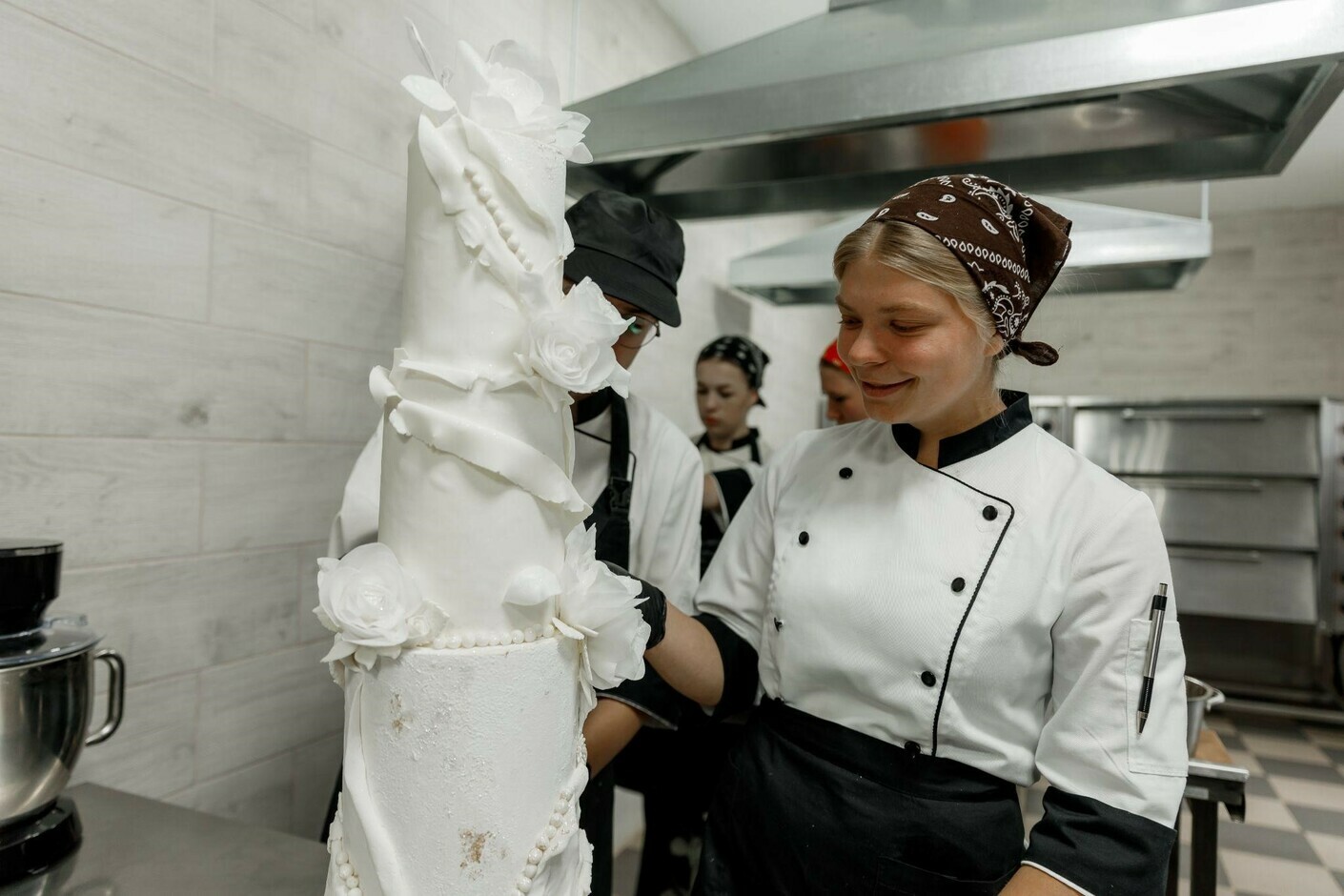
The culinary hub also has a professional washing area equipped with a pot-washing machine, a water softening system, and sterilisers. This equipment and additional facilities ensure the hub operates efficiently and safely in line with sanitary standards. In addition, routine maintenance has been done and the heating system in the 98-square-metre tasting room has been modernised.
Ultimately, the total budget amounted to over UAH 15.5 million, of which UAH 4.291 million was allocated by the Swiss-Ukrainian DECIDE Project, UAH 9.7 million by the Department of Education and Science of the Lviv Regional State Administration, and UAH 300,000 by Sokal community. Later, with funds from the special fund of the lyceum, equipment, furniture and fittings worth over UAH 1 million were purchased.
A taste of the profession: where a child feels like an adult
In fact, the main idea of the hub is career guidance. So, the space is not only for lyceum students, but also for schoolchildren from across the community. It is a dynamic space where students in Grades 7–9 can experience different professions. The hub is always open: either schools express a desire to visit, or the vocational lyceum contacts schools to suggest particular activities.
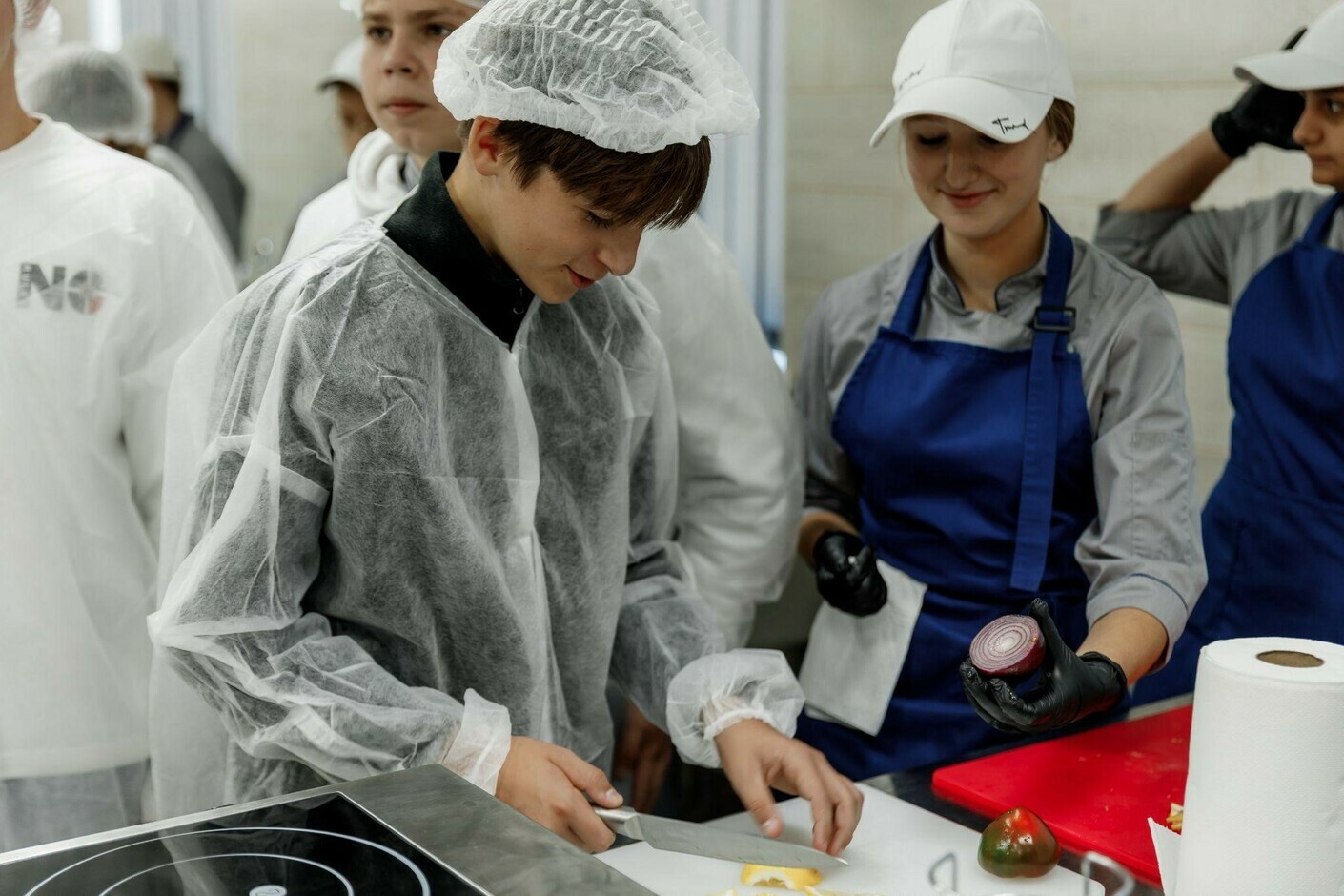
‘For the children, this is a real immersion in the profession. We do not just show them a beautiful kitchen – we let them cook. They put on professional uniforms, have their own workstation, and make pizza or sushi all by themselves. You should see the excitement in their eyes when they take their first dish out of the steam convection oven themselves! At that moment, the child gets a taste of the profession, feels grown-up and independent,’ says Myroslava Myhal, a vocational training instructor.
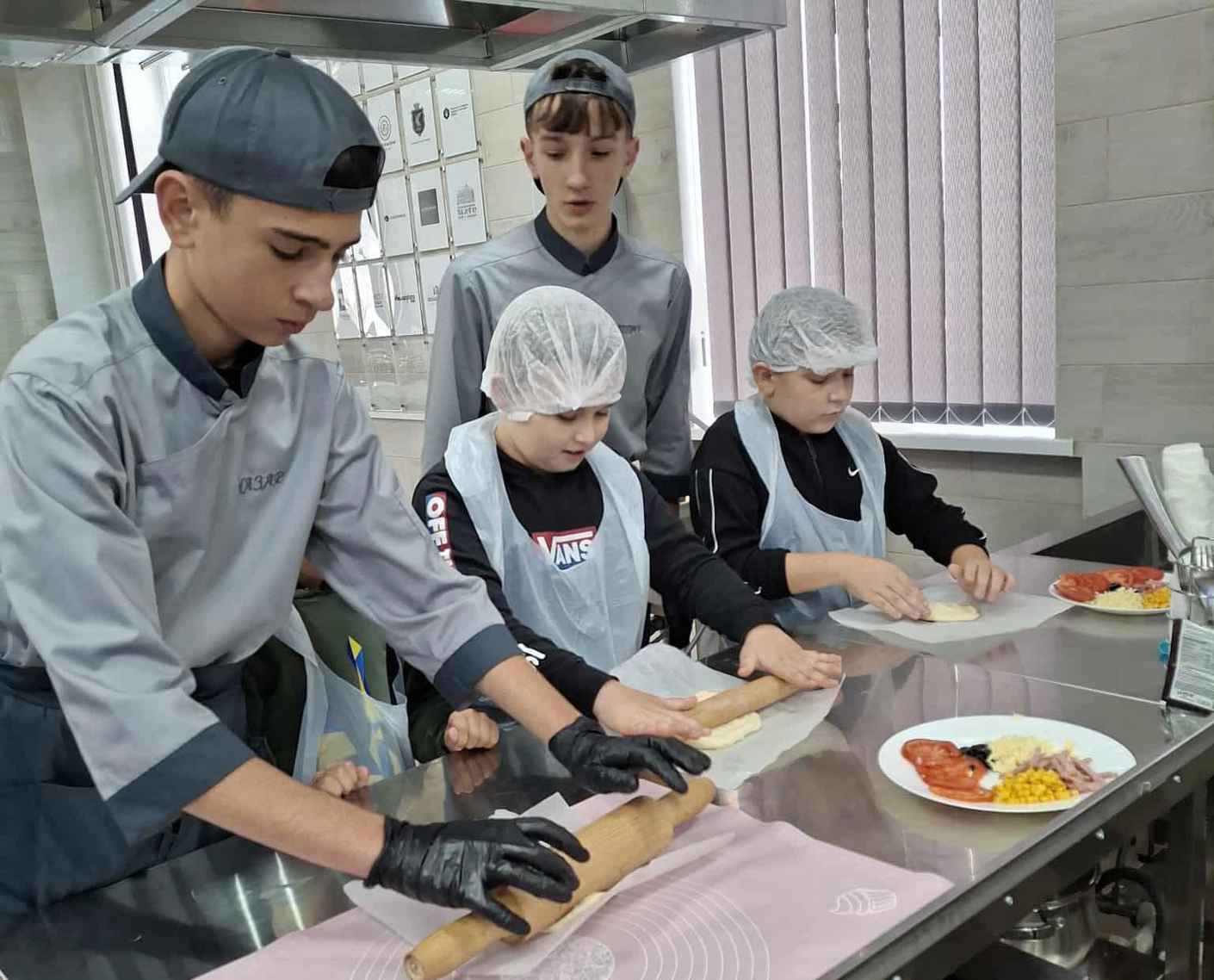
The lyceum principal emphasises that this approach radically changes the attitude of parents and teachers to vocational education. In the future, vo-tech is expected to become a place where students “are not sent because they did poorly at school”, but rather a place they “aspire to attend in order to become successful”.
‘Career guidance at the hub is about positive experiences. We hear stories of children returning home and excitedly telling their parents what they did that day. For the community, this is a huge benefit: we show teenagers that they can fulfil their potential locally, in Sokal. It is important to us that a child makes an informed choice in Grade 9,’ says Myroslava Myhal.
Other goals of the hub
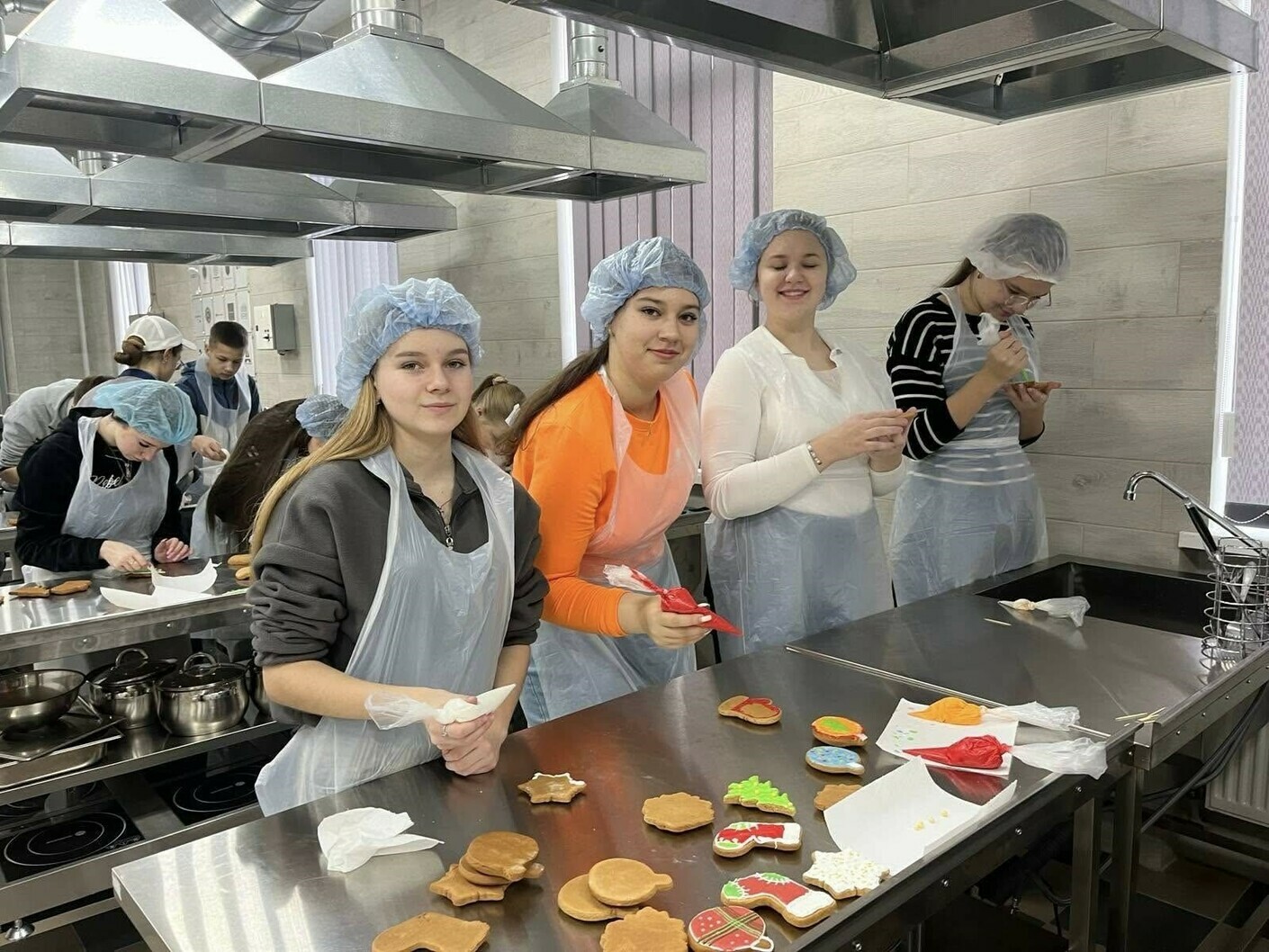
Besides all this, schoolchildren often join volunteer initiatives where vocational lyceum students and teachers make treats for wounded soldiers or to send them to the front lines. They have been doing this regularly since the hub was first established.
‘We prepare energy packs, dried borshch, and confectionery. Students and schoolchildren understand that their activities provide real-world experience whilst also helping our military. So, there is a patriotic dimension to it, too,’ explains Nataliia Yurchyshyn.
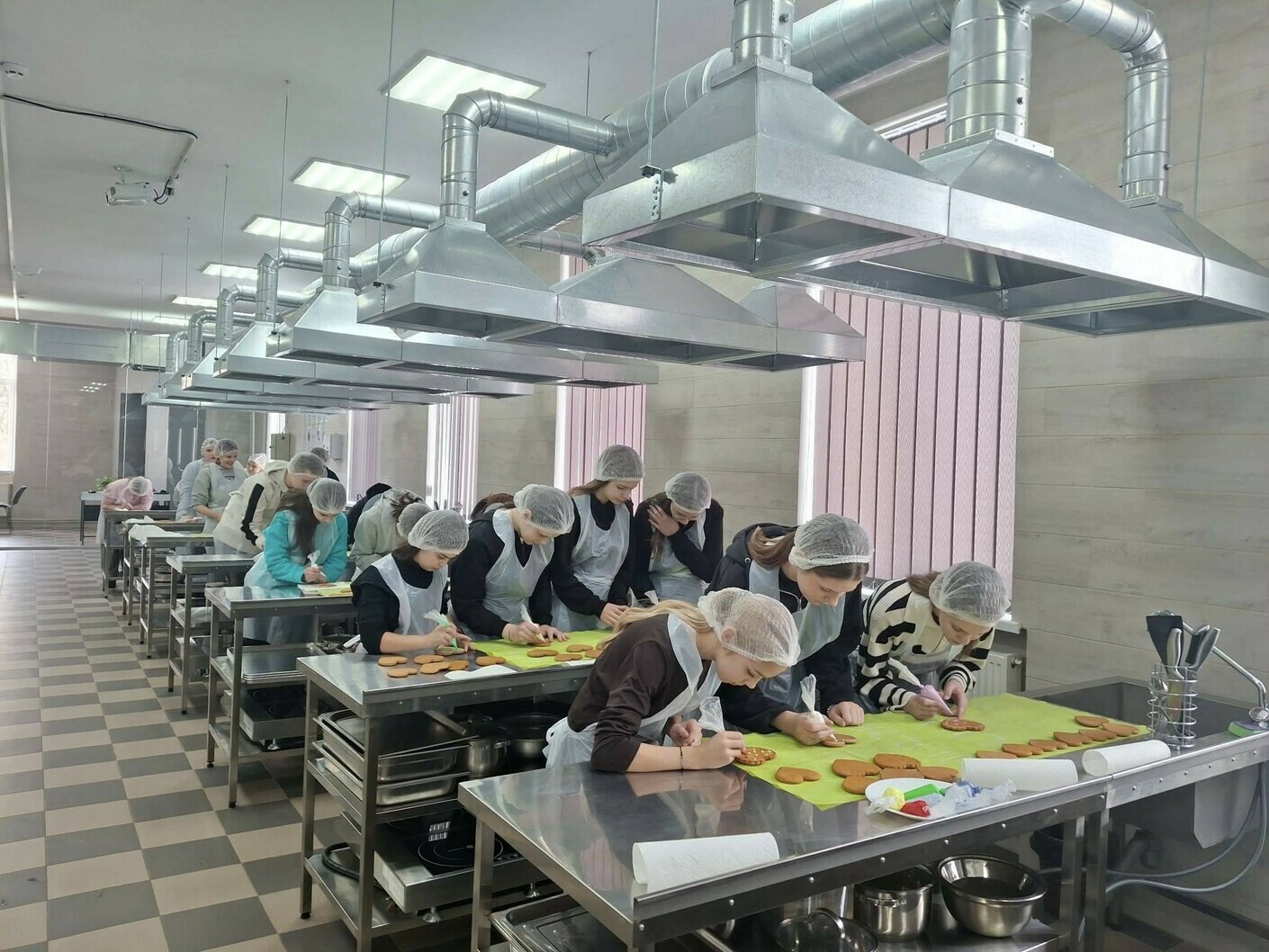
Besides, as the vocational lyceum has been providing catering services for years, it can now do it much faster and to a higher standard thanks to the hub’s modern equipment. This means the lyceum has started to earn more and steadily build up its own special fund for the development of the educational institution.

Above all, the lyceum signs memoranda of understanding with local and national businesses. They are particularly proud of their latest partnership.
‘Thanks to DECIDE Project, we have signed an agreement with Metro Cash & Carry for UAH 100,000 until the end of the academic year. This is a big breakthrough, as students used to have to buy ingredients for practical classes with their own money. This placed a significant financial burden on parents. Now the situation has changed: we receive ingredients in line with specific requests for practical training. And the training will not be limited, for example, to just cooking hake. Upon our request, the company can provide salmon, trout or any other fish or meat. These are the products that are often unaffordable for parents’ budgets. But this is a critically important practical experience,’ emphasises the principal.
These include the “Panorama” hotel and restaurant chain (including “Panorama Lviv” and “Panorama Skhidnytsia”). Other regular partners of the lyceum include the “Shato” hotel and restaurant complex in Sheptytskyi and the “Tsentrpoint” restaurant.
On plans and ambitions that go beyond the community
Nataliia Yurchyshyn admits that the hub is just the start of a long journey. When asked about her personal goals, she speaks primarily about changing the way vocational education is perceived.
‘In the past, vocational schools were for those who did poorly at school. Now, we hope, people come here to learn a real trade. A vocational lyceum graduate who is not afraid to invest in themselves can earn much more than a university graduate. We always tell our students: we give you a foundation; do not lose it, but build on it through self-education. Only then will you become successful,’ says Nataliia Yurchyshyn with confidence.
The principal’s main ambition is quality. It is a dream of a student who comes to the lyceum not just for a qualification, but because their heart yearns for it.
‘I would like to see future brand chefs among our graduates, who will return to their alma mater in a few years’ time to give a masterclass to the next generation. I want our classes to be full and of a high standard. We currently have 25 students per class, but we aim to enrol two or three cohorts of first-year students each year. This is a challenge, especially now that parents often send their children abroad, but we are also observing a reverse trend: children are returning from abroad because they realise that life is not so easy there, and that they can gain a profession at home,’ adds the lyceum principal.
The lyceum has even more ambitious plans ahead. As early as the next academic year, they are preparing to apply for accreditation of an associate degree programme in culinary arts. They also plan to open a modern training centre.
‘We want to provide high-quality retraining for adults not only from our community but from the whole region. We have a renovated student dormitory, so we can accommodate people for a month or two while the programme runs. We are moving towards these dreams step by step, but with confidence. The hub has proven that when there is a will to change, vocational education becomes a magnet that keeps young people in the community and gives them a ticket to the future,’ concludes Nataliia Yurchyshyn.
Mariia Buleiko (Markovska)
Tags:
war education education vocational training college
Область:
Львівська областьГромади:
Сокальська територіальна громадаSource:
Проєкт DECIDE
15 October 2026
‘My community and my country value me.’ How...
In Zymne community in Volyn region, career guidance is no longer just a formality. Here, students are not...
22 September 2026
Live in the city, not struggle to get through...
Barrier-free urban spaces begin with specific solutions that give people greater independence in their daily lives....
17 September 2026
Barrier-free beach in Odesa: How accessibility changes seaside holidays
Barrier-free beach in Odesa: How accessibility...
The Decentralisation portal is launching a series of articles on community initiatives that make public spaces and...
15 September 2026
Career guidance unites. How evacuated...
The community is located in an area of active hostilities; its residents have been fully evacuated and are now...