Trends In The Interaction Of Local Self-Government And State Authorities
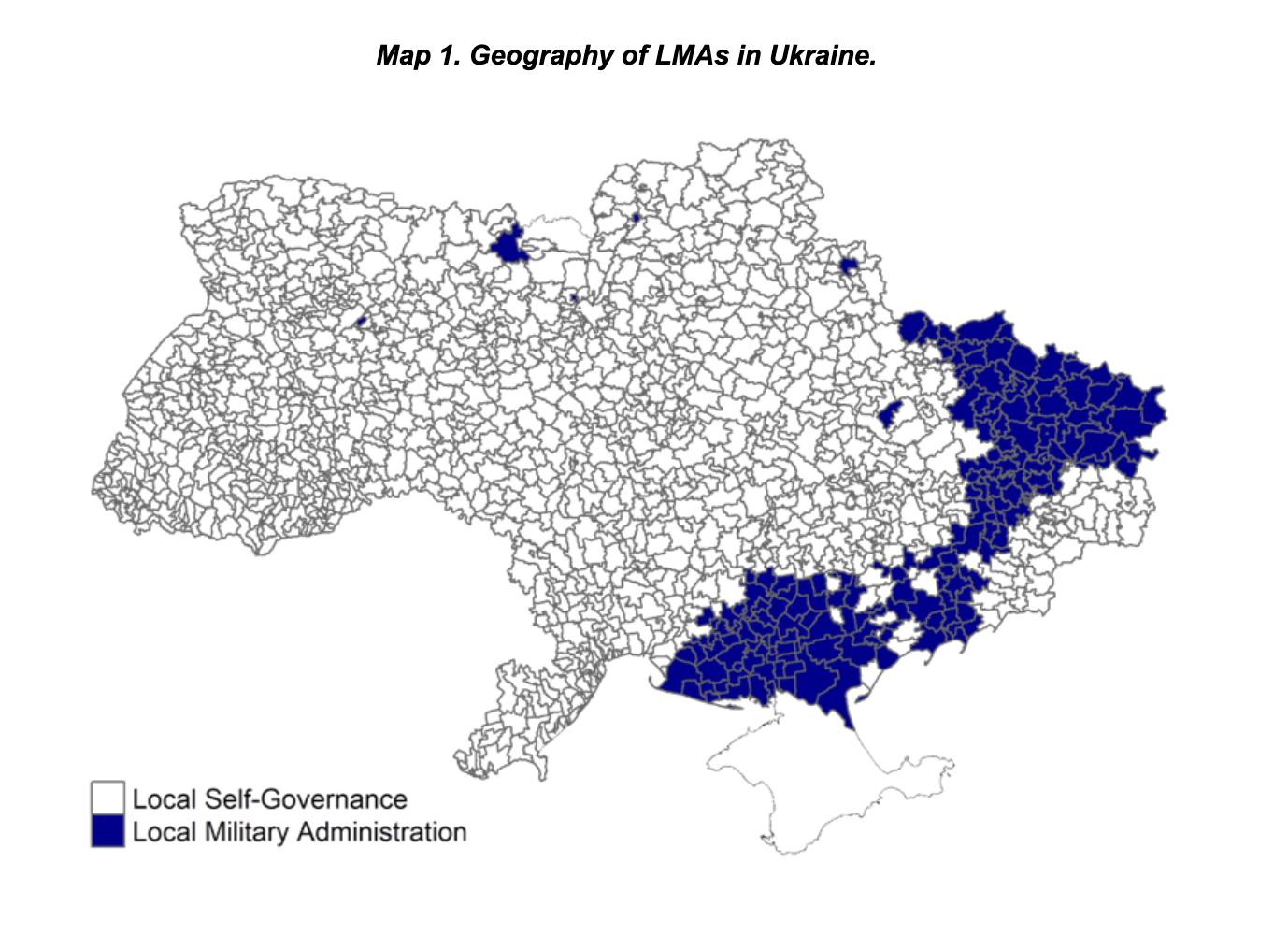
Martial law objectively creates favourable conditions for the centralisation of power, even in countries with a decentralised system of governance. In Ukraine, we can observe that the introduction of martial law has strengthened the executive branch’s role at the local level, especially in security and defence, challenges related to the occupation, and stabilisation of the de-occupied territories. Instead of the respective state administrations, the introduction of regional and district military administrations also strengthened the administrative vertical, forcing LSGs to reconsider their cooperation models with the RMA and DMA and adapt. It is worth mentioning that some LSGs were replaced by LMAs, strengthening the executive branch’s role in those hromadas.
The findings of the study are based on 30 interviews with hromada leaders in systematically selected hromadas in 5 regions to cover similar types of hromadas, 5 interviews with the heads or deputy heads of the RMA, 6 interviews with the heads of the DMAs in the study regions, 4 interviews with representatives of regional offices of international cooperation in the study regions, and 2 interviews with the heads of regional offices of the largest donor organisations in Ukraine working in the study hromadas.
The document consists of 6 sections:
- The first section briefly describes the research objective, analytical framework, and methodology.
- In the second, we describe the legislative changes to martial law at the local level and analyse the practice of establishing military administrations.
- In the third section, we show the main patterns of interaction with regional state actors (RMAs and DMAs) on the part of hromadas and show what characteristics of territorial communities can potentially influence the interaction format.
- In the fourth section, we show the strengths and challenges of cooperation as seen by the RMA and the DMA.
- In the section “5 quotes about 5 problems from donor organisations”, we record the main problems of hromadas functioning that affect interaction with other actors.
The conclusions provide the main answers to the questions set out in the analytical framework: assessment of martial law legislation at the local level and the practice of establishing military administrations, evaluation of hromadas’ groups that have better/worse interaction with the state authorities at the local level, and highlighting the main problems and strengths of interaction, on the part of hromadas (LMAs and MAs) and regional state actors (RMAs and DMAs).
Attached files:
Tags:
separation of powers war research
Source:
Київська Школа Економіки
26 October 2026
Як релокована лікарня стала частиною життя громади: досвід Мирнограда й Оринина
Як релокована лікарня стала частиною життя...
Майже два роки тому Мирноградську лікарню з Донецької області евакуювали до села Оринин на Хмельниччині. Медики...
26 October 2026
Мобільність без кордонів: як громадам з’єднати транспорт, дані й фінансування
Мобільність без кордонів: як громадам з’єднати...
Мобільність не закінчується на межі громади, але транспортні системи часто залишаються розділеними між містами,...
26 October 2026
Стратегічне мислення, сталий розвиток і...
Фото SKEW ( Engagement global) Муніципальні партнерства є дієвим інструментом євроінтеграції України. Це...
26 October 2026
How to keep youth in the village? Experience of Keretsky community
How to keep youth in the village? Experience of...
How Keretsky community in Zakarpattia region seriously approached career guidance for young people, and what the...