“Veterans’ business is not about charity, but about new jobs, tax revenue, and the development of territories.” Interview with Bohdan Malysh, a veteran of the Armed Forces of Ukraine
How local authorities can ensure that dozens of commercial projects launched by veterans are based in their communities
By Dmytro Syniak
A few turns of the little key – and the round wooden box springs to life. Colourful figurines of a Cossack and his wife, a fish, a crayfish, parsley, parsnip, onion and garlic move smoothly in a circle, creating the effect of a dance. To the gentle melody produced by the box’s internal mechanism, the famous Ukrainian folk song “The Fish Danced with the Crayfish” – a light-hearted springtime song – can be sung.
This box is a business concept developed by Bohdan Malysh, a postgraduate student at the Faculty of History of Taras Shevchenko National University of Kyiv. Without a doubt, it is an interesting idea – one of many that have emerged during the war. One could probably end the story there, were it not for two particular features. Firstly, Bohdan Malysh is a veteran of the Armed Forces of Ukraine who volunteered to go to the front in the early days of the full-scale war. Secondly, Bohdan positions his concept not simply as an interesting product, but as a way of promoting the local identity of Ukrainians. This is, in fact, where the link with local self-government comes in, as local authorities very often do not know what to do with veterans or how to develop local businesses. We talked to Mr Malysh about these issues.
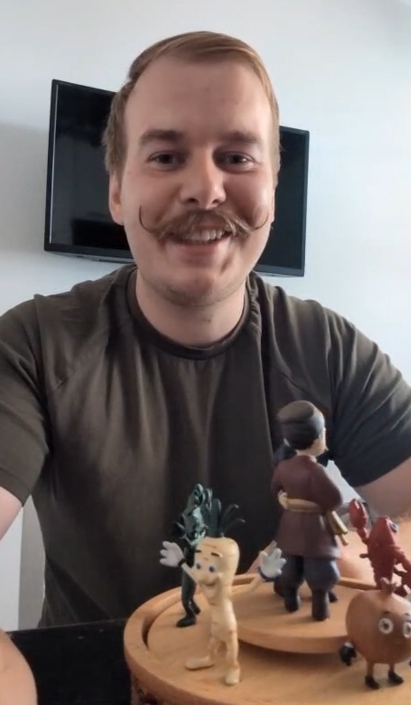
Bohdan Malysh, a veteran of the Armed Forces of Ukraine, who came up with the idea for the “Melania” music boxes
Why is your music box called “Melania”?
The reason is simple: this is the name of my daughter, who was born two years ago – on 5 January, practically on Malanka Day. You know, there are sometimes problems with this name at children’s playgrounds, especially in an environment that has undergone total russification. There were times when my little girl was called either Mila or Milana. However, my wife and I always explained that our daughter was named after a patron of the arts and a member of a noble ancient Roman family, and certainly not after the Italian city. The same goes for my music boxes. Anyone who thinks they are just a child’s toy is mistaken. They are works of art that embody an element of Ukrainian identity. The figurines on the boxes are cast or printed using 3D printers, and then hand-painted by Ukrainian artisans.
What a philosophy! How did you come to it?
I was born in Sheptytskyi, a town in Lviv region, formerly known as Chervonohrad. My mum is a music teacher and my dad is a miner. In the 2000s, driven by circumstances, so to speak, they decided to become entrepreneurs. They launched an online shop selling women’s clothing and lingerie. I inherited my business acumen from my parents. And my patriotism, too. Ever since I was a child, I have been interested in the history of Ukraine and weapons. After finishing school, I enrolled at the Lyceum of Lviv State University of Life Safety, as I wanted to become a rescuer. But I unexpectedly suffered a stroke and had to stop my studies. The military career I had dreamt of also came to an end there. After a series of operations and a long period of rehabilitation, I managed to enrol at the Kyiv-Mohyla Academy to study sociology. I moved to Kyiv and worked as an analyst at Espreso TV, at the international marketing holding company Dentsu Aegis, and others. After being made redundant along with my wife during the COVID pandemic, I decided to develop the family business. But on 25 February 2022, I went to the military recruitment office. Back in 2014, I wanted to join the army, but my father dissuaded me at the time. He said, ‘Finish university first; your time has not come yet.’ And now I felt that this was it – my time had come! I was 29 years old at the time.
How could they have recruited you into the army after a stroke?
They did not recruit me. The doctors were surprised, ‘Explosions are contraindicated for you. Why are you so keen to go to war?’ And I replied, ‘Well, someone has to!’ Ultimately, I was sent to the 63rd Battalion of the 103rd Brigade of the Territorial Defence Forces, which later fought in the battles for Bilohorivka in Luhansk region. Unfortunately, after those battles my condition deteriorated sharply, and to stabilise it, I had to spend two months in hospital. Although I felt completely natural in the army, I had to resign from service for a second time.
But you did not return to your job in marketing, did you?
War really does turn your whole world upside down. Eventually, you want to start a new life. So I went on to do a Master’s degree first, and then a PhD. The topic of my thesis is “Russia’s expropriation of Ukrainian cultural assets” – not only in the current war, but also during the era of imperialism and so on. So I thought a great deal about what, in fact, constitutes cultural assets, and what transforms seemingly ordinary things into them. And about how to reconcile culture with commerce. Because I was deeply outraged when students admitted to me that they saw no future for themselves in Ukraine, “because knowledge of history and culture is not valued here”. I categorically disagreed with this approach. Because the phrase “cultural values” contains the root “value”. And cultural values are extremely valuable; otherwise, they would not be stolen.
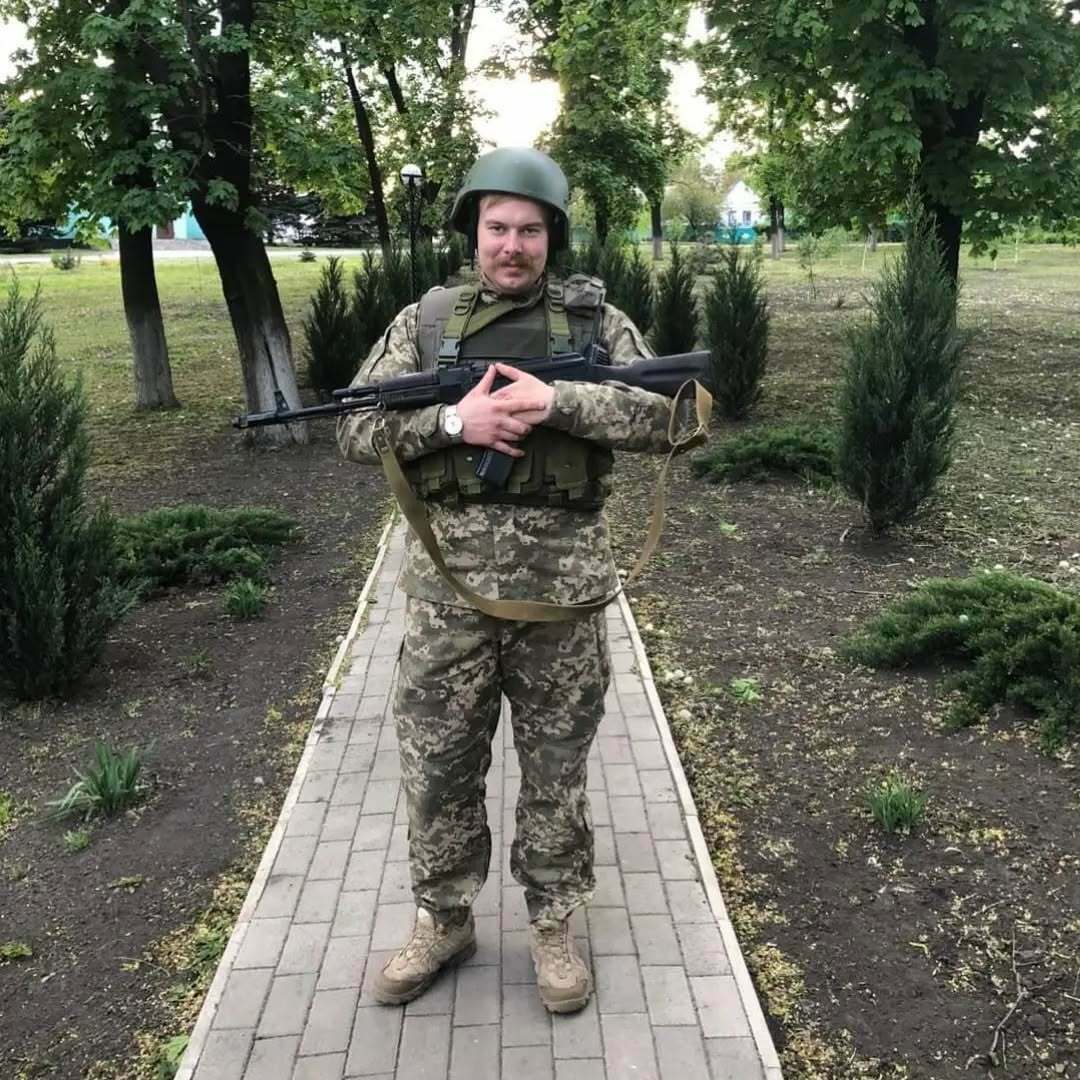
In the early days of the full-scale invasion, Bohdan Malysh went to the military recruitment office, even though he had been exempted from conscription on health grounds
So how did the “Melania” brand actually start?
When my daughter was given several music boxes for her birthday, it all clicked for me! I realised how we could create a cultural product that would, in a sense, embody the Ukrainian genetic code. At the time, my wife and I had just started applying for various grant schemes for veterans’ families. So we wrote a proposal to produce these music boxes and were awarded a long-term loan of UAH 0.5 million. With that money, I made around 100 music boxes. But they are not just a business. They are a Ukrainian song, a Ukrainian soul, expressed in an unusual and vibrant form. It is a product designed to promote Ukrainian heritage through music, craftsmanship, and applied art. It is far better than the russian “matryoshka” dolls still sold on Andriivskyi Uzviz.
To be honest, I was a little surprised by the price of UAH 9,000 per box. I imagine your daughter has received much cheaper presents for her birthday. Why is the price set at this level, and is it actually feasible to sell your products at this price?
Please do not compare mass-produced Chinese consumer goods, manufactured in runs of hundreds of thousands, with individually crafted products. I could have ordered a ready-made box from China, but what would be its intrinsic value then? Whereas, if you buy one of my boxes, you understand that it embodies the artistry of Ukrainian craftsmen. And that every box is a unique product, not a mass-market item. After all, I do not expect my boxes to fly off the shelves like hot cakes. Instead, they could be a wonderful gift from the community leadership to a foreign partner, for example. For the community’s budget, this price is entirely reasonable. Especially when you consider the uniqueness and individuality of each box. This feature in particular means we can adapt the boxes to suit the identity of a particular community. And we are already in talks about this. I should also point out that my personal profit from a single box is very small: most of the money goes towards production costs.
So is the “Melania” music box the perfect gift for partners?
Not only. It can become an integral part of charitable, educational, cultural, and community initiatives aimed to support Ukraine. Our music boxes can be used as lots for charity auctions and fundraising events; as a cultural element at exhibitions, forums, public events and so on. And, of course, they can be given as gifts to partners, donors, volunteers, and patrons.
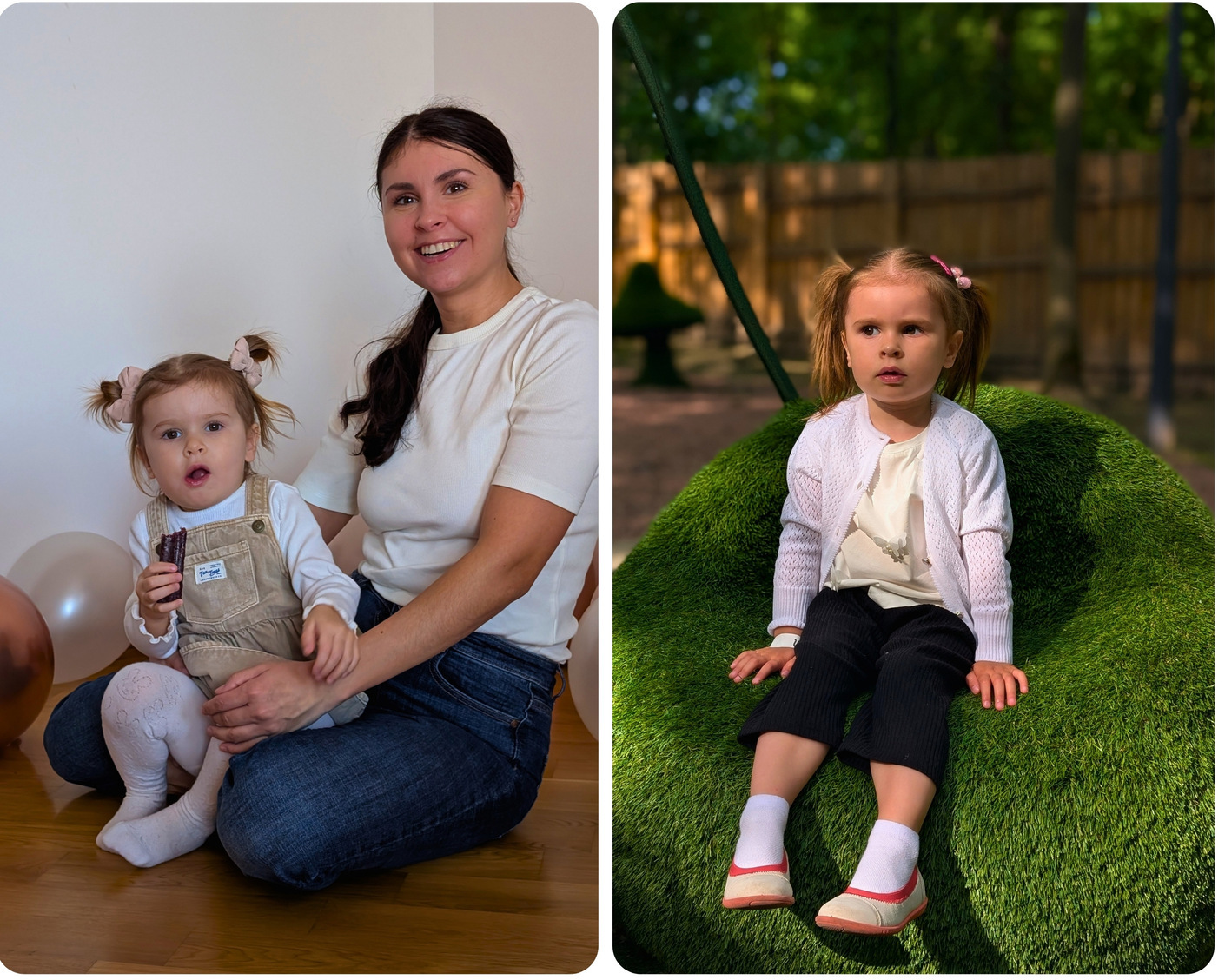
Bohdan Malysh’s wife, Kateryna, and their daughter, Melania
Let us talk about another aspect of your business. Almost every community now claims to be ready to help veterans adapt to civilian life. Could the implementation of local projects, such as yours, contribute to this?
Of course! I should say a few words here about what a veteran brings back with them from the war. On the front line, they felt like a demigod, especially if they held a fairly high rank and position. The lives and deaths of people depended on them there, after all. They felt very important and often set their own rules for living. Back home, these rules no longer apply, and it takes a Herculean effort to feel at ease again. Some veterans realise this is beyond their capabilities and give up. However, they forget about creativity – that which unites the human and the spiritual, the earthly and the divine, and which distinguishes humans from animals. Therefore, communities need to help individual veterans fulfil their need for creativity. And if this creativity also brings benefits, that would be wonderful!
Almost every community now has a veterans’ centre, but does not know what to do with it. What advice would you give in this regard?
The community can be an invaluable support for veterans. The first step is to organise a brainstorming session on topics such as: “What souvenirs could we produce?” or “What cultural treasures can our community share with the world?” The second step is to draft the relevant project and grant applications. Veterans often have little understanding of this process. It would be very helpful if someone from the city or village council were to oversee the progress of these applications. The third step, if the application is approved, is to sort out the bookkeeping and red tape. This is a real minefield of problems, with many hidden pitfalls that could result in fines. And the community has both accountants and lawyers who can help veterans at this stage, teaching them about financial reporting and similar matters. To be honest, speaking from personal experience, this third point is my biggest headache. When you have no money for an accountant at the start, when deadlines are looming and the tax office refuses to accept an incorrectly prepared report, it often leads to despair.
What does the community gain by investing effort in training a veteran?
Quite a lot! Firstly, veterans will become an integral and essential part of the community, its economic backbone. Secondly, this will enable the community to thank veterans for defending them. Thirdly, with this approach, the veteran will not leave the community but will settle there, which is important in these times of demographic crisis. Fourthly, the money the veteran receives from winning a grant will most likely be spent in the community. Fifthly, as a private entrepreneur, they will pay taxes into the community’s budget. Sixthly, they will serve as an excellent example to others, even those who have not served. And finally, seventhly, by helping veterans, the community will create its own system for developing small businesses. Is that enough? Communities need to understand that veteran-run businesses are not about “charity”, but about new jobs, tax revenue, and the development of the local economy. It is important to realise that we, as veterans, have chosen to stay in Ukraine because that is our conscious decision. Many of us have the opportunity to travel abroad freely at any time, without having to cross the Tysa, the Dniester, the Carpathian mountain ranges or the Volyn marshes. We consciously continue to work for the good of our country and our people. And, for that matter, for the good of our community.
‘The main task of the community is to convince veterans that they can fulfil their potential in business and the creative arts. When a veteran starts to lose hope, someone needs to tell them, “We believe in you! We’ve already helped many people just like you. They succeeded – and so will you.”’
Here, I suppose, it should be mentioned that some communities provide loans from their own budgets to support small business development. What do you think about that?
I think that if you ask – not just a veteran, but anyone – why they do not start their own business, you will hear in reply that they do not have the money. But that is nonsense! In fact, there are plenty of opportunities out there right now; you just have to look for them. You say that even communities have funds for business development, and there are also regional, national, and European funds. Apply, submit your applications, and stay motivated even if you fail. Analyse, draw conclusions, and keep improving. Never give up! Everything will work out. This is the message that community leaders need to convey to veterans. And then they need to support them every step of the way. Veterans very often doubt that their dreams can come true. So, the main task of the community is to convince veterans that they can fulfil their potential in business and the creative arts. When a veteran starts to lose hope, someone needs to tell them, “We believe in you! We’ve already helped many people just like you. They succeeded – and so will you.” Starting your own business is the best therapy for post-traumatic stress disorder.
Do communities lack creativity when it comes to working with veterans?
They certainly do! Many times I have heard veterans being offered the chance to open a café or a pizzeria. Yet nobody suggests they make unique music boxes. Why? Because nobody even tries to look for something unusual, authentic, or original. And this authenticity and originality exist in every community. I am telling you this as a historian. This problem should also be viewed not from the perspective of “How can we help the poor veteran?”, but from the perspective of: “How can a veteran help us develop our community whilst at the same time realising their own potential?”
I think the community’s approach to helping veterans is not quite like that yet. Meanwhile, there are plenty of untapped niches in branding alone...
Exactly! What should the community’s identity be? What makes it unique? Which local brands can be developed? Veterans can work on all of this. The community simply needs to relieve them of the burden of monotony and bureaucracy – at least in the initial stage. There are always many obstacles on the path to a goal, and it would be wonderful if the community could help veterans overcome at least some of them. And the rewards are sure to follow.
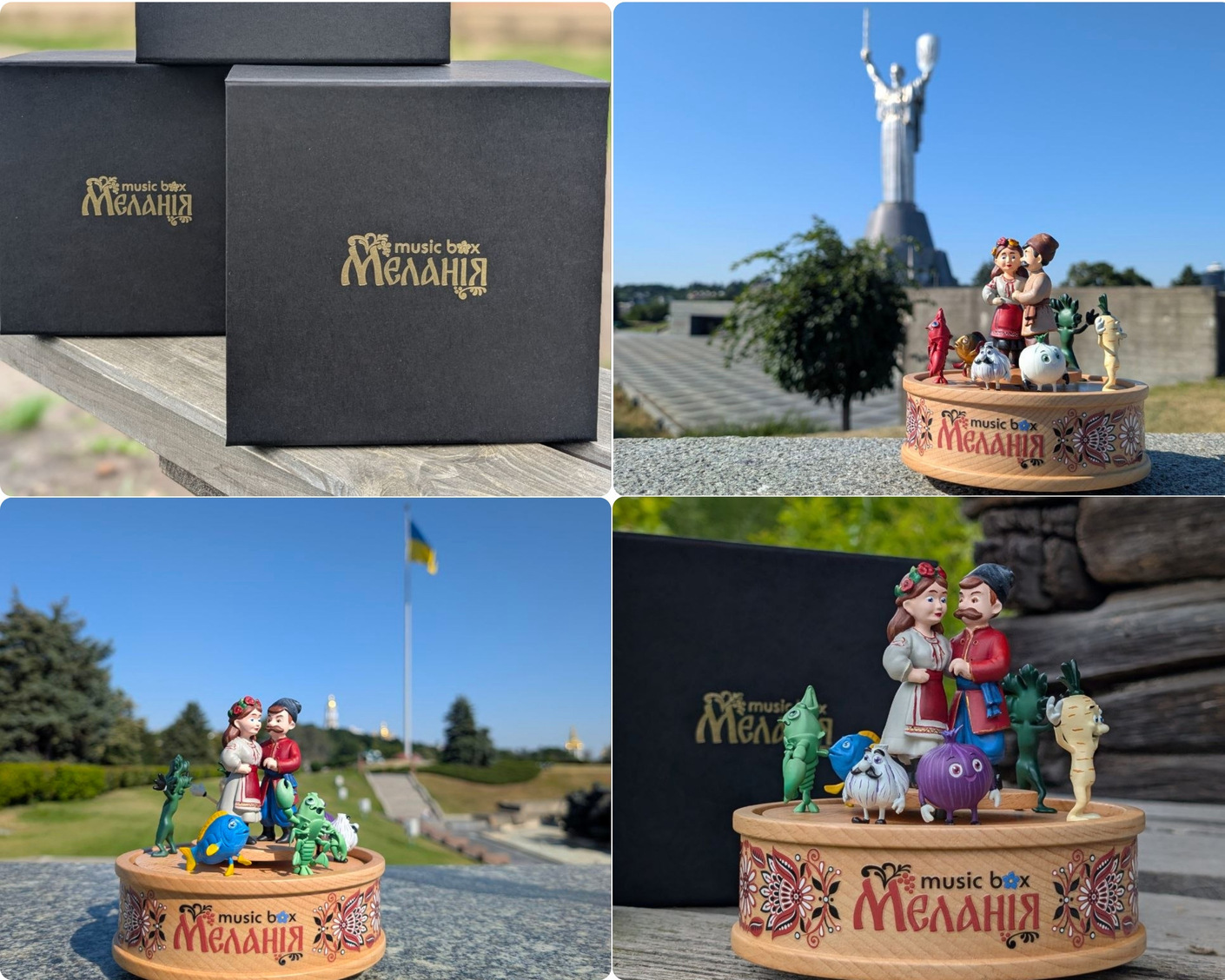
Bohdan Malysh’s “Melania” music box
More information about the “Melania” project is available via the following links:
Instagram:
https://www.instagram.com/melania.musicbox/
Tags:
25 September 2026
DECIDE та МОН обговорили пріоритетні напрями подальшої співпраці
DECIDE та МОН обговорили пріоритетні напрями...
Представники Швейцарсько-українського проєкту DECIDE та МОН України провели робочу зустріч, де обговорили пріоритети...
25 September 2026
Cross-border cooperation and regional readiness...
On 23–24 September, the first in a series of Region Ready forums was taking place in Zakarpattia: "Cross-Border...
24 September 2026
У Києві відбувся Національний форум «Майбутнє, яке обираємо ми!»
У Києві відбувся Національний форум «Майбутнє,...
22 вересня у Києві відбувся Національний форум «Майбутнє, яке обираємо ми!», організований Швейцарсько-українським...
24 September 2026
From production potential to development...
The region’s economic development starts with the ability to recognise its strengths and external opportunities and...