‘People are waiting for liberation…’ Interview with Oleh Tarabaka, Head of the Nova Kakhovka City Military Administration
Oleh Tarabaka, Head of the Nova Kakhovka City Military Administration, on the current situation in the occupied community, the crimes committed by the occupiers against local residents and the environment, and the prospects for the future
By Dmytro Syniak
Nova Kakhovka is a special city for me: when I was a child, my parents used to go there on holiday almost every summer. I remember well the quiet, sleepy streets winding down to the Dnipro, the hot steppe air; the regular ferries taking holidaymakers to the sandy islands; the market where the best fruit and vegetables in Ukraine could be bought for next to nothing… Larysa Novokhyzhna, who was the monitor in my group whilst I was studying at university, comes from Nova Kakhovka; she is currently accused of collaborating with the occupiers… Ultimately, Nova Kakhovka community was the “last peaceful one” for me: roughly on 20 February 2022, I sent an interview with the head of the city council for approval, and on 23 February I was still discussing some amendments with the press secretary. The article was about cooperation with the Estonian community of Pärnu, about ambitious plans, and about the development of tourism and local business… But the next morning it was already hopelessly irrelevant: russian troops had entered the city.
Since then, Nova Kakhovka has become a frontline city, one that has adapted to missile and drone strikes. The banks of the Dnipro River are mined, and life in the city bears no resemblance whatsoever to what it was like before the war. Oleh Tarabaka, Head of the Nova Kakhovka City Military Administration, shared his thoughts on all of this.
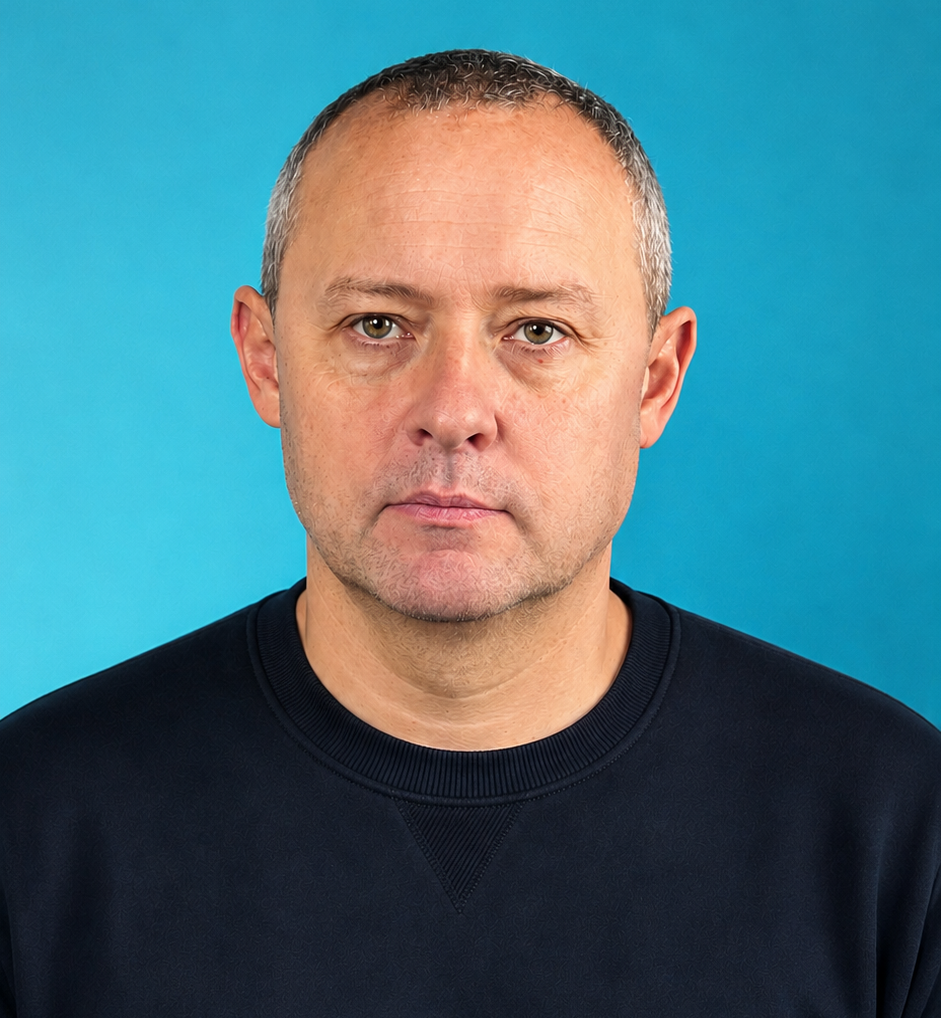
Oleh Tarabaka, Head of the Nova Kakhovka City Military Administration
“Russian world” in Nova Kakhovka
In Oleshky, 70 km from Nova Kakhovka, there is – famine. What is the situation in Nova Kakhovka community?
There is no serious food shortage in Nova Kakhovka; the crisis in the utilities sector is more acute. For quite some time now, there have been prolonged power outages lasting several days, which also result in restrictions on the water supply. There are serious problems with fuel, the price of which has risen significantly. The employment situation is difficult – there are few vacancies, and most of them are in the retail and service sectors. Almost no maintenance work is taking place, so weeds keep growing all over the city. One of the central streets – Dniprovskyi Avenue, which runs along the Dnipro – is practically closed off; the entire surrounding area has been mined, cordoned off, and is covered with fortified positions held by russian troops. Visiting the banks of the Dnipro or the city beach is dangerous. The houses on the avenue are also usually occupied not by local residents, but by russian military personnel. The Robochyi Selishche neighbourhood has been almost completely destroyed; only a few families still remain there…
Before the war, roughly 60,000 people lived in Nova Kakhovka community, of whom over 42,000 inhabited Nova Kakhovka. And now?
Currently, more than 17,000 community residents have the status of internally displaced persons; in other words, the same number of Nova Kakhovka residents are officially located in territory controlled by the Ukrainian government. But there are also those who, for one reason or another, have not registered, as well as those who have left the country, either for the russian federation or for the temporarily occupied Crimea. Besides, due to worsened living conditions, residents continue to leave the community. I think its population now stands at around 5–6,000 people, which is 10% of its pre-war population. However, I should add that two villages in our community – Vesele and Kozatske – are situated on the right bank of the Dnipro. They were occupied but were subsequently liberated. They have now been almost completely destroyed.
Do people still live in these two villages?
The city military administration is currently aware of 57 residents in those villages, but it is impossible to say how accurate this figure is, as the security situation has long prevented visits to Vesele and Kozatske. And there is practically no internet there. However, with the assistance of the military, our military administration delivers fuel to the residents of Vesele and Kozatske for the generators that power their private artesian wells. The situation in Vesele is especially difficult: just recently, as a result of yet another air strike, three generators used by the residents were destroyed at once. Without water, how can anyone survive? I have personally tried to persuade people to evacuate from there many times, but to no avail. In response, they would say the same thing, ‘Where on earth are we supposed to go? How will we make a living there? Here, we have our home and our vegetable garden…’ For a Ukrainian, their home is part of their soul, so leaving it means making a very difficult choice.
A criminal case was opened against Larysa Novokhyzhna, a resident of Nova Kakhovka with whom I studied at university, for collaborating with the occupiers. Larysa simply continued working at the local newspaper, which now reports on the “successes” of the russians. Are there many people like her?
Only a few of those who worked at the city council and the executive committee joined the invaders. I know Larysa Novokhyzhna well; I know that she covered the “elections” organised by the occupying authorities… Well, each person makes their own decision – whether or not to serve the occupiers. Other residents of Nova Kakhovka made a different choice. The so-called ‘judicial bodies’ of the occupying authorities have handed down unlawful sentences not only to members of the media, but also to local councillors and businesspeople. Their numbers are significant. All of them refused to collaborate with the occupying authorities.
What is the prevailing mindset among people in the occupied community?
First of all, I must say that maintaining contact with residents of the temporarily occupied territories poses a direct threat to them. Because the invaders always look for “traitors”. But despite this, people still get in touch with us… They feel a deep longing for Ukraine, for peacetime, when everyone could live, work, and unwind in their home city without having to think about missiles, shahed drones, or bomb shelters… People are longing for the return of the Ukrainian authorities.
The petrol crisis should inspire them… Because it makes the occupiers feel even less at ease. Right?
Whether the russians feel at home in Nova Kakhovka can be assessed from the simple fact that their “administration” fled to Henichesk a long time ago. I hope they will soon flee even further… But, you know, when people are determined to live as Ukrainians, they are indifferent to how the occupiers feel. Nothing can shake Ukraine’s place in their hearts. Nova Kakhovka is a true gem of Kherson region. And yet the invaders first destroyed this city and then flooded it. The beautiful islands in the middle of the Dnipro, where thousands of tourists used to holiday, have now become the scene of fierce fighting that continues with little breaks. There you have it: the true face of the ‘russian world’. And people can see it.
I received two phone calls from the State Security Service (SBU) about Larysa. They asked when I had last spoken to her. It was in the early days of the war. I rang her and said I would find her somewhere to stay in Lviv. She flatly refused. At the end of the conversation, she burst out, ‘You’re all saying, “Be strong!” But what should make me be strong!? We’ve simply been left to the mercy of fate here! You have no idea what’s going on here! You don’t know how any of us feel here!’ Later, I spoke to another friend from university who had also offered Larysa a place to stay in western Ukraine. ‘Larysa refused. Why?’ my friend asked, surprised and at a loss. Now I know why.
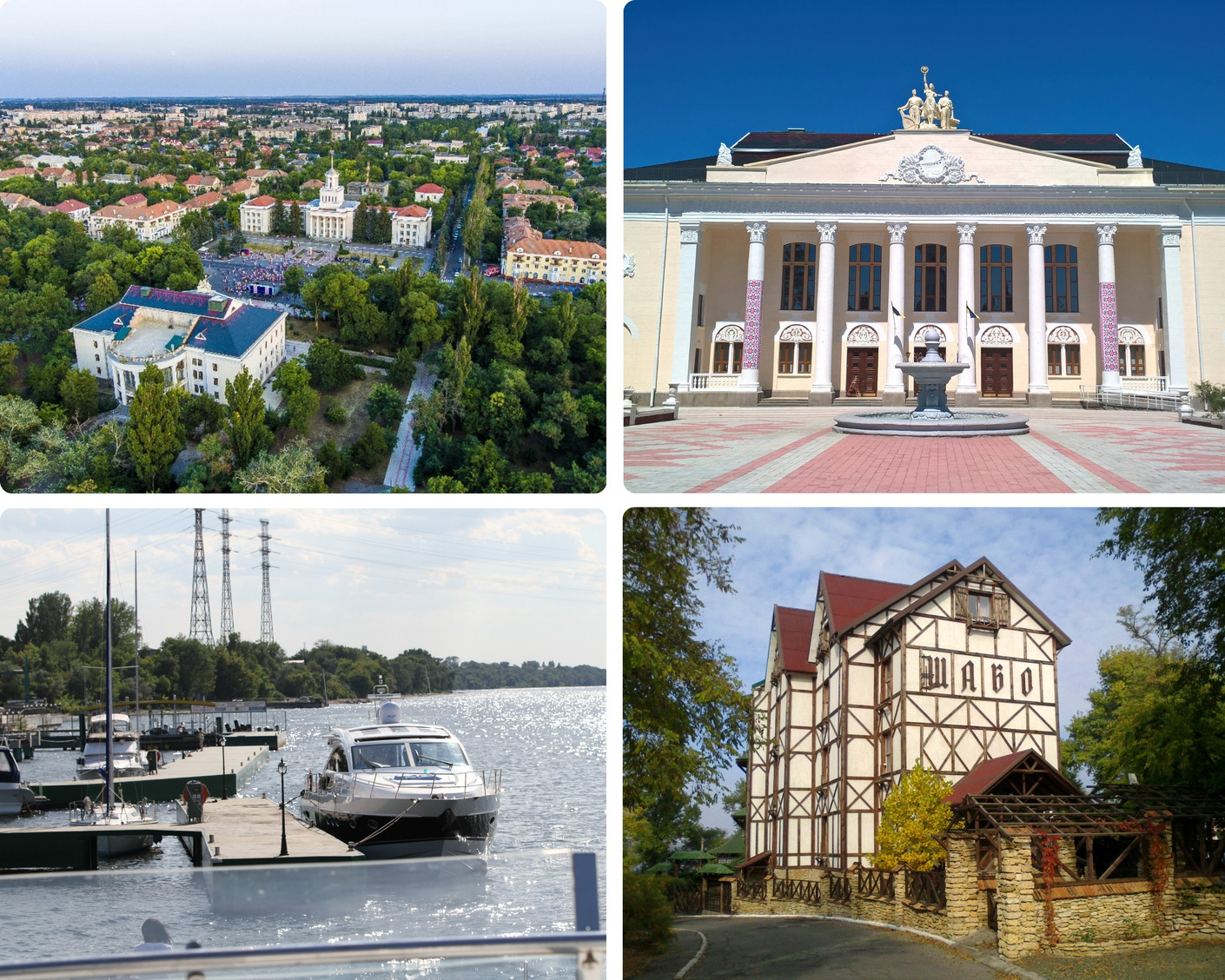
Nova Kakhovka before the war
On the aftermath of the flooding, hourly water supply, and expanding desert areas
What are the aftereffects of the flooding caused by the destruction of the Kakhovka hydroelectric power station dam by the occupying forces?
When the dam was blown up, the city was literally “floating” , especially the city centre. The water has now receded, but the damage caused by the flooding is still devastating. For example, whereas artesian wells in Vesele and Kozatske used to be drilled to a depth of 40 metres, now they have to be drilled almost twice as deep! The Kakhovka Reservoir has dried up; the main and distribution canals are empty, crumbling and becoming covered with vegetation. It will be very difficult to restore them. And in Crimea, the situation with water is a complete disaster. By blowing up the Kakhovka hydroelectric power station, the occupiers deliberately deprived Crimea of water, even though they had previously held a grand ceremony to release water into the North Crimean Canal and gave speeches about caring for the people. Such is the difference between the russians’ true intentions and their beautiful promises.
Can we speak in this case of ecocide, of the destruction of the local natural environment and land resources?
Absolutely, but that would be a very mild way of putting it. Well, just to give you context... Our village of Korsunka was completely submerged after the dam was blown up. The water washed away the mud-brick houses, and some elderly people lost their lives. This is not just ecocide; it is unprecedented barbarism! Historians are now celebrating the restoration of the Great Meadow, which used to be where the Kakhovka Reservoir is now. But no one mentions the occupied Kherson region, which has been left virtually without water. Whilst water is supplied on an hourly basis in Nova Kakhovka, some villages have none at all. People used to survive there thanks to their private vegetable gardens, but now nothing grows on these plots because there is no water to irrigate them. Orchards sometimes provide some relief – for those who have them, of course… And most people pray for rain…
You were in charge of the agro-industrial sector in Nova Kakhovka for a long time. What is the current state of the community’s agriculture, given the widespread water shortages?
We cannot yet accurately assess the scale of the disaster, as we do not have access to these lands. But the scale is certainly significant. Agriculture has been damaged not only by the flooding, but also by the mass cutting down of forest plantations. The plantations that were cultivated with great effort several decades ago are now mercilessly cut down by the occupiers, who use the timber for military purposes and for sale. As a result, sandy desert areas are spreading literally overnight. The mass cutting down and destruction of forests have a catastrophic and, most importantly, long-term impact on the agricultural sector of the entire region… By the way, mass cutting down and the shipment of timber ceased when the Ukrainian Armed Forces took control of the roads on the left bank of Kherson region.
Is there a risk of groundwater contamination as a result of the flooding?
The full extent of the damage caused by the destruction of the Kakhovka hydroelectric power station is currently extremely difficult to assess, as the destruction has triggered a chain reaction of environmental and infrastructural problems. In particular, the issue of the quality of drinking and industrial water in Nova Kakhovka remains critical: the flooding of industrial facilities, cesspits, cemeteries, and animal burial grounds has led to a serious risk of chemical and biological contamination of the groundwater aquifers. Meanwhile, prior to the full-scale invasion, residents had clean artesian water running from their taps round the clock, which could be consumed without any filtration. Now, either there is no water at all, or what comes out of the taps is rusty and salty.
… In Nova Kakhovka, my parents and I always stayed at Nadiia Demydivna’s house on Dniprovskyi Avenue. We lived there for about a month. Nadiia Demydivna always generously treated us to vegetables from her bountiful vegetable garden, and when it came to apples and pears, she would even plead, ‘Take some, because we don’t need that many, and they’re so delicious! They’ll go to waste otherwise!’ Nadiia Demydivna’s son-in-law, Lionia, had his own motorboat and would occasionally take us fishing with him. The whole family spoke in a rich southern dialect, which sounded nothing like russian.
It was about a hundred metres from that house to the Dnipro, and in the mornings we would walk down to the riverbank to bathe in the local springs. The water there was very tasty; besides, in some strange way, it whitened our teeth. During the floods, when Dniprovskyi Avenue was submerged, these springs ended up deep at the bottom.
What has become of them now? What has become of Nadiia Demydivna’s house? What of her family? Did they survive? Are they somewhere in Europe? Or perhaps they have joined the occupiers, parroting the rhetoric of the “russian world”? Do these people long for the peaceful, prosperous life they once led living under the Ukrainian flag?
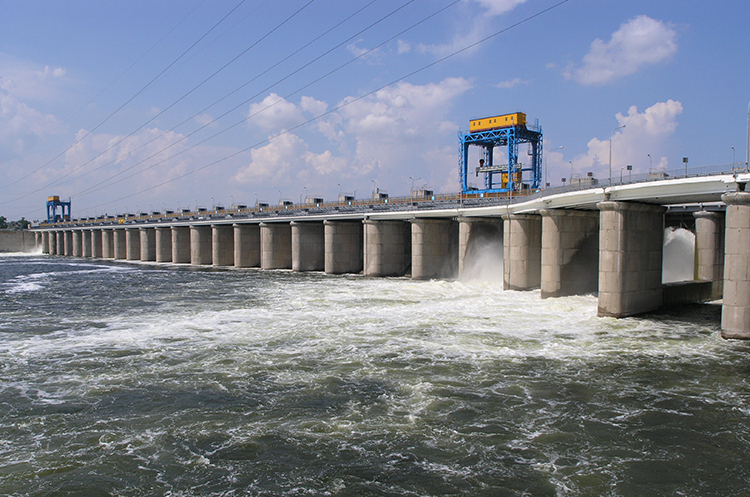
Kakhovka Dam before it was blown up by the russians
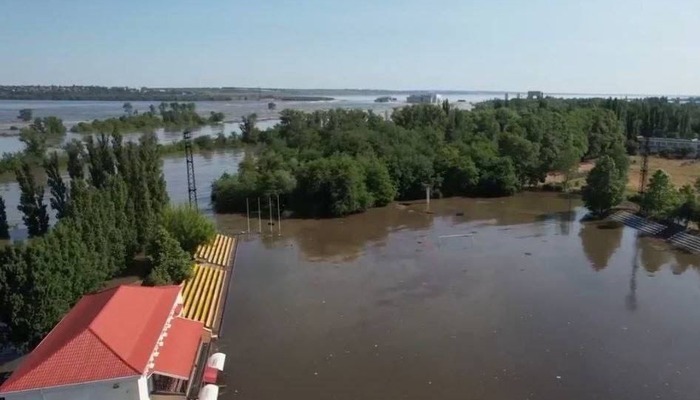
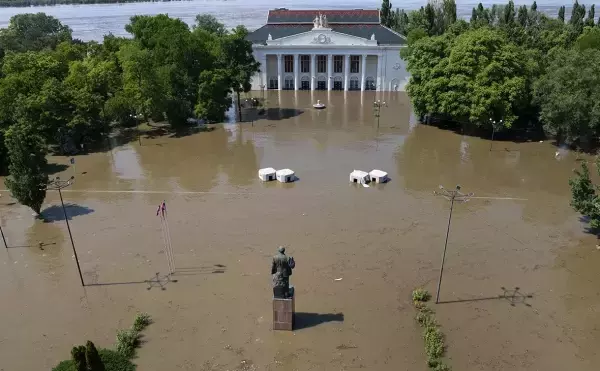
During the flooding caused by the blowing up of the Kakhovka hydroelectric power station
Why does Nova Kakhovka community need 10 schools?
What are the current sources of revenue for the Nova Kakhovka community’s budget? Which expenditure items are a priority, given the loss of control over its territory?
The main source of revenue for our budget is the state subsidies. For objective reasons, our own revenue has fallen significantly – we have only around UAH 22 million. Therefore, priority is given to funding protected expenditure items, the volume of which is currently relatively small. Moreover, in the first six months of 2026 alone, we have transferred UAH 21 million to the Defence Forces. A further UAH 4 million was spent on payments to those who have been called up. In total, we have nine areas of support for military personnel and their families. For example, Nova Kakhovka community is one of the few that provides monthly financial assistance of UAH 10,000 to the families of those killed in action. Although I would prefer it if such payments were never necessary – if only people could live, work, and raise their children…
There are ten schools in Nova Kakhovka community where lessons are conducted online. Does this number strike you as a bit high? If you were to merge these schools into one, the community would save money, at least on administrative staff…
This is not so much a question of saving money as it is of protecting people and helping them. There are still 3,500 children attending the Nova Kakhovka schools, and over two hundred teachers work there: 157 in government-controlled territory and 65 abroad. By merging the schools, we would deprive many of them of their livelihoods. And most of them have to rent apartments, as their own homes have been destroyed or remain under occupation. Therefore, whilst this remains an option, we will make every effort to preserve our network of schools. The spirit of community unity also remains a key factor. Teachers could, after all, have found work in a traditional format long ago, or even changed professions altogether. Yet they consciously choose to stay at their home schools. Such dedication is incredibly valuable. And finally, the third point: upon our return, we will need a reliable workforce – professionals who have been tested by difficult challenges. Therefore, preserving our human resources now is the guarantee of our recovery in the future.
However, the main purpose of schools is to provide children with a quality education. It is by no means a tool for providing social support to teachers. Surely you cannot argue that distance learning is objectively less effective than traditional in-person learning?
My answer to that is as follows: this year, 333 students graduated from our schools, 34 of whom received their school-leaving certificates with distinction. In my opinion, that is a very good result. Many of our children, having tried offline learning at different schools, return to their home schools. This is because adapting to new environments is often difficult, whilst one’s own, familiar surroundings, even when far from home, feel particularly precious. There are also children who study both in our schools and in schools abroad. Well, many of them say that Ukrainian education is better.
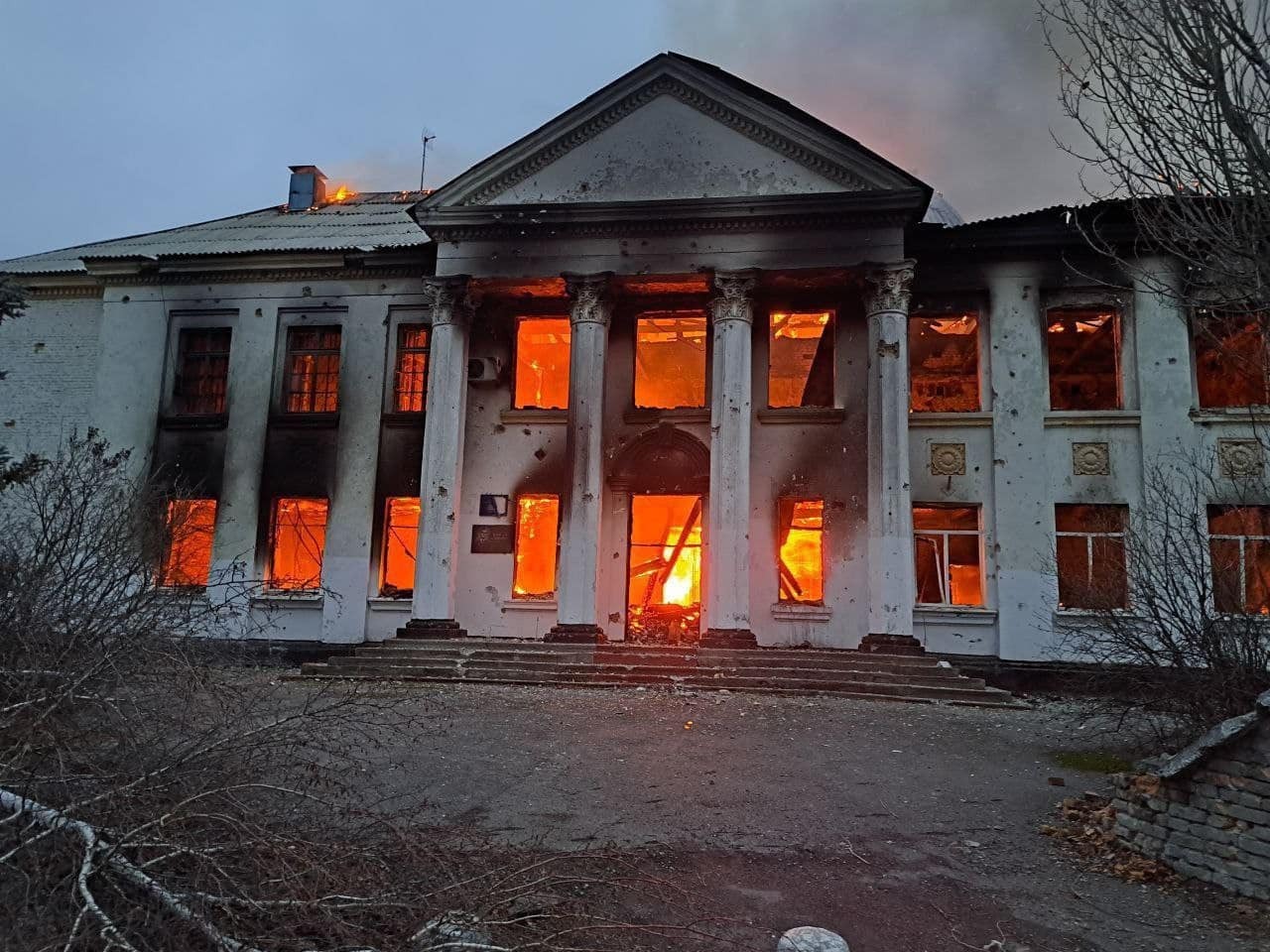
Anatolii Bakhuta Lyceum No. 2 of Nova Kakhovka, 27 December 2024
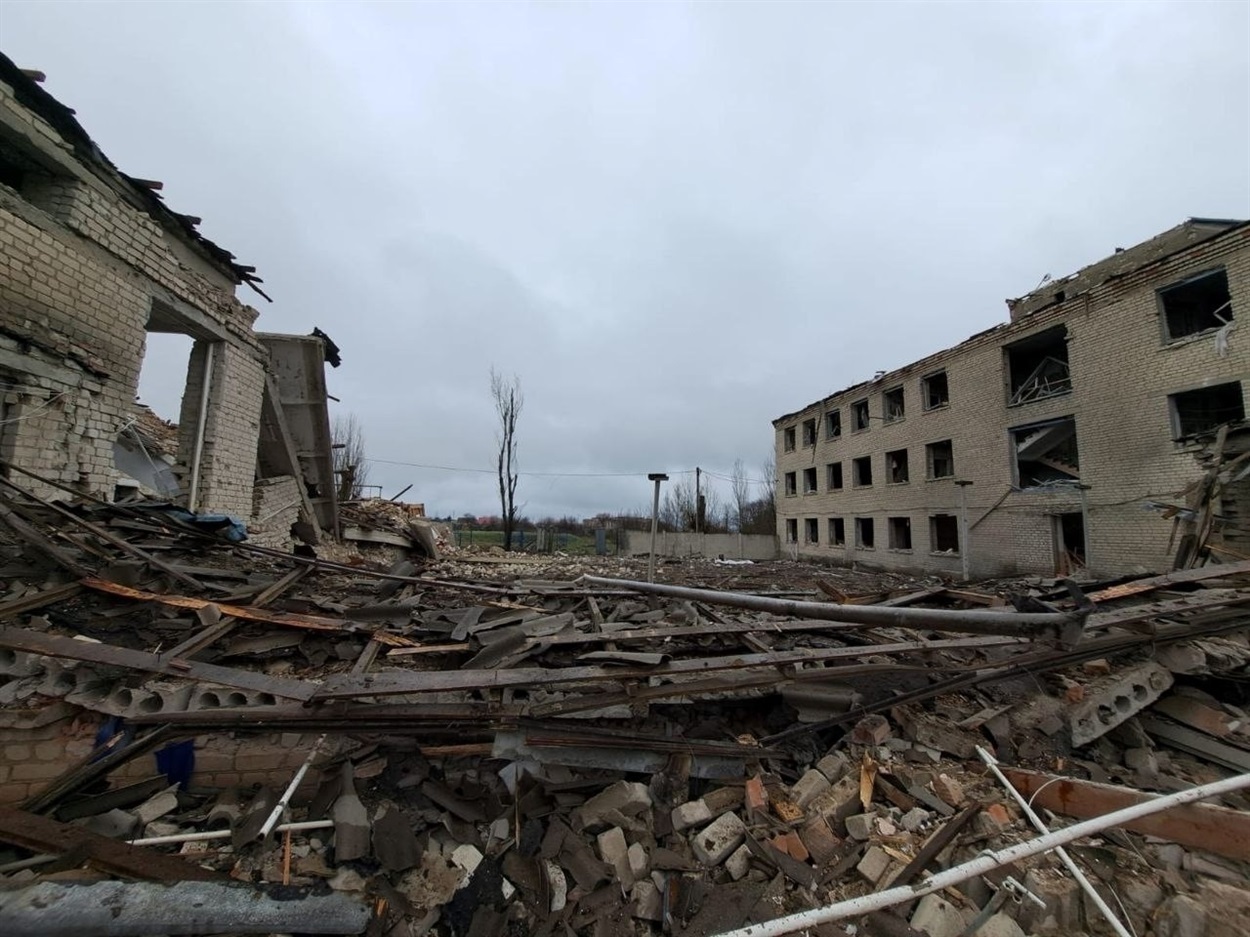
Lyceum in Kozatske, Nova Kakhovka community, destroyed by the russian army
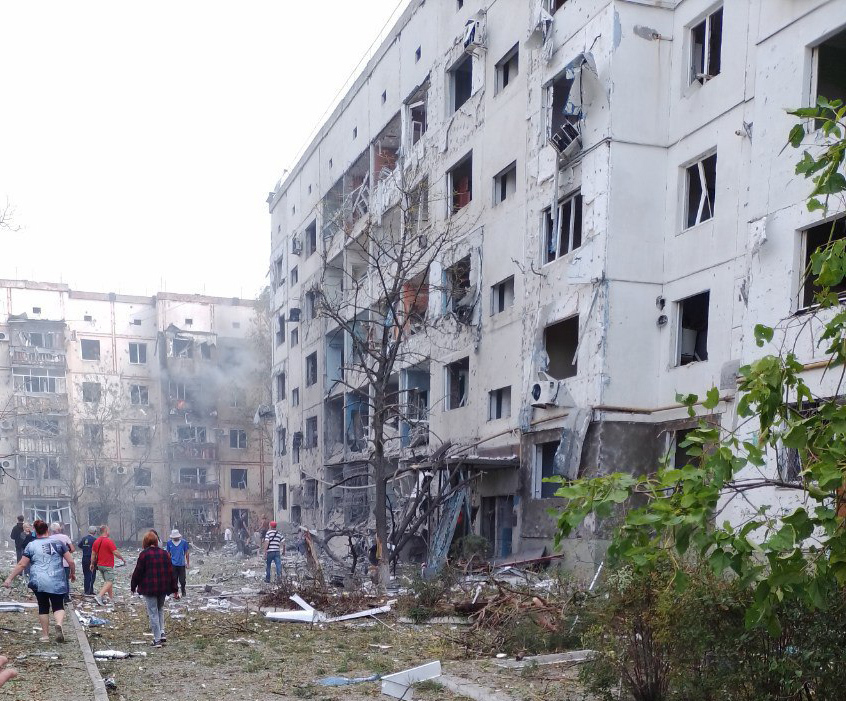
Aftermath of the russian air strike on Nova Kakhovka
Vision for the future
Does the military administration hold talks with international funds, donor organisations, and European municipalities about taking the community under their patronage?
As the majority of Nova Kakhovka community is under occupation, international donor organisations are very cautious about such cooperation. However, our military administration is in constant talks with European municipalities about partnership. In particular, we have received positive responses from several EU municipalities and even invitations to further discuss joint activities. Working visits are already planned for the autumn. In terms of seeking assistance, it is also worth mentioning the “Free Together” hubs, established across the country on the initiative of the Kherson Regional Military Administration. Nova Kakhovka community is among the participants in this project. Through the “Free Together” hub network, the people of Nova Kakhovka community receive a wide range of support – from food parcels to legal advice.
How else do you try to bring residents together?
First of all, we use different online platforms to communicate with them. We also have three offices. The main one is in Kryvyi Rih, where I spend most of my time working. It also houses the departments of education, culture, financial management, and one of our municipal enterprises, which is currently involved in transporting humanitarian aid. Our Children’s Creative Centre also continues to operate in Kryvyi Rih. By the way, over 300 children attend different clubs there! Our other office is in Odesa, where the relocated the administrative service centre, the social protection department, and the registration department are also based. The third office is near Kyiv, in Brovary district, in the village of Trebukhiv. To support our fellow residents in Kryvyi Rih, our culture department has organised a series of events: cultural meetings, workshops, children’s entertainment… These events gave the extended family of Nova Kakhovka community the chance to come together, socialise, and feel that we are united, wherever we may be.
Do former residents of Kozatske and Vesele receive housing certificates?
They do. But this is often hindered by the inability to properly inspect the buildings. Our military administration has repeatedly submitted proposals to the Verkhovna Rada to pass a law under which all housing located within a 10-kilometre zone of the line of contact would be recognised as destroyed. With a few minor exceptions, this is what actually happens. But, unfortunately, the issue has not moved forward at all. Things have become a little easier now, as the military have started to help us where possible. We also receive materials from the State Space Agency. However, their photographs are mostly of very poor quality. Despite everything, according to the findings of our commission, the total amount of compensation for destroyed homes as of 30 July this year has already exceeded UAH 322 million. This is despite the fact that so far, only combatants and people with war-related disabilities who have been granted the status of internally displaced persons from the temporarily occupied territories are eligible for state housing vouchers. Everyone else has to wait…
Have you digitised the community’s documents? Take Kupiansk, for example, which is still recovering from the loss of documents from the State Bureau of Technical Inventory (BTI) that was destroyed by a russian shell in 2022.
The situation in Nova Kakhovka is similar to that in Kupiansk. After all, russian troops entered our city just four hours after the invasion began. Therefore, the city authorities had very little time to evacuate anything. And the entire archive of the Nova Kakhovka branch of the Kherson Regional BTI remained in the occupied territory. As a result, many residents of the community now have to reclaim their property rights through the courts. Since the BTI is a regional body, the digitisation of its documents falls within the remit of the regional administration. Several proposals have been made on how the Parliament could resolve this issue, but so far nothing has changed significantly.
Does Nova Kakhovka military administration have a vision for the city’s development after de-occupation? Are there any major infrastructure projects planned?
Our representatives have met several times with the heads of project organisations, particularly those that specialise in water supply facilities. These meetings have resulted in agreements whereby, as soon as the community is liberated, all the necessary work – surveys, calculations and so on – will begin as a matter of urgency... It is difficult to predict whether Nova Kakhovka will be able to become the powerful industrial hub it was before the full-scale invasion. It is clear that some of the large enterprises will not resume operations. On the other hand, the community does not have enough land to become an agricultural one. So we need to find a happy medium – perhaps by developing agricultural processing and tourism.
Does the military administration have a vision for what Nova Kakhovka community should look like if a decision is taken not to restore the Kakhovka hydroelectric power station?
We have developed a special action plan, symbolically titled “First Day Home”. This document clearly sets out the priority actions for each department of the city council in every locality of the community once it has been de-occupied. The main task for the city authorities at that time will be to restore the infrastructure. If hospitals, schools, and kindergartens do not resume operations, people will not be able to return. And without people, businesses will not be able to operate either. Although many residents of Nova Kakhovka have already settled into life in European countries, there are still many who sincerely long for their homeland. We need to create all the necessary conditions for their return. I have high hopes that the Defence Forces will liberate Nova Kakhovka during the coming year. Then your pre-war article will once again be relevant.
From an unpublished article about Nova Kakhovka, which was due to appear on 24 February 2022
“… Nova Kakhovka community is increasing its tourism potential year by year. Its territory is home to three large yacht clubs, a leisure complex for hunters and anglers, a legendary cognac distillery and a winery that is unique in Ukraine. All of these are genuine tourist attractions in the south of Ukraine, which are already very popular with tourists. In March–April, Estonian experts plan to visit Nova Kakhovka to study the situation in the community in detail. And in the summer, a general wrap-up meeting is planned in Georgia for all the participants in the programme “Local Ownership of Democracy: Transparent Governance at the Local Level”…
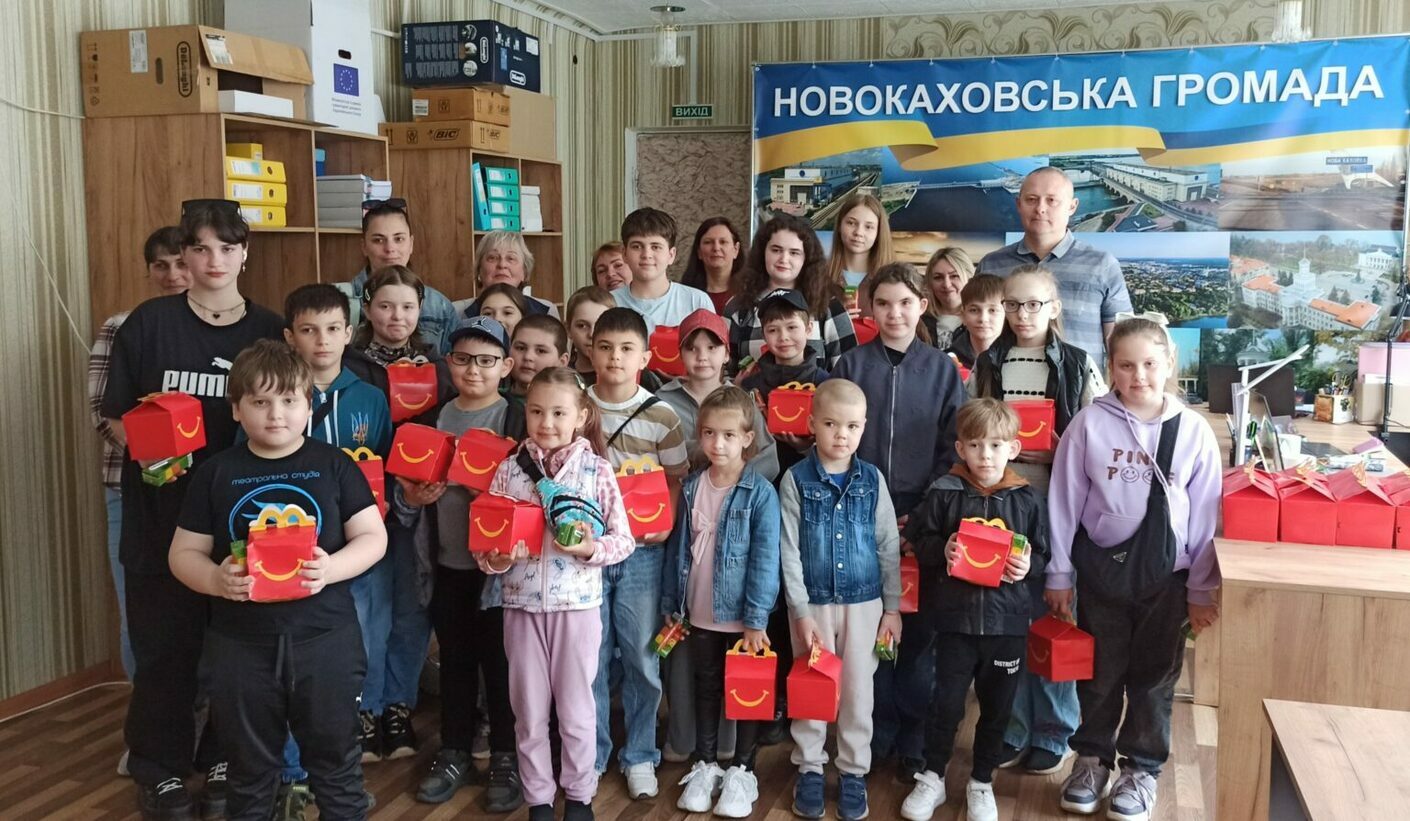
Charity event on Family Day, organised by the Nova Kakhovka Military Administration for the children of internally displaced persons in Kryvyi Rih, 15 May 2026
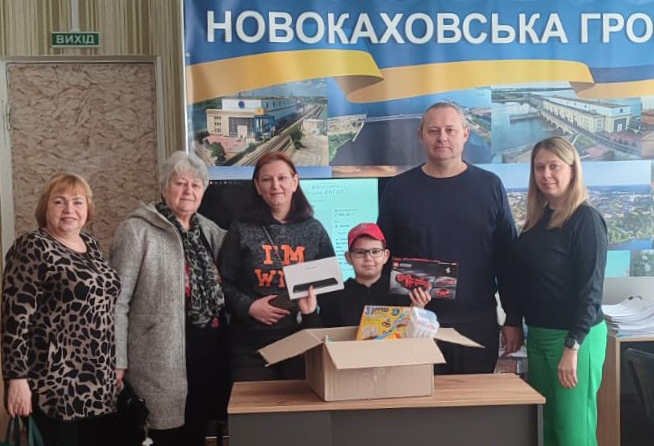
During the “Mission ANGEL” charity campaign, organised within the framework of the “DobroBOX – From Heart to Heart” project jointly with “From Village to City” NGO, Oleh Tarabaka, Head of the Nova Kakhovka City Military Administration, congratulated 9-year-old Danylo from Kozatske in Nova Kakhovka community on his birthday. Danylo currently lives and attends school in Kryvyi Rih. Photo from 2026
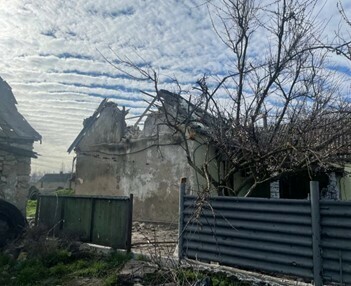
Destroyed private house in Kozatske, Nova Kakhovka community
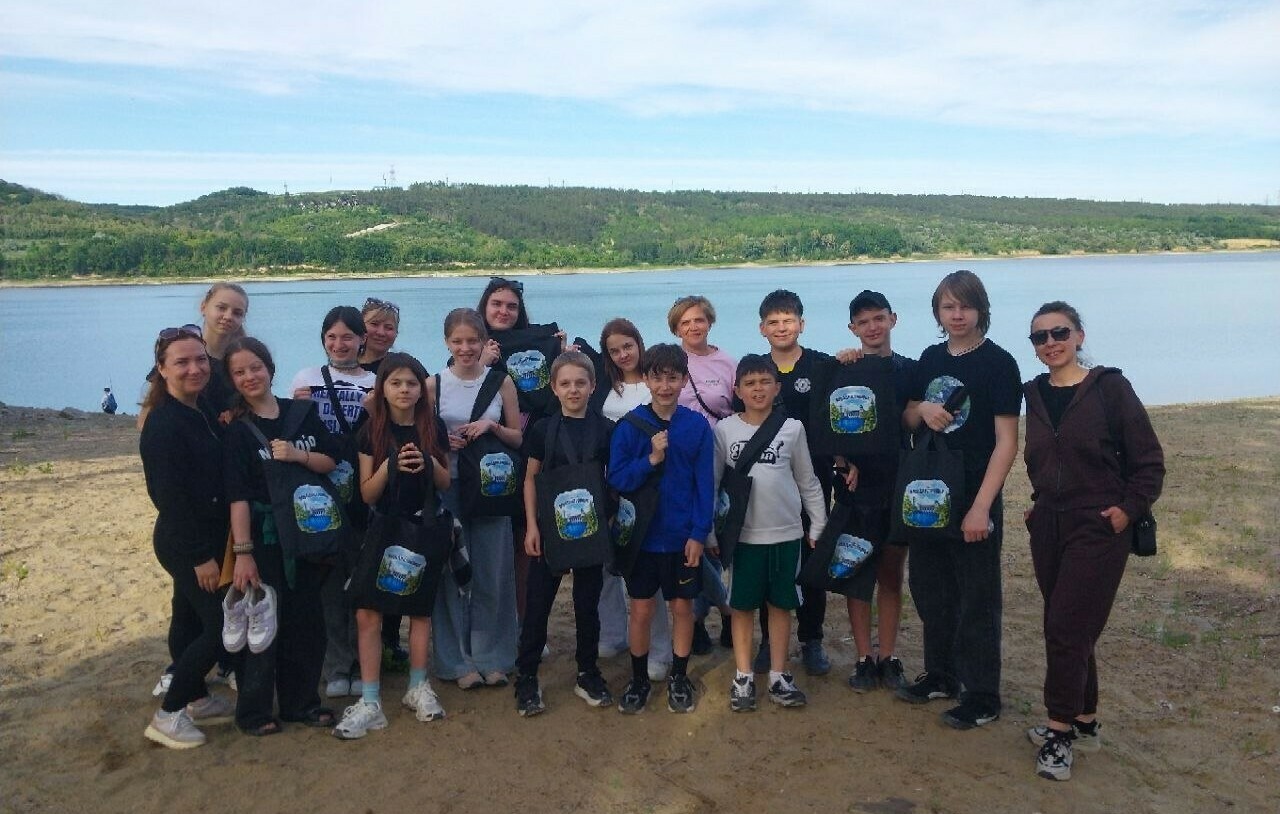 Schoolchildren from Nova Kakhovka community on a holiday in Novodnistrovsk – within the framework of the “Shoulder-to-Shoulder: Cohesive Communities” project, June 2026
This article features photography courtesy of the Nova Kakhovka Military Administration, as well as photographs from open sources
01 October 2026
Будівельний бізнес запрошують долучитися до формування Каталогу пропозицій будпродукції
Будівельний бізнес запрошують долучитися до...
Мінрегіон запрошує виробників, постачальників, торговельні мережі, імпортерів та інших продавців будівельної...
01 October 2026
Як молодь впливає на стійкість України і її громад
Як молодь впливає на стійкість України і її громад
Оприлюднення проєкту Державного бюджету на 2027 рік стало для мене приводом знову подивитися на те, як держава...
01 October 2026
Комітет ВРУ підтримав за основу законопроєкт...
Комітет Верховної Ради України з питань організації державної влади, місцевого самоврядування, регіонального розвитку...
01 October 2026
Місто, яке неможливо зупинити. Чому великим...
У ніч на 5 серпня 2026 року Київ і область втратили частину своєї логістики буквально за кілька годин....